Enterprise Core Mocap Infrastructure & Ecosystem
Integrate battle-tested hardware nodes, multi-tier sensor fusion firmware, and synchronized desktop telemetry platforms engineered specifically for real-time virtual streaming and embodied interactive pipelines.
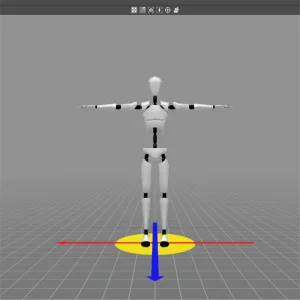
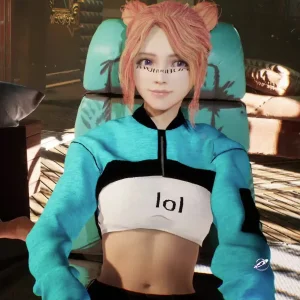

Enterprise-Grade Kinematic Telemetry Architecture for VTubers
Designing an industrial motion capture pipeline requires tackling complex physical real-time constraints: rotational drift, high packet density under crowded wireless spectrums, zero floor penetration, and seamless micro-expression retargeting.
Multi-Sensor Data Fusion Engine
Traditional single-layer algorithms suffer catastrophic drift during extended 4 to 8-hour VTuber entertainment broadcasts. Virdyn's patented architecture merges high-bandwidth 9-axis inertial measurement units (accelerometer, tri-axial gyroscope, and high-flux magnetometer) with biomechanical inverse kinematics (IK) constraints.
This dynamic kalman-filtering prevents gimbal lock and stabilizes the root bone during extreme postures—such as sitting, squatting, or dancing—ensuring live 3D avatars retain anatomical plausibility without manual recalibration breaks.
Zero-Occlusion Optical & Inertial Fusion
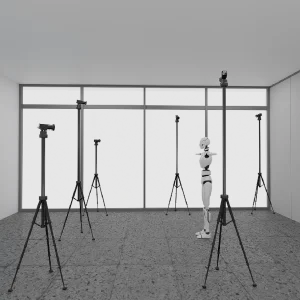
Optical systems require complex infrared camera trusses and unobstructed line-of-sight. When VTubers handle desk microphones, dual monitors, drawing tablets, or cosplay props, optical markers vanish, creating visual glitching.
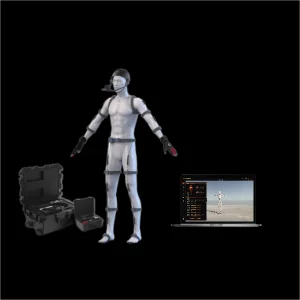
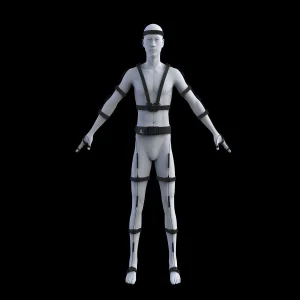
By relying on body-worn nodes through the VDSuit Full and DreamsCap systems, positional and rotational continuity remains uninterrupted even when performers fold their arms, turn their backs to baseline sensors, or recline in gaming chairs.
Ultra-Synchronized Hand & Facial Pipeline
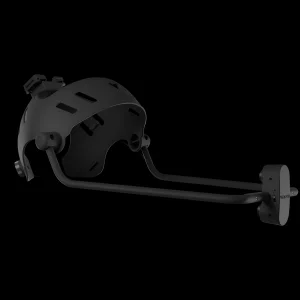
Real-time charisma hinges on synchronized micro-expressions and delicate finger gestures. The system pairs the AH dual-camera HD facial capture helmet with mHand Pro data gloves into an unified data transport channel.
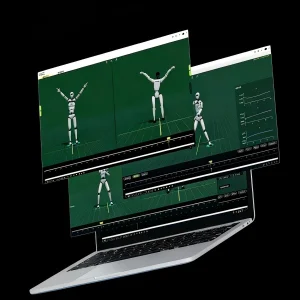
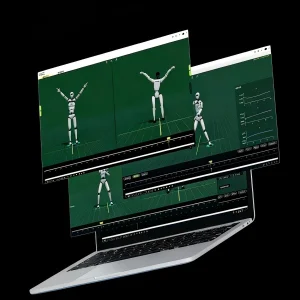
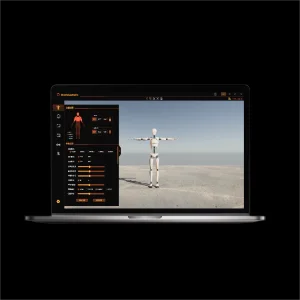
Utilizing timecode-stamped UDP/TCP streaming via VDMocap Studio Plus, blendshapes (ARKit-compatible 52 micro-features) line up frame-accurately with full-body skeletal nodes, eliminating visual dissociation during live audience interactions.
Chinese Manufacturing Ecosystem: Engineering Precision at Scalable BOM Costs
From the Greater Bay Area hardware cluster directly to global entertainment hubs, learn how localized industrial supply chains make commercial-grade motion capture hardware accessible without sacrificing mission-critical reliability.
Tier-1 Component Sourcing & Integrated SMT Yields
Situated in the heart of the Guangdong-Hong Kong-Macao Greater Bay Area electronics manufacturing cluster, Virdyn leverages immediate proximity to world-class precision MEMS foundries, high-frequency flexible PCB manufacturers, and advanced surface-mount technology (SMT) packaging facilities.
This geographic consolidation drives down prototype iteration cycles from months to mere days, while stringent automatic optical inspection (AOI) guarantees high yield rates across thousands of multi-axis IMU modules.
Cost Rationalization Without Algorithmic Compromise
Western motion capture solutions often carry legacy markup structures driven by heavy distributor layers and excessive IP premiums. By maintaining 100% in-house R&D and factory-direct calibration benches, Virdyn provides studio-grade setups at roughly 30% to 50% of legacy market prices.
This allows emerging VTuber agencies, independent streaming collectives, and mid-sized animation houses to allocate capital where it matters most: artistic talent and world-building.
Ruggedized Ergonomic Textile Engineering
Livestreaming demands physical endurance. VDSuit harnesses are constructed using breathable, anti-bacterial, high-tensile lycra composites designed for multi-hour continuous wear. Sensor pockets feature shock-absorbing silicone brackets that prevent mechanical sensor displacement during rapid movements.
Cables are reinforced with multi-strand aramid fibers to withstand extensive bending cycles, minimizing on-stage wiring failures.
Global Enterprise Procurement & RFP Technical Criteria
Enterprise procurement teams evaluating motion capture systems must balance hardware reliability, software extensibility, multi-system integration, and ongoing vendor SLAs. Here is an architectural evaluation checklist.
| Evaluation Parameter | Legacy Optical Stage Specs | Virdyn Inertial/Hybrid Suite | Procurement Impact & ROI Factor |
|---|---|---|---|
| Operating Footprint | Dedicated 40–100 m² studio with camera trusses | Unrestricted (Desk, Room, Outdoors) | Zero real estate retrofit costs; deploys in any standard office or livestream booth. |
| Setup & Calibration Time | 45–90 min (marker placement, optical calibration) | < 5 minutes (One-click posture calibration) | Drastically accelerates talent preparation; enables rapid hot-swap of stream performers. |
| Occlusion Vulnerability | High (fails during prop handling & crossed limbs) | Zero Occlusion (Kinematic sensor calculation) | Eliminates character mesh explosion and jitter during live unscripted broadcast scenarios. |
| Live Stream Retargeting | Requires heavy server clusters and relay tools | Direct UDP/TCP/OSC/VMC to Warudo & VRChat | Runs natively on single standard broadcast workstations without specialized compute racks. |
| Dual-Use Capability | Strictly visual capture | VTubing + Robotics Dataset Teleoperation | Dual depreciation: enables R&D teams to leverage identical suits for humanoid AI training. |
Localization Support, RF Spectrum Compliance & Data Security
Deploying wireless broadcast hardware internationally requires strict adherence to regional radio frequency regulations, safety standards, and airtight data governance policies.
RF Compliance: FCC, CE RED & TELEC
Wireless mocap nodes operate across dynamic 2.4 GHz industrial, scientific, and medical (ISM) frequency bands. Virdyn hardware is fully compliant with FCC Part 15 (North America), CE Radio Equipment Directive (RED - Europe), and TELEC/MIC standards (Japan).
Adaptive frequency hopping spread spectrum (FHSS) mechanisms prevent interference with existing wireless routers, stage microphones, and video transmitters commonly found in crowded studio environments.
Local SDK Architecture & Zero-Cloud Telemetry
Broadcasting security demands that proprietary talent performance data remains on local studio intranets. VDMocap Studio Plus and DreamsCap Studio feature completely isolated, offline-capable operation modes without mandatory cloud pings or external metric telemetry.
SDKs for C++, C#, Python, and Unreal Engine Blueprint operate locally, ensuring high-value intellectual property and talent biometrics remain under total enterprise control.
Comprehensive Multi-Lingual Integration Support
Enterprise clients benefit from round-the-clock technical support, field engineers, and multi-lingual documentation covering Japanese, English, Korean, and Chinese.
Dedicated engineer-to-engineer onboarding ensures smooth protocol bridging, whether retargeting bone transforms into custom Unreal 5.4 Control Rigs, Unity Animancer, or direct VRM pipelines.
Operational Scenarios: From Agency Live Houses to Metaverse E-Commerce
Virdyn's flexible mocap architecture scales across distinct commercial workflows, delivering reliable fidelity whether deployed in a high-density talent agency or an individual creator's broadcast setup.
Multi-Talent Commercial Agency Live-Rooms
Agencies broadcasting collaborative concerts or group gaming streams face spatial overlap and marker confusion with optical systems. Using multiple VDSuit Full systems with dedicated RF channels allows up to 6 performers to interact freely in a compact space without tracking cross-talk or occlusion failures.
- Synchronized multi-avatar UDP broadcast
- Independent bone mapping per talent
- Zero stage occlusion during physical hugs or handshakes
24/7 Virtual Host E-Commerce Livestreaming
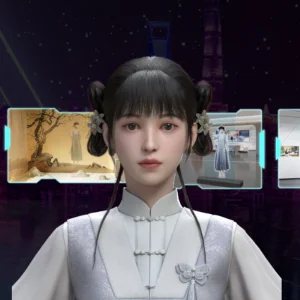
Virtual anchors represent brand storefronts around the clock on platforms like TikTok, YouTube, and Twitch. Combining the AI LingSi system with Virdyn motion capture enables hybrid operation: real human anchors drive active peak-hour sales pitches, transitioning seamlessly to autonomous AI-driven cycles during off-peak hours.
- Immediate human-to-AI state hot-swapping
- Real-time product gesturing with mHand Pro
- Lower hardware amortisation per streaming hour
Anime Studio Previsualization & Production
Animation houses cut production lead-times by swapping traditional keyframing for rapid mocap takes. With native FBX and BVH export in VDMocap Studio Plus, directors record complex combat choreography, dance performances, and dramatic scenes directly into Maya, Blender, and 3ds Max.
- Direct FBX raw-data and cleaned export
- Unreal Engine LiveLink real-time previz
- Reduces character animation cycles by over 60%
2025–2030 Strategic Technology Roadmap
The boundaries between VTuber entertainment, generative AI animation, and humanoid robotic teleoperation are converging. Explore the architectural forces transforming digital motion capture across the coming five years.
AI-Enhanced Kinematic Denoising & Physics Solving
Next-generation motion capture firmware incorporates lightweight edge neural networks that monitor sensor reliability in real time. If localized electromagnetic interference (EMI) is detected near stage equipment, machine-learned kinematic models predict and reconcile missing joint vectors instantly, ensuring seamless motion flow.
Convergence with Embodied AI & Humanoid Robotics
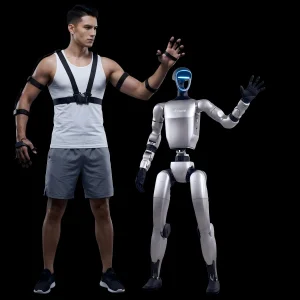
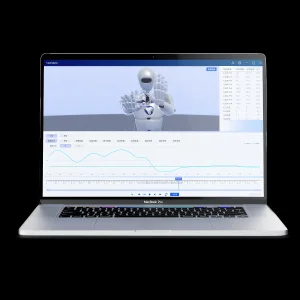
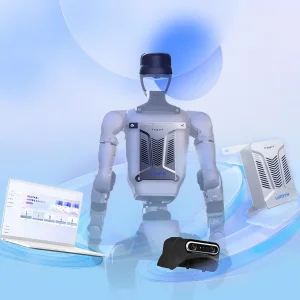
The kinematic data pipelines developed for high-fidelity VTuber body capture are directly applicable to humanoid robot teleoperation. Systems like VDRobot Studio translate full-body operator gestures into end-effector trajectories and torque requirements for robotic hands and bipedal actuators, opening new revenue models for motion capture studios.
Markerless Optical & Wearable Sensor Hybrids
The industry is rapidly shifting toward unified hybrid stages. By combining YanDong markerless computer vision algorithms with body-worn IMU suits like VDSuit Full, capture environments achieve high absolute global positioning without bulky markers, maintaining zero-drift continuity during long performance sessions.
Enterprise Motion Capture: Frequently Asked Questions
In-depth engineering answers addressing hardware capabilities, software integration, calibration best practices, and enterprise procurement terms.
How does the VDSuit Full handle magnetic interference in commercial studio environments?
Can the hardware stream simultaneously to VTuber apps (Warudo/VRChat) and game engines?
What is the typical battery operating duration, and how are wireless drops managed?
What are the primary differences between mHand Pro gloves and camera-based hand tracking?
How does Virdyn support custom avatar skeletal proportions and retargeting rigs?
Advanced Solutions: Robotics, Analytics & Optical Capture
Explore Virdyn's complete technological footprint—spanning humanoid robotic teleoperation platforms, high-fidelity facial rigs, biomarker motion analysis, and markerless optical computer vision systems.