Integrated Motion Capture Systems & Hardware Suites (Part I)
Explore high-frequency motion capture solutions designed for real-time skeletal tracking, facial expressions, and spatial telemetry.





Executive Summary: The Biomechanical Motion Capture Paradigm Shift
Transitioning from stationary, laboratory-constrained motion capture frames to ambient, field-deployable biomechanical kinetic monitoring.
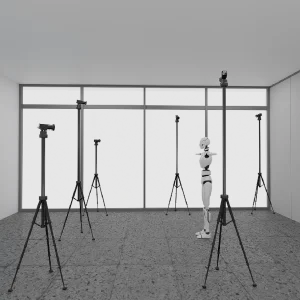
In modern high-performance sports, human kinetic efficiency, neuromuscular fatigue control, and joint load optimization represent the difference between gold medals and career-ending musculoskeletal trauma. Historically, quantitative athletic movement analysis relied on multi-camera optical marker systems anchored inside sterile laboratory environments. While optical tracking provides precise absolute spatial coordinates, its operational constraints—such as line-of-sight occlusions, lighting sensitivity, complex multi-camera calibration rings, and restricted capture volumes—render it incapable of recording organic, unconstrained athletic performance during actual competitions or full-field tactical drills.
The solution lies in **Inertial-Vision Hybrid Motion Capture Architecture**. By combining high-frequency MEMS (Micro-Electro-Mechanical Systems) inertial sensors with real-time markerless computer vision algorithms, modern sports engineers can capture full-body kinematics across unconstrained spatial domains. Designed specifically for sports performance analysis, this hardware-software matrix delivers zero-latency skeletal telemetry, spatial orientation quaternions, and joint angular velocity calculations directly to sports biomechanists, strength & conditioning specialists, and clinical physical therapists.
Key Architectural Breakthrough: By implementing Extended Kalman Filter (EKF) sensor fusion with magnetic field anomaly compensation, modern sports mocap systems eliminate sensor drift during high-acceleration sprint mechanics, explosive cutting maneuvers, and dynamic impact contact.
System Design & Biomechanical Kinematics Matrix
Hardware hardware-software stack engineered to measure kinetic chain progression, rotational torque, and dynamic joint loading.
High-G Dynamic IMU Nodes
Equipped with 9-axis MEMS sensors capable of sampling accelerations up to ±16g/±2000dps, ensuring zero saturation during explosive sprinting or ball-striking events.
- Tri-axial Accelerometer & Gyroscope
- Zero-Drift Quaternion Computation
- Sub-millisecond Time Synchronization
Kinematic Chain Analysis
Automated breakdown of proximal-to-distal energy transfer in baseball pitching, golf swings, and track sprinters to identify kinetic energy leakage points.
- Segmental Angular Velocity Tracking
- Rotational Torque Calculation
- Joint Center Drift Compensation
Ergonomic & Durable Textiles
Sweat-resistant, high-flex compression apparel incorporating anti-slip node anchor points to prevent sensor artifact displacement during high-velocity movements.
- IP67 Moisture-Sealed Sensor Hubs
- Breathable Synthetic Spandex Weave
- Quick-Release Magnetic Mounts
| Performance Dimension | Legacy Optical Camera Rings | Virdyn Hybrid Inertial Solutions | Standard Vision-Only Systems |
|---|---|---|---|
| Operating Environment | Laboratory Only (Fixed Rig) | Universal (Field, Track, Gym, Arena) | Controlled Indoor Lighting |
| Sampling Frequency | 120 Hz – 250 Hz | 500 Hz – 1000 Hz (Real-time stream) | 30 Hz – 60 Hz |
| Line-of-Sight Occlusion | High Vulnerability (Body/Prop Blocking) | Zero Impact (Wearable IMU Nodes) | Moderate to High Vulnerability |
| Deployment Time | 2 – 4 Hours (Camera Calibration) | < 5 Minutes (Suit-up & Auto-Zero) | 15 – 30 Minutes |
| Data Processing Pipeline | Post-Process Manual Cleaning | Direct Unity/Unreal Stream & OpenSim Export | Cloud Post-Processing Latency |
Localized Application Scenarios in Global Sports Science
Deploying specialized motion capture hardware across diverse athletic disciplines, clinical recovery centers, and tactical training environments.
1. Elite Track & Field Acceleration Kinematics
In competitive sprinting, acceleration phase mechanics dictate final race velocities. By mounting inertial sensor nodes on the sacrum, pelvis, thighs, shanks, and feet, biomechanists can quantify stride length, stride frequency, foot ground-contact times, and hip extension angles during actual track runs. Unlike force-plate stations that limit data collection to a single step, full-body mocap suits capture continuous kinematic data across a complete 100-meter sprint, enabling coaches to diagnose asymmetrical ground force distribution and lateral pelvic tilt in real time.
2. Anterior Cruciate Ligament (ACL) Rehabilitation & Return-to-Play Protocols
Sports medicine facilities utilize inertial motion capture to calculate dynamic knee valgus angles during drop-jump tasks and cutting drills. Following ACL reconstruction, quantitative biofeedback is essential to prevent secondary re-injury. Mocap systems integrated with real-time biofeedback displays allow physical therapists to observe dynamic joint stability, hip-to-knee flexion ratios, and ground reaction acceleration rates. When an athlete exhibits compensatory movements or fatigue-induced knee collapse, the system flags biomechanical anomalies instantly.
3. Rotational Athletics: Baseball Pitching & Golf Swing Biomechanics
Rotational velocities during a professional baseball pitch or golf swing exceed thousands of degrees per second. High-speed inertial node arrays placed along the thoracic spine, scapula, humerus, and forearm measure pelvo-lumbar separation (the X-Factor), shoulder internal/external rotation velocity, and kinetic link timing. Identifying velocity drop-offs or improper segment sequencing allows training staff to optimize energy transfer while drastically reducing stress on the ulnar collateral ligament (UCL) or rotator cuff.
4. Tactical Athlete & Military Human Performance
Tactical operators, firefighters, and first responders carry heavy equipment loads over uneven terrain, leading to severe lumbar compression and stress fractures. Localized motion capture deployment enables defense research labs to conduct load-carriage ergonomic evaluations. By measuring trunk lean angle, center-of-mass sway, and ankle stability under varying weight configurations, tactical gear manufacturers can re-engineer body armor and backpack frame geometries for optimal weight distribution.
5. Esports Biomechanics & Ergonomic Health
Professional esports athletes perform thousands of fine-motor inputs per hour, leading to high rates of carpal tunnel syndrome, cervical spine strain, and tendinitis. Utilizing high-precision motion capture gloves (such as Virdyn mHand Pro) alongside upper-body IMU suits allows sports scientists to track finger joint flexion/extension, wrist deviation, and neck protraction over extended gameplay sessions. This data empowers organizations to optimize seating ergonomics, hand-warmup protocols, and physical therapy regimens.
Technical Roadmap & China Supply Chain Efficiency Advantage
How vertical integration and automated manufacturing deliver enterprise-grade biomechanical precision at disruptive cost-efficiency.
Vertical Hardware-Firmware Integration
By housing SMT surface mount assembly, sensor calibration centrifuges, and low-latency RF board design within unified Greater Bay Area manufacturing facilities, component lead times are reduced by up to 70%.
Multi-Axis Automated Calibration
Every individual IMU node undergoes high-precision automated thermal and gyroscopic multi-axis calibration before assembly, eliminating sensor bias errors across temperature swings from -10°C to +45°C.
Global Compliance & Security
Hardware adheres strictly to CE, FCC, RoHS, and ISO9001 quality frameworks. Wireless transmission pipelines leverage AES-256 data encryption for HIPAA/GDPR biometric privacy compliance.
Technical Roadmap (2026 – 2030): The Next Decade in Sports Mocap
The convergence of **Neural Kinematic Reconstruction (NKR)** and **Spatial Computing** marks the next evolution in motion capture technology. By embedding physics-informed neural network models (PINNs) into edge computing nodes, future mocap suits will dynamically infer internal muscular force generation and joint cartilage contact pressures directly from surface kinematics.
Furthermore, native integration with vision-passthrough AR headsets (such as Apple Vision Pro and Meta Quest 3) enables coaches to view live 3D muscle strain heatmaps and force vectors overlaid directly onto an athlete in real time during field sessions, creating an unprecedented coaching interface.
Frequently Asked Questions (Technical & Commercial FAQ)
Detailed engineering explanations for sports scientists, biomechanists, and hardware procurement directors.
How does inertial motion capture overcome magnetic distortion in indoor sports stadiums?
Indoor steel reinforced concrete floors and electronic LED boards generate localized magnetic anomalies. Virdyn's fusion architecture utilizes a dual-layer Extended Kalman Filter (EKF). When the onboard magnetometer detects local distortion exceeding safety thresholds, the algorithm dynamically throttles magnetic weighting and relies on high-rate gyroscopic-accelerometer dead reckoning along with biomechanical joint constraint limits, maintaining spatial integrity without orientation snapping.
Can the system export data directly into OpenSim or MATLAB for biomechanical modeling?
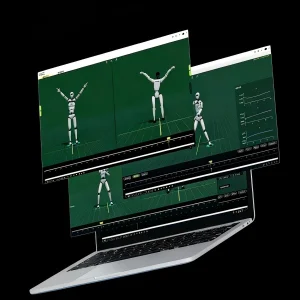
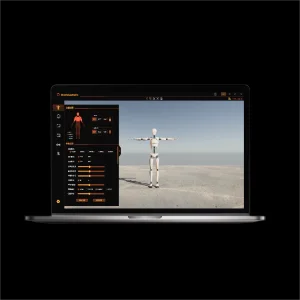
Yes. The VDMocap Studio suite features native export modules for standard biomechanical and animation formats, including .C3D, .FBX, .BVH, and raw CSV quaternion/acceleration data logs. The raw CSV data maps directly into OpenSim scaling and inverse kinematics pipelines or MATLAB/Python scripts for customized ground reaction force regression analysis.
What is the battery operational runtime during continuous full-field training sessions?
Virdyn VDSuit systems incorporate high-density lithium-ion power management hubs delivering 4.5 to 6 hours of continuous 1000Hz wireless transmission. Hot-swappable external battery packs allow continuous back-to-back team testing without taking the suit off the athlete.
How many simultaneous athletes can be tracked inside a single training facility?
Using robust 2.4GHz proprietary radio frequency hopping algorithms alongside Wi-Fi 6 multi-node sync hubs, a single master control station can stream up to 16 full-body suits simultaneously without packet loss or channel crosstalk, making it suitable for team sport tactical drills.
What is the durability and washing protocol for the wearable textile suit?
The sensor nodes feature quick-release twist-lock or magnetic mounting cradles. Once nodes are removed, the elastic compression suit can be machine washed at standard temperatures (30°C/86°F) using mild antimicrobial detergent, ensuring hygiene compliance for high-intensity athletic environments.
What are the lead times and warranty terms for international enterprise purchases?
Standard enterprise hardware packages ship within 5 to 7 business days globally via express logistics. Systems include a standard 12-month hardware warranty, lifetime software plugin updates, and dedicated 24/7 technical engineering support with remote SDK onboarding assistance.
Integrated Motion Capture Hardware & Data Ecosystem (Part II)
Complete your motion capture pipeline with specialized 3D custom avatars, game engine production plugins, and AI imitation platforms.