
Primary Biomechanical Sensor Kits & Telemetry Platforms
Integrated multi-axis IMU wearables, high-rate glove tracking, and real-time computation nodes engineered for rigorous indoor and on-field kinematic profiling.
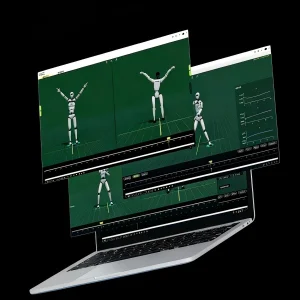
VDRobot Studio: Kinematic Data Collection & Telemetry
Explore Platform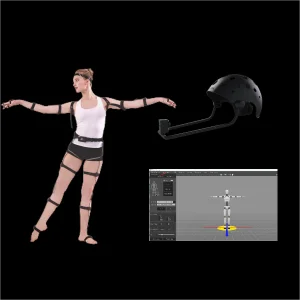
VDCap Full Performance Capture Sensor System
View Solutions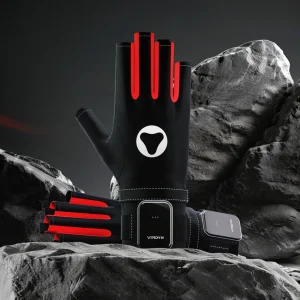
mHand Pro High-Precision Inertial Biomechanics Gloves
Analyze Gloves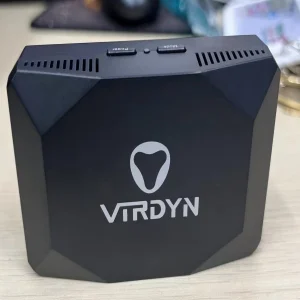
Full-Body High-Bandwidth Suit Hub Sensor Topology
View Architecture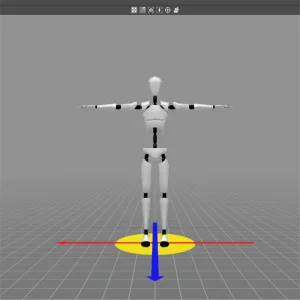
VDMocap Studio Plus Biomechanical Calculation Engine
Inspect Engine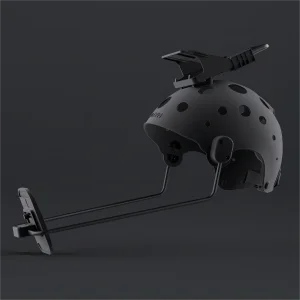
VDFace Pro High-Frequency Craniofacial Telemetry
View Sensor Kit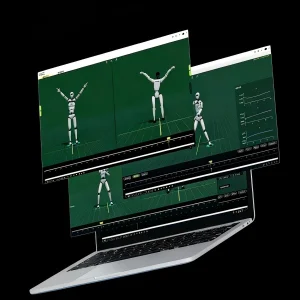
VDTraining: Human Kinetic Imitation & Modeling Hub
Explore Suite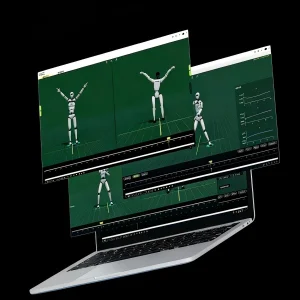
Standardized High-G Biomechanical Benchmark Datasets
Access DatasetsThe Biomechanical Paradigm Shift: From Constrained Optical Volumes to Ecological In-Situ Kinetics
Modern athletic performance analysis, orthopedics, and rehabilitation demand capture fidelity unencumbered by artificial laboratory boundaries. Our motion capture planning frameworks merge multi-modal sensor fusion with real-world biomechanical dynamics.
Unconstrained Field Kinematics
Traditional optical marker configurations fail when subjected to sunlight, turf reflection, physical contact, and occlusion. Wearable 9-axis micro-electromechanical systems (MEMS) with ultra-low latency wireless transceivers empower researchers to track sprinters, soccer players, and combat athletes in their true competition environments without boundary limits.
Multi-Sensor Drift Nullification
Utilizing high-order Extended Kalman Filters (EKF) and dynamic magnetic compensation, our proprietary fusion engine decodes absolute orientation matrices without accumulative integration drift. Sensor nodes sample angular velocity and linear acceleration up to 1000Hz internally, outputting synchronized 240Hz skeletal kinematics.
Valyze Clinical Biomechanics
Fully compliant with International Society of Biomechanics (ISB) recommendations for joint coordinate systems. The integrated pipeline translates raw quaternions into clinically validated segmental angular excursions: hip flexion/extension, knee abduction/adduction, tibial internal/external rotation, and multi-plane foot strike kinematics.
Semantic Search & Scientific Verification Notice
Biomechanical data integrity relies on rigorous anatomical calibration rather than simple algorithmic smoothing. Our planning solutions leverage anthropometric scaling algorithms, functional joint center (FJC) estimations, and continuous skin-artifact attenuation, providing sports scientists with raw CSV, C3D, BVH, and FBX data pipelines suitable for peer-reviewed publication.
Macro Industry Solutions: Engineering Precision from Lab to Stadium
Scalable biomechanics architectures customized to resolve distinct performance bottlenecks across professional sports federations, orthopedic rehabilitation clinics, footwear labs, and military ergonomic institutions.
Elite Sports & Injury Mitigation
Real-time asymmetrical loading identification during high-risk dynamic movements such as sidestep cuts, decelerations, and jumps. Early detection of valgus collapse and limb load imbalances enables proactive intervention before anterior cruciate ligament (ACL) or Achilles tendon trauma occurs.
Clinical Gait Analysis & Neuro-Rehab
Standardized automated spatial-temporal gait parameters (cadence, step length, stance/swing phase ratio, double support time) measured over longitudinal rehabilitation curves. Tailored specifically for post-stroke hemiplegic retraining, cerebral palsy therapy, and total knee arthroplasty (TKA) monitoring.
Footwear & Sporting Equipment R&D
Micro-kinematic measurement of energy return, torsional rigidity, and metatarsophalangeal flexion angles. Footwear conglomerates integrate our high-g sensor arrays into prototype testing rigs to quantify pronation velocity and running economy adaptations at millimeter scales.
Occupational Ergonomics & Safety 4.0
Rapid deployment in industrial assembly plants and warehousing centers. Automated computation of RULA (Rapid Upper Limb Assessment) and REBA (Rapid Entire Body Assessment) ergonomic scores reduces work-related musculoskeletal disorders (WMSDs) by identifying high-risk spine and shoulder strain.
Aerospace & Defense Biomechanics
Tracking human factor performance inside tightly confined vehicular and cockpit mockups where optical line-of-sight is permanently blocked. IMU sensor suites quantify pilot head stabilization under high G-forces and infantry load-carriage fatigue mechanics during tactical egress simulations.
Youth Academy Development & Scouting
Democratizing elite biometric evaluation for junior athletes. Portable capture kits allow national athletic federations to conduct mass kinematic baseline screening in tennis, baseball pitching, and golf swings, mapping kinetic chain sequence mechanics to identify biomechanically efficient phenoms.
Technology Roadmap: Multi-Modal Synchrony, Edge AI & Digital Twins
The trajectory of movement science converges on hybrid sensor modalities, continuous neuromuscular modeling, and generative physics solvers operating entirely at the edge.
| Evolutionary Phase | Kinematic Pipeline & Fusion | Biological & Kinetic Co-Registration | Deployment Latency & Edge Processing | Computational Output |
|---|---|---|---|---|
| Phase 1: Current Standard | 9-Axis IMU Wearables + Functional Joint Calibration (ISB frame). | Post-hoc synchronization with force plates and electromyography (sEMG). | 15ms to local workstation via 2.4GHz RF / Wi-Fi 6 streaming. | Quaternion orientation, Euler angles, joint center linear velocities. |
| Phase 2: Near Horizon (2025–2026) | Hybrid Optical-Inertial Fusion with markerless vision validation. | Hardware-clock PTP (IEEE 1588) microsecond synchronization of sEMG & GRF. | Embedded on-sensor neural inference via ARM Cortex-M85 microcontrollers. | Real-time inverse dynamics, joint torque prediction, soft tissue vibration metrics. |
| Phase 3: Cognitive Biomechanics (2027+) | Neuromuscular Digital Twins driven by generative physics foundation models. | In-shoe micro-piezoelectric arrays fused with bone-anchored vibration telemetry. | Sub-5ms ultra-wideband (UWB) direct edge telemetry to AR visors / robotics controllers. | Autonomous fatigue-injury risk forecasting, live muscle tension decomposition. |
Physics-Informed Neural Network (PINN) Solvers
Traditional inverse kinematics models solve purely geometric constraints, often yielding physically implausible joint velocities during violent athletic impacts. Our emerging roadmap embeds PINNs directly within the runtime runtime loop. By enforcing conservation of momentum, gravity vectors, and anatomical articular boundaries, the software dynamically filters high-frequency sensor noise without masking authentic explosive movements like sprinting contacts or golf impacts.
Synchronous Multi-Modal Telemetry Bus
Biomechanical truth requires reconciling internal neural drive with external environmental interactions. Virdyn hardware hubs feature sub-millisecond hardware trigger inputs and outputs, establishing a unified time-stamped bus alongside wireless surface electromyography (sEMG) arrays, insole pressure matrices, and metabolic VO2 analyzers. This comprehensive telemetry pipeline transforms fragmented measurements into holistic performance blueprints.
China Industry 4.0: Supply Chain Resilience, SMT Precision & Vertical Integration
Based in the Greater Bay Area technological ecosystem of Guangzhou, Virdyn leverages an end-to-end industrial apparatus that bridges silicon-level sensor calibration with rapid global delivery.
Multi-Axis Robotic Calibration Rigs
Every single inertial node undergoes multi-temperature thermal chamber cycling (-20°C to +60°C) and automated 3-axis gimbal dynamic rotational stress testing. Sensor bias, scale factor, and cross-axis misalignment matrices are factory-flashed to on-chip EEPROMs, eliminating the manual zero-drift recalibrations that plague consumer-grade motion capture hardware.
Vertical SMT & Textile Integration
By housing high-speed Surface Mount Technology (SMT) lines, RF testing chambers, precision CNC injection tooling, and smart biomechanical textile weaving within one contiguous manufacturing corridor, Virdyn slashes component procurement lead times from industry averages of 16 weeks down to under 14 days, providing resilient parts availability for overseas partners.
Total Quality Management & Durability
Sports tracking hardware experiences severe physical impacts, sweat ingress, and aggressive rotational torque. Our suits and nodes pass IP67 water/dust resistance ratings, 100,000-cycle textile flexion testing, and 2-meter drop tolerances on concrete, ensuring unyielding survivability during intense collegiate athletics and pro training camps.
Enterprise Procurement Framework, Localization & Regulatory Compliance
International sports bodies, research universities, and medical hospital chains require stringent privacy protocols, safety certifications, and robust local warranty commitments.
Medical Device & Radio Certification
Virdyn motion capture hardware holds comprehensive global certifications ensuring smooth institutional deployment:
- CE Marking (RED & LVD): Full conformity for European radio equipment, electromagnetic compatibility, and user safety standards.
- FCC Part 15 Class B: Certified non-interfering operation in high-density enterprise RF environments across North America.
- RoHS & REACH: Eco-compliant hazardous substance exclusion across all cables, plastics, and skin-contact textile surfaces.
- ISO 9001 & ISO 13485 Alignment: Quality control workflows mirrored to medical device engineering protocols.
Biometric Privacy & Data Sovereignty (GDPR / HIPAA)
Kinematic gait prints represent identifiable personal biometric information. Virdyn software architecture implements stringent safeguards:
- Zero Cloud Dependency: Localized offline streaming and processing prevents unsanctioned external biometric data exfiltration.
- AES-256 Encrypted Storage: Secure storage of subject calibration data, subject height, limb lengths, and joint trajectory outputs.
- GDPR Right-to-Erasure Protocol: Instant de-identification and cryptographically verified deletion tools built into VDMocap Studio.
- HIPAA Compliant Record Linking: Anonymized subject GUID assignment for clinical trials and hospital records management.
Global Supply Chain Support, SLA Guarantees & Maintenance Support
Enterprise procurement packages include 24-hour engineering dispatch SLAs, localized equipment swap pools in North America, Western Europe, and East Asia, plus perpetual software update licensing. Our engineering team provides dedicated on-site commissioning, SDK integration workshops (C++, Python, ROS 2, Unity, Unreal Engine), and customized biomechanical algorithm engineering for research labs worldwide.
Frequently Asked Questions: Biomechanical Capture Engineering
In-depth technical answers addressing accuracy validation, electromagnetic interference, kinematic cross-talk, and real-world system selection.
How does inertial mocap match gold-standard optical systems in joint angle validity?
Validation studies benchmarked against multi-camera marker systems (such as Vicon or Qualisys) demonstrate that Virdyn 9-axis sensor suites achieve root-mean-square errors (RMSE) under 1.8° in sagittal plane hip and knee kinematics, and under 2.5° in complex frontal plane ankle tracking. By combining real-time functional calibration with anatomical bone segment modeling, our algorithms eliminate orientation ambiguities caused by marker skin displacement.
How does the system resolve heavy magnetic interference from gym weight racks or steel floors?
Our fusion algorithms feature intelligent Magnetic Disturbance Rejection (MDR). When the local magnetic vector deviates abruptly from Earth's ambient field (detected via gradient acceleration thresholds near reinforced concrete or fitness weights), the solver dynamically down-weights magnetometer dependence, relying temporarily on high-rate gyro integration and kinematic joint constraint geometry until magnetic field stability is recovered.
Can Virdyn motion capture data be integrated into OpenSim for musculoskeletal load simulations?
Yes. VDMocap Studio Plus and VDRobot Studio natively export standard C3D files, TRC marker trajectories, and MOT joint motion files directly formatted for OpenSim. Biomechanists can immediately run inverse kinematics, inverse dynamics, static optimization, and Computed Muscle Control (CMC) simulations to model joint reaction forces and muscle excitation levels without manual syntax translation.
What is the latency when streaming kinematic streams to external robotics or VR engines?
The end-to-end hardware-to-software streaming latency is maintained below 15 milliseconds using direct 2.4GHz RF transceivers or sub-networked Wi-Fi 6 UDP streaming. Native SDK bridges for Unity, Unreal Engine 5, C++, and Python permit real-time virtual avatar playback, biofeedback cue triggering, or humanoid teleoperation without noticeable control lags.
What calibration protocol is required before capturing dynamic sprints or jumps?
Calibration takes less than 15 seconds. The participant stands in a static N-pose or T-pose for 3 seconds to calculate initial segment orientations, followed by a dynamic forward step or squat to compute individual functional joint centers. Once initialized, the anatomical offset matrix remains locked throughout high-intensity sprinting, tumbling, or cutting maneuvers.
How does the system accommodate different athlete body sizes and morphotypes?
Our biomechanical software contains modular anthropometric scaling profiles compliant with ISO 7250 ergonomic databases. Operators enter key physical measurements (stature, trochanteric height, tibial length, biacromial diameter, arm span) or execute an automated software calibration scan, ensuring segment lengths and joint centers match the athlete's true skeleton with sub-millimeter fidelity.
Specialized Biomechanics Modules, Teleoperation & Production Suites
From lightweight half-body robotics kits to comprehensive full-body avatar solutions, complete your sports research and simulation infrastructure.
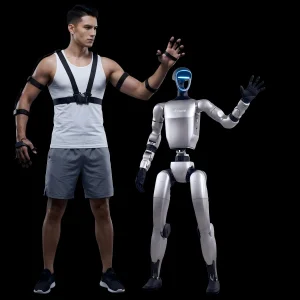
VDSuitMini Half-Body Kinematic System
Explore Half-Body
Schedule Technical Biomechanics Consultation
Book Live Demo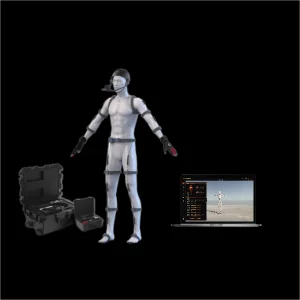
DreamsCap X1 Integrated Full-Performance Suite
Inspect Suite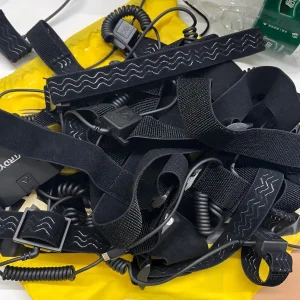
High-Tension Biomechanical Fixation Harnesses
View Harnesses
Custom 3D Biomechanical Avatar Reconstruction
Build Avatar
High-Fidelity Virtual Film & Previs Production Tools
Explore Previs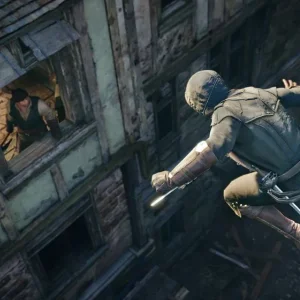
Real-Time Athletic Simulation Game Dev Pipelines
Explore Gaming
Humanoid Teleoperation & Kinetic Retargeting
Deploy RobotsArchitect Your Biomechanics Infrastructure with Virdyn
Whether configuring a 12-camera hybrid optical-inertial biomechanics laboratory or equipping a traveling premier league athletic squad with 30 wearable sensor kits, our solutions architecture team provides direct engineering consultation.
Initiate a Technical Feasibility & Hardware Evaluation Review
Connect directly with Virdyn senior biomechanical hardware engineers in Guangzhou. Receive full technical whitepapers, SDK integration manuals (C++, Python, Unity, Unreal, ROS 2), and verified anatomical validation benchmark sets tailored to your research or institutional requirements.