Core Motion & Facial Capture Hardware Lineup
Explore Virdyn's unified motion tracking solutions engineered for real-time synchronization with Android facial capture pipelines, humanoid robotics, and full-performance virtual production.
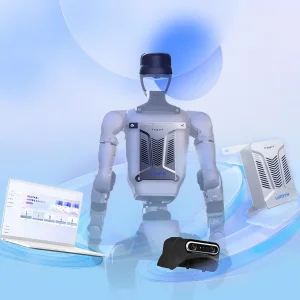
Design AI LingSi System | Robotic Intelligent Creation Platform & Intelligent Voice Interaction Planning, Solution
Explore Solution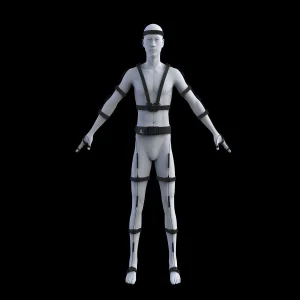
Design Virdyn VDSuit Full for Full Body Function Inertia Motion Capture Suit Planning, Solution
Explore Solution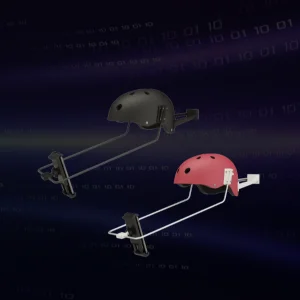
Best Virdyn VDFace Capture System for Real Time Facial Capture with Face Capture Helmet Planning, Solution
Explore Solution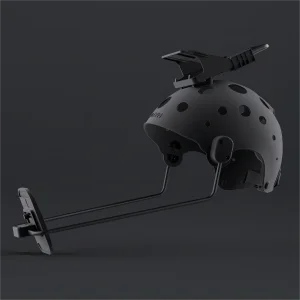
Best Virdyn VDFace Pro Capture System for Real Time Facial Capture with Face Capture Helmet Planning, Solution
Explore Solution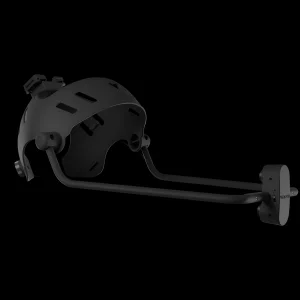
Design AH Double Camera-Based Face Capture Helmet With HD 1080p Embedded RGB Camera Planning, Solution
Explore Solution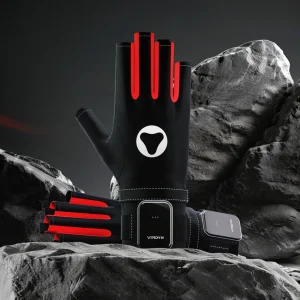
Best Virdyn mHand Pro an Inertia Motion Capture Gloves for Virtual Reality Planning, Solution
Explore Solution
Design Virdyn VDMocap Studio Plus Motion Capture Software System for VDSuit Full Planning, Solution
Explore Solution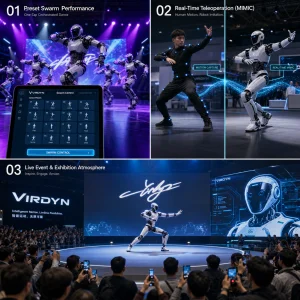
Best Virdyn Humanoid Robot Live Event Performance Solution for Robot Dance&Teleoperation Planning, Solution
Explore SolutionHigh-Precision Android Facial Motion Capture Engine
Real-time facial motion capture has transitioned from proprietary iOS TrueDepth dependencies to enterprise-grade, edge-computed Android architectures. By coupling high-speed RGB sensors, hardware NPU acceleration, and standardized biometric blendshapes, modern studios achieve unprecedented capture freedom.
Android Camera2 & NDK Pipeline
Bypassing standard high-overhead Java camera drivers, our planning architecture binds directly to the native Android NDK via Camera2 API. Utilizing asynchronous zero-copy surface allocators (AHardwareBuffer) ensures ultra-stable 60fps YUV420 image ingest with locked exposure, auto-white-balance pinning, and deterministic timing.
- Fixed-frame rate HAL3 execution with manual shutter controls
- Zero-copy GPU surface memory sharing to avoid IPC bottlenecks
- Direct thermal throttling mitigation via dynamic core affinity pinning
NNAPI / Snapdragon NPU Acceleration
Facial keypoint extraction relies on a custom-quantized INT8/FP16 transformer architecture mapped onto modern mobile neural processors (Qualcomm Hexagon, MediaTek APU). Extracting dense 468/478 3D facial topology occurs locally in under 6 milliseconds, guaranteeing zero private biometric leakage to cloud relays.
- Dedicated regression of gaze vectors and high-precision iris tracking
- Sub-millimeter micro-expression sensitivity around lip corners and nasolabial folds
- Dynamic model pruning ensuring sustained performance on mid-tier Android silicon
Sub-Millisecond UDP & VMC Streaming
To power broadcast and virtual production pipelines, the solver converts 3D vertex displacements into 52 standardized ARKit blendshapes and head rotation quaternions. Output packets are serialized into binary UDP, OSC, or VMC (Virtual Motion Capture) datagrams compatible with Unreal Live Link, Unity, Blender, and Maya.
- Native Wi-Fi 6 / 6E and USB-OTG tethered Gigabit networking modes
- NTP / PTP frame-accurate timecode synchronization for multi-actor shoots
- Automatic network jitter buffer with Kalman interpolation filter
System Engineering Insight: Transitioning facial motion capture to Android is not merely a cost-reduction strategy; it enables deep hardware customization. By deploying customized Android runtimes on dedicated head-mounted compute units (HMCs), studios bypass iOS thermal shutdown thresholds and restrictive battery throttling, unlocking uninterrupted 8-hour live production shifts.
Technical Roadmap & Future Outlook: Facial Mocap Android
The convergence of spatial computing, on-device generative AI, and neuromorphic sensing is redefining the Android mobile capture landscape. Our R&D trajectory charts continuous technological evolution through 2028.
| Phase / Horizon | Core Technology Milestone | Algorithmic Breakthrough | Pipeline & Ecosystem Integration | Production Impact |
|---|---|---|---|---|
| Phase 1: Current Baseline (2025) | Edge NPU-Accelerated RGB Landmark Extraction | 478-Point Metric 3D Topology + ARKit FACS Regression | Native Unreal Live Link, Unity XR, UDP/VMC Streaming | Replaces dedicated iOS rigs with standard Android mobile hardware. |
| Phase 2: Hybrid Multimodal (2025 - 2026) | Audio-to-Face & Vision Multi-Sensor Fusion | Joint Acoustic-Visual Transformer (AV-Transformer) | Bi-directional DSP inference; zero occluded-phoneme error | Eliminates microphone pops and chin-rest visual occlusion artifacts. |
| Phase 3: Spatial Radiance (2026 - 2027) | On-Device 3D Gaussian Splatting (3DGS) Avatars | Dynamic Neural Radiance Deformation on Vulkan Compute | Photorealistic real-time neural avatar streaming at sub-20ms | Enables cinematic-grade digital human performance without cloud GPU servers. |
| Phase 4: Neuromorphic Vision (2027 - 2028+) | Event-Based Asynchronous Sensor Integration | Continuous-time Spiking Neural Networks (SNNs) | 10,000 Hz micro-saccade and tremor tracking with micro-watt power | Total elimination of motion blur, zero rolling shutter, microsecond fidelity. |
Multimodal Audio-Visual Fusion
Pure optical tracking suffers when actors speak rapidly, breathe heavily, or experience physical microphone obstruction. Next-generation Android solutions combine real-time acoustic phoneme analysis with vision models, cross-validating occluded visemes (such as /m/, /p/, /b/) to generate anatomically flawless lip-sync data even in extreme lighting.
Zero-Shot User Dynamic Calibration
Traditional capture workflows require cumbersome 10-step neutral-expression calibrations. Future software updates leverage self-supervised latent autoencoders on Android devices, dynamically building an idiosyncratic facial biomechanical profile within 3 seconds of natural speech, totally removing pre-production studio downtime.
Vulkan Compute & 3DGS Rendering
Moving beyond discrete blendshape curves, mobile Android platforms will directly deform high-density 3D Gaussian Splatting facial representations on-chip. Digital twin actors will be streamed with photorealistic skin subsurface scattering, dynamic wrinkles, and pupil dilatation straight to XR headsets.
Macro Industry Solutions & System Integration
Facial Mocap Android architectures empower cross-vertical enterprises to deploy synchronized, scalable, and cost-effective digital character pipelines without vendor lock-in or massive hardware overhead.
Synchronized Full-Performance Capture Stacks
For large-scale video game cinematic production, facial expressiveness must align tick-for-tick with full-body biomechanics and finger dexterity. By mounting customized lightweight Android capture units directly to the Virdyn VDFace Pro helmet and pairing them with the VDSuit Full and mHand Pro gloves, animation directors record body, hand, and facial nuances in single takes.
- Simultaneous timecode binding across skeletal IMU and facial blendshape streams
- Direct FBX and BVH multi-track synchronization in MotionBuilder and Maya
- Elimination of 70% cleanup labor by capturing micro-expressions on set
24/7 E-Commerce & Broadcast Room Operations
Virtual influencer agencies and VTuber organizations operating daily continuous 12-hour live streams demand absolute hardware resilience. Dedicated iOS hardware frequently suffers from thermal downclocking and swollen lithium cells under continuous high-resolution camera loads. Our enterprise Android planning integrates external active cooling and bypass power delivery.
- Low-overhead native streaming directly into Warudo, VRChat OSC, and OBS
- Sub-20ms motion-to-broadcast latency for instantaneous viewer interaction
- Cost-effective multi-room deployment enabling rapid scaling across talent rosters
Robot Teleoperation & Affective Training Datasets
Humanoid robotics (such as the Virdyn LingSi Platform) requires high-density human behavioral datasets to train multimodal affective models. Android facial mocap tracks human facial expressions, sentiment signals, and attention vectors, streaming normalized emotion states to robotic actuators and synthetic dataset generation pipelines.
- Real-time teleoperation of expressive humanoid robotic heads and animatronics
- Synthetic data generation for training embodied vision-language-action (VLA) models
- Seamless integration with ROS / ROS2 robotics middleware via lightweight C++ nodes
Neurological & Motor Rehabilitation Analysis
In medical biomechanics and psychiatric evaluation, sub-millimeter facial symmetry tracking provides objective telemetry for stroke recovery, Parkinson's tremor profiling, and Bell's palsy assessment. Android-based portable rigs allow clinicians to record diagnostic metrics in outpatient clinics without capital-intensive laboratory optical gantries.
- Standardized metric displacement analytics paired with VDAnalyze evaluation
- HIPAA-compliant, localized cryptographic storage of biometric kinematic curves
- Objective kinetic progress reports for post-operative motor rehabilitation
Localization Support & Compliance Guarantees
Enterprise deployments must navigate stringent biometric privacy regulations, Android OS architectural restrictions, and cross-border data protection policies. Our architecture guarantees security by design.
Zero Biometric Ingestion & GDPR Art. 9
Unlike consumer apps that stream raw actor video feeds across external networks, our Android pipeline processes all camera buffers strictly within volatile device RAM. Frame buffers are flushed instantaneously post-inference. Only anonymous numerical float vectors (the 52 blendshape curves) leave the client, fulfilling GDPR, CCPA, and CPRA biometric compliance mandates.
Android Scoped Storage & Camera Governance
Architected for Android 14 and beyond, our SDK strictly complies with Scoped Storage, fine-grained foreground camera execution permissions, and SELinux isolation policies. Studios maintain complete administrative governance over network sockets, ensuring no unauthorized telemetry or outbound cloud pings occur during closed NDA film productions.
Multilingual Telemetry & Multi-Region SDKs
Our Android engineering packages provide localized runtime documentation, sample code bases, and interface localizations across English, Japanese, Korean, German, and Chinese. Technical engineering teams receive direct Tier-3 API developer support, including C++ header files, pre-compiled Android AAR packages, and native Unreal Engine LiveLink bridging source.
China Factory 4.0: Supply Chain Resilience & Efficiency
Behind high-performance facial capture solutions lies an agile, state-of-the-art hardware manufacturing infrastructure located in Guangzhou, Guangdong. Our Smart Factory 4.0 ecosystem guarantees unmatched rapid-prototyping, industrial precision, and supply chain continuity.
Aerospace Carbon-Fiber & Ergonomics
Facial capture helmets demand featherweight balance to avoid actor neck fatigue. Utilizing 5-axis CNC machining, structural carbon-fiber layups, and dual-axis counterweighted Android device brackets, our helmets deliver rigid optical stability under rapid head turns without camera flex or micro-vibrations.
Automated Optical Rig Calibration
Every face capture bracket assembly undergoes robotic end-of-line optical testing. Multi-angle laser collimators calibrate camera standoff distances, nodal offsets, and field-of-view alignments, ensuring that deployed Android devices snap into an exact pre-calibrated geometric coordinate space every single shoot.
Agile OEM/ODM Co-Development
Leveraging deep industrial clusters in the Pearl River Delta, Virdyn compresses iteration cycles from concept CAD models to production-grade functional prototypes into less than 14 business days. Enterprise customers benefit from custom mechanical mounts, custom sensor housings, and volume OEM branding.
Global Enterprise Procurement & RFP Criteria
A rigorous decision matrix for enterprise procurement officers, technical directors, and studio operations heads evaluating mobile facial motion capture infrastructure.
Total Cost of Ownership (TCO)
Legacy systems demand expensive iOS mobile hardware, recurring closed-ecosystem seat licenses, and proprietary helmet mounting brackets. Android-based planning reduces hardware acquisition expenditure by up to 55%, enables hot-swappable enterprise batteries, and eliminates annual seat licensing fees for client tracking nodes.
Technical RFP Evaluation Metrics
Key benchmark parameters to include in supplier tenders:
- Tracking drift under lighting shifts: 50 lux to 2000 lux resilience
- Continuous operational runtime before thermal downclocking: > 6 hours
- Round-trip pipeline latency over standard 5GHz Wi-Fi: < 20ms
- Direct integration with Unreal Live Link, Blender, and Unity
Global SLAs & Enterprise Logistics
Virdyn backs global studio rollouts with structured Service Level Agreements (SLAs), guaranteed 24-hour engineering responses, expedited international replacement module dispatch, and direct remote engineering onboarding to ensure seamless launch across production soundstages.
Frequently Asked Technical Questions
In-depth engineering answers addressing system architecture, hardware compatibility, latency optimization, and production pipeline deployment.
How does Android-based facial mocap achieve accuracy comparable to iOS TrueDepth systems?
What network protocols are supported for streaming facial tracking data into DCC tools?
How does the system mitigate Android hardware fragmentation and varying camera drivers?
How do you overcome mobile thermal throttling during continuous multi-hour studio sessions?
Can the Android facial mocap stream synchronize with VDSuit Full and mHand Pro data?
End-to-End Solutions & Advanced Accessories
Complete your production studio ecosystem with professional accessories, AI training development kits, custom avatar pipelines, and virtual cinematography tools.
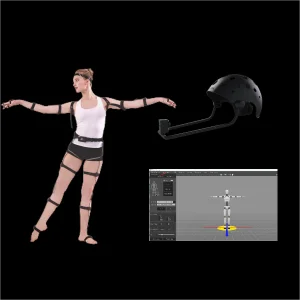
Design VDCap Full Performance Capture Entry-Level Motion Capture Kits for Beginners and Hobbyist Planning, Solution
Explore Solution
Design Motion Capture Technology to Help the Development of Creative Advertising with Realistic Effects Planning, Solution
Explore Solution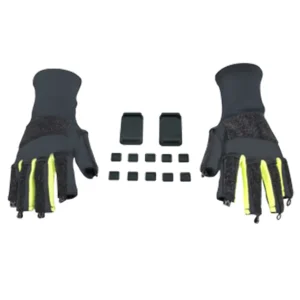
Best Inertia Motion Capture Fingers Capture Accessories Elastic Lycra Fabric Gloves for VDSuit Full(Without Sensors) Planning, Solution
Explore Solution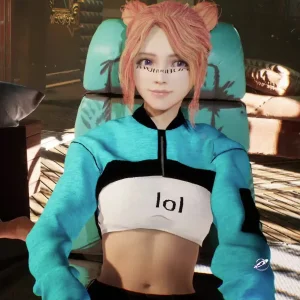
Best Virtual Human Live Streaming Rapidly Gaining Popularity: Motion Capture Suit Becomes a Key Tool Planning, Solution
Explore Solution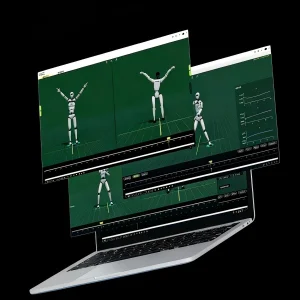
Design VDTraining: One-Stop Robot Reinforcement & Imitation Learning Platform Planning, Solution
Explore Solution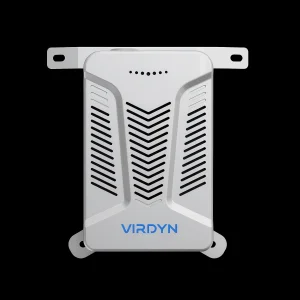
Best Humanoid Robot Intelligent Voice Interaction Development Kit Planning, Solution
Explore Solution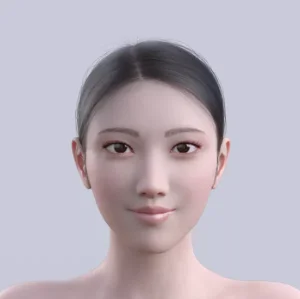
Best Customize Your 3D Virtual Avatar - Personalized High-Quality and Fast Delivery | 3D Custom Avatar Services Planning, Solution
Explore Solution