
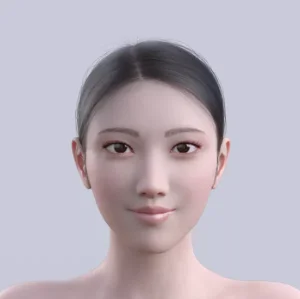
Best Customize Your 3D Virtual Avatar - Personalized High-Quality and Fast Delivery
View Solution
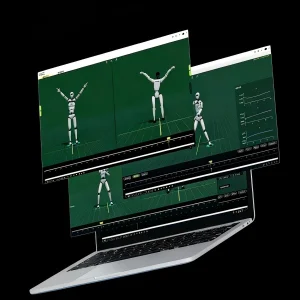
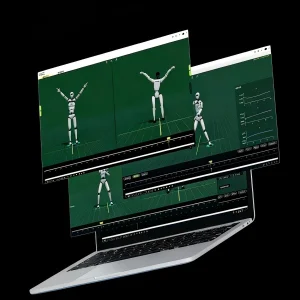
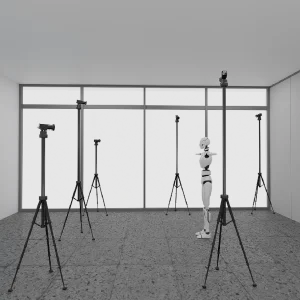
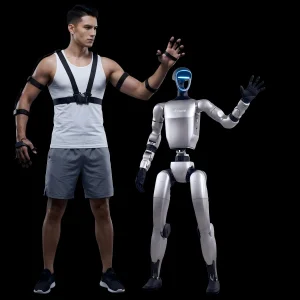
Explore Virdyn's turnkey motion capture infrastructure, spanning full-body inertial suits, dexterous teleoperation gloves, and high-fidelity facial capture helmets designed for synchronized multi-modal data streams.

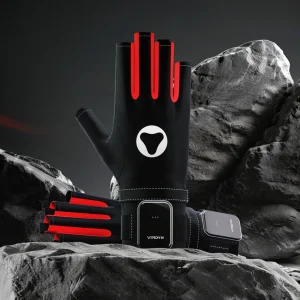
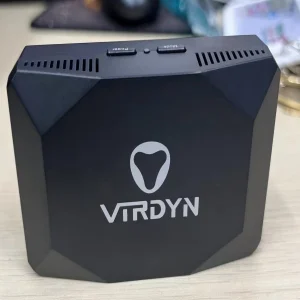
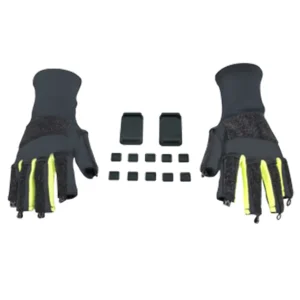
From visual effects studios to spatial computing hubs and embodied AI labs, the demand for deterministic, marker-dense facial expression reconstruction has outgrown traditional desktop and optical post-processing workflows.
Traditional HMC systems relied on post-process tracking matrices requiring 40+ man-hours per shot. Modern virtual production stages demand sub-20ms latency live streaming to Unreal Engine 5 MetaHumans directly from the physical stage actor.
Next-gen robotics initiatives, such as humanoid conversational agents, utilize high-frequency facial motion capture helmets to build generative micro-expression libraries and enable zero-shot teleoperational imitation learning.
Commercial live broadcasting requires all-day wearability, high thermal dissipation, and magnetic stability. The elimination of rigid, heavy counterweights via ultra-light carbon-fiber rigging is now an industry mandate.
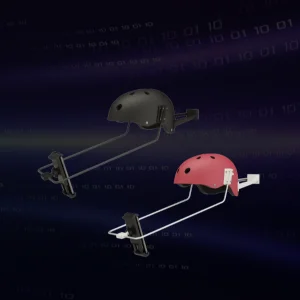
Planning and manufacturing an enterprise facial motion capture helmet demands a balance between cranial biomechanics, camera stabilization dynamics, and low-latency digital signal processing.
| Architecture Subsystem | Industrial Requirement | Virdyn VDFace Engineering Standard | System Impact |
|---|---|---|---|
| Chassis Structure | Toray Carbon Fiber Composite | Multi-axis adjustable boom with 3K twill carbon fiber | Eliminates micro-jitter and rotational drift under dynamic performer stunts |
| Optical Sensor Module | Monochrome / RGB Global Shutter | High dynamic range, zero rolling distortion sensor (1080p@60fps or 720p@120fps) | Crisp boundary tracking on rapid phonemes and ocular micro-saccades |
| Illumination System | Infrared (IR 850nm/940nm) or Ring LED | Uniform diffuse dual micro-diffusers with PWM flicker-free regulation | Maintains optical landmark segmentation in pitch-black or high-lux stages |
| Telemetry & Transmission | Wi-Fi 6 / UWB Wireless or USB-C tether | Lossless low-latency packet streaming over dedicated 5.8GHz / USB-C | Zero visual artifacting, compatible with full-body wireless IMU pipeline |
| Software Retargeting | FACS-compliant blendshape output | DreamsCap / VDMocap Studio direct live mapping (UE5, Maya, Unity) | Direct driving of MetaHuman rig with neural landmark correction |
How modern studios, research institutes, and technology conglomerates synthesize head-mounted capture hardware into coherent production pipelines.
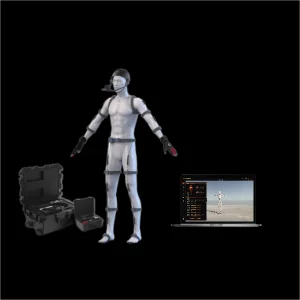
Simultaneous recording of skeletal IMU nodes (VDSuit Full), high-degree-of-freedom finger articulation (mHand Pro), and facial strain geometry (VDFace). Data streams are unified via SMPTE timecode across Unreal Engine, MotionBuilder, and Maya, cutting post-production clean-up by 70%.
In teleoperation research, humanoid operators require bidirectional sensory feedback. The combination of VDEgo head-mounted field cameras and facial capture helmets enables simultaneous tracking of user attention vectors, oral commands, and outward manipulation workspaces.
Tracking neurological disorders, such as facial paralysis recovery and speech motor rehabilitation, utilizing sub-millimeter optical landmark tracking. Clinical setups deploy Virdyn's ergonomic head-rigs to evaluate kinematic recovery through quantitative muscle vector deviation.
The progression of head-mounted tracking architectures toward multimodal neural radiance fields, edge AI vision processors, and non-invasive biomechanical sensing.
Integrate facial helmet telemetry with market-tested full-body inertial suits, optical vision rigs, and robotics simulation datasets.



Detailed insights on rigging stability, engine compatibility, synchronization standards, and calibration practices.