
Featured Studio Mocap & Robotics Intelligence Systems
Explore industrial-grade motion tracking suites, machine learning datasets, and teleoperation setups deployed across international studios and research institutions.
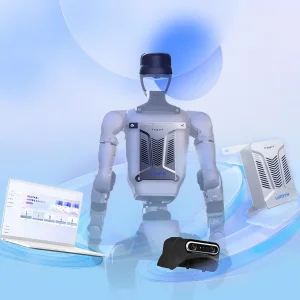
Design AI LingSi System | Robotic Intelligent Creation Platform & Intelligent Voice Interaction Planning, Solution
Explore Solution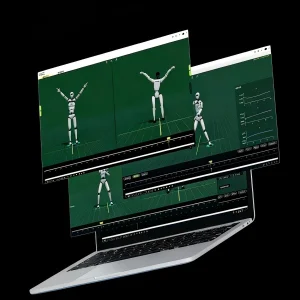
Design Ready-to-Use Robot Motion Datasets | Virdyn Planning, Solution
Explore Solution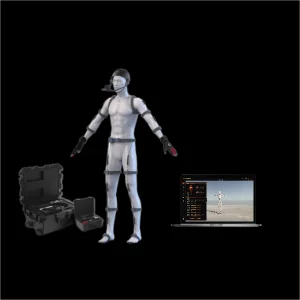
Design DreamsCap X1 Full-Body, Hand & Face Motion Capture for Humanoid Robot Data Collection & Teleoperation Planning, Solution
Explore Solution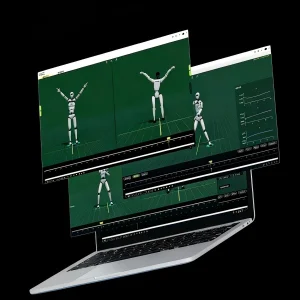
Design VDTraining: One-Stop Robot Reinforcement & Imitation Learning Platform Planning, Solution
Explore Solution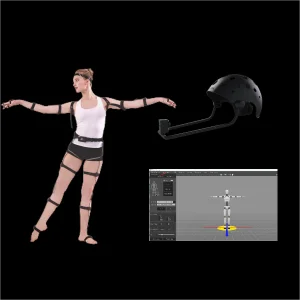
Design VDCap Full Performance Capture Entry-Level Motion Capture Kits for Beginners and Hobbyist Planning, Solution
Explore Solution
Design Motion Capture Provides Advanced Technology Tools for Virtual Film Production Planning, Solution
Explore Solution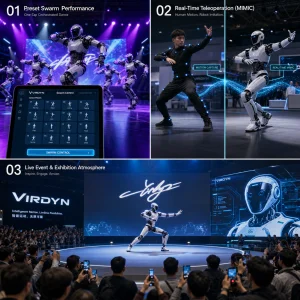
Best Virdyn Humanoid Robot Live Event Performance Solution for Robot ce&Teleoperation Planning, Solution
Explore Solution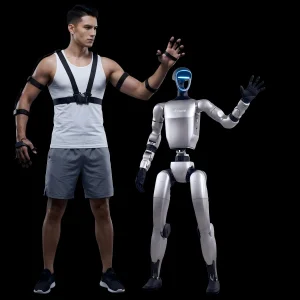
Best VDSuitMini Half-Body Mocap System | Robot Data Collection & Teleoperation | Free Software Planning, Solution
Explore SolutionThe Global Studio Motion Capture Landscape: The Paradigm Shift
From Hollywood VFX volume stages to cross-industry embodied robotics labs: how motion capture hardware transitioned from a niche cinematic luxury into core enterprise spatial infrastructure.
Cinematic & Virtual Production
Legacy film pipelines relied on multi-week marker cleanups. Modern virtual studios employ in-camera VFX (ICVFX) powered by Unreal Engine 5, where full-body IMU tracking and markerless camera tracking synchronize digital environments with physical actors at sub-15ms latencies, eliminating green-screen post-production delays.
Embodied AI & Humanoid Robotics
The explosion of autonomous humanoid robotics demands immense volumes of high-fidelity human demonstration data. High-degree-of-freedom mocap suits and multi-node tactile gloves serve as direct teleoperation interfaces and foundational data collectors for imitation learning algorithms (BC and Diffusion Policy).
Virtual Human & VTuber Broadcasting
With interactive live-commerce and virtual streamers (VTubers) generating billions in consumer engagement across Asia, North America, and Europe, studios require lightweight, turnkey mocap rigs that calibrate in under 3 minutes, run stably for 8-hour daily livestreams, and prevent magnetic interference drift.
China Factory Advantage: High-Performance MEMS Engineering & Cost Efficiency
How localized hardware-firmware co-design in the Greater Bay Area provides unprecedented price-to-performance ratios and rapid manufacturing cycles for international studios.
In the previous decade, establishing a motion capture studio required capital allocations upwards of $150,000 to $500,000 for legacy optical camera rigs and proprietary software licensing. Virdyn, rooted in Guangzhou's advanced electronics and industrial manufacturing cluster, has systematically dismantled this barrier through vertical hardware-software integration.
Direct Component Sourcing & Calibration
Leveraging proximity to world-class precision MEMS foundries, Virdyn integrates custom 9-axis sensor modules featuring proprietary Kalman filtering chips. Every sensor cluster undergoes automated multi-axis robotic turntable calibration to guarantee repeatable gyroscopic angular velocity and linear accelerometer fidelity.
Rapid Iteration Cycles (Hardware-Firmware)
While Western manufacturers often operate on 18 to 24-month hardware revision lifecycles, our localized manufacturing infrastructure permits 6-month iteration loops. Feedback from Tier-1 game studios and robotics institutes is coded into firmware and deployed directly into assembly line recalibrations within weeks.
Democratized Studio Economics (TCO)
By avoiding external subcontracting tiers and exorbitant distributor markups, our hardware provides an unmatched Total Cost of Ownership (TCO). Studios acquire full-performance motion capture capabilities at 25% to 30% of legacy costs, with zero recurring per-seat workstation licensing fees.
Studio Motion Capture System Architecture: Planning from Floor to Engine
System architects must look beyond individual sensor nodes. Building an enterprise studio requires holistic RF environment management, synchronized visual retargeting, and pipeline integration.
1. RF Spectrum & Anti-Interference Architecture
Modern studio environments are saturated with 2.4GHz and 5GHz Wi-Fi networks, Bluetooth peripherals, and structural steel reinforcement. Virdyn's VDSuit systems utilize custom 2.4GHz proprietary frequency-hopping spread spectrum (FHSS) telemetry paired with advanced magnetic immunity algorithms that prevent bone twist and foot-sliding when performers are near reinforced concrete walls.
2. Synchronized Full-Performance Solving
Capturing the body without expressive fingers and subtle facial micro-expressions results in the uncanny valley. A true turnkey solution combines: (a) Body skeletal kinematics via VDSuit Full, (b) 16-sensor multi-segment finger telemetry through mHand Pro data gloves, and (c) 60fps true-depth RGB/IR head-mounted camera helmets (VDFace Pro) into a single unified timecoded datastream.
3. DCC Live-Link & Biomechanical Retargeting
Raw sensor rotations mean nothing without accurate real-time skeletal solving. Our VDMocap Studio Plus software applies real-time inverse kinematics (IK), dynamic ground plane contact clamping, and native plugins for Unreal Engine (LiveLink), Unity, Maya, and MotionBuilder, enabling directors to visualize fully textured 3D avatars instantly in camera.
| Architecture Consideration | Inertial Studio (VDSuit / mHand) | Optical Marker Array (Cameras) | Markerless AI Vision (YanDong) |
|---|---|---|---|
| Spatial Footprint & Volume | Unlimited (Indoor / Outdoor / Enclosed Sets) | Fixed calibrated volume (typically 6x6m to 12x12m) | Camera FOV dependent (15m² to 50m²) |
| Occlusion Vulnerability | Zero occlusion (Wearable IMU nodes) | High vulnerability when markers are blocked | Moderate vulnerability under overlap/props |
| Calibration Duration | < 60 seconds (Standard T-Pose / Walk) | 30-60 minutes (Wand waving, ground alignment) | < 10 seconds (Automatic body detection) |
| Deployment Latency | < 12ms end-to-end stream | 15ms to 30ms processing overhead | 30ms to 60ms neural inference latency |
| Ideal Enterprise Application | Live VTubing, Game Stunts, Robot Imitation Learning | Biomechanics Medical Research, Hollywood VFX | Digital Retail, Rapid Prototyping, Fitness Tech |
Emerging Trends & Enterprise Procurement Evaluation Matrix
Key industry shifts defining the 2025–2030 horizon and the empirical technical parameters enterprise procurement officers must scrutinize when evaluating suppliers.
Multi-Actor Cloud Synchronization
Next-generation studios require multi-actor synchronization. Systems must seamlessly ingest 4 to 8 actors simultaneously over unified timecode genlock without packet dropouts or frequency crosstalk.
Synthetic Data for AI Training
Mocap is increasingly leveraged not by animators, but by AI research teams generating petabytes of synthetic spatial demonstration data to pre-train humanoid foundation models (Vision-Language-Action models).
Haptic Robotic Teleoperation
Bilateral haptic feedback integrated into dexterous mocap gloves allows operators thousands of miles away to teleoperate robotic hands, experiencing real-time tactile force resistance during hazardous operations.
Hybrid Sensor Convergence
The strict divide between optical and inertial systems is dissolving. High-end pipelines integrate IMU full-body suits with 2-4 auxiliary reference cameras to correct long-term positional drift permanently.
Global Enterprise Procurement Audit Checklist (RFP Baseline)
When selecting an enterprise motion capture partner, procurement teams, academic department chairs, and CTOs should insist on verifying these eight technical capabilities:
- Raw Data Access: Availability of unconstrained quaternions, linear acceleration, and raw angular velocities via open C++ / Python SDKs.
- Transmission Latency: Verified sub-15ms wireless latency over UDP/TCP socket streams under multi-device studio load.
- Magnetic Immunity: In-firmware disturbance rejection algorithms tested in environments with structural iron and high EMI.
- Robotic Stack Compatibility: Native ROS / ROS2 wrapper support for forward kinematics mapping onto URDF humanoid skeletons.
- Ergonomics & Washability: Breathable, antibacterial lycra suits with fully detachable modular harnesses for multi-user hygienic use.
- Continuous Battery Autonomy: Minimum of 4 to 6 hours continuous runtime per module with swappable power banks.
- Live Engine Plugins: Maintenance-guaranteed LiveLink plugins for current versions of Unreal Engine 5 and Unity LTS.
- After-Sales SLA & Global Support: Express sensor node replacement dispatch and direct engineer-to-engineer technical escalation within 24 hours.
Comprehensive Motion Capture & Virtual Human Solutions
From custom photorealistic 3D virtual avatars to facial capture rigs and professional software suites engineered for high-throughput studio pipelines.
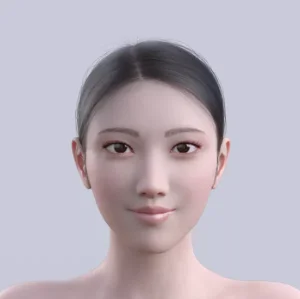
Best Customize Your 3D Virtual Avatar - Personalized High-Quality and Fast Delivery | 3D Custom Avatar Services Planning, Solution
Explore Solution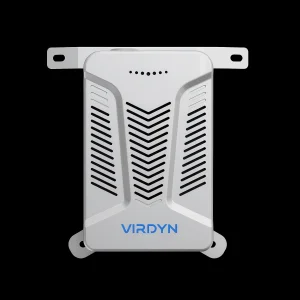
Best Humanoid Robot Intelligent Voice Interaction Development Kit Planning, Solution
Explore Solution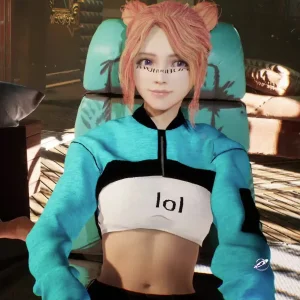
Best Virtual Human Live Streaming Rapidly Gaining Popularity: Motion Capture Suit Becomes a Key Tool Planning, Solution
Explore Solution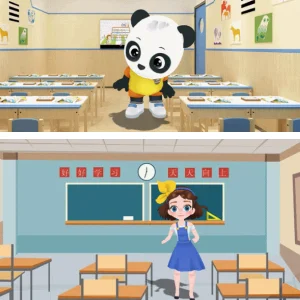
Best Virtual Live Technology Empowerment Makes Online Education and Learning As Fun As Watching Cartoons Planning, Solution
Explore Solution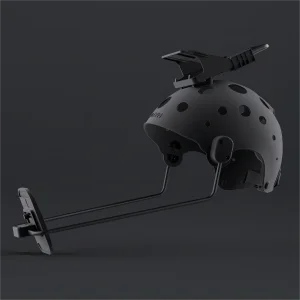
Best Virdyn VDFace Pro Capture System for Real Time Facial Capture with Face Capture Helmet Planning, Solution
Explore Solution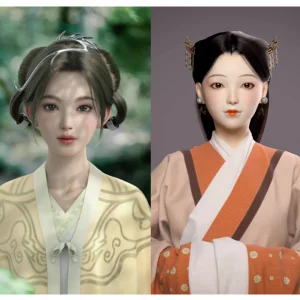
Best How Do Brands Use Virtual Spokesman to Tell Good Stories: Motion Capture Technology Empowers Brand Propagation Planning, Solution
Explore Solution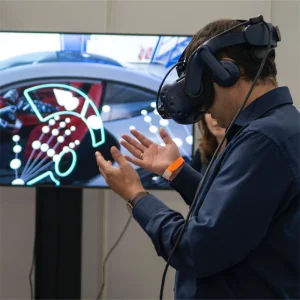
Design Book a Demo for VDSuit Full or mHand Pro Planning, Solution
Explore Solution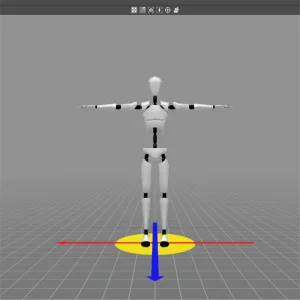
Design Virdyn VDMocap Studio Plus Motion Capture Software System for VDSuit Full Planning, Solution
Explore SolutionFrequently Asked Questions: Studio Engineering & Procurement
Direct technical answers addressing system setup, engine retargeting, robotic teleoperation, and global warranty assurance.