Integrated Mocap Hardware & Enterprise Solutions
Explore our high-precision wearable architectures, tracking suits, and software ecosystems tailored for VRChat and live broadcast pipelines.
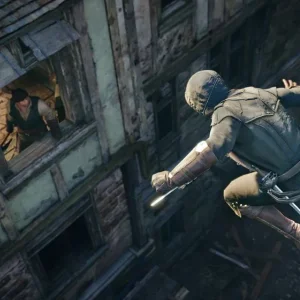

Evolution of Full-Body Tracking in Immersive Social Metaverse
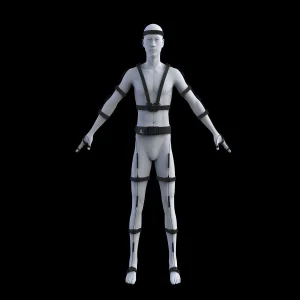
The technical shift from optical baseline constraints to distributed inertial measurement unit (IMU) architectures represents a foundational leap for live performers, VTubers, and corporate activations inside VRChat.
From Lighthouse to Autonomous IMU
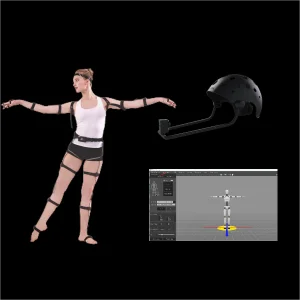
Traditional optical basestations require strictly bounded physical sightlines and undergo severe occlusion when users sit, lay down, or interact behind physical obstacles. Wearable inertial suits remove line-of-sight dependency entirely, calculating real-time joint angular velocity and orientation via embedded MEMS sensors directly into VRChat OSC protocol.
Zero-Drift Sensor Fusion
The primary historical bottleneck of inertial suits has been positional drift and magnetic disturbance. Modern sensor fusion pipelines implement 9-axis AHRS (Attitude and Heading Reference Systems) bolstered by continuous dynamic ground-contact IK (Inverse Kinematics) solving. This retains rooted feet without the notorious "skating" artifact during hours of live broadcast.
Unified Full-Performance Streaming
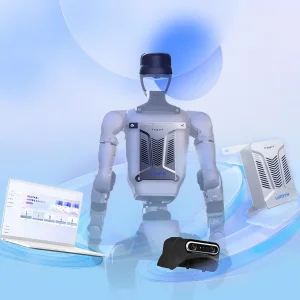
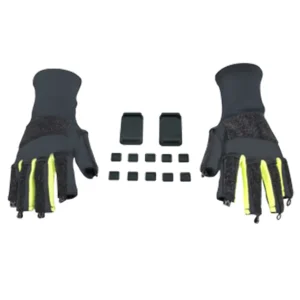
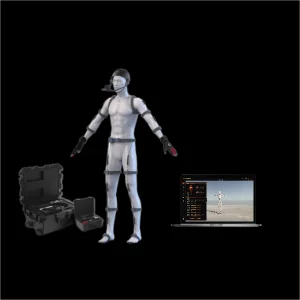
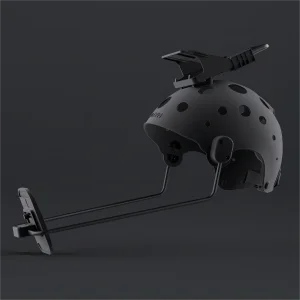
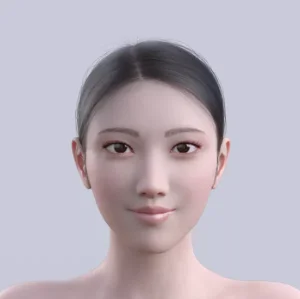
VRChat is no longer restricted to rigid skeletal armatures. By pairing VDSuit Full inertial hardware with high-precision mHand Pro finger tracking and helmet-mounted VDFace pipelines, multi-channel streams sync into single-actor avatars with zero perceptible latency across global instances.
Motion Capture Suit vs Optical Trackers in VRChat
A granular architectural comparison between multi-sensor IMU suits and external optoelectronic camera/tracker setups.
| Evaluation Parameter | VDSuit Full Inertial Suit (Virdyn) | Standalone SteamVR Trackers (Lighthouse) | Vision-Based Markerless AI Webcams |
|---|---|---|---|
| Line-of-Sight Dependency | Zero occlusion. Works under clothes, blankets, and furniture. | Requires unobstructed line of sight to base stations. | Strict frontal camera visibility; fails on turning or occluded limbs. |
| Bone Degree-of-Freedom (DoF) | Full 27-node articulation (Spine, Pelvis, Clavicles, Limbs, Fingers). | Limited to tracked anchor points (Typically 3 to 7 discrete points). | Approximated skeleton using deep learning estimation. |
| Setup Time & Calibration | < 2 minutes: Single-pose calibration (T-Pose / A-Pose). | Requires room setup, lighthouse synching, and tracker pairing. | Variable: Camera framing, lighting adjustments, latency tuning. |
| VRChat Hand Tracking Precision | High: Multi-node finger articulation with sub-millimeter fidelity. | Requires third-party controller bindings or optical add-ons. | Low: Finger self-occlusion causes severe jitter. |
| Compute Overhead | Extremely low: Pre-filtered telemetry offloaded to onboard MCU. | Moderate: Valve SteamVR driver management. | Extremely High: Neural net vision inference consumes GPU load. |
Global Enterprise Procurement & Industrial Deployments
Expanding VRChat and real-time avatar tracking from creative social spaces into tier-1 enterprise architectures, teleoperation networks, and synthetic training pipelines.
VTuber Agencies & Live Production
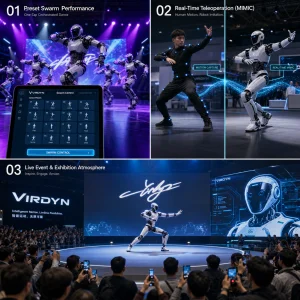
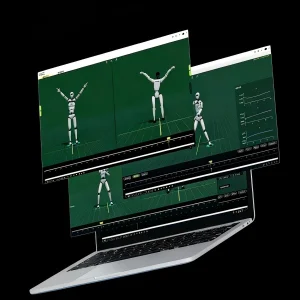
Global entertainment firms demand 24/7 continuous broadcast readiness. Our VRChat enterprise solution eliminates tracker dropout during live concerts, virtual conferences, and e-commerce streams, providing operators with plug-and-play retargeting directly into Unreal Engine, Unity, and Warudo.
Embodied AI & Humanoid Teleoperation
Industrial robotics labs utilize our VDSuit and mHand setups inside simulated VR environments to capture vast quantities of human demonstrator training data. Teleoperating robots via digital twins in VRChat environments accelerates imitation learning models with accurate torque and kinematic data.
Defense, Simulation & Remote Collaboration
Enterprise clients deploy secure, offline-capable inertial arrays for multi-user immersive scenarios. Our systems function inside RF-dense settings, secure cleanrooms, or distributed tactical simulations without external cloud reliance, satisfying mission-critical compliance standards.
Digital Heritage & Academic Laboratories
Higher education institutions purchase Virdyn platforms for sports biomechanics, ergonomic studies, and performance arts digitization. With zero camera footprint, standard classrooms convert into comprehensive volumetric capture studios instantaneously.
End-to-End Implementation, OSC Protocol & Compliance
Robust engineering configurations ensuring sub-millisecond precision, radio frequency certification, and seamless native integration.
Native VRChat OSC Protocol Pipeline
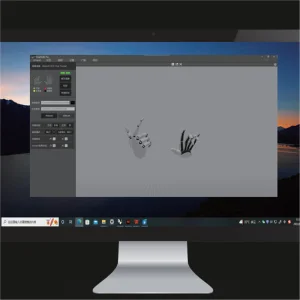
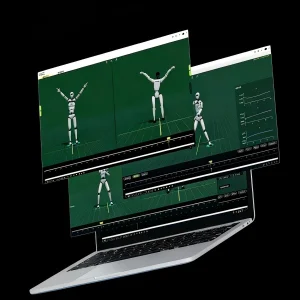
Virdyn's VDMocap Studio incorporates an automated routing interface that broadcasts normalized skeletal transforms directly across UDP port 9000 using Open Sound Control (OSC). This completely bypasses the need for third-party virtual SteamVR drivers, minimizing background compute loads and avoiding compatibility crashes after platform patches.
Ergonomics, Breathability & Fast Wash
Crafted from medical-grade, high-elastic Lycra fabric, the suit balances compressive snugness with long-duration thermal dissipation. Each sensor pocket features isolated strain-relief routing to protect wiring against aggressive movement, and the fabric chassis allows rapid sensor removal for commercial machine sanitation between shifts.
RF Compliance & Global Telecommunications
Operating over dual-band 2.4 GHz and 5.8 GHz proprietary protocols, all Virdyn transmitting hardware is strictly compliant with CE, FCC, RoHS, and TELEC certifications. Frequency-hopping spread-spectrum (FHSS) algorithms prevent interference even in convention centers packed with consumer Wi-Fi devices.
Technical Roadmap: Next-Gen Motion Capture Innovations
Discover how Virdyn is advancing multimodal fusion, neural kinematic reconstruction, and spatial computing compatibility.
Transformer-Based Neural IK Solvers
Future firmware revisions integrate on-edge micro-neural networks designed to infer missing degrees of freedom when extreme biomechanical configurations occur, eliminating foot-sliding and providing human-level fluid animation under high-speed dynamic acrobatics.
Multimodal Optical-Inertial Hybridization
Bridging spatial computing headsets (Apple Vision Pro, Meta Quest 3) with Virdyn inertial suits. By pairing headset 6DoF spatial head anchors with high-frequency IMU joint telemetry, users achieve absolute millimeter positioning alongside complete occlusion-free limb articulation.
Haptic Force-Feedback Integration
Our upcoming generation of data gloves will merge dexterous input tracking with micro-vibrotactile actuators, allowing VRChat users and robotics operators to physically feel digital touch, surface textures, and collision resistance directly through their fingertips.
Frequently Asked Questions: Motion Capture Suit VRChat Planning
Expert answers to the most common architectural and technical deployment questions.
Advanced Teleoperation & Specialized Mocap Suites
Explore comprehensive data collection platforms, dexterous data gloves, and modular tracking components.