Turnkey Infrastructure
Enterprise Motion Capture Platforms & Hardware Suites
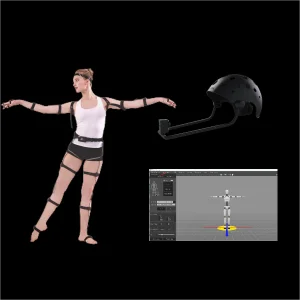
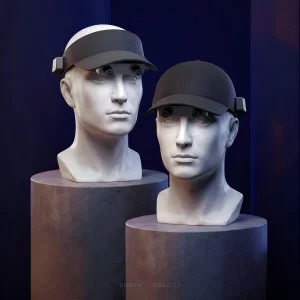
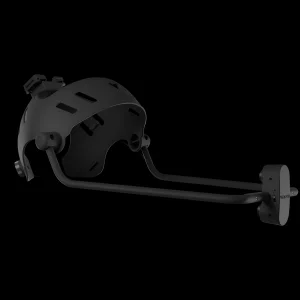
Explore production-grade tracking units, real-time facial helmets, and dexterous robotics telemetry modules engineered to slash total cost of studio ownership.


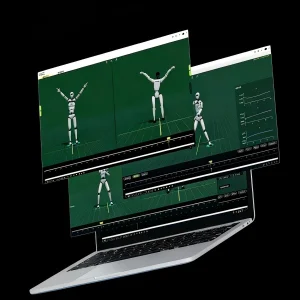
Strategic Cost Engineering
Deconstructing Motion Capture Studio Cost: Beyond the Initial Price Tag
Planning a modern motion capture studio requires a paradigm shift from purely evaluating initial hardware quotes to conducting a multi-variable Total Cost of Ownership (TCO) evaluation.
Facility & Volume Engineering
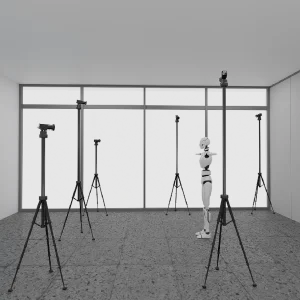
Traditional passive-optical volumes command astronomical spatial footprints—requiring 200+ sq meters of conditioned, truss-mounted square footage. Inertial and hybrid topologies eliminate complex rig installations, unlocking deployment inside standard studio spaces.
Cleaning & Data Pipeline OPEX
The true cost sink in mocap lies in manual keyframe clean-up, occlusion repairs, and trajectory stitching. Deploying IMU-driven fusion arrays with sub-20ms latency removes up to 75% of post-capture tracking point reconciliation labor.
Operational Velocity & Calibrations
Optical arrays demand lengthy wand-waving calibrations, temperature stabilization, and rigid marker placements. Wearable sensor suites allow single-actor, under-three-minute donning and one-click calibration for instantaneous on-air workflows.
65% - 80%
CAPEX Reduction vs Traditional Optical Volumes
< 20 ms
End-to-End Pipeline Latency for Unreal Engine
10+ DCC
Native Engine, Maya & Blender Plugins
300 Hz
Per-Node Inertial Sampling Fidelity
Budget Modeling Matrix
Architecture Cost Trade-Offs: Inertial vs. Markerless vs. Optical Stage
A granular technical comparison outlining setup expenses, real-estate footprints, post-processing burdens, and typical ROI cycles for production directors and studio accountants.
| Evaluation Parameter | Virdyn Inertial Stack (VDSuit / mHand) | Virdyn Markerless Optical (YanDong) | High-End Passive Optical Studio |
|---|---|---|---|
| Initial Infrastructure (CAPEX) | Low ($5,000 – $25,000 for full setup) | Moderate ($15,000 – $40,000) | High ($80,000 – $350,000+) |
| Dedicated Space Overhead | Zero required (operates in office or outdoors) | Medium (15–30 sqm clear viewing angle) | Heavy (Trussing, high-ceiling black room) |
| Occlusion Vulnerability | Immune (direct body kinematics telemetry) | Moderate (mitigated by computer vision) | High (requires manual marker reconstruction) |
| Calibration Duration | 1 – 2 Minutes (Neutral Pose alignment) | Instantaneous or minimal static test | 30 – 60 Minutes (Wand/L-Frame calibration) |
| Post-Production Cleanup Time | Negligible (Clean algorithmic bone solving) | Low to Medium depending on action bounds | High (Marker swapping & dropout stitching) |
| Robotics & Embodied AI Ready | Yes (Direct ROS, retargeting & teleoperation) | Yes (Visual confirmation data streaming) | Rigid (Complex streaming translation) |
Market Intelligence
Global Enterprise Procurement Requirements Across Divergent Sectors
Across North America, Europe, and Asia-Pacific, organizational procurement teams have diversified their technological criteria based on emerging industry demands.
Game Dev & Virtual Production
Indie to AAA video game studios require real-time Unreal Engine 5 Live Link integration, allowing performers to trigger digital assets instantly during previs reviews without render delays.
Embodied AI & Humanoid Robotics
Robotics institutions require high-throughput human demonstration trajectories (egocentric vision + dexterous finger motion) to train deep neural policies for bi-manual manipulation.
VTubers & Live Digital Avatars
Agencies producing multi-hour commercial live broadcasts demand extreme hardware ergonomics, ultra-light thermal fabric, battery hot-swap capabilities, and zero magnetic field drift.
Higher Education & Biomechanics
Universities require turnkey multi-seat lab deployments that allow multiple students to study kinetics, sports analysis, and 3D rigging concurrently on standard desktop workstations.
Global Execution
Enterprise Reliability: Localization, Regulatory Compliance & SLAs
Cross-border hardware procurement demands stringent compliance, dedicated support logistics, and zero operational downtime.
International Certification Standards
All Virdyn commercial capture units meet worldwide electromagnetic compatibility (EMC) and wireless safety protocols including FCC Part 15, CE RED directives, and RoHS hazardous materials standards.
Guaranteed SLA & Support Channels
Global institutional buyers benefit from dedicated enterprise engineering channels, 24-hour SLA ticket resolution, direct video calibration sessions, and expedited hot-swap sensor logistics.
Continuous Software Lifecycle Updates
Purchasing includes zero-royalty lifetime access to core driver updates, retargeting plugins for new Unreal Engine/Unity LTS versions, and perpetual protocol backward compatibility.
Forward Innovation
Motion Capture Technological Roadmap (2026–2030)
Anticipate architectural evolutions in neural rendering, sensor fusion chips, and AI-accelerated spatial tracking to future-proof current equipment investments.
Phase 1: Hybrid IMU-Vision SLAM Integration
Next-generation suits incorporate on-body ultra-wide micro cameras that perform egocentric Visual-Inertial Odometry (VIO), achieving infinite absolute global coordinates without floor drift or external cameras.
Phase 2: Edge-AI Micro-Sensors
Sensor hardware is transitioning toward on-node TinyML compute. Individual tracking chips execute deep positional error compensation locally, lowering wireless bandwidth and increasing multi-actor limits to 20+ simultaneous performers.
Phase 3: Universal Foundation Kinematics
Integration with multi-modal world models and generative kinematics will allow imperfect or high-velocity telemetry (e.g. extreme stunt acrobatics) to auto-resolve joint contact dynamics with physical realism in engine.
Knowledge Base
Enterprise Motion Capture Cost & Planning FAQ
Real-world inquiries from chief technology officers, lead animators, and university lab directors answered with uncompromised engineering specifics.
How do environmental magnetic fields impact the cost efficiency of inertial mocap suits?
Historically, magnetic interference from steel girders or studio rebar caused IMU heading drift, forcing costly data cleanup sessions. Modern systems like the VDSuit Full employ proprietary multi-sensor data fusion algorithms that cross-check accelerometer and gyroscope vectors against biomechanical joint limits, actively suppressing magnetometer anomalies. This allows deployment in everyday office setups and industrial warehouses without retrofitting specialized acoustic or RF-shielded studio facilities.
What is the expected ROI timeline when switching from animation keyframing to a Virdyn mocap pipeline?
A mid-sized 3D animation or video game studio typically models animator output at approximately 3 to 5 seconds of finalized character action per day via hand keyframing. With an inertial capture system streaming clean skeletal and finger telemetry into Maya or Unreal Engine, that throughput increases to several minutes of cinematic animation per session. Studios typically achieve full capital cost amortization within 30 to 60 production days.
Can Virdyn mocap gloves and suits be used simultaneously for humanoid robot teleoperation?
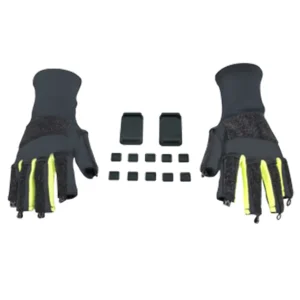
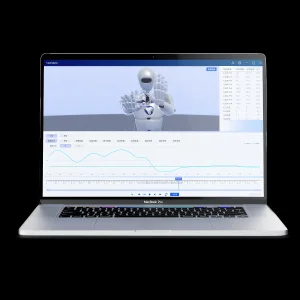
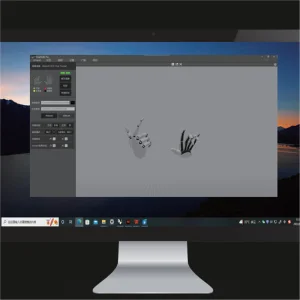
Yes. Through VDRobot Studio, kinematic joint states, orientation vectors, and per-finger telemetry from mHand Pro gloves are translated directly into robotic control frameworks (including ROS/ROS2, Python SDKs, and custom TCP/UDP streams). This allows real-time bilateral teleoperation and large-scale spatial demonstration data collection for training Embodied AI and imitation learning models.
How does markerless optical capture (YanDong) compare in cost and speed to wearable suits?
Markerless optical capture via Virdyn YanDong leverages multi-camera AI computer vision to track skeletons without putting actors into suits. It represents the lowest friction for educational spaces, medical rehabilitation, and virtual live environments where non-specialist users participate. However, inertial suits remain the standard for high-dynamic maneuvers, extreme combat choreography, and environments with visual occlusions.
What software licenses or recurring subscription costs are involved with Virdyn systems?
Unlike many Western mocap vendors who lock hardware functionality behind steep annual per-seat licensing contracts, Virdyn provides our client software suites (VDMocap Studio, mHand Studio, and DCC engine plugins) under perpetual licensing terms without recurring activation fees. This dramatically slashes Year 2 and Year 3 OPEX for long-term project planning.
Ecosystem Expansion
Accessories, Specialized Software & Data Collection Hardware
Complete your motion tracking ecosystem with precision finger accessories, biomechanical analytics software, and robotic AI collection platforms.