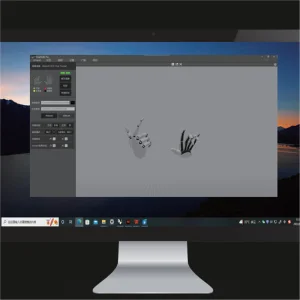
Enterprise-Grade Hardware & Retargeting Modules for NFT Avatars
Explore our core inertial wearable suits, high-frequency robotics teleoperation kits, and AI analysis platforms engineered for uninterrupted Web3 virtual production and on-chain dynamic character mapping.

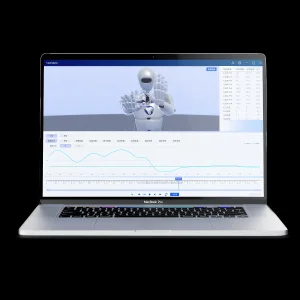
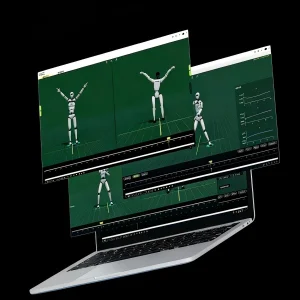


The Evolution from Static PFPs to Sovereign Kinetic Metaverse Avatars
In the contemporary Web3 and metaverse economy, Non-Fungible Tokens (NFTs) have permanently transcended static 2D profile images and pre-rendered MP4 animations. Today, enterprise brands, gaming DAOs, and digital asset holders demand fully articulated 3D rigging, sub-millisecond telepresence, and cross-metaverse interoperability.
Cryptographic Identity & Rigging Standards
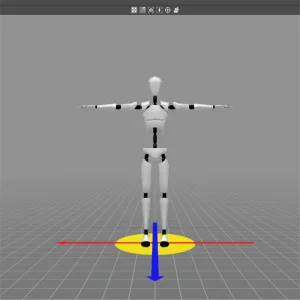
Modern NFT avatars are anchored on standards like ERC-721 and ERC-1155, binding 3D assets formatted in VRM, glTF/GLB, or FBX. Transforming these digital artifacts into responsive virtual humans requires exact skeletal node binding and dynamic retargeting algorithms capable of mapping complex biological movements onto both humanoid and stylized non-humanoid topologies.
Ultra-Low Latency Telepresence
For decentralized live shows, esports tournaments, and interactive virtual activations, real-time kinematics must execute under <20ms end-to-end latency. Virdyn’s hybrid fusion pipelines eradicate packet jitter across UDP/OSC networks, empowering NFT holders to command their virtual identities in Unreal Engine 5, Unity, and VRChat without perceptual lag.
Tokenized Movement Authenticity
Motion-captured kinetic data introduces unprecedented "proof-of-physicality" to Web3 assets. By translating live human motion into tokenizable BVH/FBX animation blocks, creators can mint on-chain motion libraries, unique victory emotes, and choreographies, monetizing kinetic IP in secondary marketplaces.
Selecting the Optimal Tracking Stack for Dynamic Web3 Workflows
Enterprise planning requires navigating trade-offs between physical footprint, environmental magnetic interference, occlusions, and operational CAPEX. Below is the technical decision matrix utilized by senior technical artists and virtual production leads.
| Evaluation Parameter | Virdyn Inertial (VDSuit / mHand Pro) | Marker-Based Optical Volume | Pure Computer Vision (Markerless AI) |
|---|---|---|---|
| Operating Footprint | Unlimited. Indoor, outdoor, living room, exhibition booth. | Requires calibrated 6m x 6m dark stage volume. | Single/Dual webcams or PTZ camera cone. |
| Occlusion Vulnerability | Zero. Sensor nodes are body-worn; crossing arms/legs causes no loss. | High. Props, loose clothing, and furniture break marker visibility. | Very High. Severe limb jitter and temporal popping upon occlusion. |
| Setup Time & Calibration | < 3 minutes: Single T-Pose / A-Pose sensor calibration. | 45–90 minutes: Wand calibration and reflective marker taping. | 1–2 minutes: Camera auto-calibration. |
| Data Throughput & Formats | Live UDP, OSC, TCP, FBX, BVH, direct engine plugins. | C3D, FBX, optical streaming protocols to MotionBuilder. | JSON coordinates, proprietary real-time streams. |
| Dexterous Finger Tracking | Dedicated 16-node high-speed IMU glove (mHand Pro). | Fragile mini-markers, often occluded during palm clenches. | Inconsistent depth estimation in multi-finger overlaps. |
| Deployment TCO (CAPEX/OPEX) | High Efficiency. Accessible for studios and creators. | Prohibitive ($50,000–$250,000+ per volume setup). | Low initial hardware cost, high cloud/compute overhead. |
In-House Sensor Fusion Algorithms
Virdyn incorporates advanced 9-axis Attitude and Heading Reference Systems (AHRS) leveraging dynamic extended Kalman filtering (EKF). By pairing high-g gyroscopes, accelerometers, and magnetometers with bio-mechanical bone-length constraints, our software cancels drift accumulation and filters magnetic anomalies caused by studio flooring or electronic rigs.
Synchronized Full-Stack Tri-Modal Capture
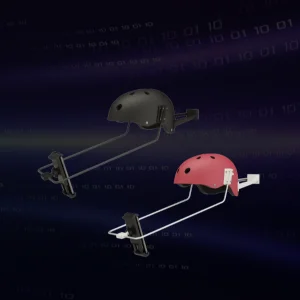
For truly convincing NFT avatar acting, body locomotion is insufficient. The complete pipeline demands triple-point synchronized telemetry: full-body inertial skeletal tracking via VDSuit Full, sub-millimeter finger articulation via mHand Pro, and real-time facial emotion recognition with 52 standard ARKit blendshapes through VDFace capture helmets.
Where Web3 Meets Dynamic Real-World Production
Enterprise planning must address regional technical demands, cultural media ecosystems, and platform API frameworks across global territories.
1. Asia-Pacific: Live E-Commerce & VTuber Entertainment
In Japan, South Korea, and Southeast Asia, NFT avatar owners monetize their digital identities through continuous virtual livestreaming on platforms like TikTok, Bilibili, and YouTube. Wearing a lightweight VDSuit Full, an operator can stream for 6+ hours uninterrupted, driving interactive sales and super-chat interactions without physical fatigue or tracking loss.
2. North America: Decentralized Gaming & Guild Tournaments
Gaming guilds and metaverse arenas require esports contenders to embody their NFT avatars in Unreal Engine 5 custom worlds. Virdyn's live network SDK streams bone orientation quaternions over local network switches directly into engine characters, ensuring spectator broadcasts show authentic physical weight, combat movements, and custom emote celebrations.
3. EMEA: Luxury Brand Activations & VIP Token-Gating
European fashion houses and cultural institutions use motion-captured NFT avatars for virtual runway shows and exclusive holder-only events. The ability to calibrate quickly inside temporary retail spaces or convention centers makes inertial tracking the gold standard for high-profile pop-up brand activations.
Manufacturing Precision & Hardware Agility from Guangzhou
Developing dependable motion capture hardware demands intimate synergy between precision electronics, firmware calibration, and intelligent textile manufacturing. Our operations in Guangzhou, China harness the world's most resilient industrial cluster.
Pearl River Delta Electronics Ecosystem
With immediate proximity to Tier-1 MEMS sensor foundries, multi-layer high-density PCB fabricators, and high-frequency wireless component suppliers, Virdyn executes rapid hardware revision cycles in days rather than months, ensuring our sensors leverage the latest low-noise chips.
Aerospace-Grade Calibration Jigs
Every single sensor node undergoes automated tri-axial multi-temperature thermal chamber stress testing and magnetic turntable calibration. This rigorous manufacturing QA minimizes factory sensor bias, ensuring out-of-the-box accuracy across diverse global climates.
Unmatched Value-to-Performance Ratio
By owning the complete stack—from textile sewing of anti-static ergonomic fabrics to embedded firmware and desktop retargeting suites—we deliver enterprise-tier fidelity at a fraction of legacy Western optical system costs, empowering agile Web3 studios to scale quickly.
Engineering Roadmap: 2026–2030 Technical Trajectory
The intersection of motion capture, generative artificial intelligence, and decentralized identity is advancing rapidly. Here is our engineering development blueprint.
Neural Dynamic Denoising
Integrating transformer-based temporal motion priors directly onto edge receiver dongles. Deep learning models predict and smooth micro-occlusions or severe electromagnetic disturbances in real-time without introducing added latency.
Zero-Knowledge Biometric Veracity
Establishing cryptographic proofs (zk-SNARKs) that authenticate motion data as genuine human actor performance versus algorithmic AI bot generation—vital for decentralized esports, high-stakes tokenized competitions, and verified VTubing.
Embodied Dual-Role Avatars
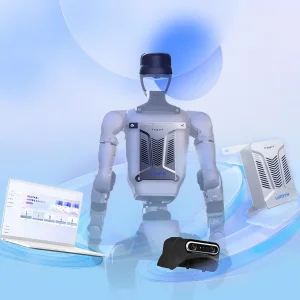
Unified telemetry allowing an actor wearing a VDSuit to concurrently drive both a virtual NFT avatar in Unreal Engine 5 and teleoperate physical humanoid robotics in real life via ROS2 and VDRobot Studio.
Enterprise Compliance, Certifications & Service Framework
Procuring industrial hardware across international borders requires stringent electromagnetic, health, environmental, and support guarantees.
RF Spectrum Compliance
Our proprietary 2.4GHz low-latency wireless transceivers hold full CE (Europe), FCC (United States), and MIC (Japan) certifications, operating legally within industrial ISM bands without interference.
Material Safety & RoHS
All wearable harnesses and fabrics conform to RoHS 2.0 and REACH safety standards. The anti-bacterial, breathable fabrics withstand rigorous daily studio disinfection routines.
24-Hour Remote Support
Enterprise users receive round-the-clock technical coverage via dedicated communication channels with our system architects, offering live rig matching, retargeting debugging, and SDK troubleshooting.
Air Express Logistics
Coupled with direct DHL/FedEx enterprise air lanes, replacement sensor nodes and upgrade hardware arrive at studios in North America, Europe, or East Asia within 3 to 5 business days.
Frequently Asked Questions on NFT Avatar Motion Capture
In-depth answers addressing pipeline integration, asset formats, latency management, and deployment logistics.
How does Virdyn motion capture software map human proportions to stylized or non-humanoid NFT avatars?
What network protocols are supported for live streaming avatar motion into virtual worlds?
How does VDSuit Full mitigate electromagnetic interference (EMI) in convention centers or server rooms?
Can facial capture and glove finger tracking run synchronously on a single workstation?
What are the minimal PC specifications required for zero-lag NFT avatar live broadcast?
Specialized Animation Suites, Gloves & Facial Tracking Architecture
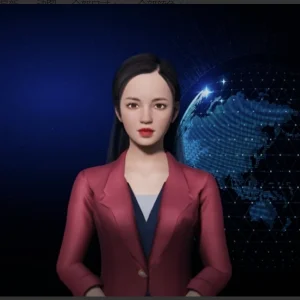
Complete your motion capture pipeline with dedicated finger tracking gloves, facial expression helmets, and intelligent AI voice platforms designed for high-fidelity avatar realization.