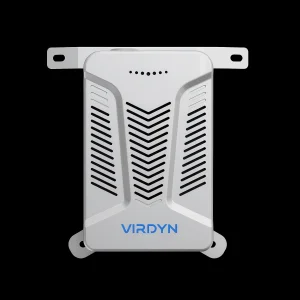
Precision Motion Tracking Systems for Human Performance & Robotics
Industrial-grade inertial suits, specialized teleoperation kits, and AI capture pipelines engineered for continuous digital twin evaluation and shopfloor kinematics.
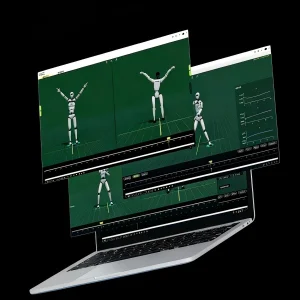
Design VDRobot Studio: Motion Data Collection & Conversion Platform for Robotics | Virdyn Planning, Solution
Explore Specification
Design Motion Capture Provides Advanced Technology Tools for Virtual Film Production Planning, Solution
Explore Specification
Best How Do Brands Use Virtual Spokesman to Tell Good Stories: Motion Capture Technology Empowers Brand Propagation Planning, Solution
Explore Specification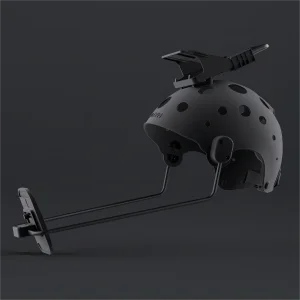
Best Virdyn VDFace Pro Capture System for Real Time Facial Capture with Face Capture Helmet Planning, Solution
Explore Specification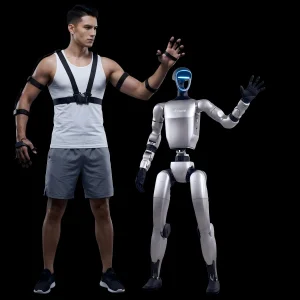
Best VDSuitMini Half-Body Mocap System | Robot Data Collection & Teleoperation | Free Software Planning, Solution
Explore Specification
Best Virtual Human Live Streaming Rapidly Gaining Popularity: Motion Capture Suit Becomes a Key Tool Planning, Solution
Explore Specification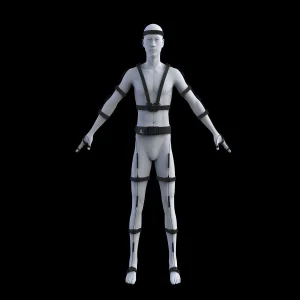
Design Virdyn VDSuit Full for Full Body Function Inertia Motion Capture Suit Planning, Solution
Explore Specification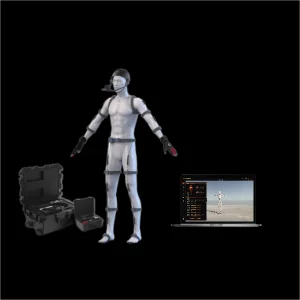
Design DreamsCap X1 Full-Body, Hand & Face Motion Capture for Humanoid Robot Data Collection & Teleoperation Planning, Solution
Explore SpecificationThe Paradigm Shift: From Subjective Ergonomics to Quantitative 6-DoF Kinematics
Eliminating Work-Related Musculoskeletal Disorders (WMSDs) through continuous, millimeter-grade inertial biomechanical assessment.
The Flaw of Optical Systems
Traditional multi-camera optical setups require sterile, line-of-sight conditions. In real industrial environments—inside automotive cabins, tight aircraft fuselages, or multi-tiered assembly cells—tool balancers, overhead hoists, and robotic arms completely occlude reflective optical markers, rendering tracking impossible.
The Catastrophic Cost of WMSDs
Work-Related Musculoskeletal Disorders represent over 33% of all lost-time occupational workplace injuries globally. According to OSHA and European Agency for Safety and Health at Work (EU-OSHA), chronic spinal compression, rotator cuff tendinitis, and carpal tunnel syndrome cost enterprises over $54 billion annually in indirect downtime.
Continuous Wearable Telemetry
Virdyn’s inertial motion capture architecture integrates high-bandwidth 9-axis MEMS IMU sensors directly across anatomical landmarks. By measuring continuous angular acceleration, gyroscopic orientation, and gravitational vectors without cameras, full-fidelity biomechanical stress is quantified directly on active shop floors.
Why China's Advanced Manufacturing Cluster Dominates High-Precision Motion Capture
Combining Pearl River Delta hardware supply chain integration with world-class multi-sensor fusion algorithms for unmatched industrial durability and price-to-performance ratio.
Full Supply Chain Synergies: Greater Bay Area Hardware Cluster
The manufacturing and assembly of high-tier biomechanical motion capture hardware demands tight coupling between precision MEMS sensor fabrication, surface-mount technology (SMT), high-elasticity breathable anti-static textiles, and low-latency wireless transceivers. Operating from Guangzhou, Virdyn leverages the Pearl River Delta's unmatched hardware supply chain.
Where Western vendors face 12-to-16-week lead times for sensor enclosure redesigns and replacement parts, our vertical integration enables 48-hour hardware revisions, rapid tooling iterations, and localized component sourcing that reduces Total Cost of Ownership (TCO) by 45% to 60% compared to legacy European or American counterparts.
Continuous Empirical Stress-Testing on the World's Factory Floor
China operates the largest, most technologically complex manufacturing ecosystem on earth—spanning high-speed automated automotive stamping, EV gigafactories, solar module fabrication, and ultra-high-density consumer electronics (3C) assembly lines.
Virdyn motion capture suits are not developed in abstract laboratory isolation; they have been field-calibrated directly across active manufacturing floors. This heavy exposure to high electromagnetic interference (EMI)—generated by spot welding robots, variable-frequency drives (VFDs), and high-voltage busways—has driven the development of proprietary extended Kalman filtering (EKF) and active ferromagnetic compensation that outclasses systems designed solely for VFX studio environments.
End-to-End Ergonomic Kinematics Pipeline: Sensor to Compliance Score
Seamlessly translating raw gyroscopic and accelerometer quaternions into ISO 11228, RULA, REBA, and NIOSH lifting equation analytics.
1. High-Precision IMU Telemetry
Up to 27 anatomical sensor nodes sample 3D rotational acceleration and magnetic vector orientation at up to 500Hz. Dual-core onboard DSPs process spatial quaternions with microsecond sync, preventing temporal drift across complex multi-segment kinematic chains.
2. Anatomical Skeleton Solving
Raw orientation data streams via 2.4GHz/5.8GHz low-latency protocol into VDMocap and VDRobot Studio solvers. Skeletal constraints prevent non-biological joint dislocation, translating raw sensor transforms into 5th to 95th percentile worker anthro-dimensions.
3. Automated Ergonomic Engines
Joint angles are parsed in real time against international ergonomic thresholds. When cervical spine extension exceeds 20° or trunk torsion exceeds 30°, the system logs risk timestamps, calculates cumulative lumbar compression, and generates instant REBA action levels.
| Evaluation Parameter | Virdyn Industrial IMU Mocap | Traditional Optical Mocap | Manual Video / Post-Hoc RULA |
|---|---|---|---|
| Line-of-Sight Occlusion | 100% Immune (Wearable Sensor Array) | Highly Sensitive to Racks, Cars & Cobots | Severe (Camera Angles Blocked) |
| Setup & Calibration Time | 5 Minutes (One-Click T/A Pose) | 60–120 Minutes (Camera Wand Calibration) | Manual Post-Shift Video Processing |
| Shopfloor Environmental Range | Full Plant Access, High Confined Spaces | Dedicated Light-Controlled Studio Only | Subject to Shop Lighting & Occlusions |
| Joint Velocity & Acceleration | Continuous High-Precision Kinetic Output | High (When Markers are Visible) | None (Static Snapshots Only) |
| Dynamic Digital Twin Export | Native Siemens Jack, DELMIA, FBX, BVH, ROS | Requires Extensive Marker Cleanup | Manual Coordinate Entry |
High-Value Industrial Use Cases: Real-World Ergonomic Engineering
From automotive chassis underbody fastening to high-speed 3C electronics micro-assembly and exoskeleton biomechanical validation.
Automotive Body & Trim
Assembly workers frequently crouch inside cockpits, extend over engine bays, and fasten underbody brake lines. VDSuit Full identifies static neck hyperextension (>25°) and sustained overhead arm abduction during seat-belt tensioning, allowing industrial engineers to optimize variable-height vehicle lifters.
3C Electronics Assembly
Micro-soldering, delicate flex-PCB insertion, and testing demand repetitive fine finger movements. Pairing VDSuit with mHand Pro gloves enables micro-ergonomic tracking of individual phalanges, detecting carpal tunnel pinch-grip forces and static wrist ulnar deviation before tendonitis develops.
Warehousing & Order Fulfillment
Continuous depalletizing and carton sorting exert severe compressive forces on the L5/S1 spinal discs. Mocap-driven NIOSH Lifting Index software calculates exact horizontal and vertical distance multipliers in real-time, dictating optimal conveyer belt heights and gravity-feed tote racks.
Exoskeleton Verification
Enterprises evaluating passive or active upper-body and lumbar industrial exoskeletons use Virdyn suits to capture kinematic trade-offs. Quantitative comparison proves whether an exoskeleton decreases lumbar erector spinae torque or inadvertently creates compensatory neck and knee joint strain.
Enterprise CAD, PLM & Simulation Software Integration
Bridging physical human motion with virtual manufacturing simulation platforms to validate factory lines before capital expenditure.
Siemens Jack & Process Simulate
Stream real-time joint coordinates directly into Siemens Tecnomatix Jack and Process Simulate environments. Replace hypothetical digital human manikins with authentic human movement to evaluate collision envelopes, reach zones, and line-of-sight clearances during pre-commissioning.
Dassault Systèmes DELMIA
Direct compatibility with DELMIA Ergonomics Specialist solutions. Export unified FBX, BVH, and JSON biomechanical logs into Dassault's 3DEXPERIENCE platform to simulate worker fatigue cycles, push/pull force limits, and optimize workstation reachability indexes.
ROS/ROS2 & Embodied AI Teleoperation
For modern Industry 5.0 hybrid cells, VDRobot Studio pipes teleoperation data directly to Universal Robots, ABB, KUKA, or humanoid robotic controllers via open ROS/ROS2 nodes. This enables human demonstrator biomechanics to be cloned into robotic manipulation trajectories without injury risk.
Enterprise Motion Capture Procurement Checklist for Industrial EHS
Essential criteria procurement directors and EHS leads must audit before approving full-scale biomechanical tracking infrastructure.
1. Real-World Electromagnetic Immunity
Industrial assembly cells are filled with structural steel, high-current busbars, and servo motors. Procurement teams must demand demonstrated magnetometer compensation algorithms that prevent catastrophic limb "drifting" when workers handle steel components.
2. Software Extensibility & Zero Lock-In
Avoid closed, proprietary vendor ecosystems. Ensure your mocap partner provides direct C++, Python, ROS2 SDKs, and raw quaternion outputs alongside Unity and Unreal Engine plugins. Virdyn provides completely open data streams for custom enterprise analytics.
3. Total Cost of Ownership & Spares
Factory environments are harsh. Inquire about replacement module availability, washability of textile harnesses, and hot-swappable battery support. Virdyn delivers full commercial replacement sets within days, avoiding production shutdowns.
Frequently Asked Questions on Ergonomic Motion Capture Planning
Authoritative insights addressing hardware integration, biomechanical accuracy, calibration, and computational ergonomics.
How accurate are inertial mocap suits compared to gold-standard optical systems for ergonomic assessments?
How does the system prevent sensor drift near large metal stamping presses or robotic welding stations?
Can the system automatically calculate RULA, REBA, and OWAS scores in real time?
What is the typical battery endurance and operational range on a bustling industrial floor?
How do you accommodate diverse worker body sizes across multinational manufacturing facilities?
Advanced Software, Entry-Tier Kits & Humanoid Dataset Platforms
Complementary animation engines, live-streaming tools, entry-level performance capture, and AI robotics dataset architectures.
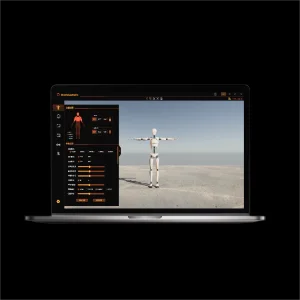
Design Virdyn DreamsCap Studio Motion Capture System Engine For Professional Animators Film and Game Producers Planning, Solution
Explore Specification
Best Virtual Live Technology Empowerment Makes Online Education and Learning As Fun As Watching Cartoons Planning, Solution
Explore Specification
Design Book a Demo for VDSuit Full or mHand Pro Planning, Solution
Explore Specification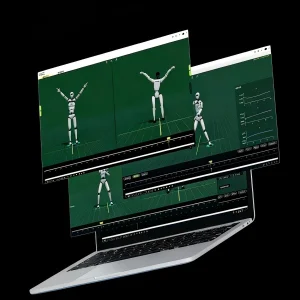
Design Ready-to-Use Robot Motion Datasets | Virdyn Planning, Solution
Explore Specification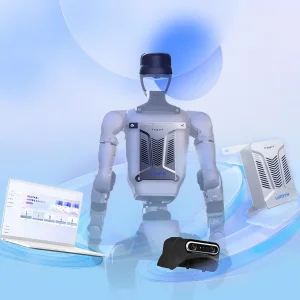
Design AI LingSi System | Robotic Intelligent Creation Platform & Intelligent Voice Interaction Planning, Solution
Explore Specification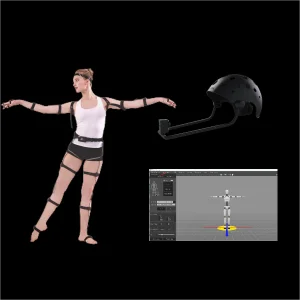
Design VDCap Full Performance Capture Entry-Level Motion Capture Kits for Beginners and Hobbyist Planning, Solution
Explore Specification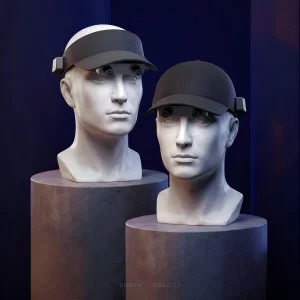
Design VDEgo - Egocentric Video Data Collection Service at Scale | FPV Head-Mounted Camera Planning, Solution
Explore Specification