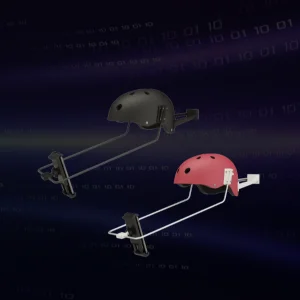
Enterprise Motion Capture Platforms (Suite 1)
Industrial-tier wearable hardware, glove tracking ecosystems, and spatial vision capture arrays engineered for flawless VRChat, Unity, and SteamVR integration.
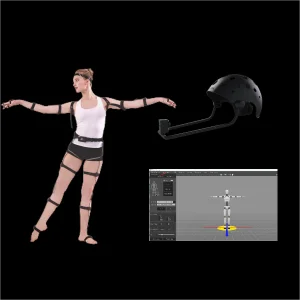
Design VDCap Full Performance Capture Entry-Level Motion Capture Kits for Beginners and Hobbyist Planning, Solution
View Product Solution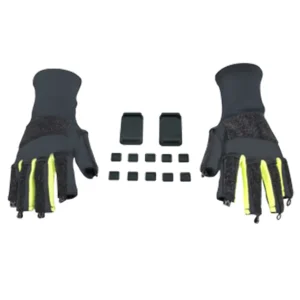
Best Inertia Motion Capture Fingers Capture Accessories Elastic Lycra Fabric Gloves for VDSuit Full(Without Sensors) Planning, Solution
View Product Solution
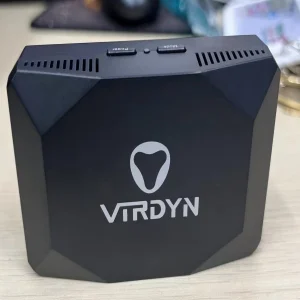
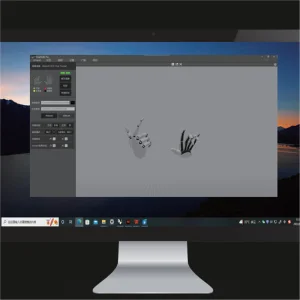
Best Virdyn mHand Studio Motion Capture Gloves Software System for mHand Pro Planning, Solution
View Product Solution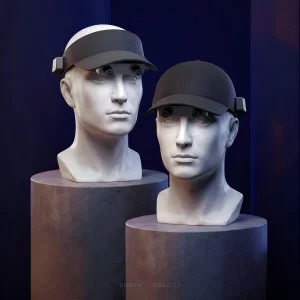
Design VDEgo - Egocentric Video Data Collection Service at Scale | FPV Head-Mounted Camera Planning, Solution
View Product Solution
Design Virtual Actors: How the Film Industry Should Layout the Virtual Market Planning, Solution
View Product Solution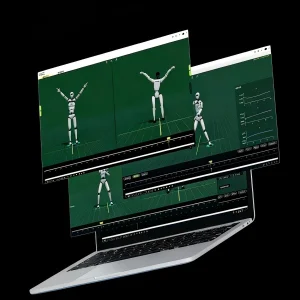
Enterprise VRChat Mocap: From Social XR to Industrial Telepresence
A rigorous examination of kinematic fidelity, sensor fusion algorithms, and low-latency transport protocols reshaping commercial virtual operations worldwide.
The Metaverse Paradigmatic Shift
VRChat has outgrown its origins as an entertainment sandbox. Today, multinational entertainment franchises, digital human creators, global retail brands, and advanced human-computer interaction (HCI) research institutions utilize VRChat as an interactive, real-time spatial networking environment. Creating a compelling presence within this hyper-interactive space demands human-level expressive kinematics that cannot be achieved via consumer head-and-hand VR controllers alone.
- Sub-centimeter skeletal tracking alignment
- Decoupled spatial root positioning
Industrial Multi-Node Telemetry
Professional deployment requires dedicated inertial measurement unit (IMU) telemetry. By instrumenting the actor with high-frequency 9-axis sensor nodes (tri-axial gyroscope, accelerometer, and magnetometer arrays), the VDSuit ecosystem captures spine curvature, clavicle elevation, knee flexion, and subtalar ankle articulation. This high-density skeletal data eliminates the notorious 'floatiness' and unnatural bending typical of budget 3-point or 6-point consumer tracking pucks.
- Biomechanical constraint solving
- Multi-frequency 2.4GHz anti-jamming transmission
Native OSC & SteamVR Pipelines
Modern enterprise integration bridges raw kinematic calculation into VRChat through two distinct, low-overhead pipelines: virtual SteamVR tracking emulation and direct Open Sound Control (OSC) data streaming. While SteamVR provides IK-driven avatar transforms, the direct OSC channel transmits granular finger flexions, chest expanders, facial blendshapes, and secondary physics controllers without incurring the overhead of heavy third-party driver layers.
- Direct UDP socket OSC streaming protocols
- Full SteamVR skeletal input API compatibility
Global Enterprise Procurement Requirements for Social XR
Key procurement criteria, operational service-level agreements, and technical parameters required by studios, multinational brands, and VTuber talent agencies.
Zero-Occlusion Industrial Reliability
Traditional optical mocap systems rely on clean lines of sight between multi-camera arrays and retroreflective markers. In active social environments, public exhibitions, or multi-performer VR stages, performers frequently cross paths, crouch, or interact with physical stage props. Enterprise procurement mandates inertial solutions such as the VDSuit Full, which eliminate line-of-sight dependency entirely, guaranteeing uninterrupted data streaming regardless of actor posture or room clutter.
Magnetic Anomaly Suppression
In convention centers, broadcast studios, and enterprise show-floors, structural rebar, high-voltage lighting, and sound equipment create severe ferromagnetic distortion. Professional procurement contracts specify multi-sensor kalman filtering arrays with integrated magnetic immunity algorithms. The system must automatically detect anomalies in local magnetic fields and switch dynamically to gyroscopic-inertial Dead Reckoning, ensuring that avatar limbs do not twitch or snap under sudden electromagnetic variance.
Sub-Millisecond Synchronization & SLA
When orchestrating multi-actor performances or live musical concerts in VRChat, latency jitter between audio, facial capture, body gestures, and finger articulation creates immediate dissonance. Enterprise procurement requires strict hardware SLAs, including hot-swappable sensor modules, battery continuous runtimes exceeding 5.5 hours, synchronized Genlock-equivalent timecode flags, and dedicated enterprise engineering escalation with under 24-hour response guarantees.
Tracking Modality Comparison for Virtual Production & VRChat
Analyzing technical tradeoffs across inertial, marker-based optical, and markerless computer vision pipelines for real-world enterprise deployment.
| Evaluation Parameter | Virdyn Inertial Ecosystem (VDSuit Full + mHand Pro) | Marker-Based Optical (Cameras + Passive Spheres) | Consumer Pucks (Lighthouse 3.0 / Standalone IMU) |
|---|---|---|---|
| Spatial Range & Boundaries | Virtually Unlimited (Up to 50m wireless direct, indoors/outdoors) | Constrained strictly to calibrated camera capture volume (e.g. 6x6m) | Restricted to base-station line-of-sight or prone to heavy positional drift |
| Occlusion Vulnerability | Zero (0%) Occlusion — sensors directly bound to biomechanical chain | High — actors blocking each other causes missing frames & bone popping | Moderate to High — physical occlusion leads to tracking loss |
| Finger Tracking Integration | Precision Multi-Node Glove (mHand Pro 15-node per-finger tracking) | Cost-prohibitive; requires dense optical finger cluster markers | Crude capacitive touch gestures (Open/Fist/Point only) |
| Rapid Field Setup Time | Under 5 Minutes (Suit up, 3-posture T/A-pose calibration) | 2 to 4 Hours (Wand calibration, masking reflections, ground leveling) | 15 to 30 Minutes (Manual base station sync and tracker pairing) |
| Avatar IK Solve In VRChat | Direct bone-to-bone rotational streaming; exact biological joint solver | Marker cloud reconstruction retargeted through third-party solver software | Inverse Kinematics extrapolation from only 3 to 8 contact points |
| Hardware & Infrastructure Cost | Optimal Enterprise ROI (Turnkey complete suit and glove system) | Capital intensive ($40,000 - $250,000+ for camera arrays & truss) | Low initial entry, but fragile hardware unsuitable for commercial SLA |
Global Commercial & Industrial Implementations
How leading global entertainment conglomerates, VTubing agencies, digital brand showrooms, and robotics engineering labs deploy Virdyn mocap solutions.
VTuber Agencies & Live Virtual Concerts
Top virtual idol agencies stage large-scale musical performances within VRChat and proprietary digital stages. Utilizing VDSuit Full paired with mHand Pro gloves and VDFace helmet systems, performers dance, sing, and engage with live audiences with zero latency. The synchronized skeletal and facial stream renders nuanced micro-expressions and complex choreographies directly inside Unity-based VRChat worlds without dropping frames.
Automotive & Luxury Virtual Brand Showrooms
Global brands create permanent experiential hubs in VRChat to present product launches, architectural walk-throughs, and interactive retail pop-ups. Brand ambassadors wearing lightweight Virdyn mocap suits guide VIP clients through virtual vehicle interiors or architectural spaces. Precise finger articulation enables realistic manipulation of virtual dials, doors, and fabric samples, elevating commercial metaverse transactions.
Robotics Teleoperation & Sim2Real Datasets
Advanced embodied AI research laboratories use VRChat as a spatial physics engine to train humanoid robots. Using VDEgo egocentric cameras, mHand Pro data gloves, and the VDRobot Studio platform, human operators perform intricate assembly and dexterity tasks within digital twin environments. This high-density demonstration data provides the foundation for training neural policy networks and autonomous humanoid manipulators.
Technical Roadmap: Spatial Computing & AI Kinematics (2026–2030)
Anticipating the technological convergence of deep learning neural inverse kinematics, edge sensor fusion, and spatial web protocols.
Phase 1: On-Chip Neural Fusion
Integration of ultra-low power neuromorphic microcontrollers embedded directly on each IMU node. Real-time inference models predict joint velocities, automatically correcting for physical shockwaves during jumps or aggressive choreography before data reaches the host workstation.
Phase 2: Hybrid Inertial-Vision SLAM
Fusing egocentric spatial cameras (such as the VDEgo) with full-body inertial suits. Dynamic visual odometry continuously anchors the performer's absolute 6-DoF world position in VRChat, eradicating long-duration positional drift without requiring external base stations.
Phase 3: Universal OSC 2.0 Standardization
Migrating from legacy OSC bundles to typed, cryptographically verified spatial packet structures. Enabling high-density transmission of 100+ biophysical metrics (including skin temperature, muscle contraction, and haptic feedback) natively across VRChat and WebXR engines.
Phase 4: Autonomous Avatar Copilots
Leveraging Virdyn's AI LingSi platform and rich robot motion datasets to synthesize autonomous avatar behavior. When the performer takes a break, real-time AI copilots maintain realistic idle breathing, conversational micro-gestures, and contextual presence within the VRChat room.
Enterprise Regulatory Compliance, Localization & Global SLAs
Ensuring mission-critical reliability, biometric data security, and worldwide regulatory compliance for institutional buyers.
Global RF Spectrum Certifications
Every Virdyn wireless hardware transmitter, suit hub, and glove transceiver undergoes rigorous international testing. Fully compliant with FCC Part 15 (North America), CE RED Directive (European Union), TELEC (Japan), and SRRC (China). Operating across dynamically negotiated frequencies to prevent crosstalk with Wi-Fi 6E/7 and production audio wireless packs.
Biometric Privacy (GDPR & CCPA)
High-resolution motion tracking captures unique biometric movement signatures. Virdyn software suites (VDMocap Studio, mHand Studio) feature customizable data encryption, local offline operational modes (no forced cloud telemetry), and complete GDPR/CCPA anonymization switches, ensuring talent privacy during broadcast and commercial VRChat hosting.
Enterprise Hardware SLA & Warranty
Institutional procurement packages include dedicated enterprise SLAs: guaranteed 24-hour engineer response, express advance hardware replacement for sensor nodes and elastic straps, direct SDK access for custom engine development, and lifetime software updates for Unity, Unreal Engine, and VRChat OSC integrations.
Enterprise Mocap & VRChat FAQ
Comprehensive answers to common architectural, hardware, and deployment questions encountered by technical directors and production leads.
How does Virdyn mocap data route directly into VRChat without causing SteamVR conflicts?
Can the system perform reliably in convention halls with extreme magnetic interference?
What avatar rigging requirements are necessary in Unity to support full-body mocap in VRChat?
What is the total operational latency from physical motion to VRChat avatar rendering?
Can multiple mocap actors operate in the same physical space without RF crosstalk?
How does Virdyn support institutional procurement and custom engine integration?
Enterprise Motion Capture Platforms (Suite 2)
Advanced facial helmets, robotics teleoperation kits, digital human broadcast systems, and specialized full-performance mocap accessories.
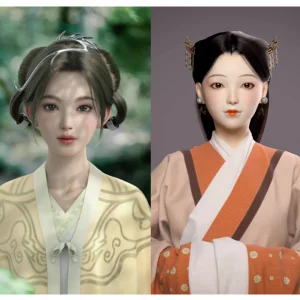
Best How Do Brands Use Virtual Spokesman to Tell Good Stories: Motion Capture Technology Empowers Brand Propagation Planning, Solution
View Product Solution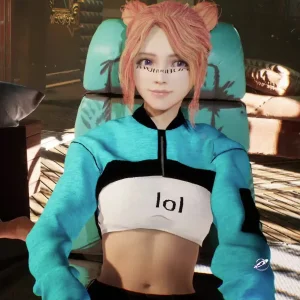
Best Virtual Human Live Streaming Rapidly Gaining Popularity: Motion Capture Suit Becomes a Key Tool Planning, Solution
View Product Solution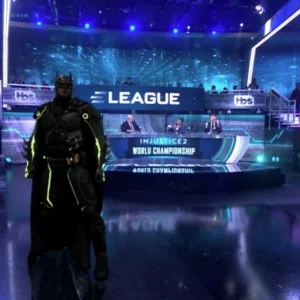
Design Motion Capture Provides Advanced Technology Tools for Virtual Film Production Planning, Solution
View Product Solution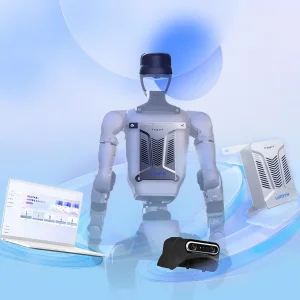
Design AI LingSi System | Robotic Intelligent Creation Platform & Intelligent Voice Interaction Planning, Solution
View Product Solution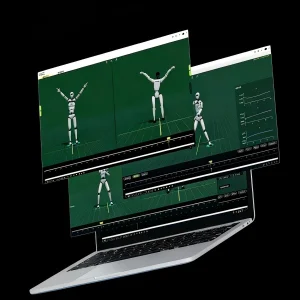
Design VDRobot Studio: Motion Data Collection&Conversion Platform for Robotics | Virdyn Planning, Solution
View Product Solution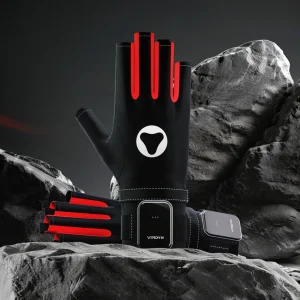
Best Virdyn mHand Pro an Inertia Motion Capture Gloves for Virtual Reality Planning, Solution
View Product Solution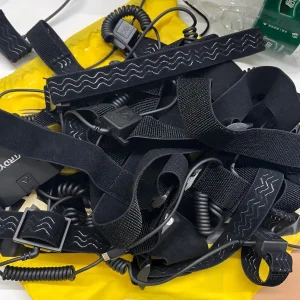
Best Full Body Motion Capture Accessories for Suit Elastic Tapes Planning, Solution
View Product Solution