
Primary Hardware Configurations & Software Nodes
Directly deployable wearable sensors, low-latency facial telemetry helmets, and full-body data suites optimized for enterprise edge environments and mobile streaming protocols.
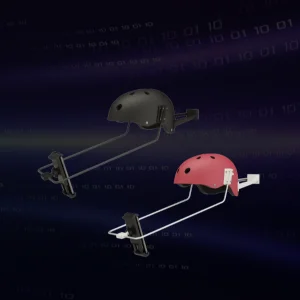
Best Virdyn VDFace Capture System for Real Time Facial Capture with Face Capture Helmet Planning, Solution
Explore Solution →
Design Virdyn VDMocap Studio Plus Motion Capture Software System for VDSuit Full Planning, Solution
Explore Solution →
Design Motion Capture Provides Advanced Technology Tools for Virtual Film Production Planning, Solution
Explore Solution →
Design Virtual Host Technology: Help Mainstream Media Layout Virtual Reality Industry Planning, Solution
Explore Solution →
Best Customize Your 3D Virtual Avatar - Personalized High-Quality and Fast Delivery | 3D Custom Avatar Services Planning, Solution
Explore Solution →
Best Virdyn mHand Studio Motion Capture Gloves Software System for mHand Pro Planning, Solution
Explore Solution →
Best Virtual Live Technology Empowerment Makes Online Education and Learning As Fun As Watching Cartoons Planning, Solution
Explore Solution →
Design VDEgo - Egocentric Video Data Collection Service at Scale | FPV Head-Mounted Camera Planning, Solution
Explore Solution →The Global Commercial & Industrial State of Android-Driven Motion Capture
The convergence of edge mobile computing, low-power sensor microelectronics, and decoupled wireless topologies has transformed Android from a generic OS into the world's most versatile motion capture terminal.
Decentralized Edge Computing
Traditional motion capture pipelines demanded heavy x86 desktop towers tethered to optical camera gantries or thick umbilical routing hubs. The industrial emergence of modern ARM System-on-Chips (SoCs)—such as Qualcomm Snapdragon platforms running customized Android Open Source Project (AOSP) builds—allows complex forward kinematics (FK) and sensor calibration to execute directly on edge mobile devices, eliminating dedicated server overhead.
Democratization of Digital Human Telemetry
The global commercial market has experienced an exponential migration toward real-time VTubing, metaverse presence, and mobile virtual production. Content creators, independent studios, and tier-1 media enterprises leverage Android mobile devices as lightweight capture nodes. Rather than booking multimillion-dollar optical volumes, teams deploy portable inertial setups like VDSuit and mHand Pro connected directly to mobile Android hubs.
Embodied AI & Robotics Sourcing
Robotics laboratories worldwide require continuous human teleoperation and kinesthetic demonstration datasets to train foundation physical models. Android-based mocap stacks provide lightweight wearable telemetry that operates continuously outdoors, inside factories, and within tight industrial cells without external sensor occlusions or environmental lighting limits.
Mocap Android Solution Architecture & Data Pipeline
Building an industrial-grade Android motion capture ecosystem requires an optimized full-stack architecture—from low-level BLE/USB-OTG driver layers to high-speed native NDK mathematical solvers.
1. Physical & Sensor Layer
High-precision 9-axis IMU modules incorporating tri-axial gyroscopes, accelerometers, and magnetometers operate at high polling rates (up to 240Hz). Onboard hardware filtering guarantees ultra-low jitter and minimizes noise before data transits over low-overhead Bluetooth Low Energy (BLE 5.2/5.3) or high-bandwidth USB Type-C OTG buses.
2. AOSP Kernel & HAL
Standard Android Bluetooth stacks can introduce OS-level scheduling latency. Our industrial Android implementation deploys native C++ bindings via the Android NDK (Native Development Kit) and direct socket interfaces, bypassing Android JVM garbage collection interruptions and achieving predictable real-time streaming.
3. Biomechanical Fusion
Sensor fusion algorithms integrate Extended Kalman Filtering (EKF) with anatomical joint constraints. The edge solver processes quaternion matrices, handles magnetic anomalies in real time, and executes rigorous inverse and forward kinematics (IK/FK) to output smooth, anatomically valid human skeletal hierarchies.
4. Protocol Broadcast Hub
From the Android edge terminal, solved skeletal telemetry broadcasts across local Wi-Fi 6 or 5G private networks via standard real-time protocols including VMC (Virtual Motion Capture over OSC), UDP broadcast, and WebRTC streaming directly to Unreal Engine, Unity, Blender, or ROS2 robotics nodes.
System Architecture: Mocap Android Hub vs. Traditional Optical & PC Stacks
A granular technical comparison between Android-centric edge mocap configurations and traditional desktop-bound optical or inertial setups for institutional decision makers.
| Evaluation Vector | Android-Centric Mobile Hub | Dedicated PC Inertial Setup | Optical Multi-Camera Stage |
|---|---|---|---|
| Spatial Independence | 100% Unbounded (Field, Vehicle, Outdoors) | Semi-Bounded (Tethered/Local PC Range) | Strictly Restricted to Calibrated Stage |
| Setup & Calibration Time | < 3 Minutes (One-touch Android App) | 5 - 10 Minutes (PC Driver & Sensor Calibration) | 45 - 90 Minutes (Wand Wave, Masking, Rigging) |
| Hardware Footprint & Weight | Pocket-sized Smartphone or Tablet (<300g) | Workstation Tower or Laptop (>2.5kg) | Multiple Trusses, Server Racks, Cables (>50kg) |
| Power Autonomy | Integrated Battery, 8+ Hrs Continuous | Wall Outlet or Laptop Battery (1.5-3 Hrs) | Dedicated High-Wattage Grid Power Required |
| Cost Profile (TCO) | Ultra-Low; Leverages Standard Mobile Hardware | Moderate; Requires Specialized PC & Licenses | Extremely High ($50,000 - $300,000+) |
| Occlusion Vulnerability | Zero; Complete Inertial Independence | Zero; Complete Inertial Independence | High; Blindspots Caused by Props & Bodies |
Localized Application Scenarios & Real-World Case Models
Discover how modern organizations utilize Mocap on Android to eliminate production friction, scale field data acquisition, and streamline live spatial experiences.
Mobile Live VTubing & Brand Avatars
Content creators broadcast full-body tracking from conventions, hotel rooms, or outdoor streams. An Android device acts as the central router, combining full-body inertial suits, mHand Pro gloves, and facial capture cameras into real-time streams to platforms like YouTube, Bilibili, and Twitch via Warudo and VRChat (OSC) without needing a single desktop PC.
Humanoid Robot Teleoperation & Telepresence
Operators wearing compact half-body or full-body inertial suits control humanoid robots and robotic arms with minimal latency. Running the VDRobot Studio framework on Android tablets enables intuitive master-slave teleoperation, tele-maintenance in hazardous zones, and rapid imitation learning data harvesting in field locations.
Clinical Gait Analysis & Sports Biomechanics
Physical therapists and athletic coaches capture patient movements directly on track fields, clinics, or gymnastics mats. Android tablets equipped with analysis software process angular velocity, joint range-of-motion (ROM), and ground clearance metrics in real time, delivering instant biomechanical diagnostics without costly lab setups.
On-Set Virtual Production Previs
Directors and cinematographers visualize virtual characters in real time inside soundstages or live-action locations. Actors perform on set while an Android tablet functions as both a virtual viewfinder and a mocap relay node, streaming synchronized camera frustum and performer skeletons into Unreal Engine LED wall stages.
Interactive XR Training & Defense Simulations
Deploying tactical motion tracking inside military simulators or industrial assembly training requires extreme freedom of movement. Android headsets (such as Meta Quest Pro or Pico 4 Enterprise) interface directly with wearable mocap nodes, providing sub-millimeter finger tracking and full-body posture tracking without external beacons.
University STEAM & Digital Media Education
Equipping a 40-student digital media classroom with traditional motion capture suites was once prohibitively costly. Android-integrated mocap hardware allows academic institutions to equip full classes with dedicated wearable trackers paired to standard university tablets, accelerating learning curves in character animation and interactive media design.
Technology Roadmap & Future Evolution (2025–2030)
Anticipating hardware breakthroughs, on-device neural inferencing, and open spatial computing standards across the Android ecosystem.
NPU-Accelerated Biomechanics
Mobile NPUs now exceed 45 TOPS on flagship chipsets. Future Android mocap engines will deploy compact transformer networks directly on device to predict joint positions and foot-contact constraints, reducing magnetic drift to near-zero without requiring constant manual T-pose recalibrations.
Multi-Modal Vision-IMU Fusion
Combining monocular RGB/ToF cameras from Android devices with wearable IMU sensor arrays creates a hybrid capture pipeline. The camera provides absolute world-space drift stabilization, while inertial sensors deliver high-frequency motion fidelity through rapid occlusions.
Ultra-Wideband (UWB) Spatial Positioning
The integration of UWB transceivers within Android ecosystems will unlock centimeter-accurate relative positioning between multiple performers. This eliminates relative root-drift issues during dynamic multi-actor interactions, stunt coordination, and crowd captures.
Android XR & OpenXR Standardization
With Google and Qualcomm unifying standard spatial computing frameworks under Android XR, mocap systems will connect natively as standard spatial input devices. This will establish universal plug-and-play compatibility across gaming engines, productivity software, and enterprise spatial apps.
Turnkey Macro Implementation Plan for Enterprise Deployments
A structured 4-phase rollout methodology designed for production supervisors, lead technical directors, and laboratory managers.
Phase 1: RF Audit & Topology
Assess production environments for 2.4GHz interference and ferromagnetic materials. Define optimal data paths: direct BLE mesh to Android terminals, private Wi-Fi 6 AP routing, or direct USB-OTG hubs for multi-actor stages.
Phase 2: Rig Retargeting & Cal
Calibrate performer skeletal dimensions within the VDMocap Studio engine. Map custom humanoid or non-humanoid skeletons to ensure bone roll alignment and avoid joint flip anomalies across your Unreal Engine or Unity assets.
Phase 3: Pipeline Integration
Deploy live VMC/OSC receiver plugins or native Live Link connections on host render systems. Establish unified Genlock / timecode synchronization via network NTP servers for smooth multi-camera virtual production sync.
Phase 4: Field Validation
Execute end-to-end stress testing under extreme movement conditions: rapid turns, tumbling, extended stationary poses, and dual-hand dexterity tasks. Validate zero thermal throttling and maintain 60-120fps steady streaming.
Frequently Asked Questions & Technical Troubleshooting
In-depth engineering answers covering mobile latency budgets, magnetic interference handling, battery optimization, and third-party engine integrations.
Specialized Optical, Inertial & Custom Avatar Solutions
Complete your deployment with precision accessories, optical markerless systems, and end-to-end digital human avatar engineering pipelines.
Best Camera Optical Markerless Motion Capture Solution - Virdyn YanDong | Real-Time Full Body, Hands, Face Planning, Solution
Explore Solution →
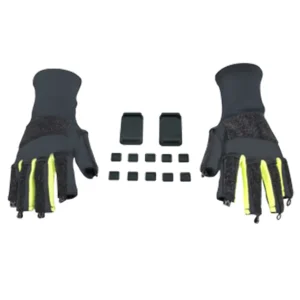
Best Inertia Motion Capture Fingers Capture Accessories Elastic Lycra Fabric Gloves for VDSuit Full(Without Sensors) Planning, Solution
Explore Solution →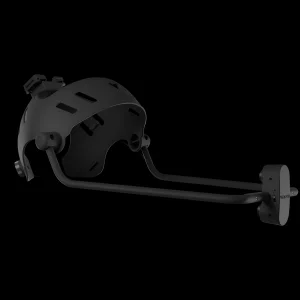
Design AH Double Camera-Based Face Capture Helmet With HD 1080p Embedded RGB Camera Planning, Solution
Explore Solution →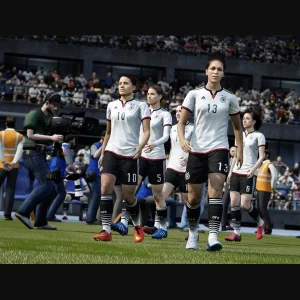
Design Motion Capture Technology to Help the Development of Creative Advertising with Realistic Effects Planning, Solution
Explore Solution →
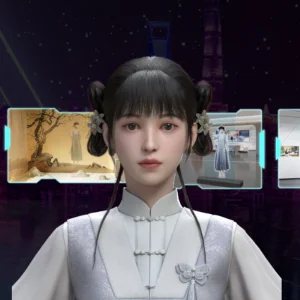
Design Virtual Human Technology: Digital Human Activation Brand Marketing New Path Planning, Solution
Explore Solution →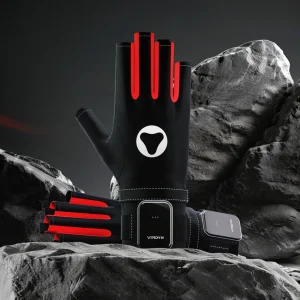
Best Virdyn mHand Pro an Inertia Motion Capture Gloves for Virtual Reality Planning, Solution
Explore Solution →