
Top Tier Low-Cost Motion Capture Hardware & Suites
Explore our factory-calibrated inertial sensors, biomechanic gloves, and conversion engines designed for instant production integration.
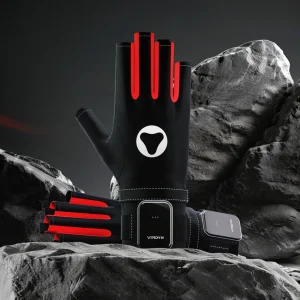
Best Virdyn mHand Pro an Inertia Motion Capture Gloves for Virtual Reality Planning, Solution
Configure Solution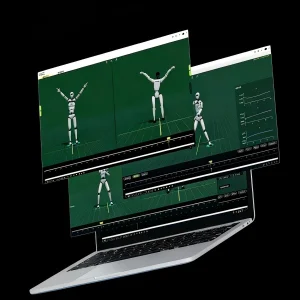
Design VDRobot Studio: Motion Data Collection&Conversion Platform for Robotics | Virdyn Planning, Solution
Configure Solution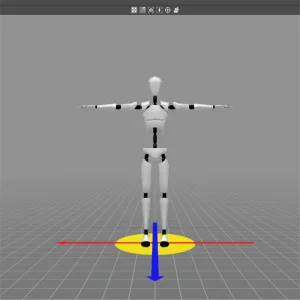
Design Virdyn VDMocap Studio Plus Motion Capture Software System for VDSuit Full Planning, Solution
Configure Solution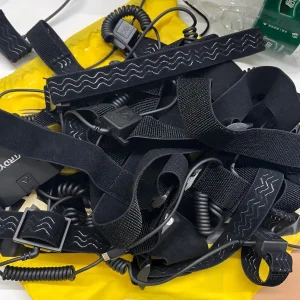
Best Full Body Motion Capture Accessories for Suit Elastic Tapes Planning, Solution
Configure Solution
Design Virtual Actors: How the Film Industry Should Layout the Virtual Market Planning, Solution
Configure Solution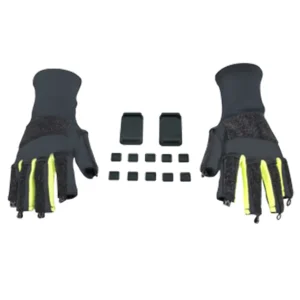
Best Inertia Motion Capture Fingers Capture Accessories Elastic Lycra Fabric Gloves for VDSuit Full(Without Sensors) Planning, Solution
Configure Solution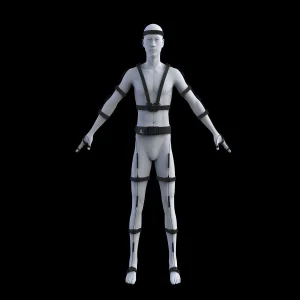
Design Virdyn VDSuit Full for Full Body Function Inertia Motion Capture Suit Planning, Solution
Configure Solution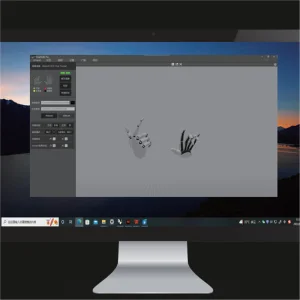
Best Virdyn mHand Studio Motion Capture Gloves Software System for mHand Pro Planning, Solution
Configure SolutionEngineering Low-Cost Motion Capture Systems: High-Fidelity Without Optical Overhead
How advanced micro-electromechanical sensor (MEMS) fusion breaks the multi-hundred-thousand-dollar barrier of legacy optical capture.
Historically, motion tracking was synonymous with retro-reflective markers, massive ceiling-mounted camera arrays, strict optical calibration routines, and prohibitive capital expenditures starting above $150,000. In contemporary computer graphics, virtual cinematography, and autonomous robotics development, this legacy financial and spatial footprint has become an untenable bottleneck. A true Low Cost Motion Capture System delivers commercial accuracy, ultra-low latency, and seamless pipeline integration at a fraction of that expenditure by capitalizing on cutting-edge 9-axis Inertial Measurement Units (IMUs), on-body microcontrollers, and real-time biomechanical kinematic solvers.
At Virdyn, our hardware and software architecture shifts the tracking paradigm from external optical observation to localized, internal rotational kinematics. By pairing low-noise accelerometers, angular rate gyroscopes, and triaxial geomagnetic sensors on discrete skeletal nodes, our systems solve body articulation mathematically in degrees of freedom (6-DOF) without requiring specialized studio light insulation or line-of-sight maintenance. The result is a nimble, field-deployable mocap pipeline that unlocks authentic motion data for enterprise teams working across diverse production constraints.
9-Axis Fusion Kinematics
Every bone segment is tracked via ultra-compact sensor nodes sampling at rates exceeding 500Hz internally, calculating spatial orientation through proprietary Extended Kalman Filtering (EKF) to suppress gyro drift.
Occlusion-Free Tracking
Because inertial sensors measure angular momentum and magnetic heading internally, actors can roll on floors, sit behind desks, interact with complex physical props, or perform in tight vehicles without dropped markers.
Zero Physical Rigging Footprint
Eschew truss systems, ceiling mounts, active infrared lighting, and high-wattage workstations. A full-body inertial pipeline fits inside a single protective flight case and sets up within 10 minutes in an office room.
Why China's Pearl River Delta Delivers the World's Best Cost-Performance Mocap Ratio
Vertical hardware integration, proprietary algorithmic calibration, and agile manufacturing yield institutional accuracy at indie studio prices.
The term "low-cost" in high-technology manufacturing often raises questions regarding reliability, thermal durability, and signal integrity. However, in the context of advanced Chinese hardware engineering, low cost is not the outcome of compromised component quality. Instead, it is the direct structural yield of operating inside the world's dense electronic cluster: the Guangzhou-Shenzhen-Dongguan hardware corridor. Located in Tianhe District, Guangzhou, Virdyn leverages immediate supply chain proximity to premium silicon foundries, surface-mount technology (SMT) lines, precision plastic toolmakers, and specialized technical textile manufacturers.
Traditional Western optical and inertial motion capture suppliers face massive overheads, including third-party contract manufacturing markup, international freight of intermediate assemblies, and distributed engineering handoffs. Virdyn unites industrial product design, PCB assembly, automated magnetic testing jigs, firmware validation, and end-user software under a singular operational roof. This vertical synthesis unlocks distinctive operational advantages:
Direct-from-Fab MEMS Sourcing
By procuring automotive-grade and industrial-grade sensor chipsets in massive volume directly from top silicon foundries, Virdyn maintains lower Bill of Materials (BOM) costs while guaranteeing high sensor uniformity and low noise floors across thousands of production nodes.
Automated Robotic Calibration Rigs
Manual calibration of multi-sensor arrays introduces human variance and high labor expenses. Our automated tri-axis rotational Helmholtz calibration platforms subject every IMU node to controlled geomagnetic and thermal stress cycles, embedding per-unit mathematical correction tables in flash memory.
Ergonomic Technical Lycra Integration
Close partnerships with high-performance sportswear mills enable Virdyn to manufacture anti-slip, breathable, antimicrobial Lycra suits. The wiring harnesses and sensor mounting housings are integrated directly into human kinesiology lines to eliminate skin migration and sensor displacement during vigorous movement.
Engineering Specifications that Redefine Affordable Motion Tracking
Measurable low latency, rock-solid transmission, and industrial drift attenuation verified across diverse operational environments.
From IMU physical displacement to Unreal Engine / Unity actor render tick.
Dual-band dynamic frequency-hopping eliminates packet loss in congested spaces.
Continuous skeletal telemetry capture without base station proximity constraints.
High-density lithium-ion cells with quick-swap battery hub architectures.
Macro Industry Trends Transforming Motion Telemetry Demand
How spatial computing, generative AI avatars, and embodied robotics are expanding mocap from entertainment to industrial automation.
The motion capture sector is undergoing a profound structural transition. For decades, the target addressable market was confined to AAA gaming franchises, feature film visual effects (VFX), and niche clinical gait laboratories. Over the past three years, three massive macroeconomic and technological tailwinds have democratized and intensified the commercial demand for affordable, high-precision motion tracking systems:
1. The Rise of Embodied AI and Humanoid Robotics Teleoperation
Humanoid robotics has advanced from experimental research curiosities into mass-manufactured industrial assets. However, robotic foundation models—such as Diffusion Policies, Action Chunking with Transformers (ACT), and Reinforcement Learning from Human Demonstration (RLfD)—require millions of hours of high-quality human demonstration data. Using optical stages to train robots in warehouse or domestic tasks is logistically impossible due to camera occlusion by shelves, equipment, and structural walls.
Low-cost inertial suits (such as VDSuit Full) and high-articulation data gloves (like mHand Pro) provide the ideal, portable telemetry rig. Operators can manipulate tools, climb scaffolding, or pack shipping boxes while their exact joint velocities, angles, and tactile interactions are streamed directly into ROS (Robot Operating System) and ROS2 via our VDRobot Studio platform.
2. The Creator Economy, VTubing, and Real-Time Virtual Identity
Virtual YouTubers (VTubers), live-stream commerce hosts, and interactive digital humans represent a multi-billion dollar digital transformation across Asia, North America, and Europe. Unlike traditional offline rendering, virtual broadcasting demands 24/7 reliability, immediate calibration, zero operator assistance, and real-time integration into broadcast software like OBS, Warudo, and VRChat (via OSC). Low-cost mocap systems liberate solo creators and agency live-streaming houses from expensive optical technician contracts.
3. Indie Game Studios and Cross-Platform Unreal Engine 5 Pipelines
With game engines such as Unreal Engine 5 (UE5) and Unity 6 democratizing visual realism via Lumen, Nanite, and MetaHuman technologies, indie and mid-tier studios are expected to deliver AAA-grade character animations. Keyframing realistic hand gestures, combat rolls, and subtle athletic animations by hand requires hundreds of tedious artist hours. A cost-effective, real-time inertial setup lets developers capture locomotion, combat sequences, and full cinematics directly into their level viewports via Live Link within minutes.
Comparative Matrix: Inertial vs. Traditional Optical vs. Markerless AI
An unvarnished engineering comparison to guide procurement teams toward the correct technical and budgetary decision.
| Evaluation Parameter | Virdyn Low-Cost Inertial (VDSuit / mHand) | High-End Optical (Vicon, OptiTrack) | Vision-Based Markerless AI |
|---|---|---|---|
| Initial Capital Outlay (Capex) | $1,500 – $6,000 complete turnkey setup | $60,000 – $250,000+ (Cameras, Trusses, Lenses) | $1,000 – $10,000 (RGB/Depth cameras & GPUs) |
| Dedicated Space Requirement | Zero (operates in living rooms, outdoors, field) | Rigid 6m × 6m to 15m × 15m calibrated stage | Standard room with clean visual background |
| Occlusion Vulnerability | 100% immune (Sensors are on-body IMUs) | High (lost markers when crawling or carrying props) | Severe (cross-limb intersection breaks tracking) |
| Setup & Calibration Time | 5–10 minutes (Wear suit, perform T/A-pose) | 1–3 hours (Wand waving, ground plane set, suit dotting) | 5–15 minutes (Camera alignment, floor plane) |
| Finger & Hand Articulation | Sub-millimeter finger tracking via mHand Pro gloves | Requires ultra-dense, fragile retro-reflective dots | Often imprecise; jittery during hand overlaps |
| Magnetic Environment Sensitivity | Moderate (managed via intelligent fusion filters) | Zero impact from magnetic fields | Zero impact from magnetic fields |
| Lighting & Sunshine Restrictions | Zero (Performs in darkness, sunlight, rain) | Requires controlled indoor infrared light environments | Requires bright, uniform, flicker-free studio light |
| Robotics Data Collection Fit | Optimal for field teleoperation and egocentric setups | Constrained to lab volume; cannot track in wild | Moderate; subject to high latency and frame drops |
End-to-End Enterprise Deployment Architectures
Modular integration pathways for virtual production studios, robotics laboratories, and digital human live rooms.
A motion capture system is never a standalone island; its real enterprise utility is measured by how seamlessly it integrates into existing digital content creation (DCC) software, game development engines, and robotic middleware. Virdyn's software stack—headlined by VDMocap Studio Plus, mHand Studio, and VDRobot Studio—is architected specifically around zero-friction pipelines.
Game Dev & Virtual Cinematography
Direct Live Link broadcast into Unreal Engine 5.4+ and Unity. Stream full-body bone transforms, per-finger rotation quaternions, and facial blendshapes simultaneously onto MetaHuman or custom characters with real-time inverse kinematics (IK) foot-locking algorithms.
Robotics Teleoperation & Embodied AI
Synchronized streaming over UDP/TCP sockets formatted in ROS/ROS2 node topics. Teleoperate dual-arm manipulators and anthropomorphic dexterous robotic hands with real-time coordinate transformation between human joint limits and robotic URDF configurations.
Live Digital Avatars & VTubing
Turnkey OSC protocol transmission to Warudo, VRChat, and custom interactive digital human kiosks. Operators achieve high-expressive performances with finger tracking and facial synchronization with minimal CPU overhead on standard broadcast laptops.
The Anti-Drift Algorithmic Engine: Solving Inertial Mocap's Historic Flaw
The primary concern enterprise buyers voice regarding inertial motion capture is cumulative positional drift over long capture sessions. Because IMU sensors calculate linear displacement by double-integrating linear acceleration, minuscule sensor inaccuracies can compound exponentially without corrective grounding.
Virdyn solves this challenge through an intelligent three-tiered algorithmic approach:
1. Dynamic Zero Velocity Update (ZUPT): Our kinematic solver detects foot-ground contact down to the millisecond. The moment a performer's foot strikes the floor, horizontal and vertical velocity errors are dynamically clamped to absolute zero, halting integration drift instantaneously.
2. Biomechanical Skeletal Constraints: Human joints cannot bend beyond fixed physiological limits. The VDMocap Studio Plus engine penalizes and rejects non-anatomical postures, ensuring limbs remain mechanically coherent even during explosive martial arts or acrobatic maneuvers.
3. Advanced Magnetic Anomaly Rejection: Heavy steel rebar in modern office buildings can distort compass readings. Virdyn's firmware continuously measures local magnetic gradient deviations; when a local disturbance is encountered, the algorithm temporarily decouples yaw correction from the magnetometer, relying on high-frequency gyro stabilization until the magnetic field normalizes.
Global B2B Procurement Specifications & Due Diligence Checklist
Essential parameters technical directors and procurement officers must audit before ordering overseas motion capture systems.
When sourcing motion capture hardware from Chinese manufacturers, enterprise procurement teams need comprehensive evaluation criteria to guarantee long-term operational success, regulatory compliance, and smooth customs clearance. Below is the technical procurement audit standard established by Virdyn's international deployment team:
Key Verification Checkpoints for Institutional Buyers:
- Radio Frequency Regulatory Certifications: Ensure the wireless transceiver operates on certified bands (FCC ID for North America, CE-RED for the European Union, MIC/TELEC for Japan). Virdyn transceivers come with full international certification to prevent customs delays.
- Raw SDK & Data Stream Access: Verify whether the manufacturer charges perpetual subscription fees for SDK access. Virdyn provides open C++, Python, and C# APIs alongside raw FBX/BVH exports without recurring software paywalls.
- Hot-Swappable Component Modularity: In high-intensity stunt captures or educational environments, sensor cables or elastic straps can suffer wear and tear. Our modular architecture allows individual node or strap replacement without replacing the entire suit.
- Electromagnetic Compatibility (EMC): In robotics labs crowded with industrial servo drives, motor electromagnetic interference is severe. Verify that sensor harnesses incorporate multi-layer twisted-pair shielding and ferrite chokes.
- Global Technical Support & SLAs: Our dedicated bilingual technical support team responds within 24 hours on business days, providing live remote setup sessions, custom rig retargeting assistance, and pipeline engineering consultations.
Ecosystem Hardware, Specialty Sensors & Production Services
Complete your motion capture pipeline with our specialized egocentric vision systems, custom 3D avatar rigging, and advanced studio engines.
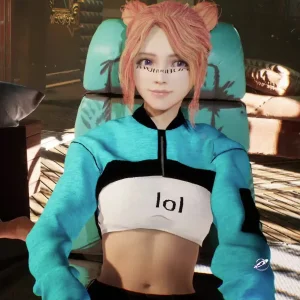
Best Virtual Human Live Streaming Rapidly Gaining Popularity: Motion Capture Suit Becomes a Key Tool Planning, Solution
Configure Solution
Best Customize Your 3D Virtual Avatar - Personalized High-Quality and Fast Delivery | 3D Custom Avatar Services Planning, Solution
Configure Solution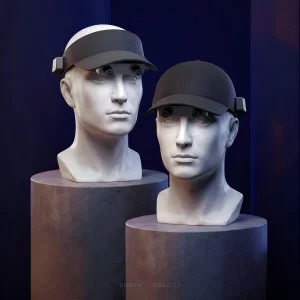
Design VDEgo - Egocentric Video Data Collection Service at Scale | FPV Head-Mounted Camera Planning, Solution
Configure Solution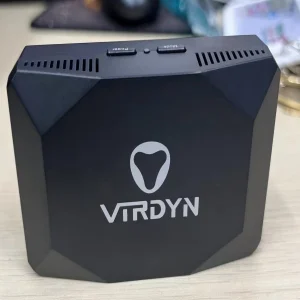
Design Full Body Motion Capture Accessories for Suit Hub Planning, Solution
Configure Solution
Design Virtual Human Technology: Digital Human Activation Brand Marketing New Path Planning, Solution
Configure Solution
Design Inertial Motion Capture Technology to Help the Game Development and Production Planning, Solution
Configure Solution
Design Virdyn DreamsCap Studio Motion Capture System Engine For Professional Animators Film and Game Producers Planning, Solution
Configure Solution
Best Motion Capture Technology Opens a New Era of Animation Development Planning, Solution
Configure SolutionFrequently Asked Questions on Low-Cost Motion Capture Systems
Technical clarifications addressing latency, magnetic interference, multi-actor setups, and custom development integrations.
How does Virdyn achieve high tracking precision at a low price point compared to Western brands?
How does an inertial system cope with magnetic interference from reinforced concrete floors and electronic equipment?
Can multiple actors be captured simultaneously in the same room using VDSuit systems?
What are the key integration steps for driving MetaHumans in Unreal Engine 5?
1. Enable the Virdyn Live Link Plugin inside Unreal Engine 5.
2. Broadcast the skeletal telemetry from VDMocap Studio Plus across the local loopback IP (127.0.0.1) or local network.
3. Open your MetaHuman blueprint, select the Live Link Subject, and assign our pre-configured MetaHuman Remap Asset. Your performer's movements will immediately drive the MetaHuman skeleton in real time, including full finger poses when combined with mHand Pro gloves.