
Explore enterprise-grade motion tracking units, gloves, and facial telemetry kits engineered specifically for zero-drop wireless live broadcasting, digital avatar concerts, and low-latency robotics imitation platforms.
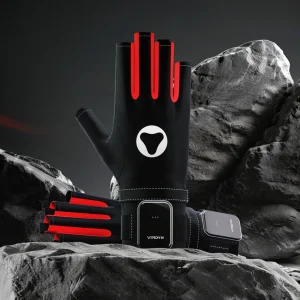
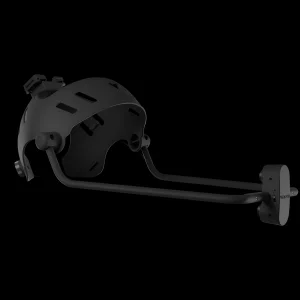

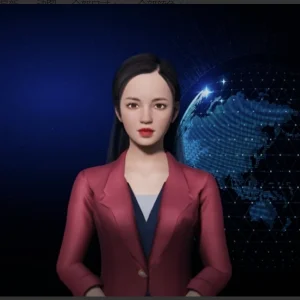
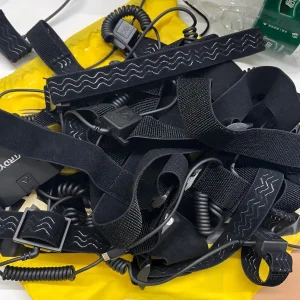
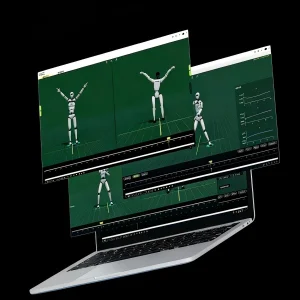

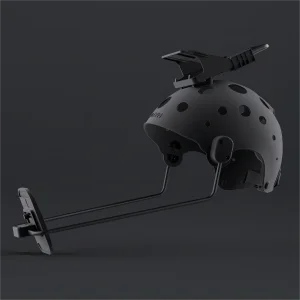
Motion capture is historically perceived as an offline, post-production studio luxury reserved for multimillion-dollar feature film pipelines and triple-A game development studios. However, the convergence of high-throughput wireless networks, real-time rendering engines (Unreal Engine 5.4+, Unity 6), and miniaturized Micro-Electro-Mechanical Systems (MEMS) has sparked an irreversible revolution. Today, Live Performance Motion Capture represents an autonomous, mission-critical infrastructure category powering synchronous digital-physical entertainment.
Unlike traditional motion analysis where optical marker occlusions can be cleaned manually during weeks of clean-up animation, live performance demands instantaneous, zero-artifact data pipelines. If an actor leaps on stage or a virtual host addresses a crowd, frame drops, sensor drift, and foot-sliding break the illusion immediately. Modern live mocap architecture incorporates on-sensor Kalman filtering and AI skeletal constraints to guarantee stage-grade integrity.
The global market for virtual reality live streaming, VTuber commercial talent, and interactive concerts has experienced exponential growth, exceeding billions in monetization globally. Enterprises deploying real-time mocap cut physical stage creation budgets by 65%, while multiplying audience engagement via interactive avatars that react to chat donations, spatial acoustic cues, and dynamic visual effects in sub-second intervals.
The live performance tech stack shares identical mathematical foundations with humanoid robotics imitation learning and teleoperation. When human performers wear full-body suits such as the VDSuit Full and mHand Pro gloves to execute complex kinetic dances, the real-time kinematic datasets are concurrently logged as high-value training assets for neural network policy training in robotics labs worldwide.
Designing a fail-safe live stage motion capture environment requires rigorous engineering trade-offs. The table and analysis below illuminate the operational reality between Pure Optical, Pure Inertial, and Synchronized Hybrid systems under strenuous live theatrical and broadcast constraints.
| Evaluation Parameter | Wearable Inertial (e.g., VDSuit Full) | Optical Multi-Camera (Marker) | Computer Vision (Markerless RGB/RGB-D) | Hybrid Inertial + Optical Anchoring |
|---|---|---|---|---|
| Setup Time & Calibration | 5 - 10 Minutes (Rapid T-Pose / S-Pose) | 2 - 4 Hours (Wand calibration, masking) | 15 - 30 Minutes (Extrinsic alignment) | 20 - 30 Minutes (Dual-system bind) |
| Stage Occlusion Susceptibility | Zero occlusion (Body-worn continuous IMU) | High (Prop, crowd, or floor blindspots) | Extreme (Complex dance poses, lighting) | Virtually Zero (Inertial bridges gaps) |
| Capture Volume Flexibility | Unlimited (100m wireless roaming, outdoor) | Strictly confined to calibrated truss cage | Limited to camera viewing frustums | Truss-bound for position; free for rotation |
| Electromagnetic Resistance | High-end fusion filtering required | Immune to magnetic interference | Immune to magnetic interference | Optical reference neutralizes magnetic drift |
| Finger & Facial Integration | Native modular data glove & RF helmet | Requires ultra-dense sub-millimeter markers | Low fidelity under high-speed rotations | Segmented pipeline via unified timecode |
| System Infrastructure Cost | Accessible ($3K - $12K enterprise setups) | Capital intensive ($50K - $250K+ studio rigs) | Moderate ($10K - $35K compute heavy) | Balanced ($15K - $40K professional grade) |
Live stages are hostile electromagnetic environments, packed with LED giant video walls, high-voltage stage lighting ballasts, audio subwoofers, and heavy steel scaffolding. Virdyn mitigates compass distortion through a decoupled 9-axis sensor fusion paradigm. By treating the magnetometer as a dynamic secondary reference and relying on high-frequency tri-axial gyroscopic integration guided by gravity-aligned accelerometers, cumulative heading drift is dynamically extinguished without visible snapping.
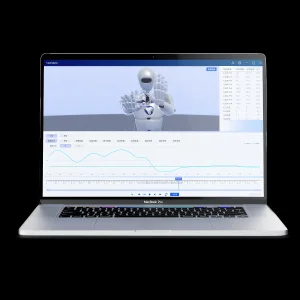
Direct sensor rotations cannot be blindly fed into 3D avatars without causing bone stretching and joint hyperextension. VDMocap Studio incorporates forward-kinematic solvers with human anatomical bounding matrices. Joint degrees-of-freedom (DoF) are mathematically bounded to real physiological limits, and inverse kinematics (IK) contact detection continuously locks the avatar's foot to the digital ground plane, eliminating unnatural floor-sliding during athletic live dance routines.
Live concert execution demands broad interoperability. Modern solutions broadcast live skeletal hierarchies via standard broadcast protocols including OSC (Open Sound Control), VMC (Virtual Motion Capture Protocol), Named Pipes, and low-latency UDP streams. Dedicated C++ plugins for Unreal Engine 5 (Live Link) and Unity (Animation Rigging) receive normalized quaternions at <15ms latency, allowing instant driving of MetaHuman characters and complex VTuber rigs concurrently.
Over 80% of the world's consumer and industrial electronics are born in the Pearl River Delta / Greater Bay Area of China. In Guangzhou, Virdyn leverages this world-class hardware ecosystem to combine cutting-edge aerospace-grade IMU sensor calibration with agile, highly cost-effective manufacturing lines. This section details why global enterprises partner with Chinese manufacturing leaders for their mission-critical mocap supply chains.
From high-precision SMT (Surface Mount Technology) assembly of MEMS sensors to specialized fabric weaving for biomechanical elastic suits, the entire production lifecycle is tightly localized. This eliminates component shipment bottlenecks, enabling rapid-response hardware customization, batch production within 7 to 14 days, and stringent multi-axis turntable sensor calibration at fractional western manufacturing costs.
Wearable motion capture systems on live stages face rigorous physical abuse: actors sweat profusely, perform martial arts falls, and flex sensor cables millions of cycles. Factory protocols mandate 50,000-cycle bend testing for sensor ribbons, continuous multi-temperature thermal cycling chambers (-20°C to +60°C) to prevent sensor bias drift, and IP-rated dust/sweat moisture barriers across all tactile nodes.
Unlike static suppliers that sell rigid black-box hardware, Chinese engineering teams operate on rapid continuous delivery sprints. Global client feedback regarding unique game engine forks, VRChat OSC network updates, or specialized ROS (Robot Operating System) drivers is translated into certified firmware and SDK updates within weeks rather than annual product iterations.
Where does live motion capture deliver immediate, quantifiable enterprise ROI? Below are four battle-tested application scenarios demonstrating how hybrid and inertial mocap hardware elevates live production standards across varied global industries.
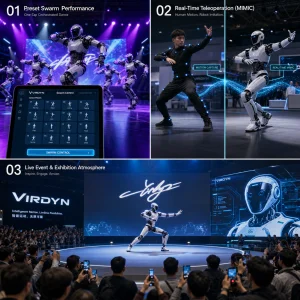
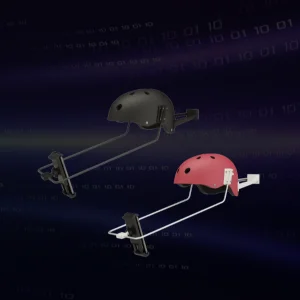
Virtual idol agencies orchestrate multi-city arena tours where voice actresses execute real-time choreography backstage. By deploying the VDSuit Full alongside mHand Pro finger trackers and VDFace helmets, full-body kinematics, micro-finger articulation, and 52 ARKit facial blendshapes are transmitted via 5GHz Wi-Fi directly to the on-stage Unreal Engine rendering node at 60fps with zero audience-perceptible lag.
Mainstream broadcast networks integrate virtual hosts into prime-time news, sports commentaries, and educational shows. Presenters wearing lightweight mocap apparel seamlessly interact with physical hosts inside green-screen or LED volume stages. The lack of optical cameras eliminates line-of-sight occlusion caused by giant teleprompters, broadcast cameras, and studio lighting trusses.
Immersive experiential entertainment venues demand continuous 8-to-12-hour operational stability. In themed dark rides and interactive walk-through attractions, live performers embody fantasy creatures and mascots, conversing directly with theme park guests. High-end hot-swappable dual battery configurations allow uninterrupted all-day live performance without system re-calibration.
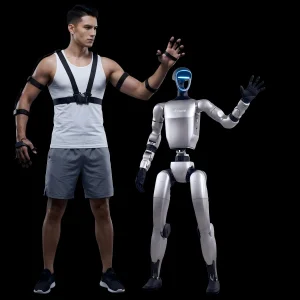
Exhibition arenas, tech expos, and hazardous industrial demonstrations utilize human-in-the-loop teleoperation. A remote pilot donning a half-body VDSuitMini or full-body suit mirrors athletic martial arts, dance choreography, or precision tool manipulation. High-frequency joint quaternions are mapped via ROS (Robot Operating System) nodes directly to robot actuators in real-time.
As spatial computing hardware (Apple Vision Pro, Meta Quest 3) gains widespread enterprise adoption, the demands placed upon live motion capture systems are rapidly shifting. Here are the defining technological trends reshaping the motion tracking landscape through 2030.
Traditional geometric inverse kinematics is steadily being augmented by lightweight neural networks trained on petabytes of human locomotion. These edge-AI models run concurrently with sensor fusion, predicting foot-floor contact forces, anticipating occlusion-induced trajectory loss, and refining subtle secondary motion (such as spine elasticity and shoulder-blade shrugs) with biological fidelity.
While inertial tracking captures hyper-accurate angular velocity and orientation, absolute translational coordinates over long spatial distances naturally encounter drift. The frontier of live performance belongs to hybrid architectures: pairing lightweight wearable IMU suits with UWB radio beacons or sparse markerless stereo cameras to provide an unshakeable 6DoF global spatial coordinate anchor on giant arena stages.
The next generation of mocap sensors moves raw filtering computations off the central host computer and onto the sensor node itself. Onboard high-efficiency ARM Cortex microcontrollers execute attitude and heading reference system (AHRS) equations locally. Pre-solved joint quaternions are then packetized and broadcast over private 5G mmWave or Wi-Fi 7 channels, freeing host CPU cycles entirely for photoreal graphics rendering.
When multinational broadcasting corporations, universities, and game animation studios submit Requests for Proposals (RFPs), evaluating motion capture equipment vendors requires a rigorous checklist beyond basic brochure pricing. Below is the multi-point evaluation framework recommended by technical procurement directors.
Procurement teams must factor beyond the initial hardware purchase order. Consider recurring costs: Are software licenses perpetual or charged annually? Are SDK access keys locked behind premium enterprise tiers? Virdyn provides transparent, perpetual licensing alongside freely accessible SDKs and plugins, preventing ballooning multi-year software budget burdens.
Live stages frequently require 2 to 6 actors performing simultaneously in the same radio footprint. Verify if the system architecture supports deterministic multi-transceiver frequency management. Inquire whether RF channels can be locked to avoid interference with wireless audio microphones, lighting DMX transmitters, and production crew comms.
Live touring shows cannot afford downtime. Review vendor Service Level Agreements (SLAs). Does the manufacturer stock spare sensor nodes, interchangeable magnetic cables, and quick-release harness straps in international distribution hubs? Ensure your supplier provides round-the-clock remote diagnostic support and rapid air-courier replacement options.
Engineered answers to mission-critical questions surrounding live motion capture deployment, network topologies, calibration stability, and digital asset retargeting.
Expand your production capabilities with specialized AI imitation platforms, kinematics evaluation engines, professional half-body teleoperation suits, and full-body production software suites.
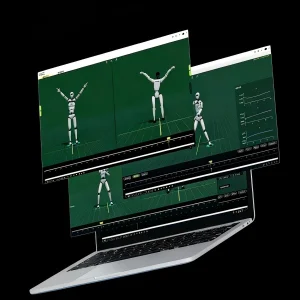

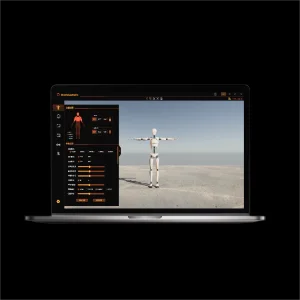

Plan Your Live Performance Motion Capture Infrastructure
Whether preparing a multi-actor VTuber stadium tour, equipping a university VR research facility, or engineering an embodied humanoid robot teleoperation cell, Virdyn provides end-to-end hardware, software, and engineering consultation tailored to your technical specifications.