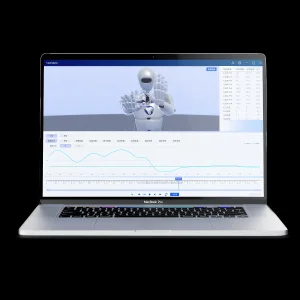
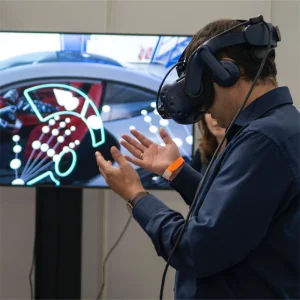
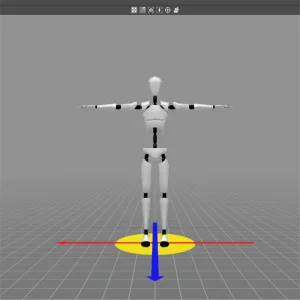
Featured Motion Capture Infrastructure & Toolkits
High-precision tracking peripherals, sensor suits, and intelligent data systems designed for flawless synergy with optical and multi-camera pipelines.

Global Landscape of Markerless Studio Planning & iPi Mocap Deployments
Comprehensive evaluation of markerless optical tracking architectures, spatial camera footprints, and enterprise pipeline adoption in 2026.
Global Production Realities
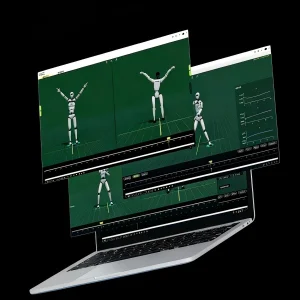
The global creative ecosystem demands rapid content turnaround. Traditional marker-based optical setups require dedicated high-ceiling stages, specialized retro-reflective suits, and tedious marker placement. Modern iPi Mocap Studio planning addresses these bottlenecks by leveraging multiple synchronized RGB cameras or depth sensors, drastically lowering physical constraints for mid-tier studios and indie creators worldwide.
Algorithmic Occlusion Resilience
By computing multi-view volumetric reconstruction alongside probabilistic biomechanical models, modern computer vision engines eliminate the classic line-of-sight dropouts typical of legacy retro-reflective systems. When an actor kneels, rolls, or interacts with props, spatial voxel tracking preserves bone length and positional continuity without manual marker relabeling.
Hybrid Fusion Architectures
High-end digital human and virtual production pipelines increasingly synthesize the environmental positioning advantages of markerless camera rigs with the rapid angular velocities captured by high-frequency inertial suits and dexterous gloves. This hybrid methodology guarantees both drift-free spatial placement and jitter-free extreme action dynamics.
The Chinese Factory Efficiency Advantage in Mocap Hardware
How vertical hardware integration in Guangzhou and the Pearl River Delta delivers unmatched precision engineering, rapid iteration, and direct supply economies.
Rapid Hardware Prototyping
Turnaround from PCB schematic design to multi-layer surface mount manufacturing takes days rather than quarters. Direct access to high-grade IMU sensor components, specialized Lycra textiles, and low-latency wireless transceivers ensures constant iteration of hardware form factors.
Stringent Calibration Standards
Factory-level automated multi-axis rotational test benches eliminate thermal sensor drift and geomagnetic alignment variances prior to export. Every IMU node and optical mounting fixture undergoes stress analysis to assure zero tracking deviations in enterprise deployment.
Integrated Ecosystem Sourcing
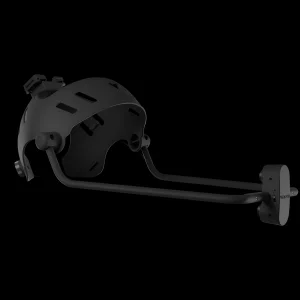
Consolidating full-body wearable frames, wireless hub arrays, high-resolution facial helmets, and precision gloves under one manufacturing umbrella slashes freight overhead, customs complexities, and multi-vendor synchronization incompatibilities for overseas buyers.
Tier-1 Quality at Disruptive Cost
Eliminating multi-tier international distributor markup enables western production studios, universities, and robotics developers to acquire top-tier motion capture capabilities at a fraction of incumbent legacy pricing models, democratizing high-fidelity data acquisition.
Localized Application Scenarios: Studio Planning & Workflow Execution
Deployment configurations engineered to maximize throughput across animation, XR broadcasting, and embodied robotics.
Virtual Production & Real-Time Broadcast
Deploying multi-camera markerless optical setups in compact broadcast stages eliminates bulky suits for guests and VTuber talents. Integrating iPi Mocap Studio with low-latency retargeting streams directly drives 3D avatars in Unreal Engine, Unity, and Warudo over OSC and live UDP protocols with zero actor encumbrance.
Game Animation & Pre-Visualization
For independent game studios and VFX animation houses, setting up a calibrated multi-camera perimeter inside standard office spaces allows rapid recording of combat loops, dialogue interactions, and complex stunt choreography. Processed FBX and BVH skeletal hierarchies drop effortlessly into Maya, Blender, and MotionBuilder.
Embodied AI & Humanoid Robotics Data
Robotic teleoperation and reinforcement learning algorithms require vast corpuses of natural human kinematics. Combining markerless studio volumetric capture with egocentric vision rigs and high-fidelity glove articulators provides clean, continuous multi-modal datasets for training humanoid manipulators.
Technical Trade-Off Matrix: Planning Your Capture Pipeline
Objective comparative benchmarks for motion capture architects evaluating studio constraints, precision requirements, and financial commitments.
| Evaluation Parameter | Markerless Optical (iPi Mocap Studio) | Full-Body Inertial (VDSuit Ecosystem) | Legacy Passive Marker Optical |
|---|---|---|---|
| Stage Footprint | Flexible 3x3m to 7x7m regular room; standard ceiling | Infinite; any indoor or outdoor environment | Strictly controlled 8x8m+ truss stage; high ceilings |
| Actor Preparation | Zero wearables; ordinary contrasting street clothing | Wearable suit fitting & magnetic calibration (~5 min) | Complex Velcro marker placement & wand calibration (~30 min) |
| Occlusion Handling | Calculated via multi-view computer vision consensus | Completely immune; IMU sensors worn directly on bone | High vulnerability; requires tedious manual trajectory cleanup |
| Spatial Drift | Absolute global coordinates; 0% cumulative drift | Minor drift managed by internal multi-sensor algorithms | Absolute global coordinates; millimeter accuracy |
| Finger & Facial Capture | Paired with specialized head-mounted RGB & data gloves | Integrated with mHand Pro gloves & VDFace helmets | Requires ultra-dense sub-millimeter retro marker arrays |
| System Infrastructure Cost | Economical; consumer/industrial cameras + standard PC | Accessible; modular wireless hardware investment | Extremely high ($50k–$250k+); specialized IR hardware |
Procurement Standards & Industry Trends (2026–2030)
Critical considerations for CTOs, studio heads, and university labs investing in scalable motion tracking solutions.
Neural Skeletal Re-Identification
Modern studio planning prioritizes AI-driven deep learning models integrated into software backends. Neural solvers now predict joint centers within clothing folds, eliminating historical ambiguities in baggy garments, hair occlusions, and props, thereby drastically reducing clean-up passes in post-production.
Native DCC Engine Synchronization
Procurement teams demand frictionless connectivity. Solutions must feature zero-latency live-link drivers directly into Unreal Engine 5.x Control Rig, Unity Animation Rigging, Blender, and Autodesk Maya. Direct support for open standards like glTF, USD, and SMPL ensures broad asset interoperability.
Turnkey Vendor Accountability
Enterprises avoid fragmented procurement where cameras, software licenses, gloves, and facial helmets stem from disparate suppliers. Choosing a dedicated partner with end-to-end hardware manufacturing and in-house algorithm maintenance guarantees uniform firmware updates, continuous compatibility, and responsive technical support.
Frequently Asked Questions: iPi Mocap Studio Planning & Solution
Direct technical clarifications addressing studio setup, camera configurations, lighting, and integration with inertial hardware.
What are the minimum room dimensions for an iPi Mocap Studio setup?
A typical markerless capture volume operates efficiently in spaces as compact as 3m x 3m (approx. 10ft x 10ft) using 4 to 6 cameras. For full athletic locomotion, combat stunts, and multi-actor capture, a recommended perimeter of 6m x 6m to 7m x 7m provides ample line-of-sight margins without edge distortions.
Can iPi Mocap markerless tracking integrate with inertial gloves and face helmets?
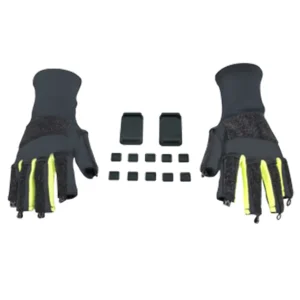
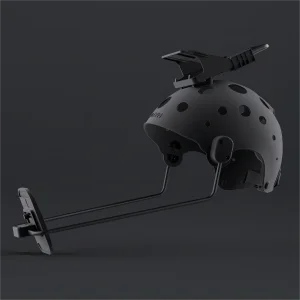
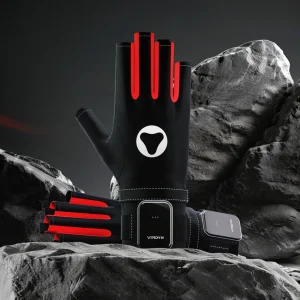
Yes. The most efficient pipeline configuration utilizes markerless camera tracking to anchor the global root positioning and skeletal posture, while integrating dedicated multi-node inertial gloves (such as mHand Pro) for dexterous fingers and an RGB/depth helmet (such as VDFace Pro) for 52-blendshape facial fidelity.
How does lighting influence markerless capture accuracy?
Consistent, diffuse illumination without intense harsh shadows or direct backlighting yields the cleanest silhouette segmentation. Standard daylight-balanced LED soft panels positioned above actor eyelines prevent dynamic dropouts during complex rotational actions.
What computational hardware is recommended for real-time tracking?
For multi-stream 4K processing or 8-camera high-frame-rate inputs, an enterprise workstation equipped with an Intel Core i7/i9 or AMD Ryzen 9 processor, 32GB RAM, dedicated USB 3.1 host controllers, and an NVIDIA GeForce RTX 4070 or higher ensures real-time volumetric solving.
Explore Complete Motion Capture Hardware & Software Solutions
Expand your production studio capabilities with advanced facial capture, wearable accessories, biomechanical analytics, and simulation kits.