Flagship Motion Capture Systems & R&D Suites
Explore production-verified wearable suits, sub-millimeter finger tracking gloves, real-time facial helmets, and synthetic embodied data pipelines engineered for global studios.



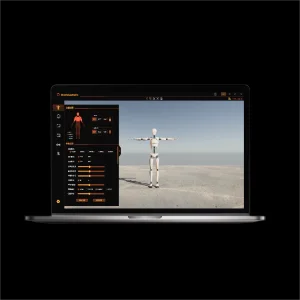
Architectural Foundations of Enterprise Full Body Mocap Systems
In the high-stakes sectors of AAA gaming, photorealistic virtual cinematography, virtual real-time broadcasting, and embodied humanoid robot teleoperation, human kinematic data serves as the digital lifeblood. Modern production pipelines require motion capture solutions that transcend laboratory limits, eliminating line-of-sight occlusion while operating predictably in non-anechoic, magnetically turbulent studio environments.
Multi-Sensor Data Fusion
Traditional single-layer filtering fails under dynamic acceleration. Modern architectures employ adaptive Extended Kalman Filters (EKF) combined with biomechanical constraints, unifying 9-axis IMUs (tri-axial accelerometer, gyroscope, magnetometer) to continuously reconcile positional orientation and negate magnetic dip deviations.
- Dynamic drift compensation algorithms
- Real-time heading recalibration
- Non-linear joint angle acceleration limits
Real-Time Engine Telemetry
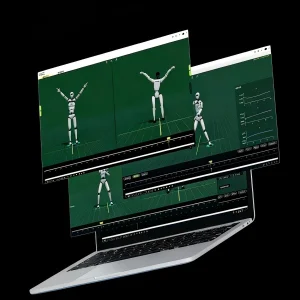
Capturing data in isolation causes studio friction. Enterprise suits must pipeline skeleton topology directly into downstream DCC and game engines without requiring intermediate translation layers, ensuring immediate visual verification by directors and animators.
- Native Unreal Engine 5 Live Link integration
- Unity Humanoid retargeting plugins
- OSC protocol bridges for VTubing & VRChat
Zero-Occlusion Freedom
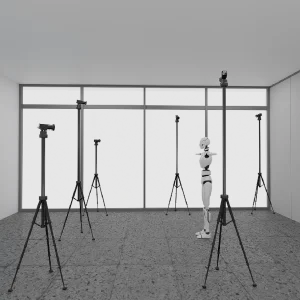
Optical systems are bounded by reflective markers, specialized truss rigs, camera sightlines, and expensive acoustically deadened stages. Wearable inertial suits empower actors to run, tumble, crawl, wield props, and execute capture in tight outdoor or indoor spaces.
- No optical markers or camera arrays needed
- Complete immunity to visual occlusion
- Field readiness in rough environments
Enterprise Buyer Evaluation & Technology Benchmark
Procuring mocap infrastructure involves assessing latency tolerances, volume constraints, maintenance cycles, and total operational costs across project lifespans.
| Evaluation Parameter | VDSuit Full Inertial Suit | Passive Optical Markers | Markerless Camera Vision | Procurement Strategic Impact |
|---|---|---|---|---|
| Setup Time & Portability | 5-10 Minutes (Wear & Calibrate) | 4-8 Hours (Camera calibration & marker setup) | 15-30 Minutes (Multi-cam sync) | Inertial eliminates studio staging overhead, cutting production day costs by up to 70%. |
| Capture Volume & Environment | Unbounded (Indoor, Outdoor, Vehicle) | Strictly confined to calibrated camera volume | Restricted to camera sight cone | Inertial captures true kinetic stunts, on-location outdoor sets, and vehicular scenes without cameras. |
| Occlusion Vulnerability | Zero Occlusion (IMU Node Mesh) | High (Props, ground interaction, multi-actor) | Extremely High (Self-occlusion, lighting) | Optical tracking loss in complex interactions demands days of post-cleanup manual keyframing. |
| Fingers & Facial Expansion | mHand Pro & VDFace modular add-ons | Requires ultra-dense secondary marker sets | Requires specialized multi-lens arrays | Integrated modular stacks guarantee unified frame timestamping across body, fingers, and facial phonemes. |
| Embodied AI / Robotics SDK | Native ROS/ROS2 & Python SDK | Proprietary rigid body broadcast | Variable depth point clouds | Zero-latency teleoperation transforms human kinematics into joint torque and trajectory datasets for robotics. |
| Total Cost of Ownership (TCO) | Moderate capital outlay, negligible maintenance | Extremely high ($80k-$300k+ equipment & space) | Moderate hardware, high compute cost | Inertial offers the highest ROI per captured second for enterprise studios and research institutions. |
China Factory Precision & Supply Chain Resilience
Virdyn leverages Guangzhou's electronics manufacturing ecosystem, fusing rapid hardware prototyping, rigorous sensor calibration, and end-to-end quality assurance.
Automated SMT & QA
Every sensor node uses multi-layer high-density SMT circuit boards. Automated optical inspection (AOI) and X-ray testing eliminate cold soldering and ensure component integrity under dynamic G-forces.
Tri-Axial Thermal Calibration
IMUs face temperature-induced bias drift. Nodes undergo 3-axis rotational calibration in thermal chambers, mapping thermal coefficients across -10°C to +50°C to maintain orientation precision.
Textile Ergonomics
Suits use breathable, high-elastic Lycra fabric with internal silicone grip linings and strain-relief wiring channels, preventing sensor shift on actor limbs during rapid motion.
Cost Efficiency & Stock
Direct supply from Guangzhou provides high price-to-performance value, custom sensor-node layouts, rapid turnarounds, and accessible spare parts that shield buyers from long supply delays.
Global Certifications, RF Integrity & Enterprise Governance
Enterprise hardware must satisfy international regulatory mandates, operate reliably across crowded radio bands, and provide complete local data isolation.
CE, FCC, RoHS & Telec Certified
Virdyn hardware complies with European CE (EMC/LVD), US FCC Part 15 Class B, and RoHS environmental directives. High-capacity lithium polymer batteries carry UN38.3, MSDS, and air freight certifications for rapid global logistics.
Dual-Band Anti-Jamming RF
Wearable suits stream over 2.4 GHz and proprietary sub-GHz channels with dynamic frequency hopping. In venues crowded with production Wi-Fi and Bluetooth, transmission switches bands seamlessly to prevent packet drops.
Air-Gapped Data Privacy
All kinematic solver algorithms run locally on client workstations. VDMocap Studio requires zero external cloud connections, satisfying NDA protocols for tier-one game studios, film productions, and military clients.
Emerging Paradigms: From Virtual Content to Embodied AI
Motion capture is evolving from pure screen entertainment toward powering physical intelligence, humanoid robot teleoperation, and synthetic spatial datasets.
Human-to-Humanoid Robot Teleoperation
Developing bipedal humanoids demands large volumes of authentic human kinematic datasets. Inertial mocap suits paired with mHand Pro gloves act as intuitive teleoperation inputs for robotic control:
- Imitation Learning: Collecting human demonstration data to train end-to-end policy networks for humanoid locomotion and manipulation.
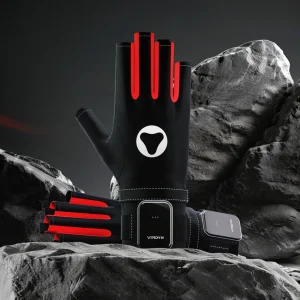
- Dexterous Hand Teleoperation: Mapping sub-millimeter finger joint movements to multi-axis robotic end-effectors with minimal latency.
- ROS/ROS2 Bridge: Streaming standard URDF joint angles directly to robot hardware or Isaac Sim and Gazebo digital twin environments.
Real-Time Cloud-Edge Spatial Workflows
As virtual production scales across distributed teams, motion data pipelines are decoupling from single physical rigs toward flexible cloud-edge setups:
- Hybrid Optical-Inertial Calibration: Pairing inertial suits with lightweight optical anchor cameras to eliminate position drift across large volumes.
- Edge Solving: On-device processing units calculate joint quaternions before wireless transmission, lowering host computing loads.
- GenAI Synthetic Augmentation: Clean captured skeletal data serves as structural conditioning for generative AI character animation pipelines.
Field Deployments Across Mission-Critical Verticals
Real-world pipelines require flexible configurations tailored to distinct production needs, whether rendering real-time avatars or analyzing high-speed athletic movements.
AAA Game Animation
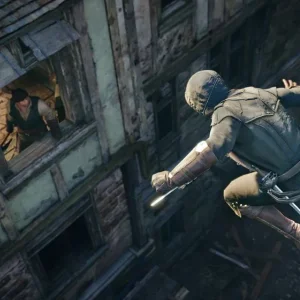
Studios capture character combat, traversal sets, and cutscenes in office spaces, streaming directly to Unreal Engine to review asset interactions in real time.
Virtual Film Production
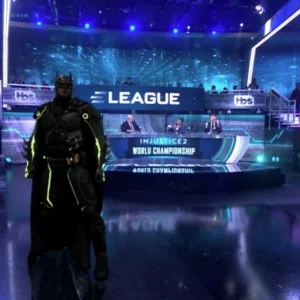
Film directors use inertial suits on LED volume stages, capturing camera-occluded actors without optical camera interference for immediate in-camera previs.
Virtual Live & VTubers
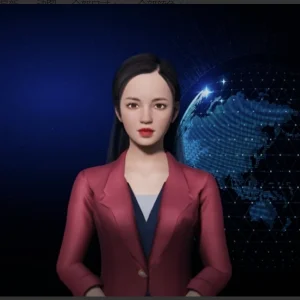
Agencies operate multiple talent rooms for continuous VTuber live streaming on YouTube, Twitch, and Bilibili, utilizing OSC outputs to drive complex rigs reliably.
Sports Biomechanics
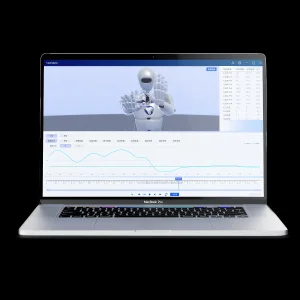
Sports researchers measure joint angular velocity, ground impact loads, and torso rotations in outdoor running and golf swings, analyzing dynamic form via the Valyze platform.
Clinical Rehabilitation
Hospitals and clinics track gait rehabilitation trajectories and joint mobility, comparing patient progress over time using exportable CSV and biomechanical reports.
Defense & Tactical Simulation
Defense teams capture tactical squad room clearing, vehicle boarding, and weapon handling within real structural replicas, operating without camera line-of-sight limits.
Frequently Asked Questions on Full Body Mocap Planning
Technical guidance addressing calibration routines, multi-actor setups, engine integrations, and institutional procurement policies.
How does Virdyn's inertial motion capture manage magnetic interference in steel-reinforced rooms?
What are the primary differences between inertial, marker-based optical, and markerless mocap?
Which DCC engines and 3D pipelines are natively supported?
Can VDSuit Full capture multiple actors simultaneously?
How can research institutions and robotics labs leverage the hardware for Embodied AI?
What calibration procedures are required before capturing an actor?
What international warranties, certifications, and service terms are provided?
Consult with Our Mocap Solutions Engineers
Whether you are engineering an interactive VTuber studio, outfitting an animation pipeline, or designing teleoperation controls for bipedal robotics, our engineering team provides customized hardware bundles, live remote software demonstrations, and direct SDK integration guidance.
Integrated Software, Accessories & Analytical Suites
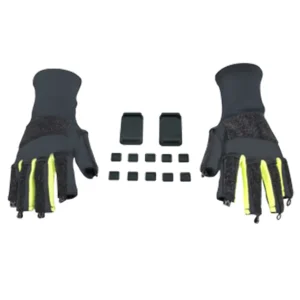
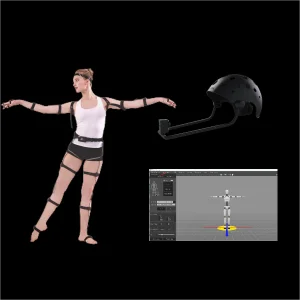
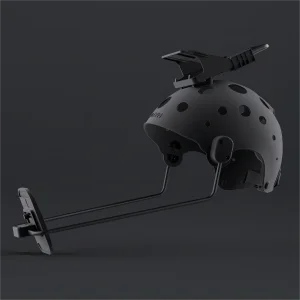
Complete your motion capture infrastructure with high-fidelity inertial gloves, flexible Lycra textiles, specialized facial helmets, and biomechanical analytics engines.