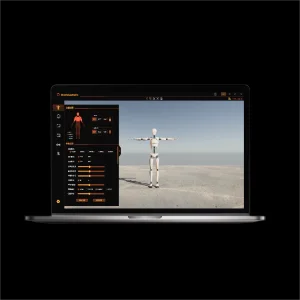
Integrated Mocap Hardware & Systems Under Android Ecosystems
Explore production-grade inertial motion tracking suits, embedded capture helmets, robotic training platforms, and precision mocap accessories designed for seamless cross-platform live retargeting.

Best Motion Capture Technology Opens a New Era of Animation Development
Explore Solution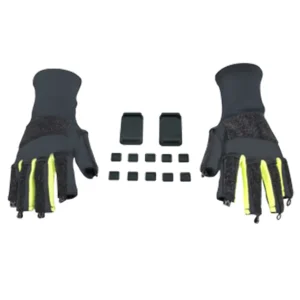
Best Inertia Motion Capture Fingers Accessories Lycra Gloves
Explore Solution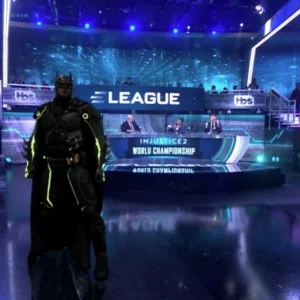
Design Motion Capture Provides Advanced Virtual Film Tools
Explore Solution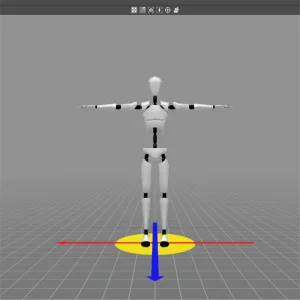
Design Virdyn VDMocap Studio Plus Software System
Explore Solution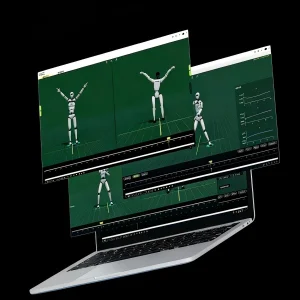
Design Ready-to-Use Robot Motion Datasets | Virdyn
Explore Solution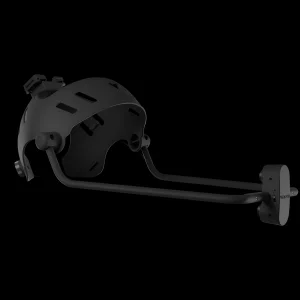
Design AH Double Camera-Based Face Capture Helmet 1080p
Explore Solution
Best Virtual Live Technology Empowerment for Education
Explore Solution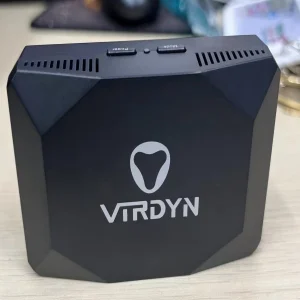
Design Full Body Motion Capture Accessories for Suit Hub
Explore SolutionEvolutionary Paradigm: Why Android Edge Facial Mocap Dominates the Industry
Examining the technological migration from tethered multi-camera optical setups to decentralized, neural-accelerated Android hardware for mission-critical digital avatar and robotics deployment.
From Server Heavy to Edge NPU
Early facial capture relied upon high-bandwidth PC workstation processing, transmitting raw RGB streams across local networks. Today, Android Neural Networks API (NNAPI) and dedicated NPUs execute 468+ facial landmark extraction directly on mobile chipsets with less than 6ms inferencing overhead, drastically cutting compute infrastructure costs.
Standardized ARKit 52 Blendshape Mapping
Android facial mocap solutions now achieve parity with Apple's proprietary TrueDepth framework by translating multi-dimensional topological meshes directly into industry-standard Apple ARKit 52 Blendshapes. This eliminates pipeline fragmentation across Unreal Engine, Unity, Blender, and Maya pipelines.
Thermal & Power Optimization
Continuous facial mocap on mobile devices historically encountered severe thermal throttling within 20 minutes. Modern Android architectures leverage fixed-function DSP/NPU subroutines, customized thermal dissipation headgear, and frame-rate adaptation algorithms to deliver over 6 continuous hours of rock-solid 60 FPS live tracking.
China's Manufacturing Ecosystem: Precision Hardware & Scalable Delivery
How concentrated supply clusters in the Greater Bay Area enable superior optical quality, ruggedized helmet ergonomics, rapid firmware turnaround, and disruptive BOM economics.
Vertically Integrated Optics
Close proximity to Shenzhen and Dongguan optical glass clusters allows for custom-tuned ultra-low-distortion lenses with customized infrared cut filters, matching Android camera sensors flawlessly.
Lightweight Aerospace Composites
Head-mounted facial mocap structures utilize high-tensile carbon fiber and medical-grade anti-allergenic Lycra fabrics produced in automated Guangdong factories, balancing rigidity and comfort.
Rigorous QA & Drop-Testing
Each embedded Android-compatible face capture rig undergoes multi-axis vibration testing, continuous 72-hour thermal baking, and micro-switch actuation validation ensuring enterprise-grade stability.
OEM/ODM Customizability
From custom camera sensor mounting brackets to embedded Android OS ROM flashing and proprietary networking protocol bundling, factory-direct OEM engineering accelerates time-to-market.
End-to-End Macro Engineering Architecture for Android Facial Mocap
A multi-tiered transmission pipeline built for sub-15ms glass-to-rig latency across wireless enterprise local networks.
Layer 1: Sensor & Edge Vision
High-speed global-shutter CMOS sensors interface with Android Camera2 API, bypassing OEM post-processing pipelines. Neural inference tracks micro-expressions, pupil dilation, eye squint, and lip phonemes at 60–120 FPS.
Layer 2: Real-Time Protocol Encoding
Extracted biometric blendshapes are normalized and serialized into ultra-lightweight UDP/OSC packets or encrypted WebSockets. Zero JSON serialization overhead ensures zero packet bloat and minimal network jitter.
Layer 3: DCC & Engine Retargeting
Native plugins for Unreal Engine LiveLink, Unity, Maya, and Blender receive skeletal transforms and morph curves instantaneously, enabling direct driver binding onto MetaHuman rigs without keyframe cleanup.
High-ROI Deployment Across Multi-Industry Operational Landscapes
From live interactive e-commerce streamers to teleoperated humanoid robotics research, Android-powered facial tracking bridges virtual expression and physical automation.
VTubing & Virtual Live Commerce
Streamers operate standalone Android setups on flexible desktop mounts or lightweight headgear to drive interactive avatars across YouTube, TikTok, and Bilibili. Built-in blink auto-smoothing and speech lip-sync prevent mechanical uncanny-valley artifacts.
Virtual Film Previsualization
Directors and animation supervisors capture nuance-rich rehearsal performance simultaneously with full-body inertial suits. Android devices function as wireless on-actor facial satellites, logging timecode-synchronized performance takes directly to local SSDs.
Humanoid Robotic Teleoperation
Embodied AI labs map human facial muscle parameters onto expressive humanoid androids in real time. Micro-expressions captured by Android edge systems guide telepresence robots in customer service, healthcare caregiving, and social human-robot interaction studies.
Enterprise Motion Capture Evaluation Matrix: Sourcing Specifications
A rigorous checklist for chief technology officers, procurement directors, and animation pipeline architects evaluating factory-direct hardware suppliers.
| Evaluation Parameter | Consumer iOS/Webcam Alternatives | Enterprise Android Mocap Hardware | Virdyn Integrated Factory Ecosystem |
|---|---|---|---|
| Operating OS Architecture | Closed proprietary iOS ecosystem | Open AOSP / Modular Android | Customized Android OS ROM + SDK API |
| Thermal Stability (Continuous) | Throttles after 25–40 minutes | Varies by device dissipation | Active thermal dissipation chassis (6+ Hours) |
| Timecode Synchronization | Software NTP approximation | Basic UDP broadcast | Hardware-aligned SMPTE / Genlock support |
| Full-Body Fusion Support | Requires separate third-party bridge | Custom engineering integration | Native synchronization with VDSuit Full & mHand Pro |
| Lead Times & OEM Scalability | Fixed retail distribution channels | Fragmented supplier components | Guangzhou factory-direct: 500+ units/mo capacity |
Frequently Asked Questions: Facial Mocap Android Planning & Integration
Everything you need to know about hardware compatibility, transmission protocols, calibration, and engine retargeting.
How does Android facial mocap compare to iPhone TrueDepth tracking?
While TrueDepth utilizes structured infrared dots, modern high-framerate Android systems combined with deep learning neural mesh regressors (such as 468+ point topological grids) achieve comparable, and in many lighting conditions superior, blendshape tracking precision without being locked into proprietary single-vendor hardware.
What wireless streaming protocols are supported for Unreal Engine and Unity?
Our solutions deliver zero-lag data streaming via optimized UDP sockets, Open Sound Control (OSC), and native Unreal Engine LiveLink data protocols. This ensures your rig can consume face, finger, and body streams on a single consolidated IP subnet.
Can facial mocap on Android run concurrently with full-body inertial suits?
Yes. The Android tracking pipeline is designed to synchronize via shared multi-cast clocks with Virdyn VDSuit Full and mHand Pro data gloves. In VDMocap Studio Plus, all data streams merge into a unified FBX or live skeletal feed.
What are the minimum hardware requirements for Android facial mocap devices?
Devices equipped with Qualcomm Snapdragon 778G or newer (or equivalent MediaTek Dimensity chips), supporting Android 10+ and Camera2 API with hardware-level NPU acceleration, can easily maintain constant 60 FPS face tracking with minimal battery consumption.
Full-Spectrum Motion Capture Hardware & Intelligent Studio Suites
Complete your production studio setup with professional inertial suits, teleoperation half-body controllers, AI interaction systems, and advanced DCC plugins.
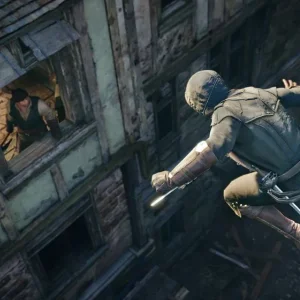
Design Inertial Mocap Technology for Game Development
Explore Solution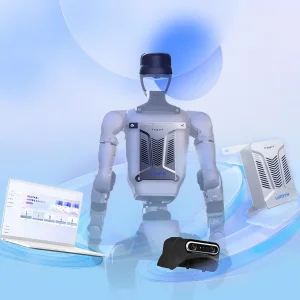
Design AI LingSi System | Robotic Intelligent Creation Platform
Explore Solution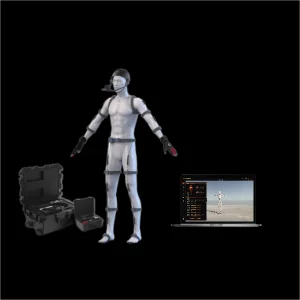
Design DreamsCap X1 Full-Body Hand & Face Capture for Robots
Explore Solution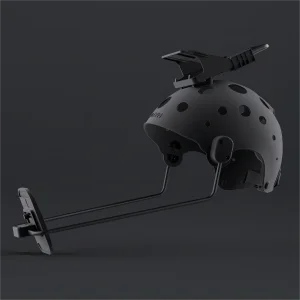
Best Virdyn VDFace Pro System with Face Capture Helmet
Explore Solution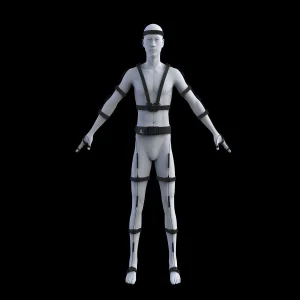
Design Virdyn VDSuit Full-Body Inertia Motion Capture Suit
Explore Solution
Design Book a Demo for VDSuit Full or mHand Pro
Explore Solution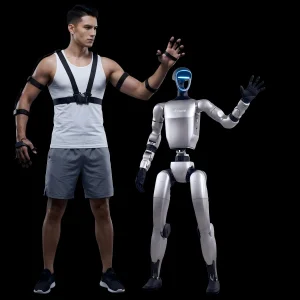
Best VDSuitMini Half-Body System | Robot Teleoperation
Explore Solution