
High-Precision Performance & Tracking Hardware
Integrate certified Android edge nodes, inertial body trackers, sub-millimeter finger haptics, and optical headgear into your studio infrastructure.
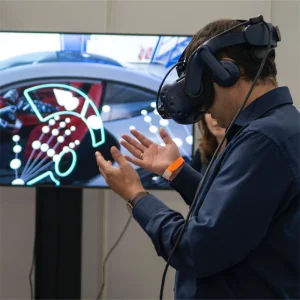
Design Book a Demo for VDSuit Full or mHand Pro Planning, Solution
View Product Details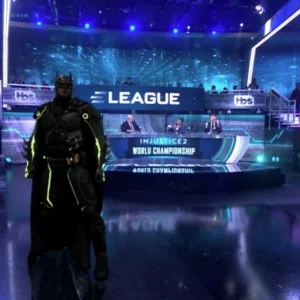
Design Motion Capture Provides Advanced Technology Tools for Virtual Film Production Planning, Solution
View Product Details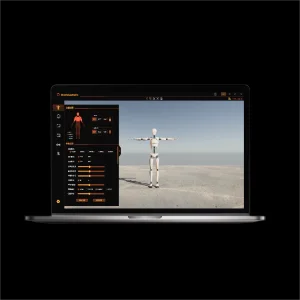
Design Virdyn DreamsCap Studio Motion Capture System Engine For Professional Animators Film and Game Producers Planning, Solution
View Product Details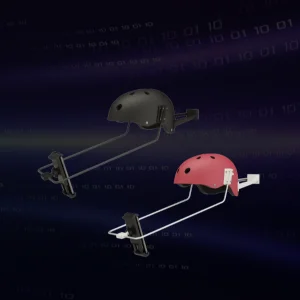
Best Virdyn VDFace Capture System for Real Time Facial Capture with Face Capture Helmet Planning, Solution
View Product Details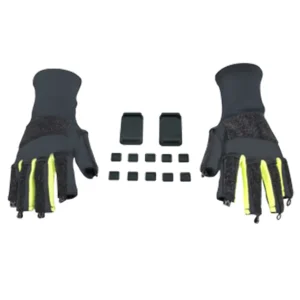
Best Inertia Motion Capture Fingers Capture Accessories Elastic Lycra Fabric Gloves for VDSuit Full(Without Sensors) Planning, Solution
View Product Details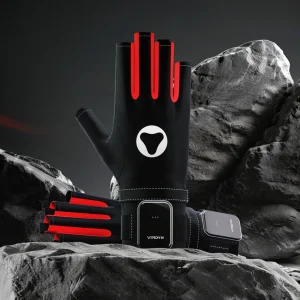
Best Virdyn mHand Pro an Inertia Motion Capture Gloves for Virtual Reality Planning, Solution
View Product Details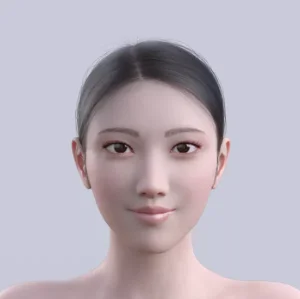
Best Customize Your 3D Virtual Avatar - Personalized High-Quality and Fast Delivery | 3D Custom Avatar Services Planning, Solution
View Product Details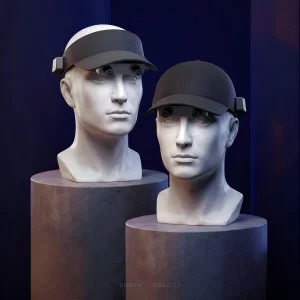
Design VDEgo - Egocentric Video Data Collection Service at Scale | FPV Head-Mounted Camera Planning, Solution
View Product DetailsWhy Enterprise Studios Shift to Scalable Android Facial Capture
A strategic breakdown of Capex, operating margins, hardware interoperability, and neural pipeline reliability across large-scale deployments.
70% Reduction in Fleet TCO
Traditional facial capture workflows rely heavily on single-vendor, closed-ecosystem iOS TrueDepth hardware, introducing extreme replacement costs, limited hardware lifecycle customization, and severe supply constraints during multi-actor production shoots.
By implementing enterprise Android facial tracking clusters utilizing modern high-frame-rate Camera2 NDK APIs and specialized NPUs (Snapdragon Neural Processing Engine), enterprise procurement departments reduce hardware acquisition costs by up to 70% while sustaining identical sub-frame tracking accuracy.
Open OS Pipeline Agility
Proprietary closed-source platforms enforce background sandbox limitations, unpredictable thermal throttling, and automatic process termination during prolonged studio sessions. Android’s open operating system allows our engineers to compile low-level C++ daemons running directly on bare-metal kernels.
This bypasses OS garbage collection, locks CPU/NPU governance frequencies, and directly interfaces with custom helmet-mounted USB UVC sensors and external synchronization genlocks for bulletproof 24/7 broadcast operations.
Local Compute Data Privacy
In high-security AAA game studios, virtual film projects, and proprietary robotics research, transmitting raw video frames across Wi-Fi or public cloud networks presents severe intellectual property and biometric compliance liabilities under GDPR and ISO/IEC 27701.
Virdyn's Android architecture processes computer vision models entirely on-device, calculating 52 ARKit-compatible FACS coefficients locally and streaming purely discrete numeric vectors via encrypted UDP/OSC packets.
Deterministic Edge Solve Rate
Lens-to-Viewport Network Latency
Anatomical Muscle Blendshapes
Multi-Actor Timecode Sync Lock
End-to-End Solutions Across Global Production Sectors
From virtual film stages to humanoid teleoperation, discover how synchronized Android facial capture interfaces with full-body inertial motion capture hardware.
Virtual Film Production
In LED volume in-camera visual effects (ICVFX), actors wear our lightweight carbon-fiber AH-Double camera face helmets coupled with Android computing modules. The system calculates nuanced micro-expressions (corrugator supercilii contraction, lip purse, eye saccades) and live-streams directly into Unreal Engine 5's Live Link framework, synchronizing with the VDSuit Full skeleton over PTP IEEE 1588 timecode.
VTuber Agencies & Live Broadcast
High-volume digital human agencies require continuous 8+ hour live streams without thermal crash or tracking decay. Virdyn's Android facial mocap solution pairs seamlessly with Warudo, VRChat OSC, and Unity DCC runtimes. By distributing real-time eye gaze calculations and phoneme viseme mapping to our dedicated Android edge solver, main rendering workstations remain fully dedicated to GPU rendering.
Embodied AI & Humanoid Mimicry
Training humanoid robots requires comprehensive human demonstration data spanning gross motor skills down to human-robot emotional interaction. Paired with VDRobot Studio and VDTraining reinforcement frameworks, the Android facial tracking platform captures operator emotional cues, mapping human facial expressions to multi-DOF social robot mechanical face actuators with zero perceptual delay.
AAA Game Studio Cinematics
For cinematic motion capture studios, our DreamsCap Studio engine unifies multi-actor performance capture. Directors monitor synchronized full-body skeletal telemetry from VDSuit Full, finger articulations from mHand Pro gloves, and complete facial performance from our Android capture helmets on a single centralized monitor grid with instantaneous FBX/BVH raw curve export.
Technical Benchmark: Edge AI vs. Monocular RGB vs. IR Structured Light
A comprehensive engineering comparison detailing frame delivery, thermal stability, landmark extraction, and spatial synchronization performance.
| Evaluation Parameter | Virdyn Android Neural Vision Edge | Standard iOS TrueDepth Rig | Traditional Desktop Optical IR |
|---|---|---|---|
| Inference Architecture | Edge-Optimized TensorRT / TFLite NPU Engine | Apple Neural Engine (Closed Sandbox) | Host PC Centralized GPU Rig |
| Output Facial Topology | 52 ARKit Blendshapes + Custom 78 FACS AUs | 52 Standard Blendshapes Only | 3D Marker Trajectories / Point Clouds |
| Thermal Throttling Threshold | Continuous >8 hrs (Bypassed Governance) | Throttles at 45–60 min (60 to 30 FPS) | Continuous (AC Powered Cameras) |
| Multi-Camera Sync Latency | Sub-14ms via Direct UDP/OSC or USB Tether | 22–35ms via Wi-Fi Live Link | Sub-5ms via Hardware Genlock BNC |
| Lighting Tolerance | Adaptive IR Illumination + Low-Light ISP | High IR Sensitivity; Weak in Sunlight | Requires Controlled Studio Lighting Rig |
| Cross-Platform Modality Integration | Direct VDSuit / mHand Pro IMU Fusion Sync | Third-party Software Bridge Required | Native Suite Integration Only |
Landmark Coordinate Regression
Our Android inference pipeline uses a lightweight, dense 468-point 3D facial mesh regressor. By isolating regions of interest (ROI) around the periocular and perioral zones, the model achieves sub-pixel landmark precision even during high-velocity head rotations, completely eliminating marker slip common in traditional optical tracking.
Adaptive 1-Euro & Kalman Filtering
To eliminate high-frequency micro-jitter without introducing tracking lag during rapid vocal articulation, the output stream executes dual-stage algorithmic filtering. Slow facial muscular changes trigger aggressive noise suppression, while sudden velocity spikes automatically reduce smoothing coefficients to guarantee instantaneous responsiveness.
Native DCC Network Protocols
Payloads are packaged into ultra-compact, binary-serialized OSC (Open Sound Control) or direct Unreal Engine Live Link Protocol Buffers. Over 50 channels of normalized float weights are transmitted concurrently at 60Hz per actor, consuming negligible local network bandwidth (<120 kbps per stream) for massive multi-performer scalability.
Engineering Horizons: 2026–2030 Next-Generation Mocap Vision
Strategic advancements pioneering the convergence of neuromorphic vision sensors, diffusion-based micro-expression synthesizers, and unified embodied intelligence.
Phase I: Neuromorphic Event Cameras
Transitioning from frame-based video capture to event-based neuromorphic vision sensors integrated on Android SoC backplanes. By recording only continuous changes in pixel brightness asynchronously, microsecond temporal resolution is attained at a fraction of data bandwidth, effectively tracking rapid eyelid twitches and ocular micro-tremors at over 1,000 equivalent FPS without motion blur.
Phase II: On-Device Diffusion Rigs
Deploying quantized generative latent models on local Android NPUs to predict occluded geometric features. When an actor's hand or a physical prop covers portions of the jaw or mouth, edge AI infers the biomechanical trajectory based on phonetic voice analysis and co-articulation dynamics, delivering continuous, artifact-free performance telemetry.
Phase III: Unified Embodied Kinematics
Full algorithmic convergence connecting VDSuit Full full-body IMU data, mHand Pro finger telemetry, and Android VDFace tracking into a single unified kinematic optimization graph. Biomechanical kinetic energy distributions across the spine, neck, and facial muscles will be computed in real-time, enforcing complete anatomical coherence.
Enterprise Biometric Governance & Global Support SLA
Ensuring end-to-end data integrity, biometric isolation, and international enterprise SLA fulfillment for corporate and studio procurement teams.
GDPR & CCPA Biometric Isolation
Under strict biometric regulations, raw video containing identifiable human facial imagery cannot be stored or transferred without stringent administrative controls. Virdyn's Android facial capture runtime is architected around zero-persistence biometric computing: raw frames remain strictly within volatile NPU memory buffers, where they are converted into abstract numerical blendshape coefficients and immediately purged from memory.
24/7 Field Engineering SLA
To support global enterprise clients across North America, Europe, and the Asia-Pacific region, Virdyn maintains dedicated Tier-3 engineering response hubs. Clients receive direct developer-level SDK support, custom pipeline consulting for proprietary in-house game engines, and pre-configured hot-swap replacement modules with guaranteed dispatch windows.
Open API & Android NDK Extensibility
Unlike monolithic consumer software, Virdyn provides low-level Android NDK C++ dynamic libraries (.so) and wrappers for Java/Kotlin, C#, and Python. Enterprise software architects can embed our high-performance tracking core directly into custom corporate mobile applications, defense flight-simulator cockpits, or medical diagnostic rehabilitation suites.
End-to-End Motion Capture, Datasets & Robotics Suites
Complete your production pipeline with humanoid robot training platforms, custom 3D avatar workflows, and commercial broadcast toolkits.
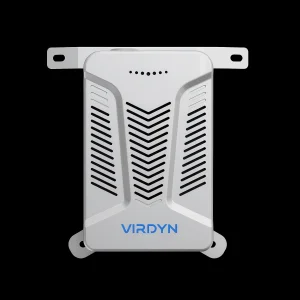
Best Humanoid Robot Intelligent Voice Interaction Development Kit Planning, Solution
View Product Details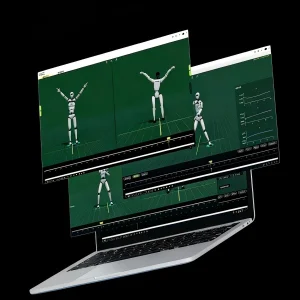
Design Ready-to-Use Robot Motion Datasets | Virdyn Planning, Solution
View Product Details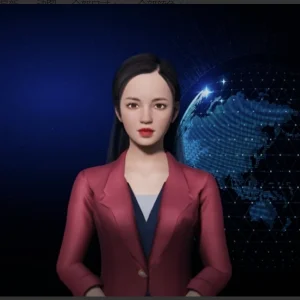
Design Virtual Host Technology: Help Mainstream Media Layout Virtual Reality Industry Planning, Solution
View Product Details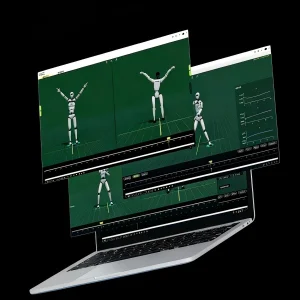
Design VDRobot Studio: Motion Data Collection&Conversion Platform for Robotics | Virdyn Planning, Solution
View Product Details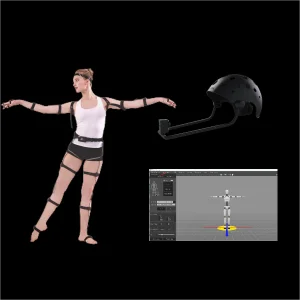
Design VDCap Full Performance Capture Entry-Level Motion Capture Kits for Beginners and Hobbyist Planning, Solution
View Product Details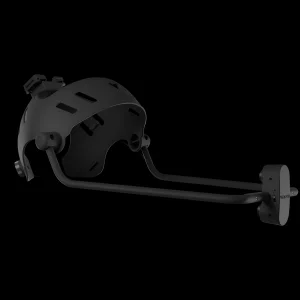
Design AH Double Camera-Based Face Capture Helmet With HD 1080p Embedded RGB Camera Planning, Solution
View Product Details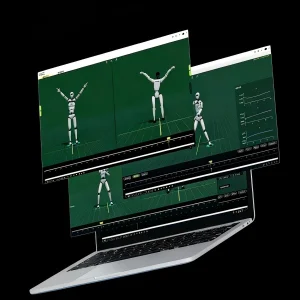
Design VDTraining: One-Stop Robot Reinforcement & Imitation Learning Platform Planning, Solution
View Product Details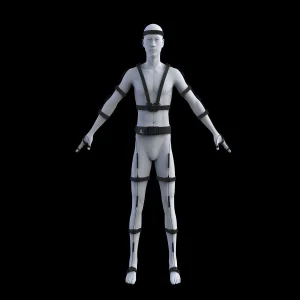
Design Virdyn VDSuit Full for Full Body Function Inertia Motion Capture Suit Planning, Solution
View Product DetailsFrequently Asked Questions on Android Facial Tracking Systems
In-depth technical answers addressing deployment concerns, wireless jitter management, ARKit blendshape retargeting, and multi-device genlock synchronization.
How does Android facial mocap achieve low latency comparable to dedicated hardware?
Can Android facial capture run simultaneously with VDSuit Full and mHand Pro gloves?
How does the system mitigate Android device fragmentation and variable ISP quality?
What are the exact blendshape standards output by the Android mocap solver?
How is thermal throttling handled during long live-broadcast and production sessions?
Deploy Enterprise Android Facial Tracking in Your Production Studio
Contact our global systems engineering team to schedule a live remote pipeline demonstration, request enterprise volume quotes, or receive the complete SDK integration documentation.