Industrial Core Capture Stack
Explore Virdyn's enterprise inertial sensor suites, real-time facial helmets, and dexterous teleoperation interfaces configured specifically for native low-latency Warudo integration.
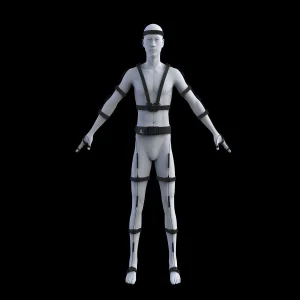
Design Virdyn VDSuit Full for Full Body Function Inertia Motion Capture Suit Planning, Solution
Configure VDSuit Full
Design Motion Capture Provides Advanced Technology Tools for Virtual Film Production Planning, Solution
Explore Film Tools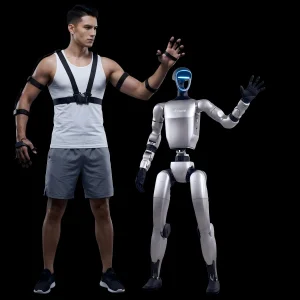
Best VDSuitMini Half-Body Mocap System | Robot Data Collection & Teleoperation | Free Software Planning, Solution
Deploy Half-Body Mocap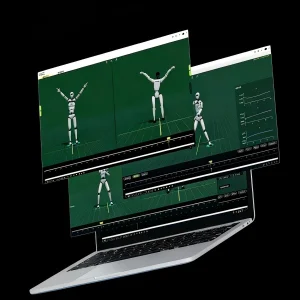
Design VDRobot Studio: Motion Data Collection&Conversion Platform for Robotics | Virdyn Planning, Solution
Explore Robotics Studio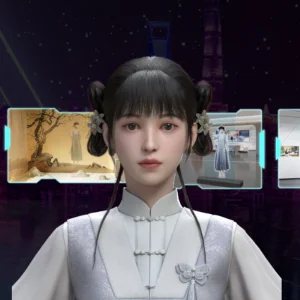
Design Virtual Human Technology: Digital Human Activation Brand Marketing New Path Planning, Solution
Discover Digital Humans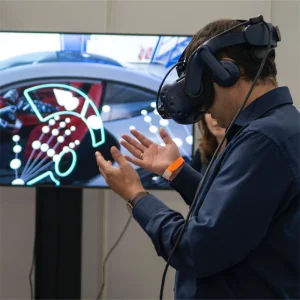
Design Book a Demo for VDSuit Full or mHand Pro Planning, Solution
Schedule Engineering Demo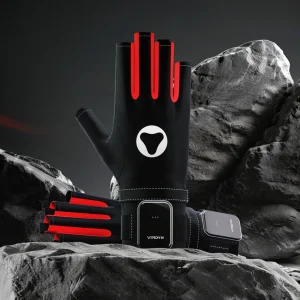
Best Virdyn mHand Pro an Inertia Motion Capture Gloves for Virtual Reality Planning, Solution
Deploy mHand Pro Gloves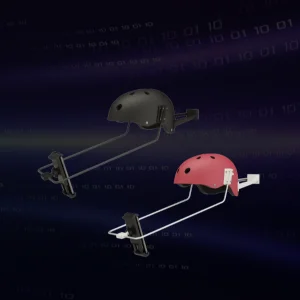
Best Virdyn VDFace Capture System for Real Time Facial Capture with Face Capture Helmet Planning, Solution
Integrate VDFace SolutionThe Warudo & Inertial Motion Capture Synergy
Analyzing the paradigm shift in 3D character puppeteering, flexible node blueprints, and high-fidelity real-time rendering environments.
Node-Based Runtime Flexibility
Warudo has redefined virtual production by replacing rigid monolithic software with an extensible, node-based visual scripting pipeline. Integrating Virdyn’s inertial data stream via native UDP/VMC or C# plugins enables instant procedural asset binding, customized collision layers, dynamic lighting interactions, and interactive prop kinematics without recompilation.
Zero-Latency Telemetry Streaming
Traditional optical marker workflows incur multi-stage camera parsing delays, marker occlusion interpolation, and heavy spatial calibration requirements. By bridging Virdyn VDSuit Full 9-axis sensor arrays directly into Warudo's kinematic solver at <20ms latency, creators achieve real-time responsive avatars capable of complex stage choreographies.
Biomechanical Stability & Anti-Drift
The core challenge in inertial tracking has historically centered on magnetic anomalies and integration drift. Virdyn’s proprietary multi-sensor data fusion engine, coupled with dynamic Zero-Velocity Update (ZUPT) algorithms, maintains rock-solid ground contact constraints, eliminating floor sinking and foot sliding inside the Warudo physics engine.
Global Enterprise Procurement Demands
Enterprise procurement teams across North America, Europe, and East Asia are shifting capital expenditures from optical stages to agile wearable hardware integrated with flexible real-time software runtimes.
Entertainment & VTuber Talent Agencies
Global multi-channel networks (MCNs) managing rosters of dozens of live streaming performers demand rapid setup, portable operational footprints, and minimal software licensing overhead. The pairing of Virdyn VDSuit Full, mHand Pro gloves, and Warudo eliminates dedicated stage infrastructure, enabling simultaneous daily 6-hour interactive live broadcasts with zero camera calibration downtime.
AA/Indie Game Studios & Virtual Previs
Mid-tier video game studios require high-throughput animation assets without paying exorbitant hourly rates for commercial optical soundstages. By deploying inertial suit rigs synchronized into Warudo for real-time visualization and Maya/Unreal Engine for BVH/FBX capture, studios reduce character animation budgets by up to 70% while accelerating scene previsualization cycles.
Embodied AI & Robotics Research Labs
Universities and advanced robotics manufacturers require rich multimodal teleoperation datasets. Capturing human musculoskeletal kinematics at 100Hz+ while validating reach, collision, and end-effector orientation inside digital twins provides foundational training datasets for imitation learning and humanoid robot autonomous path planning.
China Factory 4.0: Supply Chain Resilience & Precision Engineering
How advanced smart manufacturing, localized MEMS sourcing, and rigorous quality assurance in Guangzhou enable premium tier-one motion capture at unmatched commercial scalability.
Automated Sensor Binning & Robotic Calibration
Every single inertial node powering the VDSuit Full and mHand Pro undergoes multi-axis thermal, gyroscopic, and magnetic stress testing using automated robotic arms inside Virdyn's Guangzhou facility. Sensor calibration profiles are written directly into non-volatile node memory, ensuring uniform quaternion precision (<0.5° orientation error) across entire enterprise fleets.
Supply Chain Cluster & Rapid Cycle Iteration
Situated within the Greater Bay Area hardware ecosystem, Virdyn leverages tight integration with high-precision SMT assembly lines, flexible circuit fabrication, and specialized textile engineering. This allows agile design revisions, rapid custom cable harness integration, continuous firmware iterations, and lead times measured in days rather than quarters.
Warudo Motion Capture Pipeline Architecture
A comprehensive step-by-step technical blueprint for synchronizing inertial suits, facial tracking helmets, and finger capture gloves inside Warudo's node-graph engine.
Step 1: Telemetry Broadcast (UDP / VMC)
Launch VDMocap Studio Plus and configure the network broadcast tab. Enable VMC (Virtual Motion Capture) protocol forwarding across IP port 39539. Real-time bone rotational quaternions and root translation estimates are packetized with millisecond-precision timestamps to eliminate packet jitter.
Step 2: Warudo Receiver Node Binding
Inside Warudo, instantiate an "On Update" event node connected to a "VMC Receiver" node. Select your imported VRM/FBX character model. Map the skeletal bone transforms automatically. Warudo's internal Inverse Kinematics (IK) automatically handles foot pinning and pelvic stabilization to avoid clipping.
Step 3: Multimodal Face & Finger Synthesis
Integrate VDFace real-time helmet streams via Apple ARKit 52 blendshape standards alongside mHand Pro finger telemetry. Warudo's blend nodes merge skeletal pose, 16-segment finger flexion, and micro-facial expressions into a single coherent visual performance at 60 FPS.
Localized Commercial & Industrial Scenarios
Examining field-proven implementations of the Virdyn + Warudo motion capture infrastructure across diverse production vertical sectors.
Scenario A: 24/7 E-Commerce VTuber Livestreams
In high-density live streaming studios, space is limited and electromagnetic interference from lighting rigs is prevalent. Virdyn’s anti-interference algorithm maintains tracking precision inside standard 10m² rooms. Warudo triggers automated gift interactions, dynamic garment physics, and camera zoom automations on actor gestures.
Scenario B: Virtual Concerts & Real-Time Fan Engagement
For live virtual concerts, multi-actor tracking allows multiple performers wearing VDSuit Full suits to share a synchronized virtual stage inside Warudo. Real-time MIDI cues and audience chat events trigger dynamic particle effects and procedural stage transitions with zero latency lag.
Scenario C: Indie Film Virtual Production & Previs
Directors utilize Warudo as a lightweight virtual production tool. Actors wear VDSuit Full and mHand Pro gloves while navigating digital sets rendered in real time. The director can adjust virtual lens focal lengths, lighting setups, and camera tracks instantly, recording clean animation takes directly to FBX for post-processing in Unreal Engine.
Scenario D: Humanoid Robot Imitation Learning
Robotics engineering teams feed human demonstrator motions into VDRobot Studio, converting live human kinematics into URDF joint angle trajectories. Visualized inside Warudo or digital twin simulators, teleoperators validate reachability, torque limits, and collision avoidance for embodied AI training.
Mocap Architecture Evaluation Matrix
A rigorous quantitative assessment comparing the Virdyn + Warudo ecosystem against traditional optical, markerless vision, and consumer tracking setups.
| Evaluation Parameter | Virdyn Inertial + Warudo | Optical Marker System | Markerless AI Vision (RGB) | Consumer Lighthouse VR |
|---|---|---|---|---|
| Spatial Requirement | Zero footprint; indoor/outdoor arbitrary | Requires 30-100m² dedicated studio | Constrained to camera field of view | Limited to 5x5m tracker volume |
| Occlusion Vulnerability | Immune (Sensor-based telemetry) | High (Markers blockable by props) | Extreme (Overlapping limbs fail) | Moderate (Tracker line-of-sight) |
| End-to-End Latency | <20 ms (Real-time live streaming) | <15 ms (Requires massive compute) | 60-120 ms (Heavy neural inference) | 25-35 ms |
| Calibration Time | <2 minutes (Single A/T-pose) | 45-90 minutes (Wand waving, staging) | 1-5 minutes per actor profile | 5-10 minutes (Room setup) |
| Finger & Face Synthesis | Native mHand Pro + VDFace ARKit | Complex auxiliary marker arrays | Low-resolution 2D keypoints | External hand trackers required |
| Total Cost of Ownership | Low CapEx / Zero recurring site costs | Extreme ($50k-$250k+ soundstage) | Medium (Requires high-end GPU arrays) | Low (Consumer hardware limits) |
Frequently Asked Questions
Detailed engineering explanations addressing common questions raised by enterprise architects, VTuber agencies, and industrial system integrators.
How does Virdyn resolve electromagnetic interference and yaw drift inside Warudo?
Can multiple performers wearing VDSuit Full be tracked simultaneously in a single Warudo scene?
How is finger and facial tracking integrated alongside full-body motion in Warudo?
What are the minimum workstation hardware specifications for zero-latency streaming?
Can motion capture data captured in Warudo be exported to Maya, Blender, or Unreal Engine?
How does Virdyn support institutional procurement and OEM/ODM customizations?
Expanded Solutions & Platform Software
Explore Virdyn’s specialized platforms for game development, virtual education, entry-level capture kits, and advanced humanoid robot imitation learning frameworks.

Best Motion Capture Technology Opens a New Era of Animation Development Planning, Solution
View Animation Solution
Design Inertial Motion Capture Technology to Help the Game Development and Production Planning, Solution
Explore Game Production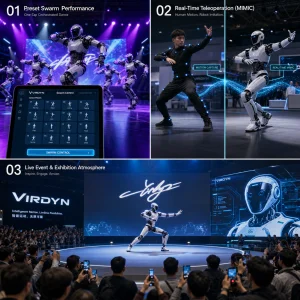
Best Virdyn Humanoid Robot Live Event Performance Solution for Robot ce&Teleoperation Planning, Solution
Explore Robot Teleoperation
Best Virtual Live Technology Empowerment Makes Online Education and Learning As Fun As Watching Cartoons Planning, Solution
Deploy Education Solution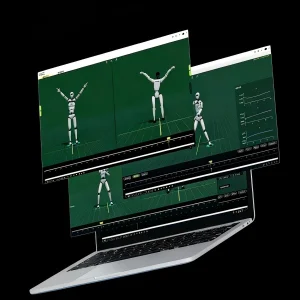
Design VDTraining: One-Stop Robot Reinforcement & Imitation Learning Platform Planning, Solution
Configure VDTraining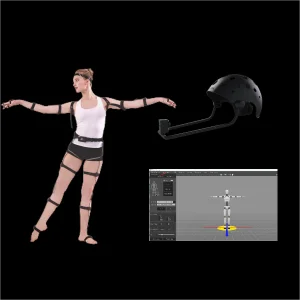
Design VDCap Full Performance Capture Entry-Level Motion Capture Kits for Beginners and Hobbyist Planning, Solution
Explore Entry-Level Kits
Design Virtual Actors: How the Film Industry Should Layout the Virtual Market Planning, Solution
Virtual Market Strategy