
Design Motion Capture 3ds Max Planning & Pipeline Solution
An industrial whitepaper on architecting high-fidelity inertial and optical motion capture pipelines within Autodesk 3ds Max: skeletal retargeting, biped optimization, sub-20ms low-latency runtime, and embodied AI teleoperation frameworks.
Certified Motion Capture Systems for Production Pipelines
Engineered for native integration with Autodesk 3ds Max, Maya, Unreal Engine, and Unity. Discover precision inertial trackers, markerless optical rigs, and robotic motion telemetry hardware.
-

Best How Do Brands Use Virtual Spokesman to Tell Good Stories: Motion Capture Technology Empowers Brand Propagation Planning, Solution
Configure Solution -
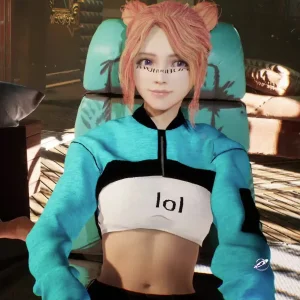
Best Virtual Human Live Streaming Rapidly Gaining Popularity: Motion Capture Suit Becomes a Key Tool Planning, Solution
Configure Solution -
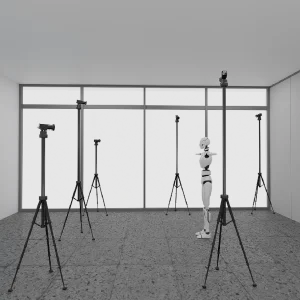
Best Camera Optical Markerless Motion Capture Solution - Virdyn YanDong | Real-Time Full Body, Hands, Face Planning, Solution
Configure Solution -
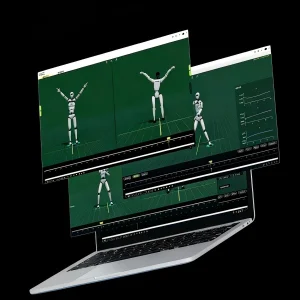
Design VDRobot Studio: Motion Data Collection&Conversion Platform for Robotics | Virdyn Planning, Solution
Configure Solution -
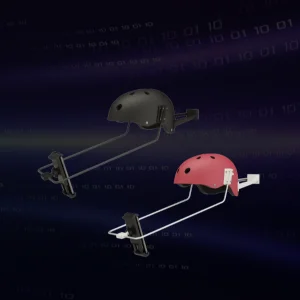
Best Virdyn VDFace Capture System for Real Time Facial Capture with Face Capture Helmet Planning, Solution
Configure Solution -
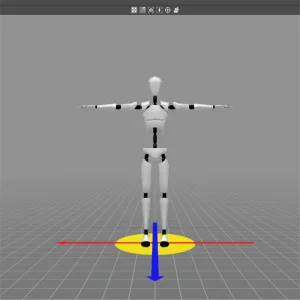
Design Virdyn VDMocap Studio Plus Motion Capture Software System for VDSuit Full Planning, Solution
Configure Solution -
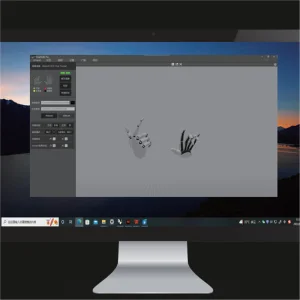
Best Virdyn mHand Studio Motion Capture Gloves Software System for mHand Pro Planning, Solution
Configure Solution -
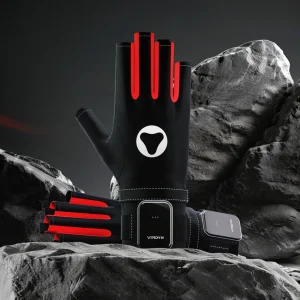
Best Virdyn mHand Pro an Inertia Motion Capture Gloves for Virtual Reality Planning, Solution
Configure Solution
Designing Motion Capture Workflows Inside Autodesk 3ds Max
Autodesk 3ds Max remains an industry-dominant digital content creation (DCC) suite across gaming, architectural visualization, and episodic VFX. Achieving seamless motion capture (mocap) integration requires addressing data protocol translation, skeletal topology mapping, Euler angle discontinuity, and inverse kinematic constraint resolution.
Biped & CAT Rig Integration
While contemporary pipelines often stream directly into real-time engines, character technical artists rely on 3ds Max Biped and CAT (Character Animation Toolkit) systems for deep procedural layering and keyframe cleanup. Virdyn's capture suite provides native quaternion translation tools that eliminate gimbal lock during Biovision Hierarchy (.BVH) and Filmbox (.FBX) file imports, ensuring bone scales and reference coordinate spaces align with sub-millimeter precision.
- Zero-twist forearm alignment via dual-quaternion math
- Custom Biped .CST configuration mapping presets
- Automated CAT bone twist weight transfer
Real-Time UDP & IPC Streaming
Modern enterprise workflows cannot tolerate hours of post-recording manual bake cycles. By deploying low-overhead TCP/UDP telemetry and Shared Memory Inter-Process Communication (IPC) hooks directly within 3ds Max via custom MAXScript and C++ .DLU plugins, performers wearing VDSuit Full can control rigged meshes in the 3ds Max Viewport at 60 to 120 FPS with end-to-end latencies verified under 20 milliseconds.
- Asynchronous packet deserialization for viewport thread safety
- Lossless dynamic buffering for high-interference sets
- Simultaneous streaming to 3ds Max and Unreal Engine 5
Biomechanical Error Compensation
Inertial sensors inherently face position drift due to double integration of linear accelerometers. Within 3ds Max pipelines, Virdyn’s sensor fusion engine utilizes active zero-velocity update algorithms (ZUPT) combined with floor-contact detection nodes. Foot sliding is eliminated at the software driver level before keys are committed to the 3ds Max Motion Mixer, saving hundreds of cleanup hours per asset.
- Integrated floor contact detection in 3ds Max Track View
- Automated markerless trajectory curve reconstruction
- Dynamic center-of-mass (CoM) stability checking
Global Sourcing Requirements & Macro-Industry Deployment
Procuring studio-grade motion capture infrastructure requires strategic evaluation of CAPEX, ongoing maintenance, workspace constraints, and software interoperability. Understanding how inertial systems compare to classical optical stages enables studios to minimize Total Cost of Ownership (TCO).
CAPEX vs. OPEX Rationalization
Traditional optical motion capture setups require dedicated stage space exceeding 100 m², specialized camera trusses, acoustic isolation, and extensive camera calibration arrays—pushing initial deployment budgets beyond $250,000 USD. Inertial capture solutions like the VDSuit Full eliminate room-scale constraints entirely. Production studios achieve 85% CAPEX reduction while maintaining the flexibility to capture high-dynamic stunts in field locations, sound stages, or office environments.
Cross-DCC Interoperability
Enterprise content studios do not operate in a vacuum. A motion asset captured for 3ds Max must frequently transition into Autodesk Maya for cloth simulation, Houdini for destructive particle dynamics, and Unreal Engine 5 or Unity for interactive rendering. Virdyn’s unified output protocol packages full-body kinetics, per-finger articulation via mHand Pro, and 52-blendshape ARKit-compatible facial telemetry into clean, non-destructive formats ready for immediate hand-off.
EMC & Environmental Resilience
Industrial settings, soundstages with LED display walls (Unreal Virtual Production), and robotics factories present intense electromagnetic interference (EMI). Enterprise mocap buyers evaluate whether IMU tracking systems incorporate active magnetic anomaly rejection algorithms. Virdyn suits leverage custom 9-axis fusion units combining tri-axial gyroscopes, accelerometers, and advanced anti-interference magnetometers to prevent skeletal deformation near heavy stage steel.
| Evaluation Parameter | Inertial Suit Pipeline (VDSuit Full) | Passive Optical Mocap Stage | Markerless Camera System (YanDong) |
|---|---|---|---|
| Spatial Footprint & Setup | Zero dedicated stage needed; calibrated within 3 minutes indoors or outdoors. | Requires 80–200 m² clean line-of-sight stage with permanent wall-mounted trusses. | Requires minimal studio clearance; 2 to 4 synchronized optical cameras. |
| Occlusion Vulnerability | 100% immune to visual line-of-sight occlusion, prop blocking, and ground rolls. | Severe drift or tracking loss if 2+ markers are occluded by props or actors. | Moderate; subject to limb crossover or rapid illumination changes. |
| Autodesk 3ds Max Pipeline Fit | Direct BVH/FBX streaming via UDP plugin into Biped/CAT rigs with real-time key baking. | Requires extensive optical marker-to-actor cloud solving (C3D format) before retargeting. | Direct point-cloud to skeletal bone mapping via standalone solver software. |
| Finger & Facial Synchronization | Integrated mHand Pro 16-node gloves + VDFace wireless helmet on identical timecode. | Requires dense, highly fragile retroreflective micro-markers and specialized head rigs. | Single RGB-D sensor neural estimation for face; hands tracked within camera cone. |
| Typical Total System TCO | Low CAPEX ($5,000 – $15,000 range); minimal annual maintenance overhead. | High CAPEX ($150,000 – $400,000); requires dedicated calibration engineers. | Moderate CAPEX ($8,000 – $25,000); scalable software subscription models. |
Technological Roadmap: From Entertainment to Embodied AI
Motion capture is transcending entertainment. Human movement data recorded in 3ds Max formats is becoming the primary training substrate for autonomous humanoid robotics, reinforcement learning from human demonstrations (RLfD), and neural simulation.
Humanoid Teleoperation & RLfD
Using VDRobot Studio alongside 3ds Max kinematic solvers, industrial robotics labs map human motion demonstrations directly into URDF (Unified Robot Description Format) articulation trees. Mocap suits function as sub-millisecond teleoperation interfaces, allowing human pilots to teach dual-arm humanoid robots delicate pick-and-place tasks, assembly procedures, and industrial tool handling.
Generative Neural Denoising
The next generation of Virdyn tracking engines leverages transformer-based spatio-temporal neural filters. By training on petabytes of human biomechanical datasets, neural autoencoders predict and suppress sensor drift, high-frequency foot sliding, and non-physiological bone stretching in real-time, delivering optical-grade positional fidelity without physical markers.
Egocentric Spatial Multimodality
Pairing head-mounted egocentric vision rigs (such as VDEgo) with full-body inertial suits enables simultaneous capture of first-person visual perception and proprioceptive physical kinetics. This multi-modal dataset directly fuels Vision-Language-Action (VLA) models, establishing the standard for training embodied AI in virtual twin simulations created inside Autodesk 3ds Max.
Enterprise Compliance, SLA Guarantees & Global Support
Procuring international hardware assets for tier-one media production or university research facilities requires rigorous verification of global telecommunications compliance, data security, and comprehensive technical warranties.
Radio Frequency & Hardware Certifications
All Virdyn wireless transmission hardware (including 2.4GHz proprietary ultra-low-latency RF hubs and Wi-Fi 6 modules) complies with CE (European Conformity), FCC Part 15 (Federal Communications Commission), and RoHS environmental standards. Equipment is certified safe for international freight and deployment in complex broadcast facilities without disrupting wireless audio and stage communications.
Enterprise SLA & Global RMA Guarantees
Commercial enterprise packages include guaranteed 24-hour turnaround on technical engineering tickets, modular spare parts kits (including hot-swappable IMU nodes, elastic harness webs, and rechargeable battery banks), and expedited global express RMA replacement. Dedicated pipeline engineers are available to review client MAXScript loaders and 3ds Max rig configurations.
Data Sovereignty & Air-Gapped Operation
Studio confidentiality is critical. VDMocap Studio Plus and mHand Studio can operate in completely air-gapped network environments without mandatory cloud logins, outbound telemetry tracking, or proprietary license check callbacks. Your proprietary motion telemetry and character IP remain strictly within your local studio local area network (LAN).
Frequently Asked Questions: 3ds Max & Motion Capture Planning
Detailed engineering answers covering skeletal retargeting, bone orientations, latency limits, and hardware calibration protocols.
How does Virdyn resolve Euler angle gimbal lock when exporting to 3ds Max?
Virdyn’s motion capture architecture computes all segment orientations internally using unit quaternions (W, X, Y, Z). When exporting motion curves to 3ds Max FBX or BVH formats, users can specify XYZ, ZXY, or custom Euler rotation orders to match your target Biped or CAT rig hierarchy. In real-time streaming mode, rotation matrices are transferred directly, bypassing Euler recalculations until keyframes are baked in the Curve Editor.
Can I stream full-body motion, mHand Pro fingers, and facial capture simultaneously into 3ds Max?
Yes. VDMocap Studio Plus operates as the central data fusion hub. It aggregates body IMU nodes (VDSuit Full), finger tracking (mHand Pro data gloves), and facial blendshapes (VDFace camera helmet). The unified skeletal hierarchy is broadcast over a single synchronized network port using TCP/UDP, allowing 3ds Max to map the full expressive performance onto a single master character rig in real time.
How is magnetic interference handled in high-steel studio production spaces?
Virdyn’s hardware integrates multi-tiered anti-magnetic algorithms. The 9-axis IMUs prioritize high-rate gyroscopic integration and dynamic accelerometer filtering during rapid transients. If localized magnetic field anomalies (such as reinforced concrete floors or steel beams) are detected by the magnetometer, the sensor algorithm automatically shifts weighting toward inertial dead-reckoning and biomechanical joint angle boundaries, preventing erratic skeletal distortions.
What is the typical learning curve for a 3ds Max animator transitioning to mocap cleanup?
Because Virdyn exports clean, standard hierarchical skeleton rigs, animators familiar with 3ds Max Motion Mixer, Animation Layers, and the Biped Keyframing Tools typically become productive within 1 to 2 business days. The motion data arrives as standard transform tracks, allowing animators to apply additive animation layers for caricature exaggeration or collision tweaks immediately.
Can the data gathered in 3ds Max be exported to Unreal Engine 5 or Unity?
Absolutely. Once character animation is finalized, adjusted, or baked inside 3ds Max, standard FBX export presets (with bake animation enabled) ensure 100% bone-for-bone compatibility with the Unreal Engine 5 Control Rig, IK Retargeter, and Unity Mecanim Humanoid systems without requiring secondary translation software.
What are the power requirements and battery runtimes during extended shoot days?
The VDSuit Full and mHand Pro feature rechargeable lithium-ion battery modules delivering 4 to 6 hours of continuous, uninterrupted data transmission. Modular quick-release battery packs permit hot-swapping during actor breaks without recalibrating the suit, ensuring production schedules proceed without downtime.
Complementary Solutions for Complete Motion Capture Mastery
Expand your motion capture infrastructure with specialized hardware bundles, biometric analysis platforms, and teleoperation rigs designed for professional enterprise deployment.
-
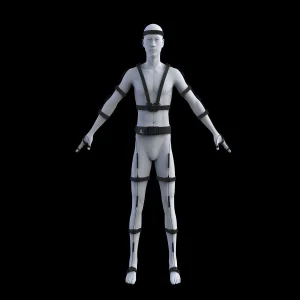
Design Virdyn VDSuit Full for Full Body Function Inertia Motion Capture Suit Planning, Solution
Configure Solution -
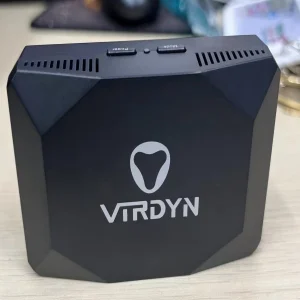
Design Full Body Motion Capture Accessories for Suit Hub Planning, Solution
Configure Solution -
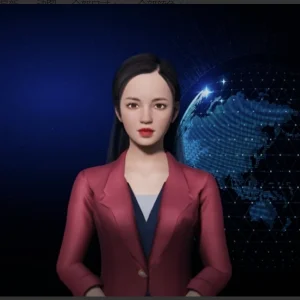
Design Virtual Host Technology: Help Mainstream Media Layout Virtual Reality Industry Planning, Solution
Configure Solution -
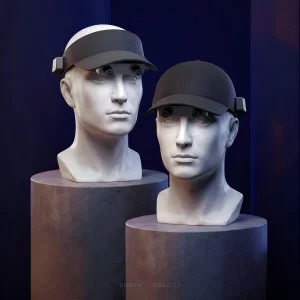
Design VDEgo - Egocentric Video Data Collection Service at Scale | FPV Head-Mounted Camera Planning, Solution
Configure Solution -
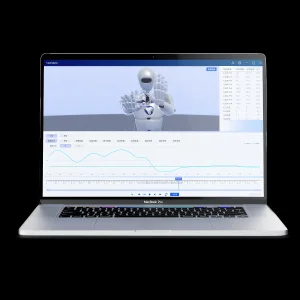
Best Valyze | Visualized Intelligent Motion Data Analysis Software for ce, Sports, Rehabilitation & Education Planning, Solution
Configure Solution -
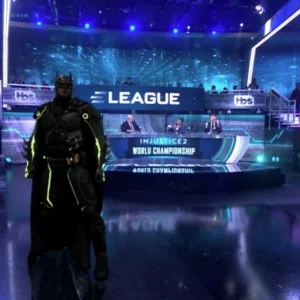
Design Motion Capture Provides Advanced Technology Tools for Virtual Film Production Planning, Solution
Configure Solution -
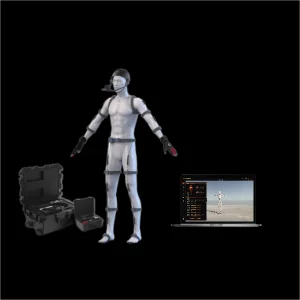
Design DreamsCap X1 Full-Body, Hand & Face Motion Capture for Humanoid Robot Data Collection & Teleoperation Planning, Solution
Configure Solution -
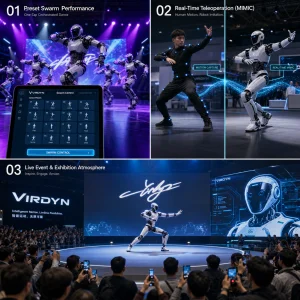
Best Virdyn Humanoid Robot Live Event Performance Solution for Robot ce&Teleoperation Planning, Solution
Configure Solution