
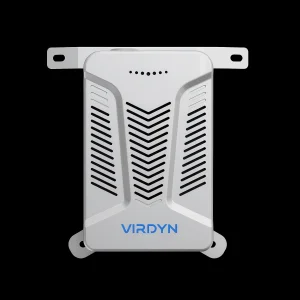
Hardware Ecosystem · Phase 01
Primary Motion Capture & Teleoperation Hardware
Engineered for sub-millimeter data fidelity, real-time edge processing, and native integration into next-generation industrial, robotic, and creative animation pipelines.
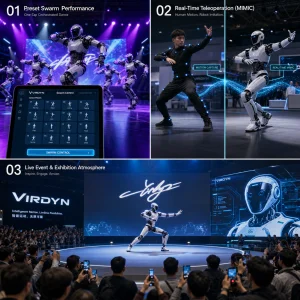
Best Virdyn Humanoid Robot Live Event Performance Solution for Robot ce&Teleoperation Planning, Solution
Configure Solution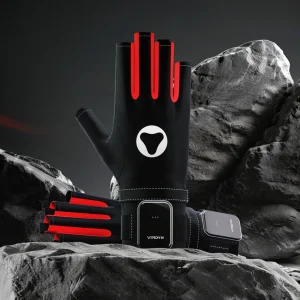
Best Virdyn mHand Pro an Inertia Motion Capture Gloves for Virtual Reality Planning, Solution
Configure Solution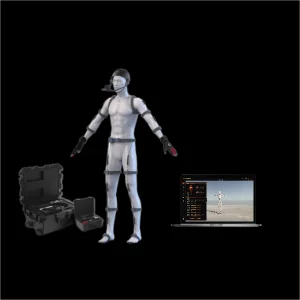
Design DreamsCap X1 Full-Body, Hand & Face Motion Capture for Humanoid Robot Data Collection & Teleoperation Planning, Solution
Configure Solution
Best Motion Capture Technology Opens a New Era of Animation Development Planning, Solution
Configure Solution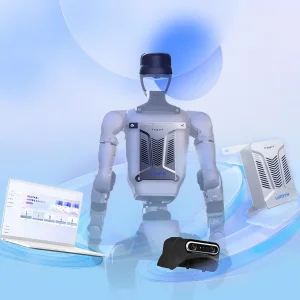
Design AI LingSi System | Robotic Intelligent Creation Platform & Intelligent Voice Interaction Planning, Solution
Configure Solution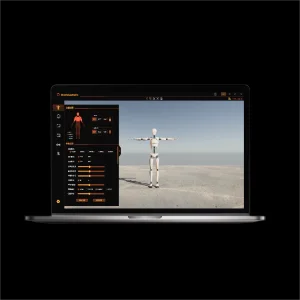
Design Virdyn DreamsCap Studio Motion Capture System Engine For Professional Animators Film and Game Producers Planning, Solution
Configure Solution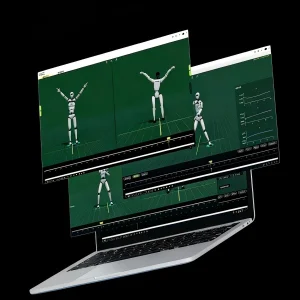
Design Ready-to-Use Robot Motion Datasets | Virdyn Planning, Solution
Configure SolutionIndustrial White Paper Overview
The Economics of Low-Cost Motion Capture Planning
Motion capture (mocap) has ceased to be an exclusive luxury reserved for AAA film studios and multi-million-dollar biomechanics facilities. By coupling high-frequency micro-electro-mechanical systems (MEMS) with low-latency 2.4GHz wireless protocols, advanced Extended Kalman Filtering (EKF), and localized edge AI retargeting, commercial enterprises can deploy full-body kinematics tracking at a fraction of legacy optical capital expense.
Inertial Sensor Fusion Architecture
Legacy optical volumes require dedicated riggings, dozens of sync cameras, and continuous marker calibration prone to line-of-sight occlusion. Modern low-cost inertial motion planning leverages 9-axis sensor arrays (accelerometer, tri-axial gyroscope, geomagnetic sensor) positioned across articulated joint centers to derive quaternion orientations natively.
Zero Occlusion FootprintHybrid Markerless & Algorithmic Infill
When integrated with budget-conscious single or dual monocular depth cameras, modern inertial sensor pipelines bypass position-drift challenges. Forward kinematics (FK) and inverse kinematics (IK) solvers resolve positional anchor points in real time, delivering biomechanically plausible root motion without room-scale optical tracker arrays.
Real-Time Biomechanical IKTotal Cost of Ownership (TCO) Shift
While high-end passive retroreflective camera rigs entail upfront expenditures of $80,000 to $250,000 USD (plus recurring studio real estate and calibration maintenance), professional-grade low-cost IMU setups reduce hardware entry costs by over 80%, facilitating scalable institutional and corporate rollouts.
80%+ CapEx OptimizationProcurement & Manufacturing Edge
China Factory Ecosystem & Industrial Supply Chain Advantages
Deploying competitive, highly robust motion capture suits at an accessible commercial price point requires tight integration with advanced electronics manufacturing clusters in Shenzhen and Guangzhou.
Direct Tier-1 MEMS Component Sourcing
Direct factory pipelines partner with Tier-1 semiconductor suppliers, locking in high-stability 9-axis MEMS inertial measurement chips. Unfiltered wholesale volume sourcing eliminates regional distributor markups, allowing higher grade IMUs to be built directly into low-cost production suites.
Automated SMT ProductionSmart Textile & Ergonomic Integration
Southern China's textile infrastructure delivers medical-grade, highly breathable Lycra blends with antibacterial, high-tensile properties. Embedded silicone anti-slip channels secure sensor positions directly against anatomical reference landmarks, reducing motion-artifact noise without cumbersome harness systems.
Bio-Stable Wearable DesignRapid Prototyping & Agile Firmware Iteration
Hardware and software co-development thrives within tight geographical proximity. From 4-layer flexible printed circuit (FPC) design iterations to high-precision ultrasonic sensor housings, the turnaround timeline from engineering bench tests to mass production is compressed by over 60% compared to Western counterparts.
Iterative Embedded Agile CyclesEnterprise Standards & Governance
Global Enterprise Procurement Requirements & Regulatory Compliance
International technology buyers, universities, and industrial research consortia operate under strict compliance mandates. Deploying low-cost solutions globally requires comprehensive certification, secure data protocols, and resilient localization networks.
FCC / CE / RoHS International Compliance
Wireless motion telemetry hardware operates across clean 2.4GHz ISM and Wi-Fi Direct frequency spectra. Systems comply fully with CE Radio Equipment Directive (RED), FCC Part 15 Class B emissions thresholds, RoHS environmental standards, and REACH chemical regulations, ensuring friction-free global customs clearance.
Universal RF ComplianceData Sovereignty & Localized Low-Latency Hubs
Telemetry data collection pipelines support full local offline execution—guaranteeing that proprietary robotics datasets, biometric joint angles, and confidential gaming cinematics are never exfiltrated to external cloud endpoints. Plug-ins communicate through isolated UDP/TCP and ROS sockets.
GDPR & ISO/IEC 27001 AlignedLocalized SLA & Spare Node Logistics
A reliable global procurement plan guarantees rapid replacement cycles. By maintaining regional RMA depots in North America, Europe, and the APAC region, defective individual node sensors, modular cables, or Lycra components can be hot-swapped within 48 to 72 business hours, mitigating critical downtime.
Global Direct RMA SupportTechnical Architecture & Trade-Off Matrix
System Engineering: Low-Cost Mocap vs. Optical & Depth Arrays
Selecting the appropriate kinematic capture architecture requires balancing space requirements, lighting constraints, latency budgets, and per-rig financial commitments.
| Evaluation Parameter | Virdyn Low-Cost IMU Architecture | High-End Optical (Vicon / Qualisys) | Markerless RGB/Depth AI (Camera Based) |
|---|---|---|---|
| Capital Investment (Per Rig) | $2,500 – $7,500 USD | $65,000 – $250,000+ USD | $1,500 – $5,000 USD (GPU intensive) |
| Operating Volume Constraints | Unbounded (Indoor / Outdoor / Enclosed Cabs) | Strictly bounded by camera throw volume | Bounded by camera angle, 2.5–5m cone |
| Occlusion Vulnerability | Zero (Worn directly on skeletal segments) | High (Requires constant optical line-of-sight) | Severe (High error on crossed limbs / props) |
| Output Latency (Live Engine) | < 15 ms (Direct RF / BLE 5.2 to USB receiver) | < 8 ms (GigE vision network pipeline) | 45 – 90 ms (Deep neural network inference) |
| Biomechanical Drift Handling | Automated zero-velocity updates (ZUPT) + EKF | Absolute global ground truth calibration | No rotational drift; frequent jitter/jitter jumps |
| Setup Time & Field Mobility | 3–5 minutes (Wear suit, T/A-pose calibrate) | Hours (Camera calibration, wanding, markers) | 1–2 minutes (No wearables needed) |
Architectural Implementation Roadmap
01
Biomechanical Skeleton Mapping
Perform subject bone measurement and anatomical joint indexing. Calibrate 17–27 IMU node positions across key skeletal anchors.
02
Magnetic Distortion Rejection
Execute adaptive dynamic filtering to decouple localized ferrous interference (rebar, servers) from true geomagnetic orientation.
03
Sub-System Sensor Fusion
Combine high-speed inertial data with optional monocular depth or feet contact sensors (ZUPT) to prevent positional drifting.
04
Protocol Telemetry Streaming
Stream formatted BVH, FBX, VRPN, OSC, or direct ROS2 message packages across internal network switches at 120–240 FPS.
Industrial Use Cases & Deployment Proof
Localized Application Scenarios Delivering Rapid ROI
Examining real-world production environments where low-cost motion capture hardware generates measurable productivity gains, cuts production cycles, and enables novel embodied AI workflows.
Humanoid Robot Teleoperation & Embodied AI Training
General-purpose humanoid robots rely on millions of tokens of kinematically accurate human demonstration datasets. Wearable IMU mocap suits paired with mHand Pro gloves allow human operators to pilot dual-arm manipulators and bipedal robots through direct teleoperation, logging fine-motor manipulation trajectories into Isaac Gym and ROS2 with sub-centimeter fidelity.
Embodied AI Trajectory GenerationIndie Game Studios & AAA Pre-Visualization
For independent gaming studios building games in Unreal Engine 5 or Unity, hiring external mocap stages costs upwards of $10,000 per day. Implementing in-house low-cost inertial suits empowers character animators to act out combat animations, locomotion blends, and dramatic cinematics within a standard office space, saving months of hand-keyframing.
Unreal Engine 5 Live RetargetingVirtual Production & Interactive VTuber Livestreams
Commercial VTubing agencies, live virtual commerce presenters, and digital human brand ambassadors require 4- to 8-hour continuous streaming sessions with zero frame drops. Lightweight IMU suits offer long battery life, low-friction operation, and direct VRChat (OSC) or Warudo broadcasting support for zero-downtime interactive live events.
Zero-Drop Live StreamingStrategic Technology Outlook 2026–2030
Emerging Trends Reshaping Kinematics & Spatial Computing
The convergence of edge AI models, multi-modal sensor fusion, and spatial computing headsets is ushering in a transformative era for low-cost motion capture solutions.
Neural Kinematic Solvers & Deep Contact Models
Traditional kinematics rely strictly on geometric joint constraints. Next-gen systems integrate neural kinematic networks trained on massive motion databases. These models accurately predict foot-to-ground contact states, foot sliding elimination, and center-of-mass balance dynamics purely from sparse IMU sensor arrays.
AI Learned Physics SolversEgocentric Vision & Headset Sensor Fusion
As spatial headsets (Apple Vision Pro, Meta Quest Pro) mature, low-cost mocap suits increasingly fuse egocentric downward-facing camera streams with body IMUs. This hybrid approach resolves global spatial drift while preserving ultra-high-rate 120Hz finger articulation and spinal flexion.
Spatial Computing SynergiesStandardized OpenXR & ROS2 Telemetry Standards
Proprietary raw data formats are rapidly yielding to standardized protocols. Low-cost systems now integrate OpenXR skeletal input pipelines alongside micro-ROS streaming nodes, enabling cross-platform plug-and-play across game engines, simulation testbeds, and physical humanoid robotics armatures.
Universal InteroperabilityHardware Ecosystem · Phase 02
Specialized Capture Systems, Sensors & Accessories
Expanding your production pipeline: High-precision facial tracking helmets, first-person egocentric cameras, broadcast accessories, and Lycra sensor-ready suits.
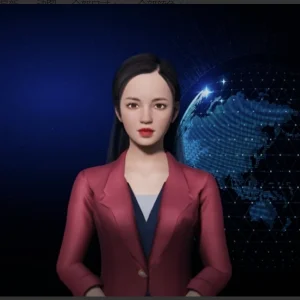
Design Virtual Host Technology: Help Mainstream Media Layout Virtual Reality Industry Planning, Solution
Configure Solution
Best Virtual Live Technology Empowerment Makes Online Education and Learning As Fun As Watching Cartoons Planning, Solution
Configure Solution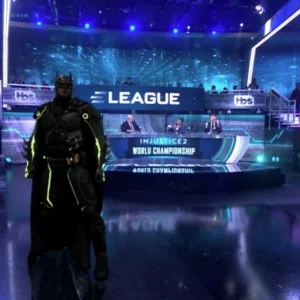
Design Motion Capture Provides Advanced Technology Tools for Virtual Film Production Planning, Solution
Configure Solution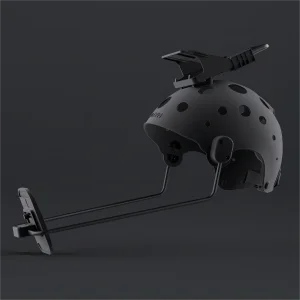
Best Virdyn VDFace Pro Capture System for Real Time Facial Capture with Face Capture Helmet Planning, Solution
Configure Solution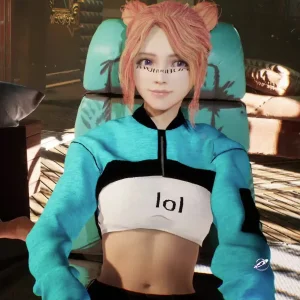
Best Virtual Human Live Streaming Rapidly Gaining Popularity: Motion Capture Suit Becomes a Key Tool Planning, Solution
Configure Solution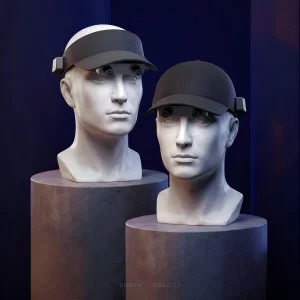
Design VDEgo - Egocentric Video Data Collection Service at Scale | FPV Head-Mounted Camera Planning, Solution
Configure Solution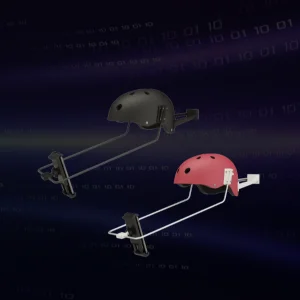
Best Virdyn VDFace Capture System for Real Time Facial Capture with Face Capture Helmet Planning, Solution
Configure Solution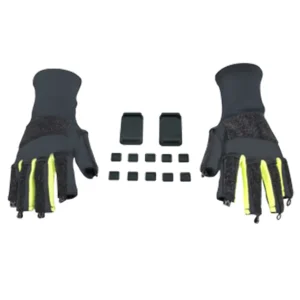
Best Inertia Motion Capture Fingers Capture Accessories Elastic Lycra Fabric Gloves for VDSuit Full(Without Sensors) Planning, Solution
Configure SolutionTechnical Knowledge Base
Frequently Asked Questions (FAQ) & System Integration
In-depth answers to core engineering questions surrounding low-cost inertial motion capture planning, latency mitigation, interference handling, and enterprise hardware deployment.
How do low-cost inertial systems eliminate positional drift without cameras?
Inertial suits calculate joint rotations directly via gyroscopes and accelerometers. To prevent positional drift during locomotion, the software runs real-time Zero Velocity Update (ZUPT) algorithms coupled with forward kinematic biomechanical skeleton models. Whenever a performer's foot strikes the ground, the velocity vector is clamped to zero, anchoring spatial translation precisely without optical markers.
How does the hardware handle heavy magnetic interference from steel structures?
Modern enterprise-grade systems employ adaptive magnetic immunity algorithms. The onboard Extended Kalman Filter dynamically assesses local magnetic vector anomalies against expected gravitational and gyroscopic trajectories. If severe ferromagnetic distortion is detected (e.g., steel flooring or heavy machinery), magnetometer weighting is automatically suppressed in favor of high-stability gyro integration, preventing skeletal twisting.
What is the typical end-to-end transmission latency for robot teleoperation?
Virdyn inertial systems achieve an internal sensor sampling rate of up to 500Hz with an end-to-end telemetry streaming latency under 15ms via optimized 2.4GHz proprietary wireless dongles. When integrated with local ROS2 nodes via UDP, glass-to-teleoperation latency remains well below human visual-haptic perception thresholds, allowing agile bilateral teleoperation of humanoid robot arms and dexterous hands.
Can multiple mocap actors perform simultaneously in the same room?
Yes. Because inertial systems do not rely on visual marker identification, they are completely immune to optical occlusion caused by actors hugging, wrestling, or interacting closely. Each suit communicates across distinct frequency hops within the 2.4GHz spectrum or over localized multi-channel Wi-Fi, supporting up to 4 to 8 actors simultaneously within a single physical rehearsal space.
Which major 3D software suites and robotics middleware are supported out-of-the-box?
The pipeline provides dedicated live-link plugins and SDKs for Unreal Engine (4.27 to 5.4+), Unity (URP/HDRP), Autodesk Maya, 3ds Max, MotionBuilder, and Blender. For robotics and AI simulation, systems export directly to Python API scripts, ROS2, Isaac Sim, and raw time-synchronized CSV/BVH formats for direct reinforcement learning consumption.
What is the typical battery operating life and thermal profile under continuous use?
Integrated low-power 32-bit ARM Cortex processing units and high-capacity lithium-polymer power cells deliver between 4.5 to 7.5 hours of continuous continuous data capture per charge. The modular battery design allows hot-swapping or pass-through USB-C power bank connectivity, ensuring non-stop operation during all-day motion capture sessions.