
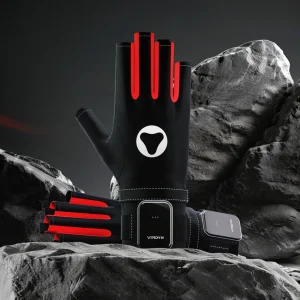
Primary Hardware & SDK Architecture
Core Kinematic Systems for Live Character Deployment
Industrial sensor fusion suits, dexterous finger articulation gloves, and multi-spectral egocentric tracking arrays engineered for continuous broadcast and embodied telemetry.
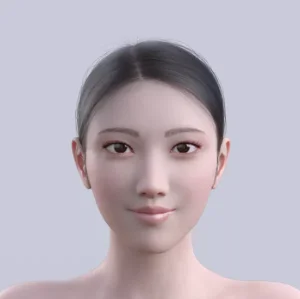
Best Customize Your 3D Virtual Avatar - Personalized High-Quality and Fast Delivery | 3D Custom Avatar Services Planning, Solution
View Specs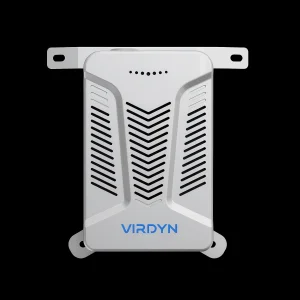
Best Humanoid Robot Intelligent Voice Interaction Development Kit Planning, Solution
View Specs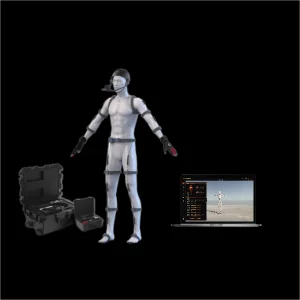
Design DreamsCap X1 Full-Body, Hand & Face Motion Capture for Humanoid Robot Data Collection & Teleoperation Planning, Solution
View Specs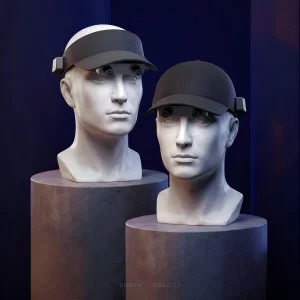
Design VDEgo - Egocentric Video Data Collection Service at Scale | FPV Head-Mounted Camera Planning, Solution
View Specs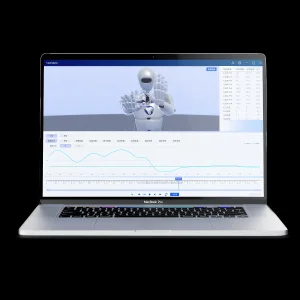
Best Valyze | Visualized Intelligent Motion Data Analysis Software for ce, Sports, Rehabilitation & Education Planning, Solution
View Specs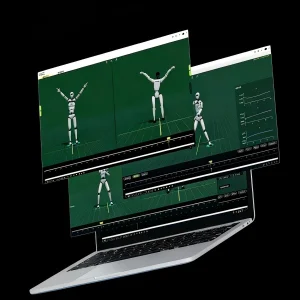
Design VDRobot Studio: Motion Data Collection&Conversion Platform for Robotics | Virdyn Planning, Solution
View Specs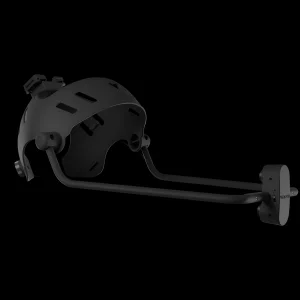
Design AH Double Camera-Based Face Capture Helmet With HD 1080p Embedded RGB Camera Planning, Solution
View Specs
Industrial Perspective
The Global Evolution of Live Character Animation Pipelines
From passive post-production keyframing to ultra-low-latency, real-time spatial computing, live character animation has transformed into critical infrastructure for entertainment, corporate enterprise, and artificial intelligence.
Decoupling from Optical Stages
Traditional motion capture mandated fixed studio volumes, multi-camera arrays, marker occlusion calibration, and post-capture cleanup cycles costing upwards of $10,000 per production minute. Today, commercial enterprise demands instant deployment.
Inertial sensor fusion suits like VDSuit Full eliminate optical line-of-sight constraints, allowing real-time character retargeting in any physical environment without tracking cameras.
Synchronous Sub-System Fusion
Live digital characters require synchronized multi-modal data streams: full-body skeletal kinematics, 16-finger articulation via multi-node data gloves (mHand Pro), and micro-expression facial telemetry via HD dual-camera rigs (AH Double Camera Helmet).
Consolidated pipeline architecture ensures zero phase discrepancy across skeletal and morph-target tracks directly inside Unreal Engine 5 and Unity.
Convergence with Embodied AI
Live character animation is no longer solely an entertainment technology. Industrial robotics developers utilize identical inertial capture fabrics, egocentric head-mounted systems (VDEgo), and retargeting software (VDRobot Studio) to teleoperate bipedal humanoids.
Human demonstrations captured in real time serve as foundational datasets for reinforcement learning and imitation policies.
<20ms
End-to-End Live Latency
16+
Joints Solved at 120Hz
99.8%
Magnetic Immunity Reliability
10+
Game Engines & DCC Links
Manufacturing Precision & Scalability
China Factory Efficiency & Agile Engineering Advantage
How Guangzhou and Greater Bay Area mechatronic hardware clusters drive extreme precision, rapid iterative design, and cost-effective volume manufacturing for global studio deployment.
Vertically Integrated Firmware-to-Textile Assembly
Unlike western integrators that outsource sensor sourcing, PCB fabrication, wiring harness loom braiding, and textile assembly to disparate international vendors, Virdyn operates within the world’s most concentrated microelectronics manufacturing corridor in Guangzhou.
- High-Yield IMU Binning & Calibration: Automated 3-axis rotational calibration jigs execute thermo-bias drift mapping across every 9-axis sensor node before integration, guaranteeing uniformity across 27+ wearable telemetry points.
- High-Tenacity Lycra Textile Ergonomics: Proprietary anti-slip Lycra fabric matrices ensure absolute skin adherence without biological constrictions, preventing sensor positional shift during explosive acrobatics or prolonged 8-hour live broadcasts.
- Rapid Prototype Turnaround (14-Day Cycle): Direct access to specialized component suppliers enables customized sensor topologies, specialized harness lengths, and embedded robotics connectors in less than two weeks from CAD design signoff.
- Direct Tier-1 Industrial Pricing: Factory-direct manufacturing removes multiple intermediary distributor markups, delivering professional grade sub-millimeter motion capture pipelines at a fraction of legacy optical installation costs.
Supply Chain Competitiveness Matrix
| Production Metric | Traditional Western Vendors | Virdyn Integrated Factory |
|---|---|---|
| Sensor Calibration Cycle | Manual / Sample-based | 100% Automated Multi-Axis Rigs |
| Textile Customization | Standard Off-the-Shelf Only | Custom Anatomical Lycra Patterns |
| Lead Time for 50+ Units | 8 to 16 Weeks | 10 to 18 Business Days |
| Firmware Customization | Restricted / High NRE Fees | Direct Firmware API & SDK Access |
| Replacement Part Dispatch | 4 to 6 Weeks Backorder | Global Express Within 48 Hours |
Deployment Scenarios
High-Yield Application Architectures in Global Industry
Evaluating how production studios, gaming giants, virtual human agencies, and enterprise brands maximize ROI through live character animation systems.
01. Virtual Live Streaming & VTubers
Continuous commercial broadcasting across platforms like YouTube, Twitch, TikTok, and Bilibili requires infallible zero-drift performance. Performers stream for 6-10 hours uninterrupted.
Hardware Stack: VDSuit Full, mHand Pro, Warudo & VRChat OSC network pipeline.
02. Game Cinematics & Rapid Previs
Eliminate costly animator keyframing during the pre-production phase. Directors stage complex physical combat choreographies and live cutscenes directly within Unreal Engine 5 Sequencer.
Hardware Stack: VDSuit Full, DreamsCap X1, Live Link FBX streaming.
03. Virtual Brand Ambassadors
Global brands activate hyper-realistic 3D digital humans to interact live with real-world physical audiences at expos, virtual press conferences, and corporate flagship showrooms.
Hardware Stack: Custom 3D Virtual Avatar Services + VDFace Pro Helmet.
04. Humanoid Robot Teleoperation
Embodied AI initiatives capture human motor skills to train manipulation neural networks. High-fidelity motion data provides immediate joint angle retargeting to bipedal robots.
Hardware Stack: VDRobot Studio, VDEgo FPV System, DreamsCap X1.
Procurement Engineering
Global Enterprise Sourcing Criteria & TCO Evaluation
A structured technical evaluation framework used by university labs, AAA game studios, and broadcast networks when selecting live character motion capture systems.
RF Stability & Channel Hopping
Studio environments are saturated with 2.4GHz wireless microphones, Wi-Fi 6 access points, and stage telemetry. Commercial procurement demands proprietary frequency-hopping spread spectrum (FHSS) protocols to guarantee zero frame drop during live broadcasts.
Virdyn systems utilize dual-band auto-switching transceivers with localized internal caching.
Biomechanical Drift Correction
Pure mathematical integration of accelerometer data suffers quadratic drift over time. Enterprise systems must feature advanced sensor fusion engines pairing extended Kalman filtering with inverse kinematics (IK) bio-constraints.
Ground-contact detection algorithms ensure virtual feet plant firmly without slipping or sliding.
Total Cost of Ownership (TCO)
Legacy optical systems incur massive hidden costs: dedicated 100m² soundstages, recurring marker consumable purchases, air conditioning loads, and specialized cleaning staff. Inertial suits require minimal footprint and zero stage buildout.
Reduces 3-year enterprise capital expenditures (CapEx) by up to 74%.
| Evaluation Parameter | Inertial Multi-Sensor (VDSuit / mHand) | Marker-Based Optical Array | Pure Computer Vision (Markerless) |
|---|---|---|---|
| Setup Time to Live Broadcast | < 5 minutes (One-step calibration) | 45 - 90 minutes (Marker check & wanding) | 10 - 20 minutes (Multi-camera alignment) |
| Field Occlusion Sensitivity | 100% Occlusion-Free (Sensors on body) | High vulnerability to props / body overlap | High failure rate with props / loose clothing |
| Operational Environment | Offices, Outdoors, Stage, Any Room | Controlled Dark/Reflective-Free Stage | Controlled Uniform Studio Lighting |
| Finger & Face Telemetry | Integrated mHand Pro + VDFace Helmet | Requires secondary micro-marker sets | Limited fidelity under rapid finger movement |
| Real-Time Engine Compatibility | Native UE5, Unity, Maya, MotionBuilder | Server workstation to client broadcast | High GPU overhead for neural estimation |
Future Horizons
Emerging Trends Reshaping the Animation Industry (2026–2030)
Where edge-computing silicon, generative motion models, and spatial computing converge to redefine live human-to-avatar embodiment.
Neural IK on Edge Processing Chips
Next-generation motion capture suits are migrating the computational load of skeletal solving directly onto wearable hub units. By leveraging micro-neural processing units (NPUs), sensor drift is predicted and cancelled at the hardware layer prior to wireless data transmission, reducing host PC CPU load to near zero.
Generative Motion Infilling
Machine learning models running in tandem with real-time capture engines predict performer intent. In cases where extreme physical contact occurs (e.g., floor grappling or complex stunts), generative diffusion priors infill biomechanically accurate joint orientations in real time without lag.
Unified Avatar-to-Robot Frameworks
The boundary between virtual character animation and physical robot control is vanishing. Universal skeletal retargeting architectures allow an actor’s physical performance to concurrently animate a virtual meta-human in an Unreal Engine live stream and actuate a bipedal robot on an exhibition stage.
Technical Clarifications
Frequently Asked Questions on Live Character Animation Planning
Comprehensive engineering insights into sensor fusion calibration, real-time engines, and pipeline integration.
How do Virdyn inertial suits eliminate magnetic interference in metal-heavy studio stages?
Traditional IMUs rely heavily on magnetometers to determine absolute heading, which drift near steel beams, monitors, and broadcast equipment. Virdyn’s proprietary multi-sensor data fusion engine continuously evaluates magnetic field integrity. When anomalies occur, the system dynamically decouples yaw calculations from magnetometer inputs and switches to high-rate gyro integration stabilized by biomechanical kinematic constraints, preventing avatar drift.
Can the live character animation pipeline stream directly into Unreal Engine 5 MetaHumans?
Yes. Through the VDMocap Studio Live Link plugin, skeletal joint rotations, finger transforms from mHand Pro gloves, and 52 facial blendshapes from the VDFace helmet stream concurrently via UDP/TCP directly into UE5. Performers drive MetaHuman characters with full retargeting, cloth physics, and Nanite lighting in real-time at 60 to 120 FPS.
What are the practical multi-actor limitations for live interactive stages?
Using Virdyn’s coordinated multi-hub radio architecture, up to 6 actors wearing full-body suits can perform concurrently in the same wireless volume without RF packet collision. The desktop receiver allocates dedicated time-frequency slices across proprietary 2.4GHz bands, synchronizing timecodes via SMPTE standards.
How does the system resolve foot slippage during dynamic athletic movements?
Foot contact stability is solved through intelligent dual-mode kinematic anchoring. The fusion algorithm continuously detects contact events based on acceleration profiles and zero-velocity updates (ZUPT). When the foot plant is recognized, the system locks the translation vector to prevent slippage while maintaining natural ankle compliance.
What data output formats are supported for post-production re-editing?
While live streaming transmits directly via Live Link, OSC, or WebSockets, VDMocap Studio concurrently logs clean raw motion data. Files can be exported immediately to industry-standard FBX, BVH, and JSON formats for post-production refinement inside Autodesk Maya, Blender, MotionBuilder, or 3ds Max.
What is the typical deployment timeline for enterprise OEM/ODM customizations?
Because all research, circuit design, firmware programming, and Lycra garment weaving occur in our Guangzhou manufacturing facility, custom hardware prototypes (e.g., custom sensor positioning for robotics or specialized sports analysis suits) can be designed, sampled, and delivered for pilot testing within 14 to 21 business days.
Enterprise Hardware & Specialized Toolsets
Advanced Production Hardware & Modular Accessories
Markerless optical solutions, specialized Lycra fabrics, robotics conversion studios, and professional capture helmets completing your live animation pipeline.
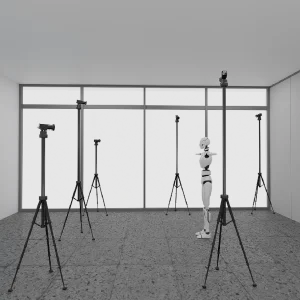
Best Camera Optical Markerless Motion Capture Solution - Virdyn YanDong | Real-Time Full Body, Hands, Face Planning, Solution
View Specs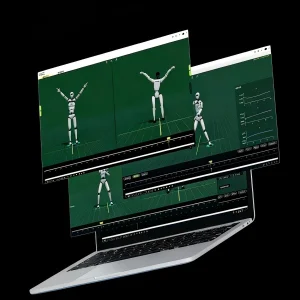
Design Ready-to-Use Robot Motion Datasets | Virdyn Planning, Solution
View Specs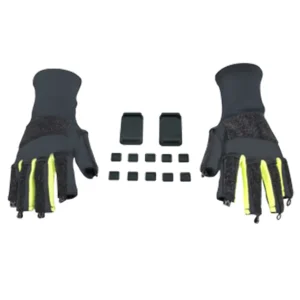
Best Inertia Motion Capture Fingers Capture Accessories Elastic Lycra Fabric Gloves for VDSuit Full(Without Sensors) Planning, Solution
View Specs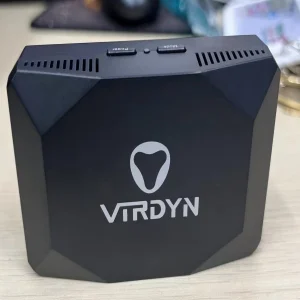
Design Full Body Motion Capture Accessories for Suit Hub Planning, Solution
View Specs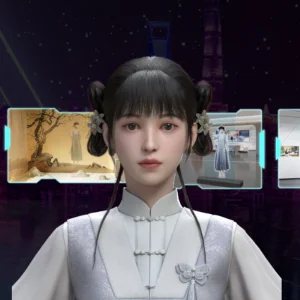
Design Virtual Human Technology: Digital Human Activation Brand Marketing New Path Planning, Solution
View Specs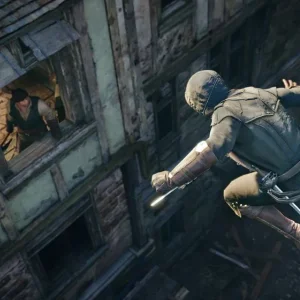
Design Inertial Motion Capture Technology to Help the Game Development and Production Planning, Solution
View Specs
Best Motion Capture Technology Opens a New Era of Animation Development Planning, Solution
View Specs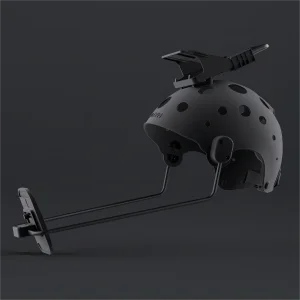
Best Virdyn VDFace Pro Capture System for Real Time Facial Capture with Face Capture Helmet Planning, Solution
View SpecsReady to Engineer Your Live Animation Pipeline?
Whether configuring a 10-actor virtual live stage, deploying digital brand human presenters, or architecting embodied AI robot teleoperation arrays, Virdyn engineering specialists provide end-to-end integration consulting.