
Core Hardware Deployments · Part I

Edge-Native Face Motion Capture on Android: Systematic Architecture & Latency Budget
High-fidelity facial performance capture has evolved past restrictive desktop optical rigs. Contemporary studio pipelines require distributed edge architectures where lightweight, head-mounted Android terminals execute neural inference locally, outputting Apple ARKit-standard 52 BlendShape coefficients via real-time UDP/OSC networks.
3D Dense Mesh Regression
Android NNAPI and Qualcomm SNPE run quantized convolutional backbones (MobileNetV4-Mocap) that extract 468–478 canonical facial landmarks from monochrome or RGB video feeds at 60–120 FPS.
- Zero-latency eye-gaze vector tracking
- Sub-millimeter lip corner solving
- Asymmetric micro-expression isolation
Deterministic Latency <16ms
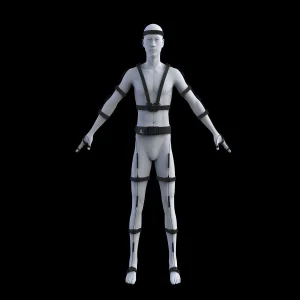
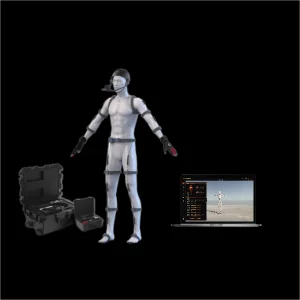
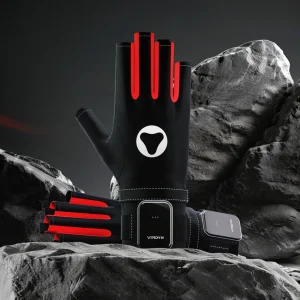
To achieve frame-accurate synchronization with full-body inertial suits like VDSuit Full and mHand Pro gloves, the Android edge stack leverages Vulkan compute buffers for memory zero-copy transfer.
- Camera ISP to NPU DMA transfer: 3.2ms
- Neural Landmark solving: 6.8ms
- Kalman filter BlendShape mapping: 1.5ms
- OSC/UDP socket serialization: 0.9ms
Cross-Engine DCC Pipeline
Native Android clients transmit unified timecoded payloads via Wi-Fi 6 or USB-tethering directly into Unreal Engine 5 Live Link, Unity Animation Rigging, Blender, and Autodesk Maya.
- Live Link Face compatible protocol
- VMC (Virtual Motion Capture) protocol
- Deterministic SMPTE timecode sync
The China Manufacturing & Supply Chain Engine: Why Hardware-Software Co-Design Wins
Headquartered in Guangzhou with manufacturing clusters extending through Shenzhen and Dongguan, Virdyn capitalizes on the world's most concentrated precision optoelectronics and embedded electronics supply chain. Designing industrial-grade Face Motion Capture systems on Android requires strict balance among structural ergonomics, thermal dissipation, low-distortion wide-angle optics, and Bill-of-Materials (BOM) optimization.
Ultra-Lightweight Ergonomic Rigging
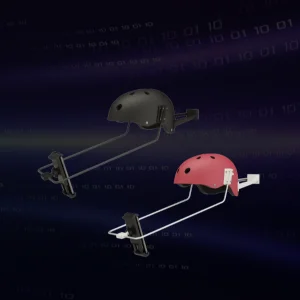
China’s advanced carbon-fiber composite molding and aviation-grade CNC aluminum machining allow our VDFace capture helmets to achieve an overall structural weight under 420 grams. Counterweighted battery housings ensure zero neck fatigue during grueling 8-hour live broadcast or game mocap sessions.
Specialized Optical Sensor Integration
Close proximity to world-leading lens module fabricators allows rapid iteration of custom distortion-free f/1.8 optical assemblies tuned specifically for short focal distance (12–18cm from performer face). Integrated active 850nm/940nm infrared illumination rings eliminate studio shadow artifacts.
Accelerated Firmware & NPU Tuning
Direct collaborative links with domestic silicon foundries and Android OEM engineering teams provide low-level board support package (BSP) access. We bypass standard Android Camera2 API latency by streaming directly from sensor MIPI lanes to dedicated NPU cores via custom kernel drivers.
Macro Industry Trends: How Edge Facial Mocap Powers Embodied AI and the Metaverse
Facial tracking is no longer an isolated discipline reserved for high-budget Hollywood visual effects. The confluence of generative AI digital avatars, 24/7 autonomous e-commerce livestreams, and humanoid robotic teleoperation has created massive global demand for turn-key, portable capture hardware.
| Application Vector | Historical Desktop Setup | Modern Android Edge Solution | Core Advantage & Impact |
|---|---|---|---|
| Humanoid Robot Teleoperation | Multi-camera optical marker rigs ($50k+) requiring static laboratory space. | Head-mounted Android rig syncing with DreamsCap X1 and dexterous gloves. | Real-time operator gaze and emotion mimicry transferred to robotic head mechatronics. |
| Virtual Streamer (VTuber) Studios | High-end PC tethered with proprietary optical cables, limiting natural mobility. | Wireless Android client streaming via 5GHz Wi-Fi directly to Warudo / VSeeFace. | Zero room setup; immediate broadcast capability with full-body freedom. |
| AAA Game Studio Pre-Vis | Post-production manual keyframe animation averaging 35 hours per character minute. | Simultaneous body (VDSuit Full) + hand (mHand Pro) + face capture directly into UE5. | Real-time actor validation on virtual sets; cuts post-cleaning costs by over 70%. |
| Clinical & Neurological Analytics | Subjective visual scoring by medical staff or bulky clinical equipment. | Valyze analytics engine paired with mobile high-speed facial landmark regression. | Objective quantification of facial symmetry, stroke recovery, and tremor micro-motions. |
System Engineering Blueprint: End-to-End Android Motion Capture Workflow
Building a dependable real-time production ecosystem requires a coherent architectural pipeline spanning hardware acquisition, mobile edge computation, network protocol handshakes, and host workstation retargeting.
Phase 1: Capture & Ingestion
The Android capture client interfaces directly with high-speed global shutter image sensors. Custom firmware controls ISO, shutter speed (1/500s minimum), and active IR LED triggers to eliminate motion blur during rapid speech.
Format: YUV420sp / RAW8
Thermal: Dissipation < 38°C sustained
Phase 2: Edge Inference & Filtering
Raw frames are pushed into a multi-threaded C++ NDK pipeline. A two-stage neural architecture locates region-of-interest (ROI) bounding boxes before calculating 478 dense 3D facial coordinates and regression to 52 ARKit BlendShapes.
Filter: Dual 1-Euro / Adaptive Kalman
BlendShape Vector: float32[52]
Phase 3: Network & Host Engine Sync
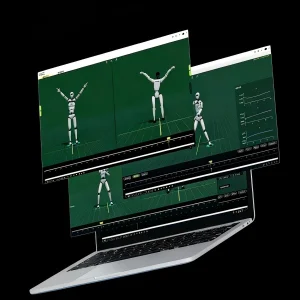
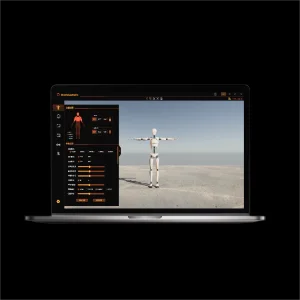
Coefficients are packaged into lightweight UDP OSC or VMC bundles containing actor ID, sub-millisecond timestamps, and rotation quaternions, ingested directly by Unreal Engine 5 Live Link or VDMocap Studio.
Host Plugin: UE5 LiveLink / Unity OSC
Drop Rate: < 0.01% on 5GHz Wi-Fi
Global Enterprise Procurement Requirements: Evaluation Framework for Mocap Systems
When multinational production houses, robotics laboratories, and university research facilities evaluate Chinese motion capture manufacturers, technical due diligence centers around four non-negotiable vectors.
01. SDK/NDK Freedom & Zero Vendor Lock-in
Enterprise clients demand full native Android SDKs (C++, Java, Kotlin) and Python APIs. Pre-compiled black-box binaries are insufficient for humanoid robotics or specialized military/defense simulation pipelines where local data compliance and offline air-gapped security are mandatory.
02. Cross-Modal Sensor Synchronization
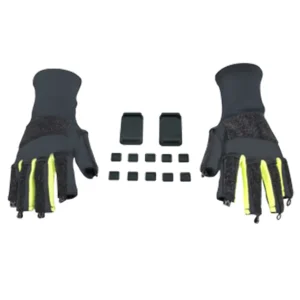
Facial data without synchronized body and fingers causes uncanny valley artifacts. Procurement mandates unified hardware hubs where VDSuit Full (body inertial), mHand Pro (finger flexion), and VDFace Android systems lock to an identical SMPTE master clock.
03. Robustness to Physical & Ambient Variances
Consumer mobile face tracking fails under dynamic lighting, vigorous performer head movement, or facial hair. Industrial solutions must feature mechanical head stability, infrared active projection, and auto-exposure compensation that tracks accurately across diverse facial morphologies.
04. Factory-Direct Spares & Rapid SLA
Overseas studios require reliable supply lines for quick replacement of wear items: Lycra capture suits, sensor harnesses, quick-release helmet brackets, and battery packs. Virdyn delivers direct factory express logistics with dedicated English-speaking technical support within 24 hours.
Frequently Asked Questions: Face Motion Capture Android Architecture
Answers to critical technical, integration, and procurement inquiries compiled from our global engineering engagements with game studios, VTuber networks, and robotics institutes.
How does Android-based facial capture compare to iOS ARKit TrueDepth solutions?
Can the Android Face Mocap stream be synchronized with VDSuit Full and mHand Pro?
What are the minimum Android hardware specifications required for stable 60 FPS tracking?
How does the system mitigate facial hair, glasses, and ambient lighting variances?
What formats can be exported for post-production animation editing?
How does Virdyn support custom OEM/ODM hardware and software integration?
Core Hardware Deployments · Part II

Schedule a Technical Demonstration or Request Complete System Specifications
Discuss your project pipeline directly with Virdyn’s senior motion capture systems architects in Guangzhou. We support custom hardware builds, enterprise volume pricing, Android SDK licensing, and remote Live Link integration testing.
Initiate Engineering Consultation