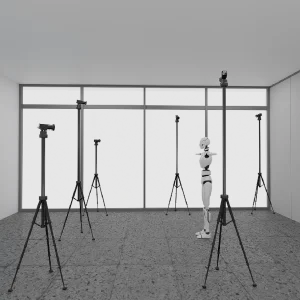
Flagship Motion Capture Range Systems & Telemetry Hardware
Explore our precision-engineered inertial suits, haptic telemetry gloves, and markerless optical synchronization units built for mission-critical game engines and robotics automation.
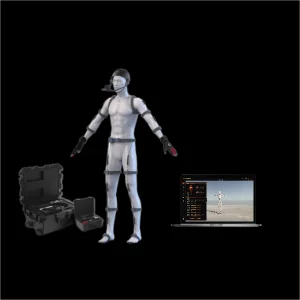
Design DreamsCap X1 Full-Body, Hand & Face Motion Capture for Humanoid Robot Data Collection & Teleoperation Planning, Solution
Explore Specification
Best How Do Brands Use Virtual Spokesman to Tell Good Stories: Motion Capture Technology Empowers Brand Propagation Planning, Solution
Explore Specification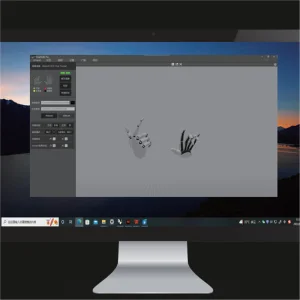
Best Virdyn mHand Studio Motion Capture Gloves Software System for mHand Pro Planning, Solution
Explore Specification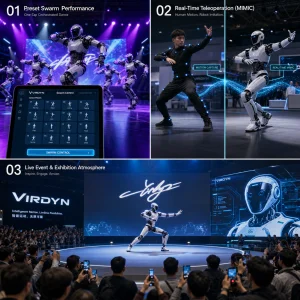
Best Virdyn Humanoid Robot Live Event Performance Solution for Robot Dance&Teleoperation Planning, Solution
Explore Specification
Design Virtual Human Technology: Digital Human Activation Brand Marketing New Path Planning, Solution
Explore Specification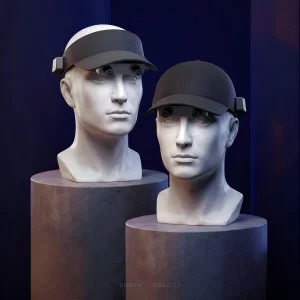
Design VDEgo - Egocentric Video Data Collection Service at Scale | FPV Head-Mounted Camera Planning, Solution
Explore Specification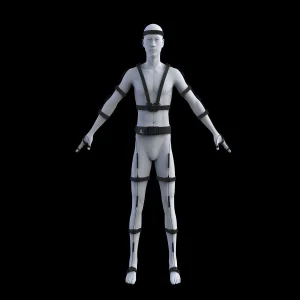
Design Virdyn VDSuit Full for Full Body Function Inertia Motion Capture Suit Planning, Solution
Explore Specification
Best Motion Capture Technology Opens a New Era of Animation Development Planning, Solution
Explore SpecificationWireless Mocap Range Planning: Physics, Frequency Bands & Architectural Execution
Navigating electromagnetic interference, packet drop dynamics, and multi-sensor orientation fusion in complex enterprise operational environments.
In modern computer vision, virtual production, and embodied artificial intelligence, the operational radius of a motion capture system dictates spatial feasibility. While optical marker-based setups lock performers within rigid camera fields of view subject to occlusion, inertial wireless motion capture (mocap) liberates performers, teleoperators, and roboticists. However, achieving reliable wireless mocap range demands deep systemic planning. It is not merely a matter of transmitter wattage; it requires holistic management of radio frequency (RF) propagation, multi-path fading, structural line-of-sight (LOS) obstructions, and synchronization timing across dozens of asynchronous 9-axis IMU nodes.
Standard consumer RF technologies falter under hostile production conditions. When stage trusses, reinforced concrete, LED walls, and dense arrays of wireless stage microphones pollute the 2.4 GHz spectrum, standard Bluetooth and non-managed Wi-Fi protocols experience packet loss. In a 17-node full-body inertial pipeline (such as the VDSuit Full), dropped orientation packets translate into skeletal twitching, rotational drift, and phase delay. Professional wireless range planning requires deterministic frequency allocation, adaptive spatial antenna diversity, and localized algorithmic compensation directly inside the fusion processor.
Orientation data calculated on-node via high-rate Extended Kalman Filters (EKF) dramatically reduces RF bandwidth requirements compared to transmitting raw accelerometer, gyroscopic, and magnetometer streaming packets. By transmitting processed quaternions alongside dynamic cyclic redundancy checks (CRC32), effective operational transmission distance can be doubled without raising battery discharge curves or increasing thermal throttling.
RF Frequency Agility
Automatic channel switching between 2.4 GHz proprietary protocols and 5.8 GHz channels isolates tracking packets from dense studio Wi-Fi traffic, avoiding packet queuing and jitter.
Mesh Node Clustering
Centralized hub topologies bridge regional extremity sensors (fingers and feet) to a core lumbar transceiver, reducing transmitter footprint while boosting signal penetration through human tissue.
Algorithmic Dead Reckoning
When intermittent multipath nulls occur, kinematic physics constraint solvers project joint hierarchies forward in time for up to 800ms, preserving optical stream continuity until link restoration.
The Strategic Advantage of China Factory Manufacturing & Precision Integration
How Greater Bay Area industrial ecosystems empower rapid sensor prototyping, rigorous multi-axis calibration, and uncompromised cost efficiency.
The engineering superiority of modern inertial mocap is deeply intertwined with high-precision manufacturing. Headquartered in Guangzhou, at the technical core of the Pearl River Delta industrial cluster, Virdyn leverages an unparalleled electronic fabrication and rapid component integration ecosystem. Unlike western counterparts burdened by protracted R&D supply cycles and offshore subcontracting overheads, our direct factory integration enables iterative sensor refinements in days rather than quarters.
Automated 3-Axis Turntable Calibration
Every single IMU node is subjected to temperature-controlled multi-axis rate table calibration, nullifying raw manufacturing bias and cross-axis alignment errors before leaving the production line.
Textile-Integrated Flex Harnesses
Direct integration with top-tier technical garment manufacturers produces lightweight, breathable, and tear-resistant Lycra suits with shielded flat-cable matrices that eliminate signal noise and skin resistance.
Component Sourcing & Rapid Iteration
Direct supply partnerships with tier-1 MEMS foundries ensure early access to ultra-low noise gyroscopes, allowing Virdyn to engineer higher dynamic range motion tracking suits at radical price-to-performance ratios.
Macro Industry Trends: From Game Cinematics to Embodied AI Teleoperation
Motion capture technology has expanded far beyond entertainment, evolving into the sensory foundational layer for robotics training and spatial telepresence.
The motion capture sector is undergoing a massive paradigm shift. Historically, mocap suites served entertainment pre-visualization, triple-A video game locomotion trees, and Hollywood VFX pipelines. In the current technological era, the explosive expansion of Embodied Artificial Intelligence (Embodied AI) and bipedal humanoid robotics has transformed motion capture into the primary data ingest mechanism for reinforcement and imitation learning.
Human demonstrations captured via full-body inertial suits, dexterous finger-tracking gloves (such as mHand Pro), and first-person egocentric cameras (like VDEgo) generate the high-density multimodal kinematic data sets required to train humanoid neural network policies. Instead of hand-coding inverse kinematics for robotic limbs, artificial intelligence models ingest thousands of hours of teleoperated human locomotion, object grasping, and bi-manual manipulation collected within real-world factory, warehouse, and domestic settings.
| Tracking Modality | Effective Wireless Radius | Occlusion Sensitivity | Setup & Space Overhead | Primary Industrial Use-Case |
|---|---|---|---|---|
| Inertial (Virdyn VDSuit Full) | Up to 100m (Open Field) | Zero (Wearable IMU-based) | < 5 minutes / Any indoor or outdoor area | Robotics teleoperation, VTubing, dynamic open-field sports |
| Optical Marker-Based | Restricted to camera volume (approx. 8x8m) | Severe when markers are obscured | High (Camera calibration, fixed room, trussing) | Biomechanical lab analytics, cinematic stunt stages |
| Optical Markerless (YanDong) | Camera lens view distance (approx. 5-10m) | Moderate (Prop and self-occlusion risks) | Minimal (RGB cameras, no wearable suit) | Interactive exhibitions, fast previs, fitness analytics |
| Hybrid Telemetry (IMU + Optical) | Compound (Variable multi-hop) | Low (IMU fills optical blackout periods) | Medium (Requires co-registration grid) | Humanoid robot dual-arm dexterous teleoperation |
Localized Application Scenarios & Global Enterprise Pipelines
Turnkey integration frameworks supporting real-time broadcast production, virtual enterprise ambassadors, and spatial teleoperation workflows.
Enterprise Digital Humans & VTubing
Broadcasters and corporate brands deploy VDSuit Full and VDFace helmets for high-engagement live commerce, virtual brand spokespersons, and broadcast avatar streaming with direct OSC feeds into Warudo and Unreal Engine.
Bipedal Robot Teleoperation & Policy Training
Robotics development laboratories pair VDSuitMini and mHand Pro data gloves with ROS2 architectures to remotely manipulate humanoid limbs, recording imitation trajectories for reinforcement learning at 120Hz.
AAA Game Previs & Locomotion Libraries
Game studios capture continuous parkour, combat sequences, and dynamic athletic locomotion over vast outdoor stages without camera setup delays, streaming clean FBX and BVH data straight into Maya and MotionBuilder.
Global Enterprise Sourcing: RFP Checklist for Wireless Mocap Infrastructure
Rigorous vetting criteria for technical directors, laboratory heads, and international procurement leaders acquiring mission-critical mocap technology.
When enterprise organizations evaluate commercial motion capture systems, equipment procurement extends beyond unit pricing. Systemic reliability, algorithm transparency, SDK modularity, and magnetic resilience under harsh studio environments determine lifecycle return on investment. The following procurement benchmarks should guide technical assessment matrices:
Anti-Magnetic Drift Mitigation
Ensure the fusion algorithm incorporates active magnetic disturbance rejection. Studios with steel-reinforced concrete or subfloor electrical conduits induce magnetic distortion that throws inferior IMU systems off axis within minutes.
SDK & Streaming Protocol Openness
Verify native support for C++, Python, ROS2, and standard network protocols (UDP, TCP, WebSocket, VRPN) to guarantee that incoming skeletal frames integrate smoothly with proprietary robotics frameworks and custom engines.
Battery Autonomy & Thermal Profile
Continuous uninterrupted capture sessions require node battery runtimes of at least 3.5 to 5 hours, coupled with fast hot-swap capabilities and safe thermal dispersion to ensure performer comfort during extended multi-take shoots.
Frequently Asked Technical Questions on Wireless Mocap Range & Deployment
In-depth answers addressing real-world range constraints, latency benchmarks, multi-actor synchronization, and software pipeline mechanics.
What factors primarily determine the practical wireless range of an inertial mocap suit?
How does Virdyn prevent drift and spatial dislocation during extensive motion captures?
Can multiple performers or robots operate simultaneously within the same wireless capture zone?
How do Virdyn inertial suits integrate into modern humanoid robotics teleoperation pipelines?
Which 3D software packages and game engines are supported out of the box?
Specialized Sensors, AI Platforms & Teleoperation Accessories
Complete your production pipeline with half-body kits, optical tracking systems, and dedicated imitation learning platforms engineered by Virdyn.
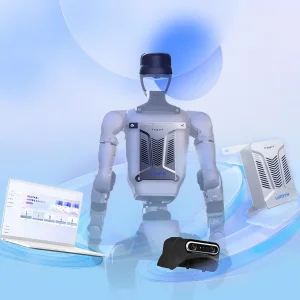
Design AI LingSi System | Robotic Intelligent Creation Platform & Intelligent Voice Interaction Planning, Solution
Explore Specification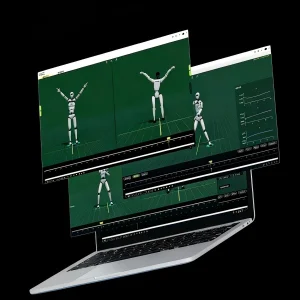
Design VDTraining: One-Stop Robot Reinforcement & Imitation Learning Platform Planning, Solution
Explore Specification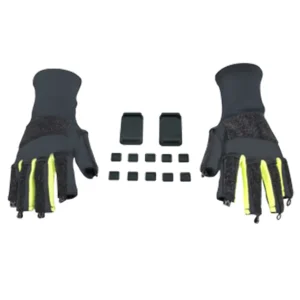
Best Inertia Motion Capture Fingers Capture Accessories Elastic Lycra Fabric Gloves for VDSuit Full(Without Sensors) Planning, Solution
Explore Specification

Best Virtual Human Live Streaming Rapidly Gaining Popularity: Motion Capture Suit Becomes a Key Tool Planning, Solution
Explore Specification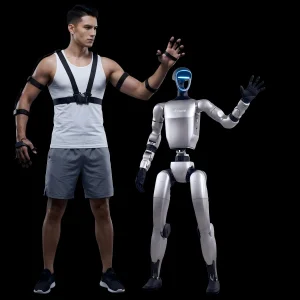
Best VDSuitMini Half-Body Mocap System | Robot Data Collection & Teleoperation | Free Software Planning, Solution
Explore Specification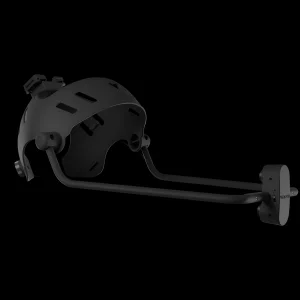
Design AH Double Camera-Based Face Capture Helmet With HD 1080p Embedded RGB Camera Planning, Solution
Explore Specification