High-Precision Motion Capture Suites & Core Architecture
Explore our foundational inertial sensor suits, markerless optical frameworks, intelligent humanoid interaction platforms, and data collection pipelines verified for global production.


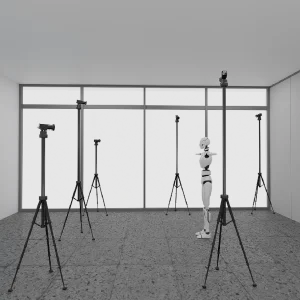
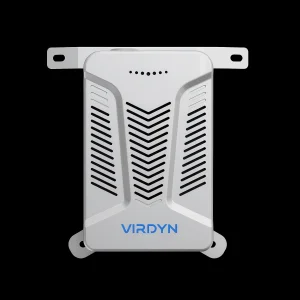
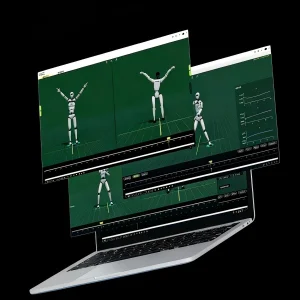
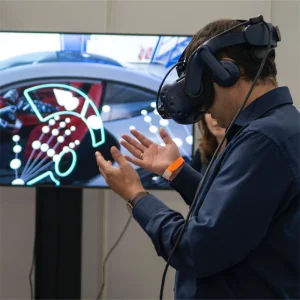
Navigating Enterprise Procurement: Motion Capture For Extended Reality (XR)
In modern industrial workflows, cinematic broadcast studios, and embodied artificial intelligence testbeds, spatial tracking is no longer an isolated animation luxury. It is a mission-critical infrastructure layer demanding low latency, sub-degree angular fidelity, and seamless cross-platform orchestration.
The Paradigm Shift in XR Motion Capture: Extended Reality (encompassing Virtual Reality, Augmented Reality, and Mixed Reality) requires continuous bidirectional telemetry. Capture systems must calculate kinematics with less than 20ms glass-to-glass latency while maintaining skeletal stability during prolonged multi-hour live operations in hostile, electromagnetically cluttered production stages.
Ultra-Low Latency Telemetry
Enterprise XR pipelines demand instantaneous feedback. Motion tracking streams over low-overhead UDP socket channels or OSC protocols directly into Unreal Engine 5 (Live Link) and Unity (XR Interaction Toolkit) at update frequencies of 120Hz to 240Hz, preventing simulator sickness in real-time virtual production viewfinders and VR head-mounted displays.
- Sub-15ms end-to-end hardware-to-viewport pipeline
- Custom 2.4GHz / 5.8GHz dual-band wireless transmission
- Timecode synchronization (LTC/SMPTE genlock support)
Zero-Occlusion Multi-Node Fusion
Traditional optical marker arrays fail when subjects perform complex maneuvers, sit inside vehicle mockups, or handle physical props. Wearable inertial measurement unit (IMU) networks fuse tri-axial accelerometers, high-rate gyroscopes, and tri-axial magnetometers with biological kinematic constraints to sustain flawless tracking regardless of visual sightline barriers.
- Immune to physical visual occlusion and shadow drops
- Extended Kalman Filter (EKF) drift compensation
- Real-time ZUPT (Zero Velocity Update) foot contact solver
Full-Stack SDKs & Industrial Compatibility
Procurement teams evaluate total cost of ownership (TCO) based on deployment agility. Virdyn hardware couples with plug-and-play SDKs for C++, Python, ROS / ROS2 (Robot Operating System), alongside native live retargeting plugins for Autodesk Maya, MotionBuilder, Blender, iClone, and Apple Vision Pro / Meta Quest XR runtimes.
- Open architecture supporting multi-actor co-located tracking
- Native Python APIs for embodied AI dataset engineering
- Direct FBX, BVH, CSV, and skeletal joint angles export
Macro-Industry XR Implementations: Driving Value Across Verticals
From LED volume in-camera visual effects (ICVFX) to safety-critical aerospace ergonomics and autonomous robotics imitation learning, explore how Virdyn’s motion tracking ecosystem anchors industrial transformation.
1. Virtual Production & Broadcast ICVFX
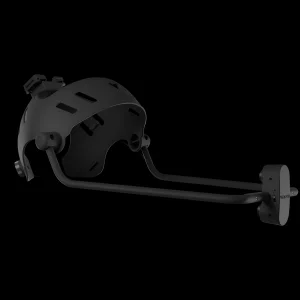
Film studios and broadcast television houses leverage the VDSuit Full alongside VDFace helmets inside LED volume stages. Because inertial systems avoid line-of-sight dependency, camera crews and production gear can move unrestricted around performers without generating tracking blind spots or occlusion artifacts typical of traditional optical rigs.
2. Embodied AI & Humanoid Teleoperation
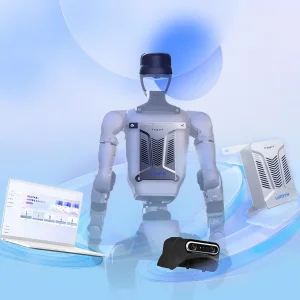
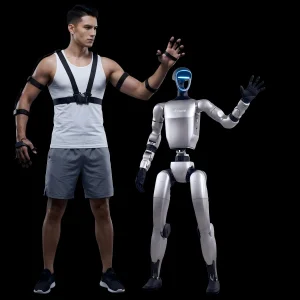
As humanoid robotics advances rapidly worldwide, training robust Foundation Models demands tens of thousands of hours of high-fidelity human demonstration data. Using the VDSuitMini half-body setup paired with mHand Pro dexterous gloves and VDEgo first-person cameras, operators train robots in manipulation, object sorting, and delicate assembly via the VDTraining platform.
3. Aerospace & Automotive Ergonomics
Global original equipment manufacturers (OEMs) use full-body motion capture suits inside virtual prototypes to measure physical fatigue, musculoskeletal strain, and reachability. Engineers evaluate vehicle cockpits, cabin spaces, and automated assembly line safety long before cutting a single sheet of metal, reducing physical prototype cycles by up to 60%.
4. Sports Science & Biomechanical Rehabilitation
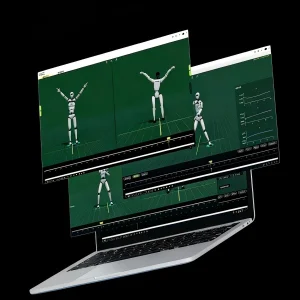
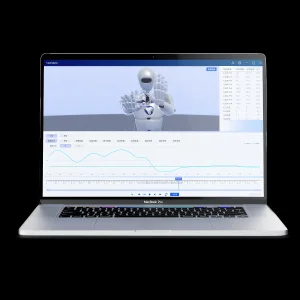
Powered by the Valyze motion data analysis software, clinical therapists and professional athletic organizations capture multi-segment joint kinematic angles, angular velocities, and postural stability metrics. This objective data helps track ACL recovery, optimize golf or running mechanics, and build individualized physical therapy curricula.
5. Enterprise Digital Twins & Simulated VR Training
High-hazard industries (offshore drilling, nuclear safety, electrical grid repair) integrate Virdyn mocap suits into immersive VR training simulators. Real-time human kinematics sync inside multiplayer OpenXR environments, allowing remote distributed teams to conduct live emergency drills without jeopardizing personnel safety.
6. Digital Human Brand Activation & VTubing
Modern marketing agencies leverage real-time inertial capture to drive photorealistic virtual influencers and VTubers across social broadcasting channels. With zero complex optical marker rigs needed, a single talent can run an interactive 4K live stream from standard office rooms, achieving hyper-authentic micro-gestures and emotive facial nuance.
Inertial vs. Optical vs. Hybrid Tracking Architecture
Enterprise buyers must balance volumetric precision, operating constraints, calibration cadence, and total infrastructure investment when architecting their XR pipeline.
| Evaluation Parameter | Virdyn Inertial IMU (VDSuit Full) | Marker-Based Passive Optical | AI Markerless Optical (YanDong) | Hybrid Inertial + Spatial Anchor |
|---|---|---|---|---|
| Spatial Freedom & Environment | Unlimited; operates indoors, outdoors, inside vehicles, zero optical sightline dependency. | Constrained strictly to calibrated camera frustum; high sensitivity to lighting & reflection. | Flexible single-or-multi camera coverage; requires well-lit stage with uncluttered background. | Expansive volumes; IMU captures articulation while optical/VR base stations anchor global 6DoF. |
| Occlusion Resilience | 100% immune; sensors track joint angles through clothing, props, furniture, and bodies. | High vulnerability; markers disappear during ground rolls, close hugging, or prop handling. | Moderate; deep learning models estimate obscured limbs but can glitch during dense overlap. | Superior; IMU dead-reckoning bridges optical occlusion gaps seamlessly in real time. |
| Setup Time & Field Portability | 3 to 5 minutes; slip on lightweight fabric suit, perform single T-pose/A-pose calibration. | 2 to 5 hours; camera calibration, wanding, precise retro-reflective marker suit placement. | 1 to 2 minutes; zero suit required, standard RGB/RGB-D camera positioning. | 5 to 10 minutes; suit calibration paired with quick origin point alignment. |
| Dexterous Finger & Facial Capture | Multi-node mHand Pro gloves (strain/IMU) + AH 1080p dual-camera face capture helmet. | Requires ultra-dense, fragile retro-reflective marker clusters; high marker swap probability. | Vision-based neural mesh tracking; high convenience, moderate fine-finger articulation. | Synchronized multi-layer data stream directly into single skeletal hierarchy. |
| Capital Expenditure & TCO | Low to Moderate; zero specialized ceiling trusses, low power draw, single workstation driven. | Extremely High; tens of specialized high-speed cameras, network switches, dedicated dark room. | Low; uses commercial standard cameras and workstation GPU compute. | Balanced; modular expansion allows scaling from pure IMU up to mixed tracking. |
| Primary Target Use Cases | Game animation, VTubers, robot teleoperation, vehicle cockpit ergometrics, remote sets. | Sub-millimeter medical biomechanics, Olympic sprinter labs, AAA motion capture stages. | Interactive fitness, education live streaming, rapid cinematic pre-visualization. | Industrial VR walkthroughs, large-scale multi-user XR simulation, spatial computing. |
Technical Roadmap & Next-Generation Spatial Computing Outlook
As mixed reality hardware evolves toward sub-ounce optical waveguides and embodied neural architectures, motion capture is migrating from raw coordinate recording to contextual biomechanical intelligence.
Neural Inertial Fusion & Magnetic Rejection
Integration of real-time machine learning inference engines at the software layer that detect local ferromagnetic distortions in industrial environments and dynamically de-weight compromised magnetometers without position snapping.
Spatial Computing Headset Native Sync
Native protocol bridging with Apple Vision Pro (visionOS), Meta Quest Pro, and HTC VIVE Focus series. Combining Inside-Out Headset SLAM positional ground truth with Virdyn body kinematics to yield drift-free, boundary-less XR tracking.
Embodied AI Generative Imitation Loops
Human demonstration capture streamed directly into reinforcement learning reward models. Physical movements captured via VDSuit and mHand Pro are synthetically augmented via physics-based simulation (NVIDIA Isaac Sim / MuJoCo) to train dexterous humanoid robots.
Neuromorphic Edge Kinematics
Transitioning toward low-power, event-based neuromorphic sensor nodes embedded directly within intelligent smart fabrics, delivering sub-millisecond continuous kinematics tracking with all-day micro-watt power consumption.
Commercial Status & Industrial Footprint Across Global Markets
Organizations across North America, the European Union, Japan, South Korea, and Southeast Asia are standardizing their human motion capture procurement protocols to eliminate pipeline fragmentation.
North American Entertainment & Embodied AI Labs
In the US and Canada, demand is split between West Coast autonomous robotics developers procuring human-to-robot teleoperation datasets and East Coast VFX/virtual broadcast facilities. Seamless compatibility with Unreal Engine Live Link, Python ROS wrappers, and genlock timecode sync dominates request-for-proposal (RFP) checklists.
European Industrial Manufacturing & Ergonomics
Automotive and aerospace corridors across Germany, France, and the UK prioritize human factors engineering and workplace safety simulation. Regulatory compliance with CE, RoHS, and stringent GDPR workplace biometrics mandates requires localized data handling and encrypted transmission protocols.
Asia-Pacific Virtual IP, VTuber & Gaming Hubs
Japan, South Korea, and Greater China lead high-frequency live streaming, mobile gaming asset authoring, and metaverse brand ambassadors. Studios require turnkey operations: systems that can run 8-hour continuous live broadcasts without sensor overheating or calibration degradation, paired with native VRChat OSC and Warudo support.
Localization Support, Quality Assurance & Compliance Standards
Deploying enterprise hardware internationally requires rigorous regulatory compliance, localized field training, robust spare parts logistics, and rapid technical SLA guarantees.
International Hardware Certification
Every Virdyn sensor node, wireless transceiver, and charging cradle undergoes exhaustive testing to ensure compliance with global telecommunications and environmental safety regulations:
- CE Mark: Compliant with EU Radio Equipment Directive (RED) & EMC standards.
- FCC Part 15: Certified for non-interference wireless operation across North America.
- RoHS & WEEE: Free of hazardous lead, mercury, and toxic flame retardants.
- UN38.3 & MSDS: Certified lithium battery transport protocols for global air express freight.
Enterprise SLA & Support Architecture
Enterprise procurement packages include comprehensive institutional service level agreements to safeguard production continuity:
- 24-Hour Business Response: Dedicated senior solutions engineers assigned to institutional clients.
- Remote Rigging & Pipeline Audits: Custom retargeting setup assistance for proprietary 3D skeletons.
- Expedited RMA & Modular Spares: Rapid replacement dispatch of individual sensor pods to prevent project delays.
- Continuous Firmware Updates: Free lifelong desktop software upgrades and algorithm improvements.
Frequently Asked Questions: Technical & Procurement Insights
In-depth responses to core engineering, pipeline integration, and procurement questions posed by technology evaluators.
Advanced Analytics, Facial Hardware & Specialized Toolkits
Complete your production ecosystem with AI robotics teleoperation platforms, high-definition facial helmets, ergonomic biomechanical analytics software, and ready-to-train datasets.