Enterprise Tracking Systems for Virtual Production & Robotics
Explore high-fidelity wearable sensor arrays, egocentric vision systems, and intelligent multi-sensor fusion hardware built for real-time virtual avatar embodiment and high-frequency data pipelines.

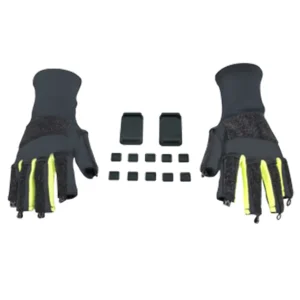
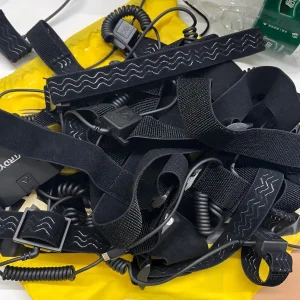
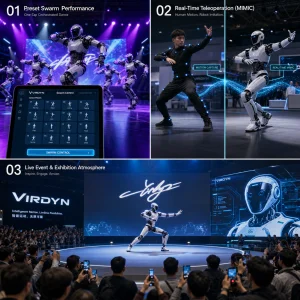

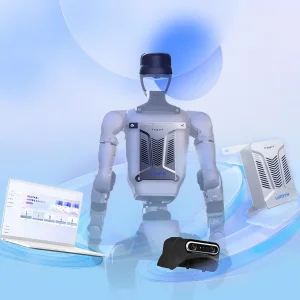
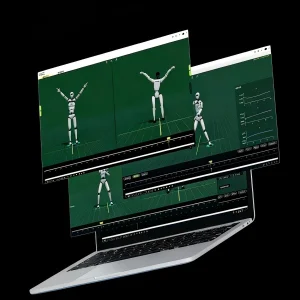
The Paradigm Shift: From Head-and-Hand Tracking to Full-Kinematic Embodiment
Social Virtual Reality has matured from simple head-mounted display (HMD) orientation into complex spatial presence. Today's metaverses demand expressive non-verbal human communication powered by full-body inertial motion capture.
Semantic Architecture & The Physicality of Virtual Interaction
In modern virtual environments like VRChat, Resonite, and corporate metaverses, the illusion of co-presence breaks when avatars exhibit inverse kinematics (IK) snapping, floating limbs, or rigid postures. The implementation of high-frequency IMU (Inertial Measurement Unit) tracking matrices delivers biomechanical fidelity directly to OSC (Open Sound Control) and WebSocket protocols, transforming raw quaternion streams into micro-gestures, grounded dance routines, and expressive non-verbal interpersonal cues.
Why China's Smart Hardware Manufacturing Powers the World’s Social VR Pipelines
Building resilient, lightweight, zero-drift motion capture suits requires deep cross-disciplinary mastery: MEMS chip integration, specialized textile engineering, and rapid RF firmware iteration.
Greater Bay Area MEMS & SMT Cluster
Situated in the heart of high-precision electronics manufacturing (Guangzhou-Shenzhen corridor), Virdyn leverages direct-tier access to industrial-grade 9-axis gyroscopes, accelerometers, and magnetometers. Real-time factory calibration chambers eliminate initial drift curves before sensors are shipped.
Ergonomic Lycra & Biomechanical Garments
Unlike rigid plastic exoskeleton frames that fatigue users in VR social sessions lasting 4 to 8 hours, Chinese textile manufacturing integration delivers breathable, anti-bacterial, military-grade elastic Lycra weaves with integrated silicone cable routing that prevents sensor shift during rapid motions.
Cost-to-Performance Ratio for Global Procurement
Direct supply-chain verticalization allows institutional buyers, VTuber production guilds, and academic research labs to procure enterprise-grade tracking systems at one-third the cost of legacy Western optical camera rigs, while ensuring redundant spare parts and scalable multi-unit deployments.
Enterprise Motion Capture Architecture for Social Virtual Realities
Deploying motion capture inside real-time social metaverse clusters requires bulletproof synchronization between hardware sensors, edge computational runtimes, and network socket dispatchers.
| Pipeline Phase | Technical Mechanism | Key Performance Indicators (KPIs) | Social VR Integration Vector |
|---|---|---|---|
| 1. High-Precision IMU Sensing | 9-Axis Sensor nodes with custom Kalman-filter orientation processing | 1000Hz internal frequency, ±0.1° angular resolution | Direct physical node alignment on spinal, cranial, and limb landmarks |
| 2. Wireless RF Hub Transmission | Proprietary 2.4GHz / 5.8GHz low-interference anti-jamming wireless protocol | <3ms airborne latency, 30m uninterrupted omnidirectional radius | Enables full 360-degree freedom without tethering or line-of-sight dropouts |
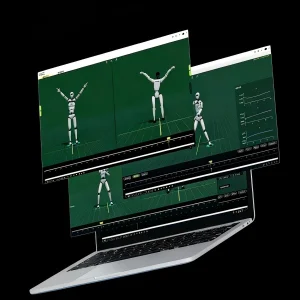
| 3. Biomechanical IK Solver Runtime | VDMocap Studio core engine running skeletal constraint reconciliation | Bone-length preservation, dynamic floor-contact zero penetration | Exports clean human bone hierarchies formatted for humanoid avatar rigs |
| 4. OSC & Live Link Dispatcher | UDP OSC parameter broadcasting and WebSocket JSON streaming | 60–120 FPS socket dispatch with minimal network jitter | Native VRChat OSC endpoints, Resonite integration, Unreal Live Link |
| 5. In-World Avatar Presentation | Target armature retargeting with dual-quaternion smooth skinning | Zero visual jitter, realistic weight shifting, responsive fingers | Photorealistic interactive expression during live performances & meetups |
High-Impact Localized Application Scenarios
Explore how forward-looking organizations apply Virdyn motion capture solutions across gaming lounges, virtual concert stadiums, digital retail pavilions, and telepresence training hubs.
Metaverse Live Concerts & EDM Stages
Musicians and dancers perform complex choreography in living rooms or studios, broadcasting seamless full-body rhythm directly into packed VRChat venues without optical occlusion when jumping or spinning.
VTuber Guild Lounges & Collaborative Meetups
Multi-performer streaming where several VTubers share a virtual room. The lack of optical cameras means multiple performers can stand close, embrace, or perform comedic skits without marker line-of-sight confusion.
Corporate Brand Metaverse Activations
High-end luxury brands and automotive manufacturers employ live digital human ambassadors to greet VIP clients in private virtual showrooms, presenting cars and merchandise with authentic human hand gestures.
Academic Distance Simulation & Ergonomics
Universities conduct synchronous remote architectural walkthroughs, surgical theatre observations, and human factors evaluations in shared virtual spaces with real-time kinematic posture analysis.
Global Enterprise Procurement Criteria: What Technical Buyers Must Verify
Purchasing motion capture hardware for continuous social metaverse infrastructure differs drastically from standard VFX film studio setups. Review the fundamental technical criteria below.
1. Magnetic Immunity & Office Calibration
Social VR creators operate in urban apartments and high-density studios surrounded by PCs, steel desks, and electrical conduits. Ensure the tracking system incorporates sophisticated anti-magnetic algorithms that prevent limb twitches caused by localized electromagnetic distortion.
2. Zero-Base-Station Freedom
Optical systems require fixed camera trussing, calibration wands, and high ceiling clearance. Inertial suits operate anywhere—indoors, outdoors, or in confined gaming rooms—allowing performers to sit, lie on the floor, or roll without tracker occlusion.
3. Native OSC Integration & SDK Access
Ensure the manufacturer supplies out-of-the-box support for the VRChat OSC protocol, Warudo, Unity, Unreal Engine, and C++ / Python SDKs, allowing internal engineers to customize avatar parameter maps and trigger custom in-world physics.
Enterprise Procurement Quality Assurance Checklist
- CE, FCC, RoHS Global Regulatory Certifications
- Hot-swappable Battery System for 6+ Hour VR Raves
- High-Speed Low-Latency Wireless Hub (USB Dongle)
- Elastic Breathable Fabric with Replaceable Straps
- Biomechanical Spine & Pelvis Root Stabilization
- Direct Manufacturer Technical Support SLA (<24h)
Frequently Asked Questions: Motion Capture for Social VR
Direct technical answers from senior mocap hardware architects and metaverse integration specialists.
Enterprise Retargeting, Teleoperation & Multi-Modal Platforms
Complete your production ecosystem with intelligent voice-interaction modules, imitation learning frameworks, game engine integration suites, and markerless optical rigs.