
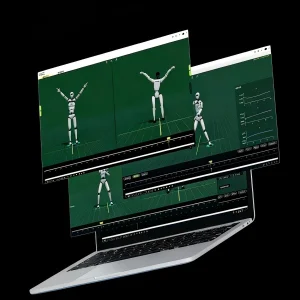
Flagship Hardware & Datasets
Featured Motion Capture Infrastructure: Batch I
Precision-calibrated wearable suits, specialized finger telemetry, robotic simulation datasets, and studio retargeting platforms deployed across research institutions and human motion laboratories worldwide.
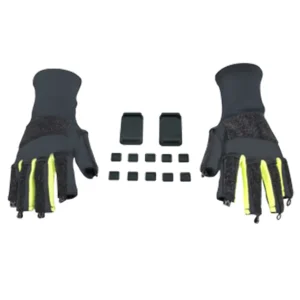
Elastic Lycra Finger Capture Gloves
Explore Solution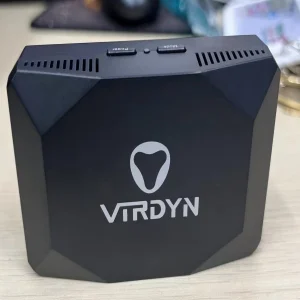
Full Body Suit Hub Hardware & Accessories
Explore Solution
Live Engineering Demo: VDSuit Full & mHand
Explore Solution
Humanoid Teleoperation & Gait Control
Explore Solution
Cinematic & Realistic Commercial Motion Capture
Explore Solution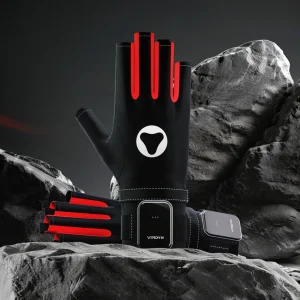
mHand Pro High-Precision Data Gloves
Explore Solution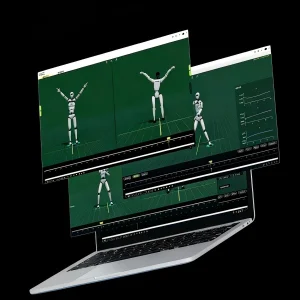
VDRobot Studio Kinematic Retargeting Engine
Explore Solution
Deep Biomechanical Engineering
Kinematic Planning & Spatiotemporal Gait Formulation
Modern clinical gait analysis has evolved from static laboratory goniometry into real-time, multi-segment dynamic assessment. Selecting the best motion capture system requires rigorous synchronization across kinematic, kinetic, and neuro-muscular evaluation vectors.
Sagittal, Frontal & Transverse Planes
Accurate quantification of hip flexion-extension, knee valgus-varus, and ankle dorsiflexion-plantarflexion demands continuous tracking at sampling rates exceeding 120Hz. Inertial systems utilizing tri-axial gyroscopes, accelerometers, and magnetometers isolate rotational matrices without visual line-of-sight constraints, preventing occlusions during double-limb support.
Spatiotemporal Parameter Extraction
Automated boundary determination for initial contact (heel strike), loading response, midstance, terminal stance, and preswing phases. Fusion algorithms calculate step length, cadence, stance-to-swing ratios, and stride velocity variation down to millisecond precision, illuminating subtle neurological asymmetries and pathological antalgic compensations.
Inverse Dynamics & Joint Moments
By marrying angular velocity outputs with anthropometric segment mass models, clinicians compute proximal and distal joint moments. This information is vital for presurgical planning in cerebral palsy, post-stroke hemiparetic rehabilitation, and high-performance athletic energy return optimizations.
< 1.2°
Mean Angular Error
200 Hz
IMU Sensor Sampling Rate
< 15 ms
End-to-End Latency
100%
Occlusion Immunity
| Evaluation Parameter | Traditional Optical Mocap | Wearable IMU Systems (VDSuit) | Markerless AI Vision (YanDong) |
|---|---|---|---|
| Capture Environment | Dedicated 50m² lab with calibrated truss | Unconstrained: clinic, stairs, outdoor turf | Standard clinic room, multi-RGB setup |
| Preparation & Calibration | 45–60 mins (Palpation & 40+ markers) | 3–5 mins (Slip-on suit & N/T-pose) | Zero patient setup (Instantaneous) |
| Marker Occlusion Susceptibility | High (Lost markers cause trajectory loss) | Zero (Inertial physics-based continuity) | Moderate (Mitigated by neural priors) |
| Global Trajectory Tracking | Sub-millimeter absolute reference | Calculated via zero-velocity update (ZUPT) | Calculated via volumetric triangulation |
| Clinical Compliance & Scalability | High CAPEX ($80k+), low throughput | Cost-effective ($5k–$15k), scalable across wards | Low CAPEX, ideal for rapid screening |
Industrial Superiority
Global Procurement Meets China Factory Ecosystem
Procuring high-reliability kinematic hardware requires an unbroken bridge between microelectronic fabrication and biomechanical validation. Leveraging the Greater Bay Area manufacturing matrix provides unprecedented engineering speed and cost advantages.
Vertical SMT & Cleanroom Production
Our Guangzhou and Shenzhen engineering hubs integrate automated Surface Mount Technology (SMT) with rigid MEMS sensor calibration chambers. Each IMU module undergoes automated thermal drift chamber profiling (-10°C to +50°C) and precision multi-axis turntable rotation to align orthogonal sensitivity vectors prior to housing assembly.
Bespoke OEM/ODM Fabric & Harness Ergonomics
Medical-grade gait research involves patient cohorts ranging from pediatric cerebral palsy cases to geriatric fall-risk evaluations. In-house textile R&D manufactures antimicrobial, anti-static, highly breathable Lycra weaves with custom silicone anchor tracks that eliminate soft-tissue artifact (STA) while guaranteeing patient comfort.
Scalable Procurement Economics
By circumventing tier-three distributor markups and consolidating component supply chains—from MCU microcontrollers to RF transceivers—enterprise clients achieve a 60% lower Total Cost of Ownership (TCO). This democratizes multi-ward university deployments and distributed multi-site clinical trials.
Trust & Governance
Compliance Architecture & Localized Support
Biomechanical systems handling human telemetry must conform to strict global healthcare guidelines, data sovereignty rules, and rapid enterprise SLA mandates.
CE & FCC Radio Certification
Hardware complies with EN 300 328, EN 301 489, and FCC Part 15 subpart B standards. Certified low-power 2.4GHz proprietary RF protocols guarantee complete coexistence with medical hospital Wi-Fi, telemetry channels, and Bluetooth networks without packet collision.
HIPAA & GDPR Data Handling
Software architectures provide complete on-premise execution modes. Motion files (BVH, FBX, CSV, C3D) and kinematic raw trajectories are encrypted via AES-256 with zero mandatory cloud egress, assuring compliance with hospital patient privacy protocols.
24/7 Global Engineering SLAs
Distributed engineering support hubs across North America, Europe, and Asia-Pacific provide localized hardware swaps, firmware tailoring, and direct developer-level integration assistance for ROS, Unity, Unreal Engine, and MATLAB environments.
ISO 9001 / ISO 13485 Alignment
Manufacturing adheres to strict quality management standards ensuring that sensor calibration offsets, gyroscope scale factors, and accelerometer biases remain stable over years of continuous clinical duty cycles without degradation.
Future Trajectories
Next-Generation Trends in Motion Capture & Gait Science
The convergence of artificial intelligence, humanoid robotics, and edge sensor computing is radically reshaping human movement acquisition and kinematic analysis.
1. Embodied AI & Humanoid Bipedal Teleoperation
Robotics laboratories are shifting away from heuristic walking algorithms toward Reinforcement Learning (RL) trained on massive human gait datasets. Virdyn's VDRobot Studio enables researchers to record human locomotion, map human skeletal limits directly to robotic URDF joint configurations, and train bipedal robots to handle uneven terrain, stairs, and perturbation recovery.
2. Edge-Compute IMUs & On-Chip Neural Fusion
Modern sensor units feature embedded micro-NPUs executing Extended Kalman Filters (EKF) directly on the node. This architecture eliminates wireless latency, drastically curbs host computer processing overhead, and suppresses ferromagnetic distortion in indoor environments using learned magnetic anomaly compensation models.
3. Hybrid Inertial-Optical Multi-Modal Fusion
The debate between camera-based and wearable mocap is dissolving into hybrid synergy. Markerless vision streams from systems like YanDong provide global positional anchoring and spatial awareness, while wearable IMUs supply high-frequency micro-rotations and contact transients, delivering unprecedented fidelity without markers.
Practical Deployment
Clinical, Athletic & Industrial Applications
How world-class institutions leverage Virdyn motion capture ecosystems to translate raw skeletal coordinate data into actionable clinical and industrial outcomes.
Orthopedic & Arthroplasty Recovery
Pre- and post-operative assessment for Total Knee (TKA) and Total Hip (THA) Arthroplasty. Clinicians monitor pelvic tilt, hip internal rotation, and gait symmetry indices over longitudinal timelines, replacing subjective Visual Analog Scales with quantifiable kinematic data.
Sports Performance & Return-to-Play
Elite athletic departments deploy inertial suits directly on the field or running track. By capturing real-world cuts, sprints, and deceleration loading without optical field constraints, biomechanists identify knee valgus collapse and ACL tear risk profiles before acute injury occurs.
Powered Exoskeleton & Neuro-Prosthetic Control
Integrating real-time motion telemetry directly into lower-limb powered exoskeletons. High-speed kinematic feeds feed predictive gait intent classifiers, enabling assistive actuators to synchronize seamlessly with patient effort in spinal cord injury rehabilitation centers.
Knowledge Repository
Frequently Asked Questions
Technical, operational, and regulatory clarifications for enterprise biomechanists, clinical investigators, and procurement directors.
How does inertial motion capture eliminate soft tissue artifact (STA) in clinical gait analysis?
Soft tissue artifact—the movement of skin and muscle relative to the underlying bone—is a primary source of error across all biomechanical tracking. Virdyn mitigates STA through a two-fold solution: custom-engineered biomechanical Lycra suits with elastomeric anti-slip anchors that seat sensors against bony anatomical landmarks, paired with multi-segment kinematic filtering models in VDMocap Studio that mathematically constrain non-physiological skeletal displacements.
Can Virdyn motion capture suits operate in environments with severe electromagnetic interference?
Yes. Modern clinical environments contain metal hospital beds, treadmills, and imaging equipment that produce localized magnetic distortions. Our sensors utilize advanced heading-fusion algorithms that automatically de-weight magnetometer inputs when anomalies are detected, relying on drift-compensated high-frequency gyroscopic integration to maintain accurate orientation until magnetic stability is restored.
What data export formats are provided for clinical biomechanics software?
Virdyn platforms export universally recognized clinical and computational formats: standard Biomechanical Coordinate (C3D) files, hierarchical Biovision (BVH), Autodesk FBX, and raw comma-separated value (CSV) formats containing Euler angles, quaternions, angular velocities, and linear acceleration vectors. Native streaming protocols support TCP/UDP, ROS 1/2, VRPN, and direct API hooks for MATLAB and Python.
How is patient calibration handled for individuals with severe mobility impairments?
Unlike optical systems requiring rigid static T-pose stances for several seconds, Virdyn provides flexible calibration routines. Clinicians can choose standard T-pose, N-pose, or seated sitting postures tailored for wheelchair users and stroke patients. Dynamic calibration modes also allow calibration through brief, natural walking motions.
How does Virdyn support institutional OEM/ODM and custom SDK integration?
We provide deep developer support for universities, hospitals, and robotic manufacturers. This includes low-level C++ SDKs, Android/iOS developer toolkits for mobile rehabilitation tracking, hardware-level custom sensor configurations, and custom firmware revisions directly from our central R&D engineering facility in Guangzhou.
Extended Systems & Vision Platforms
Featured Motion Capture Infrastructure: Batch II
Optical markerless rigs, entry-level telemetry systems, egocentric computer vision modules, and comprehensive animation analysis suites completing the full movement pipeline.
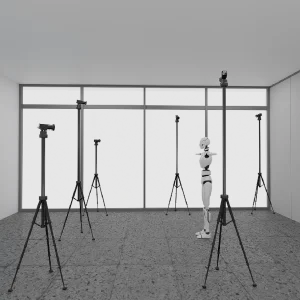
YanDong Optical Markerless System
Explore Solution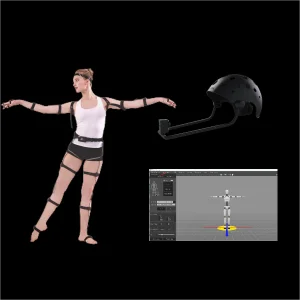
VDCap Full Performance Capture Kits
Explore Solution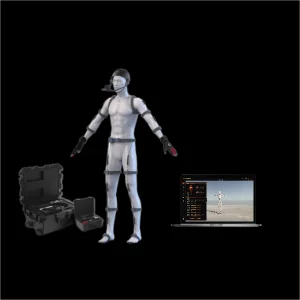
DreamsCap X1 Full-Body, Hand & Face
Explore Solution
Next-Gen Animation Engineering Suite
Explore Solution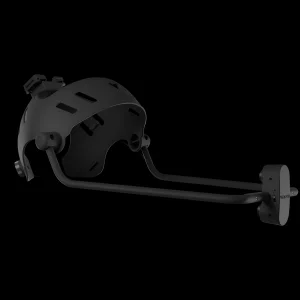
AH Dual-Camera Facial Capture Helmet
Explore Solution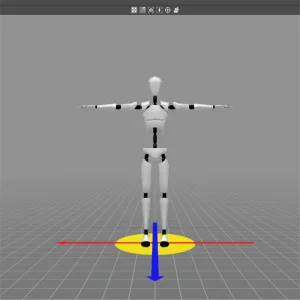
VDMocap Studio Plus Biomechanics Suite
Explore Solution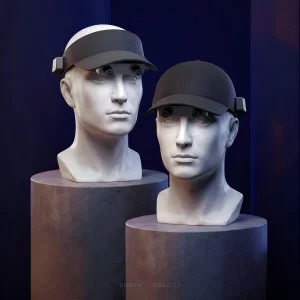
VDEgo Egocentric FPV Telemetry Camera
Explore Solution
Virtual Production & Film Tools
Explore SolutionPlan Your Laboratory Gait & Motion Telemetry Infrastructure
Speak with our principal biomechanical system architects. From sensor layout engineering and custom software SDKs to hospital network compliance and volume manufacturing quotes, Virdyn delivers turn-key kinematic precision.