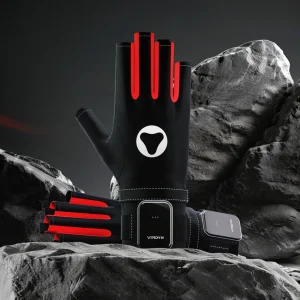
Best Virdyn mHand Pro an Inertia Motion Capture Gloves for Virtual Reality Planning, Solution
Industrial-grade inertial suits, optical tracking nodes, and bio-mechanical sensor arrays engineered for immediate production-pipeline integration.
A granular look at initial physical plant outlays versus recurring software licensing, human capital, and maintenance overhead.
Building an enterprise-grade motion capture facility historically represented an intimidating financial barrier for mid-sized game studios, animation houses, and research institutions. An optical marker-based volume often required upwards of $150,000 to $500,000 in capital expenditures (CAPEX), primarily driven by specialized high-speed infrared cameras, custom trussing, active acoustic dampening, sub-millimeter calibration rigs, and massive high-performance compute clusters. In stark contrast, modern motion capture studio cost planning shifts the focus toward total cost of ownership (TCO) and operational velocity (OPEX).
By leveraging precision inertial measurement units (IMUs) combined with targeted optical reference points or markerless vision algorithms, studios can slash facility modification costs by over 70%. Sensor fusion algorithms bypass the need for climate-controlled light stages, allowing standard 40–100 m² office footprints to convert into fully operational tracking stages in less than 48 hours.
| Cost Driver Component | Legacy Optical Studio (12-24 Cameras) | Virdyn Advanced Inertial-Hybrid Stage | Markerless Machine Vision Studio |
|---|---|---|---|
| Hardware & Sensor Acquisition | $80,000 – $220,000 (Cameras, Lenses, Sync Hubs) | $12,000 – $38,000 (Full-Body Suits, Gloves, Helmets) | $25,000 – $65,000 (Industrial RGB/Depth Cameras) |
| Facility Construction & Rigging | $30,000 – $80,000 (Aluminum Trusses, Acoustic, Non-reflective) | $1,500 – $5,000 (Minimalist standard staging) | $10,000 – $25,000 (Fixed multi-angle camera mounting) |
| Annual Licensing & Software | $12,000 – $30,000 / seat / year | $0 – $3,500 (Free perpetual desktop software tiers) | $8,000 – $20,000 / seat / year |
| Data Cleanup & Engineering Labor | High (Marker occlusion, trajectory swapping) | Low (Deterministic joint hierarchy, magnetic correction) | Moderate to High (Complex multi-actor occlusions) |
| Mobility & Outdoor Flexibility | Zero (Strictly locked to indoor studio volume) | 100% Mobile (Capture in fields, cars, stage performances) | Low (Requires stationary multi-camera stands) |
How concentrated supply chains, embedded R&D, and complete vertical integration unlock unprecedented cost advantages for global motion tracking buyers.
Direct proximity to the world's leading micro-electro-mechanical systems (MEMS) foundries, specialized textile mills, and PCB surface-mount lines allows rapid prototyping cycles and substantial savings passed directly to the studio buyer.
Unlike integrators who white-label foreign components, proprietary multi-sensor data fusion and magnetic anomaly rejection algorithms are authored in-house since 2016, eliminating exorbitant software royalties and third-party middleware surcharges.
Global procurement teams bypass multi-tier reseller markups. Direct B2B factory consultation provides custom cable configurations, specialized SDK endpoints for robotic control, and swift replacement part logistics without inflated dealer fees.
From monolithic stage rentals to decentralized, AI-driven embodied intelligence workflows.
Native live streaming into Unreal Engine 5 (Live Link) and Unity eliminates offline baking phases, slashing post-processing payroll and shortening production schedules from months to hours.
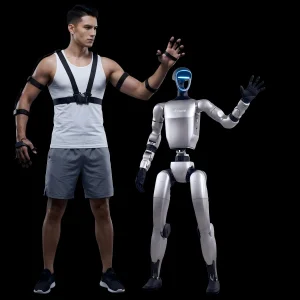
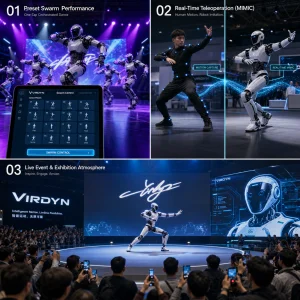
Human demonstration data has become the primary fuel for training teleoperated humanoid robots. Half-body and glove systems now deliver multi-modal kinematics at 10% of traditional research lab costs.
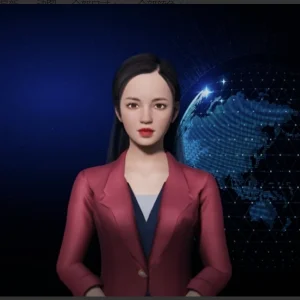
VTubing agencies, live e-commerce broadcasting, and digital brand ambassadors require daily real-time stability. Turnkey inertial mocap suits remove the need for full technical camera crews.
Modern studio engineers increasingly blend optical floor references with full-body inertial telemetry, achieving cinema-grade positional accuracy without paying for a 64-camera optical array.
How distinct industries configure cost-effective capture workflows to maximize return on investment.
Deployment: Standard office space (5x5m).
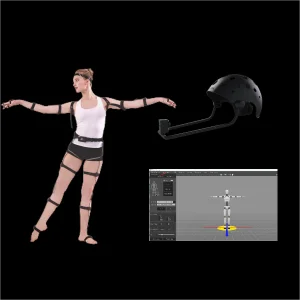
Equipment: VDSuit Full + mHand Pro gloves.
Workflow: Direct live-link skeleton streaming into Unreal Engine and MotionBuilder. Enables rapid combat animation staging and iterative cinematic prototyping without external stage booking fees.
Deployment: Compact live broadcast room.
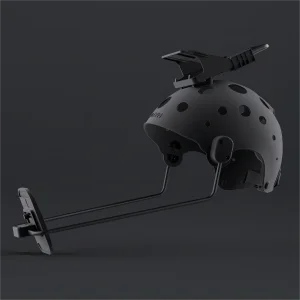
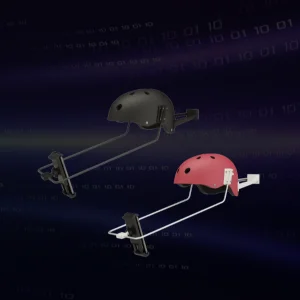
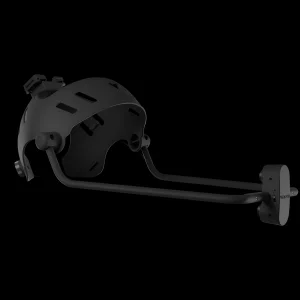
Equipment: VDSuit Full + VDFace Helmet + Warudo/VRChat OSC.
Workflow: Continuous 8-hour low-drift transmission with zero camera occlusion. Performer can sit, turn, and use physical props while maintaining seamless facial blendshape and finger articulation.
Deployment: Robotics development laboratory.
Equipment: VDSuitMini + mHand Pro gloves + VDEgo camera.
Workflow: Dexterous manipulation recording and real-time ROS/ROS2 streaming. Captures synchronized egocentric video with precise arm-hand joint trajectories for policy training.
Critical checkpoints for university labs, international distributors, and game studios to minimize procurement risk and lifecycle surprises.
When enterprise procurement departments assess motion capture technology proposals, equipment cost is only one dimension. Savvy technology directors evaluate vendor proposals across four core lifecycle vectors:
Clear, direct answers regarding hardware investment, setup requirements, and platform integrations.
A professional, production-ready setup utilizing high-end inertial suits (such as the VDSuit Full paired with mHand Pro gloves) typically ranges between $8,000 and $18,000. This includes all sensor hardware, capture helmets, perpetual desktop processing licenses, and game engine plugins, requiring no costly room renovation or infrared camera rigging.
Optical stages often require dedicated clean-up artists to resolve occluded markers, swap trajectories, and eliminate jitter—often adding $40,000–$80,000 per animator annually. Inertial systems solve skeletal kinematics directly on an articulated biomechanical hierarchy, delivering engine-ready animation takes immediately and slashing post-processing labor by over 60%.
Yes. Because inertial capture is completely non-optical and independent of fixed camera fields-of-view, a complete studio packs into a standard transport case. You can execute high-speed action scenes, vehicle stunts, and field captures outdoors or in standard office rooms with zero recalibration of the physical room geometry.
Headquartered in Guangzhou, China, Virdyn integrates full-stack R&D with direct localized manufacturing. By engineering proprietary multi-sensor data fusion algorithms, designing PCB sensor nodes in-house, and eliminating intermediate Western third-party distribution markups, we pass extensive cost efficiencies directly to studio buyers.
Virdyn motion capture pipelines deliver turnkey live streaming and data plugins for Unreal Engine, Unity, Autodesk Maya, MotionBuilder, 3ds Max, Blender, and iClone. Additionally, standard FBX and BVH motion files are exported seamlessly, with OSC protocol support for VTuber suites like Warudo and VRChat.
Robotics labs can leverage our VDSuitMini half-body telemetry or mHand Pro gloves paired with egocentric camera modules (VDEgo) and VDRobot Studio software. This architecture maps human joint positions directly to robot kinematic control limits via ROS/ROS2 or custom Python APIs for accelerated embodied AI dataset collection.
Complete your studio infrastructure with modular entry kits, facial tracking helmets, and specialized data manipulation software.