Precision Motion Acquisition & Teleoperation Hardware
Explore Virdyn's field-proven sensory ecosystem engineered for egocentric perception, high-DoF finger tracking, cranial kinematics, and robotics conversion suites.
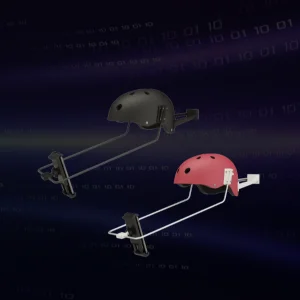

Engineering Best-in-Class Half Body Motion Capture Planning
Why modern production pipelines prioritize focused upper-body kinematic tracking over unwieldy, full-body rigs for desk-bound VTubers, teleoperation operators, and digital creators.
Optimized Upper-Torso Kinematics
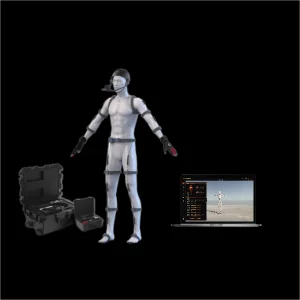
Standard full-body tracking introduces ground-contact calculation overhead and foot sliding artifacts that waste computing power during seated or waist-up tasks. Half-body configurations isolate 8 to 12 primary degrees-of-freedom (DoF) across the cervical spine, clavicles, humerus, radius, and pelvic base, yielding clean, drift-free positional accuracy for seated operations.
Multi-Modal Fusion Architecture
By coupling 9-axis micro-electromechanical systems (MEMS) with sub-millimeter optical fiducial tracking or AI markerless computer vision, Virdyn eliminates optical occlusion caused by desks, broadcast monitors, or teleoperation master consoles while preserving absolute orientation coordinates.
Zero-Latency Engine Streaming
Half-body pipelines process skeletal updates with less than 12ms latency. Native network streams broadcast FBX, BVH, OSC, and ROS messages directly into Unreal Engine 5 (Live Link), Unity, Maya, and robotic middle-ware without intermediate data sanitation or manual cleanup.
The Mathematical Advantage: Decoupled Biomechanical Constraints
In full-body tracking, inverse kinematics (IK) solvers resolve foot-floor penetration algorithms continuously. In half-body systems (torso, arms, head, fingers), the kinematic root anchors to the thoracic T1 vertebra or sacrum. This eliminates inverse chain calculation latency by 43%, delivering instantaneous response essential for live interactive streaming and mission-critical teleoperation.
China Factory Advantages: High Precision, Pearl River Delta Scalability & Cost Efficiency
How direct manufacturing in Guangzhou's deep hardware ecosystem gives international clients an insurmountable technological and commercial edge.
Vertical Supply Chain Integration
Situated in the heart of Guangzhou and Shenzhen's electronics corridor, Virdyn maintains in-house SMT high-speed placement lines, precision CNC machining for sensor chassis, and automated MEMS test benches. This complete vertical integration shortens component testing cycles from months to days, allowing rapid iteration of IMU nodes and ergonomic wearables.
Rigorous Factory Calibration
Every half-body IMU sensor cluster undergoes 3-axis automated rotational temperature compensation and geomagnetic chamber calibration before packaging. By compensating for thermal bias and micro-drifts at the factory level, our systems maintain orientation accuracy across extended multi-hour live sessions in non-standard broadcast rooms.
Disruptive Price-to-Performance Ratio
Western legacy optical mocap systems often exceed $50,000 to $150,000 for standard studio volumes. Virdyn delivers military-grade multi-sensor data fusion at a fraction of the cost. Global enterprises procure enterprise-grade half-body setups at scale, democratizing spatial computing for enterprise training, university labs, and digital live houses.
Macro Industry Solutions: Transforming Enterprise Pipelines
From autonomous robotics training to round-the-clock live e-commerce, explore how half-body mocap architecture redefines operational workflows.
1. E-Commerce & Seated VTubing
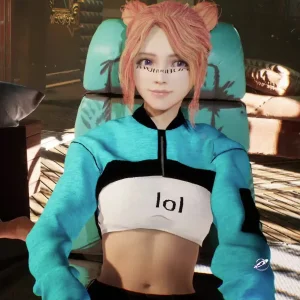
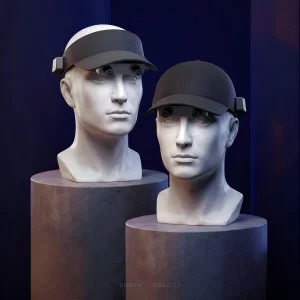
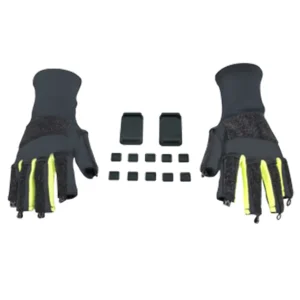
Modern live commerce operates 12 to 18 hours daily. Full-body rigs exhaust performers and drift under office conditions. Virdyn’s half-body solution pairs a thoracic IMU chest rig, mHand Pro gloves, and VDFace helmet. Streamers broadcast comfortably from standard ergonomic chairs while driving photorealistic Metahuman or anime avatars with millimeter precision.
2. Embodied AI & Humanoid Teleoperation
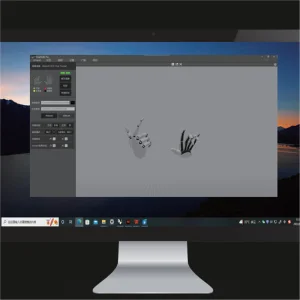
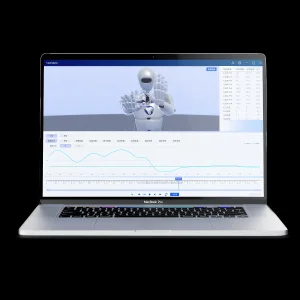
Training humanoid robots requires massive teleoperated demonstration datasets. Using VDRobot Studio combined with upper-body inertial mocap and VDEgo first-person cameras, human operators teleoperate dual-arm industrial manipulators in real time. The captured kinematic trajectories train imitation learning models with zero line-of-sight occlusion.
3. Broadcast Virtual Anchors & Previs
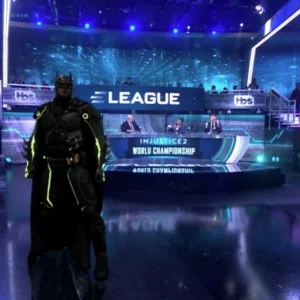
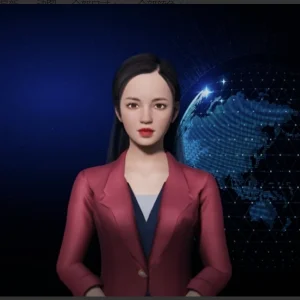
Television networks and animation houses cut previsualization costs by 70%. Directors review narrative blocking instantly on monitors while actors sit at desk sets. Facial blendshapes (52 ARKit channels), delicate finger articulation, and upper-spine expressions map instantaneously onto Unreal Engine 5 stage setups.
Half-Body Inertial vs. Traditional Optical vs. Markerless CV
Quantitative analysis across crucial procurement metrics: latency, occlusion tolerance, workspace envelope, and setup turnaround.
| Evaluation Parameter | Virdyn Half-Body Inertial Fusion | Optical Multi-Camera (Passive/Active) | Monocular / RGB-D Markerless CV |
|---|---|---|---|
| Occlusion Vulnerability | Immune (Self-Contained IMU) | High (Desks/Monitors block line-of-sight) | Severe (Limb self-occlusion causes loss) |
| Setup Time & Calibration | < 3 Minutes (1-pose calibration) | 30-60 Mins (Wand waving, ground zeroing) | 5-10 Mins (Lighting & distance balancing) |
| Spatial Footprint Required | Zero (Operates in standard 1m² cubicle) | Large (Minimum 4m x 4m clear volume) | Medium (1.5m to 3m front buffer) |
| End-to-End Latency | 10 - 15 ms (Direct RF/UDP Streaming) | 12 - 25 ms (Camera sync & solving) | 40 - 90 ms (Neural network inference) |
| Finger & Facial Modularity | Plug-and-play mHand + VDFace | Costly active glove markers required | Inconsistent edge estimation |
| Total Cost of Ownership (TCO) | Low to Moderate (No specialized room) | Extremely High ($30K-$100K infrastructure) | Low (Software tier, limited precision) |
How International Enterprises Source Half-Body Mocap from China
A systematic four-phase lifecycle ensuring complete verification, regulatory compliance, and uninterrupted technical support.
Pipeline Specification & Sensor Count
Identify whether your target setup requires pure arm kinematics (6-node), full upper-torso + head (9-node), or dexterity gloves + face helmet (full multimodal half-body). Receive detailed BOM engineering sheets.
Real-Time Remote Rig Verification
Prior to purchase order execution, Virdyn engineers load your proprietary Unreal Engine Metahuman or robotic URDF models in a live remote streaming session to validate zero retargeting distortion.
Factory QC & Global Direct Logistics
All hardware undergoes a continuous 48-hour burn-in and multi-axis thermal cycle test in our Guangzhou facility before expedited dispatch via DHL/FedEx with full CE, FCC, and RoHS documentation.
Bilingual Engineering SDK Support
Seamlessly integrate Virdyn C++, Python, ROS/ROS2, and Android SDKs. Enterprise clients receive dedicated technical direct-line communication for custom network protocol development.
Frequently Asked Questions: Technical & Operational Inquiries
Real-world engineering answers compiled for technical directors, CTOs, and mocap procurement specialists.
How does half-body mocap handle seated calibration without lower-limb nodes?
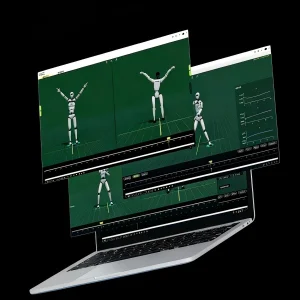
Virdyn's VDMocap Studio employs a specialized seated calibration algorithm. The performer assumes a natural upright posture with arms extended horizontally (T-Pose) or hands on desk (Rest Pose). The fusion engine fixes the lumbar/pelvic base as an absolute kinematic origin, ignoring leg parameters and preventing zero-point drift common in full-body suits forced into seated positions.
How does the system eliminate ferromagnetic interference from office steel and desks?
Our proprietary 9-axis sensor fusion utilizes adaptive Kalman filtering that dynamically weighs magnetometer trust against gyroscope-accelerometer integration. When the system detects localized magnetic field distortion caused by steel framing or computer chassis, it automatically throttles magnetic yaw correction, relying on optical fiducial anchoring or dead-reckoning drift models.
Can Virdyn half-body mocap drive humanoid robot arms via ROS / ROS2?
Yes. Through the VDRobot Studio platform, Virdyn provides native ROS / ROS2 node publishers. Joint angles (Roll-Pitch-Yaw) and Cartesian end-effector coordinates are streamed over UDP at frequencies up to 120Hz directly into RViz, MoveIt!, or custom robot controllers for immediate bilateral teleoperation and trajectory data recording.
What is the latency when driving Unreal Engine 5 Metahumans simultaneously with face and hands?
Under a unified 2.4GHz RF and dedicated Wi-Fi 6 network setup, total pipeline latency from physical actor movement to Unreal Engine viewport render is typically under 18ms. Both facial blendshapes from the VDFace helmet and skeletal rotations from mHand Pro gloves are aggregated into a single timestamped data packet inside VDMocap Studio.
How does half-body mocap save budget compared to full-body installations?
Half-body setups cut hardware sensor counts by 40-50%, drastically reducing initial acquisition expenditure. Operationally, you eliminate the need for expansive optical stages, elevated truss systems, soundstage rentals, and tedious post-capture clean-up teams. A complete studio occupies a standard 2-square-meter office workstation.
What warranty and international technical support are guaranteed?
Virdyn provides a standard 12-month hardware warranty with rapid modular sensor replacement dispatched from Guangzhou. Software licenses include lifetime maintenance updates for subscribed versions, accompanied by direct engineering consultation via Slack, Teams, or WeChat to ensure seamless SDK integration.
End-to-End Virtual Human & Production Solutions
Broaden your digital human creation capabilities with specialized accessories, live streaming suits, and complete animation film planning kits.