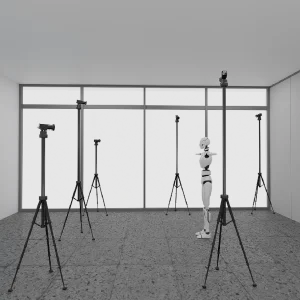
Enterprise Motion Capture & Virtual Reality Hardware Stack
Explore production-grade full-body inertial suits, dexterous tracking gloves, and robotic control modules certified for cross-platform integration and precision VRChat OSC pipelines.


The Paradigm Shift in Full Body Tracking (FBT) for VRChat & Enterprise XR
From social immersion to mission-critical simulation: How spatial computing architectures are transforming live virtual interaction, brand activations, and telemetry capture.
Evolution of Immersion Dynamics
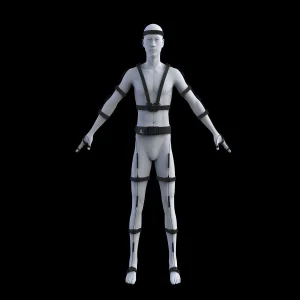
Initial VRChat FBT implementations relied heavily on rudimentary 3-point lighthouse trackers (waist and feet). Modern enterprise solutions integrate 17 to 27 point 9-axis AHRS inertial arrays, enabling multi-joint rotational fidelity, realistic spine curvature, and sub-degree micro-gesture rendering without field-of-view constraints.
OSC Protocol Standardization
The native adoption of the Open Sound Control (OSC) standard within VRChat has decoupled tracking hardware from proprietary SteamVR runtimes. This architectural breakthrough permits direct skeletal node parsing via UDP sockets, reducing compute overhead on the host rig while delivering real-time biometric telemetry.
Cross-Discipline Convergence
Full Body Tracking in VRChat is no longer solely entertainment-focused. Multinational studios utilize VRChat as a cost-effective virtual stage for pre-visualization, digital live concerts, tele-presence brand propagation, and multi-user ergonomic evaluation prior to final physical builds.
Global Enterprise Procurement Demands: Technical Selection Metrics
Enterprise procurement divisions evaluate spatial tracking systems through a rigorous multi-variable framework balancing total cost of ownership, deployment velocity, and precision durability.
| Evaluation Parameter | Legacy Optical Stage Trackers | Entry-Level Consumer Trackers | Virdyn VDSuit Enterprise Inertial Solution |
|---|---|---|---|
| Spatial Freedom & Occlusion | Requires calibrated volume; easily occluded by props/furniture | Requires Line of Sight to base stations or camera sensors | 100% Occlusion Immune: Wearable AHRS algorithms operate flawlessly in cluttered or non-line-of-sight environments. |
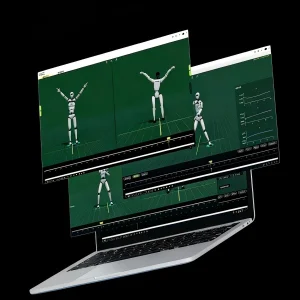
| Calibration Overhead | 30-60 minutes wand waving, fixed lighting requirements | Individual tracker pairing, multi-joint manual calibration | Rapid Sync (< 2 mins): One-click posture calibration via VDMocap Studio with continuous zero-point stabilization. |
| Latency & Transmission | Ultra-low (sub-10ms), fixed server tethered setup | Variable wireless drift, 25-50ms latency depending on dongles | Deterministic Low Latency: Hardware-level 2.4GHz proprietary transmission delivering stable < 15ms OSC streaming. |
| Data Export Versatility | Proprietary studio formats requiring heavy post-processing | Limited to direct VR input; no raw skeleton capture utility | Dual-Channel Pipeline: Real-time VRChat OSC stream concurrent with clean FBX/BVH raw bio-mechanical data logging. |
| Scalability & Portability | Fixed ceiling rigs; non-transportable ($50k - $250k CAPEX) | Battery swapping issues; strap degradation; casual use profile | Turnkey Flightcase Deployment: Studio-in-a-backpack portability with commercial washable antibacterial fabrics. |
End-to-End Enterprise VRChat FBT Planning & Solution Matrix
Deploying studio-grade tracking into social VR ecosystems demands a structured engineering methodology covering biomechanical capture, data mediation, and network topologies.
Phase 01: Biomechanical Rigging
Sensor alignment along critical anatomical landmarks: Sternum, C7 vertebra, sacrum, mid-femur, and dorsal foot segments. Ensures exact human-to-avatar joint remapping without limb inversion or knee inversion glitches.
Phase 02: Drift-Proof Calibration
Application of adaptive Extended Kalman Filter (EKF) algorithms. Our proprietary magnetic compensation layers eliminate ferromagnetic distortion caused by steel desk frames, VR base stands, or localized electronics.
Phase 03: OSC Telemetry Mediation
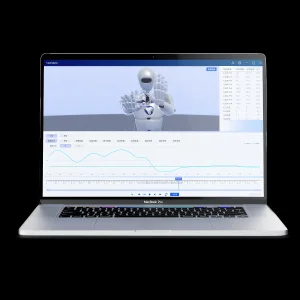
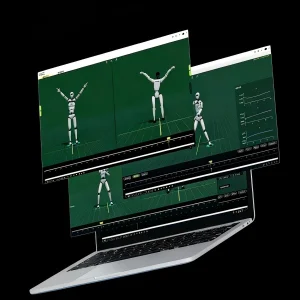
VDMocap Studio packages high-frequency skeletal data into VRChat-standard /avatar/parameters/ OSC data arrays over high-speed local UDP loops, preserving CPU overhead for VR rendering and multi-user instances.
Phase 04: Rig Validation & Retargeting
Avatar bone hierarchy matching via standard Humanoid rig definitions. Automated t-pose/i-pose calibration offsets guarantee 1:1 floor-contact precision, natural spine posture, and zero jitter when seated or lying down.
Enterprise Regulatory Compliance, Localization & Technical Support
Designed for multinational procurement standards, Virdyn systems adhere to world-class wireless safety, electromagnetic compatibility, and localized SLA guarantees.
Global RF Certifications
All wireless transmission hubs and node transceivers hold comprehensive CE, FCC, RoHS, and TELEC certifications. Safe low-energy RF emissions allow frictionless international customs clearance and deployment in enterprise-grade IT infrastructure.
Tiered Global SLA & Support
Enterprise clients receive designated technical account management, complete with guaranteed 24-hour turnaround windows, dedicated firmware custom-compiles, and remote debugging assistance for complex VR world builds.
Localized Documentation & SDKs
Comprehensive English-language documentation, Unity SDK packages, Unreal Engine live-link bridges, and OSC network templates designed to minimize technical friction for overseas development pipelines.
Technology Roadmap: The Future of Spatial Full Body Tracking
Analyzing next-generation breakthroughs: How neural kinematics, vision-inertial hybrid nodes, and human-in-the-loop robotics training converge.
Deep Learning Kinematic Solvers
Integrating transformer-based temporal prediction models directly into the driver stack. Upcoming iterations anticipate physical contact points, self-correct foot sliding dynamically, and extrapolate complex contortions even during extreme angular velocity changes.
Hybrid Inertial-Vision SLAM
Merging ego-centric visual SLAM tracking with distributed IMU arrays. This dual-layer approach provides sub-millimeter absolute world coordinates without requiring external cameras, bridging the gap between social VR immersion and high-end cinematic VFX.
Embodied AI & Teleoperation Pipelines
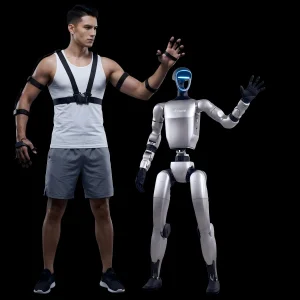
Transforming VRChat avatar interaction into training datasets for bipedal robotics. Human spatial dexterity recorded via VDSuit Full and mHand Pro creates rich imitation learning corpora, accelerating reinforcement training for autonomous humanoid robots.
Technical Architecture & Procurement FAQ
In-depth responses addressing technical integration, latency optimization, and enterprise procurement requirements.
How does VDSuit Full stream data into VRChat without SteamVR base stations?
VDSuit Full utilizes an on-body 9-axis sensor array that calculates orientation internally. The companion software, VDMocap Studio, solves the skeleton biomechanically and broadcasts tracking coordinates directly to VRChat via local OSC (Open Sound Control) UDP packets, completely bypassing optical base stations.
How is magnetic drift mitigated in steel-reinforced studio environments?
Our sensor modules implement an adaptive sensor fusion algorithm combining gyroscopic integration with high-frequency accelerometer error-checking. When localized magnetic distortion is detected, the algorithm temporarily dampens magnetometer weighting to prevent sudden model rotation or drift.
Can finger tracking and facial capture be combined simultaneously?
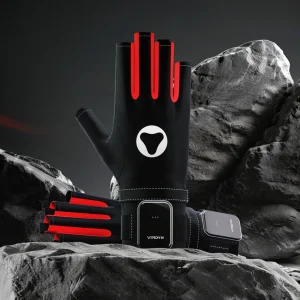
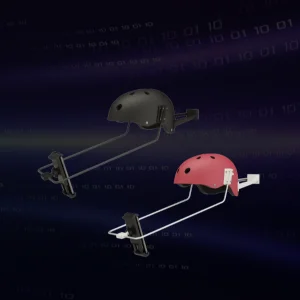
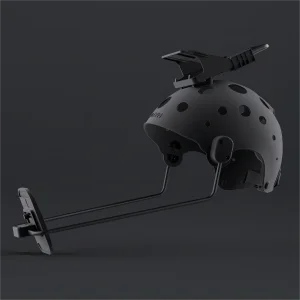
Yes. The Virdyn ecosystem is modular. mHand Pro gloves connect alongside VDSuit Full, streaming 16-channel dexterous finger articulation, while VDFace helmet modules broadcast real-time ARKit blendshapes simultaneously into VRChat or virtual live production engines like Warudo and Unity.
What is the typical battery endurance and charging lifecycle?
The integrated low-power wireless nodes deliver over 5 hours of continuous transmission on a single charge. Nodes can be hot-charged or replenished via multi-port charging hubs, ensuring minimal downtime during all-day virtual productions or high-throughput live events.
Advanced Motion Analysis, Datasets & Autonomous Platform Suites
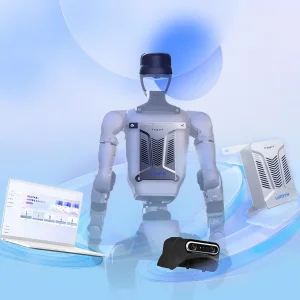
Complete your deployment with intelligent motion data analytics, pre-packaged training datasets, and multi-modal optical markerless integration tools.