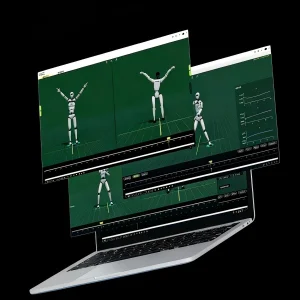
Integrated Facial, Optical & Algorithmic Deployment Stack
Enterprise hardware suites and synchronized software infrastructure ready for immediate studio integration, robotic actuation, and biomechanical analytics.
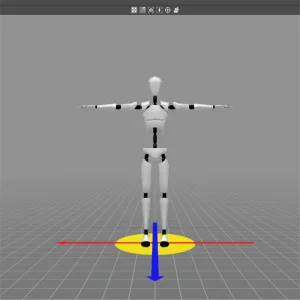


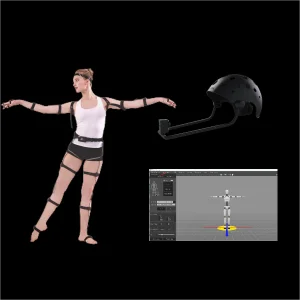
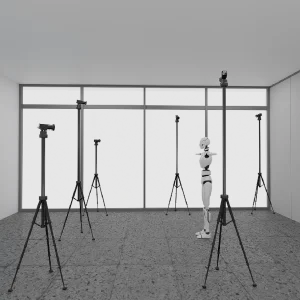
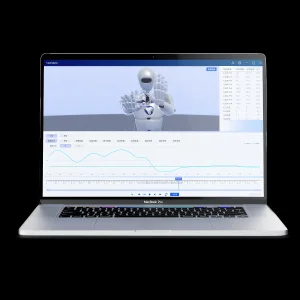
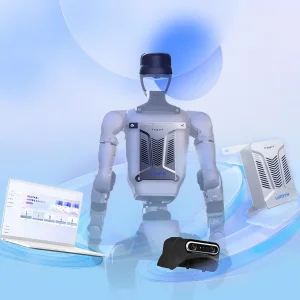
The Architectural Evolution of Facial Motion Capture: From Marker Dots to Neural Morph Targets
Facial performance acquisition has advanced beyond static physical markers into continuous volumetric tracking powered by edge computing, synchronized RGB-D pipelines, and high-frequency anatomical neural solvers.
The Demise of Retro-Reflective Markers in High-Fidelity Rigging
Traditional performance capture historically relied on calibrated retro-reflective hemispherical dots adhered directly across the actor's epidermis. While viable for coarse jaw translation and brow crinkling, this legacy approach introduced insurmountable pipeline bottlenecks: heavy occlusion during dynamic dialogue, hours of manual point clean-up, and catastrophic fidelity losses in subtle micro-expressions around the zygomaticus major and orbicularis oris.
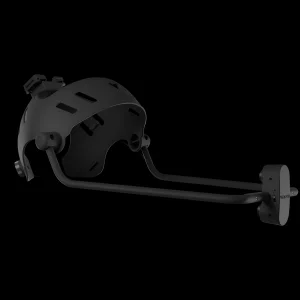
Today's modern production pipelines demand automated, photorealistic fidelity calibrated directly into Facial Action Coding System (FACS) blendshapes. By utilizing head-mounted camera rigs (HMCs) equipped with high-speed, global-shutter CMOS sensors operating in infrared spectrums alongside on-device algorithmic neural networks, studios capture high-frequency facial deformation down to sub-millimeter tolerances with zero marker drift.
This technical transition allows virtual production supervisors to stream real-time, solved morph weights directly into Unreal Engine 5's MetaHuman Framework, Unity, or MotionBuilder via low-latency UDP streams, drastically reducing post-production clean-up cycles from weeks to zero-latency real-time validation.
Engineering Performance Metrics
Continuous testing over 20,000 recorded takes indicates that algorithmic neural HMC solutions outpace optical marker-based setups across key operational production criteria:
Dual-Camera Stereoscopic HMC
By pairing dual high-definition stereoscopic optical feeds with specialized 850nm infrared ring illumination, capturing hardware eliminates ambient studio shadows, micro-jitter, and stage lighting color interference.
Hardware Level RigidityMachine-Learning Blendshape Solvers
Real-time machine learning inference maps physical lip roll, tongue position, pupil gaze vectors, and nasolabial folds directly into standard 52 ARKit-compatible or custom high-order studio skeletal morph targets.
Sub-Pixel PrecisionZero-Drift Sensor Fusion
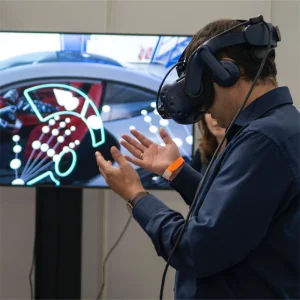
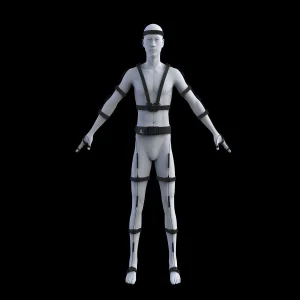
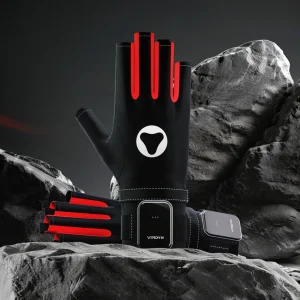
Comprehensive ecosystem synchronization unifies facial morph data with full-body inertial IMU suits (such as VDSuit Full) and mHand Pro multi-node finger sensors through precision timecode network protocols (SMPTE/PTP).
Temporal Genlock SyncGlobal Enterprise Sourcing: Navigating TCO, Rig Integration, and Pipeline Latency
When Tier-1 animation houses, university research consortiums, and robotics institutes evaluate facial and full-body motion capture infrastructure, procurement extends far beyond raw camera specifications.
Total Cost of Ownership (TCO)
Traditional multi-camera setups involve significant software licensing overheads, dedicated acoustic tracking volumes, and maintenance fees. Modern inertial-optical bundles drastically reduce stage footprints and infrastructure overhead.
SDK & Open Architecture
Enterprise buyers reject closed data silos. Native C++ SDKs, Python bindings, ROS/ROS2 interfaces for humanoid robotics, and LiveLink bridges to major 3D software ensure smooth software compatibility.
Thermal & Ergonomic Durability
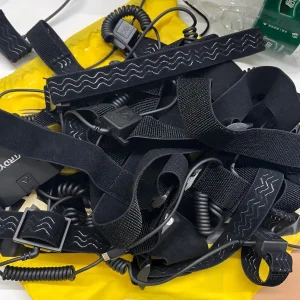
Head-mounted rigs must feature ultra-lightweight carbon fiber composite balancing, anti-slip multi-point harness mechanics, and passive heat dissipation to guarantee comfort across 8-hour continuous performance sessions.
Zero-Latency Broadcast Feeds
Virtual YouTube broadcasters (VTubers), live XR stages, and interactive virtual idol broadcasts require deterministic pipelines with less than 20ms of total latency to avoid audio-visual desync during high-tempo musical performances.
China Industry 4.0: Supply Chain Resilience, Precision R&D & Cost-Performance Moats
Virdyn's centralized design and manufacturing ecosystem in the Greater Bay Area represents an integrated approach to high-precision motion technology, pairing rapid iterative firmware cycles with robust component integration.
Supply Chain Integration Vectors
- Localized Component Clustering: Direct access to domestic high-yield CMOS sensor fabrication, rapid CNC carbon-fiber milling, and specialized micro-lens assembly lines reduces component lead times significantly.
- Automated Calibration Testing: Robotic high-frequency shake-tables and multi-angle optical collimation cells verify every single IMU sensor and camera module prior to QA clearance.
- Rapid Algorithmic Updates: In-house firmware teams deploy regular algorithmic improvements, optimizing Kalman filtering routines and magnetic immunity layers directly on local hardware architectures.
Democratizing High-End Motion Capture Hardware
Historically, studio-grade capture systems were limited to major productions due to steep procurement markups and proprietary software licensing. The expansion of precision industrial automation has challenged that framework.
By leveraging advanced surface-mount technology (SMT), automated optical testing, and optimized modular tooling, cutting-edge capture systems are manufactured with remarkable structural stability and consistency.
This allows boutique studios, independent software creators, regional universities, and robotics incubators across North America, Europe, and Asia to procure reliable capture ecosystems at scalable economics—empowering diverse teams to achieve high-fidelity production results.
Commercial Application Scenarios: From Virtual Stages to Embodied AI Teleoperation
Advanced facial and inertial motion capture solutions serve as dynamic data bridges across diverse commercial domains, from digital interactive media to physical humanoid robotics.
AAA Game Cinematics & Previs
Actors deliver uninhibited dialog and acrobatic stunts simultaneously. Live streaming facial morphs combined with body IMU transforms lets directors review fully lit, populated game sequences inside Unreal Engine in real time.
Interactive DirectingVTuber Agencies & Live E-Commerce
In virtual entertainment and interactive e-commerce, latency and stability define engagement. Turnkey facial helmets alongside lightweight half-body trackers enable virtual talents to execute multi-hour live streams without drift.
Real-Time InteractionEmbodied AI & Humanoid Training
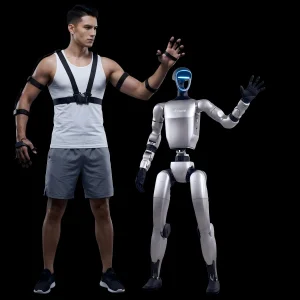
Robotics laboratories rely on high-frequency human kinematic capture to compile teleoperation demonstration libraries. Detailed hand articulation and facial visual gaze tracks train imitation learning models for human-robot interaction.
Imitation Learning Datasets| Tracking Architectural Layer | Virdyn Integrated Facial Solution | Standard Optical Multi-Camera Studio | Consumer RGB Webcams / Mobile Apps |
|---|---|---|---|
| Capture Modality | Dual Infrared CMOS Headset + Global Shutter | 24-48 External Optical Array + Face Dots | Monocular Visible Light Video Stream |
| Ambient Light Vulnerability | Immune (Integrated 850nm IR Illumination) | Controlled Studio Lighting Required | Highly Sensitive to Shadows & Glare |
| Facial Micro-Expressions | Full Sub-millimeter FACS & Tongue Tracking | Marker-dependent, High Surface Noise | Coarse Morph Estimates, Jitter Prone |
| Spatial Freedom | Unbounded Wireless Mobility (Inertial Match) | Restricted to Small Optical Stage Volume | Tethered to Desktop Camera Cone |
| Initial Calibration Time | < 90 Seconds Auto Neutral-Pose Calibrate | 45-60 Minutes Marker Placement/Tuning | Instant (Low Precision Threshold) |
Deep Search Intent: Engineering Inquiries Answered
Authoritative responses to complex hardware synchronization, network protocol design, and studio deployment questions.
How does the system mitigate facial expression tracking errors caused by actor head movement and helmet shifts?
Can the facial capture stream be directly synchronized with third-party full-body optical or inertial systems?
How are varied environmental lighting conditions handled on live virtual production stages?
What pipeline options exist for retargeting captured data to proprietary, non-standard character rigs?
How does the system accommodate facial hair, eyeglasses, and varied facial structures?
Complementary Performance Capture & Robotics Hardware Solutions
Complete your production studio configuration with dedicated full-body inertial suits, dexterous finger-tracking gloves, and AI training development platforms.