Hardware & Software Matrix
Featured Real-Time Facial & Body Tracking Systems
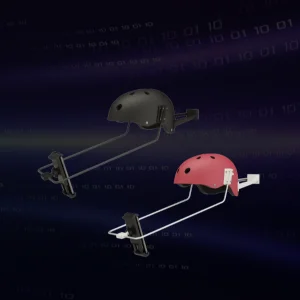
Direct factory-engineered systems bridging dual-camera optical capture helmets, full-body IMU telemetry, and enterprise SDK pipelines for turnkey real-time deployment.


Industry Benchmarks
Engineering Precision in Real-Time Facial Expression Tracking
Capturing human facial subtleties requires deep alignment between physical ergonomic head-mounts, synchronized dual-stream optical imaging, and high-frequency AI blendshape solvers.
52+
FACS Blendshapes Solved in Real Time
<15ms
Ultra-Low Pipeline Capture Latency
1080P
RGB Dual-Camera Sensor Streaming
100%
SDK Compatibility (UE5, Unity, Maya)
System Architecture
Full-Stack Face Capture Solution Architecture: Planning to Production
When planning a high-end enterprise facial performance infrastructure, system architects must address camera vibration isolation, lighting calibration, thermal dissipation, and direct socket streaming to virtual engines.
Dual-Camera Optical Triangulation
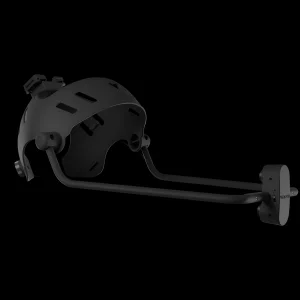
Unlike single-monocular webcams, the AH Double Camera-Based Helmet incorporates calibrated dual-sensor geometry. This stereoscopic setup eliminates depth ambiguity across extreme jaw extensions, lip pouts, and subtle eye squinting, ensuring accurate 3D landmark triangulation under varied studio angles.
Counterbalanced Carbon-Fiber Rigging
Operator fatigue introduces jitter and drift. Our facial capture helmets employ aerospace-grade carbon fiber booms, precision-balanced battery counterweights, and micro-dial tightening belts. This minimizes displacement during dynamic stunt movements and multi-hour performance sessions.
Sub-frame Synchronization & Genlock
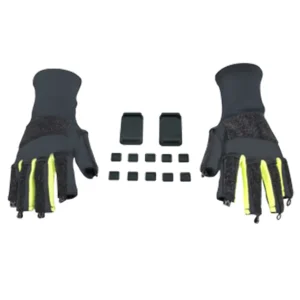
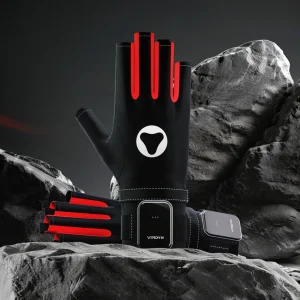
Facial performance must sync with full-body skeletal motion and finger kinematics without phase slip. The VDFace pipeline features hardware-triggered timestamping, synchronizing facial blendshape streams directly with VDSuit Full IMU nodes and mHand Pro data gloves at sub-frame intervals.
Global Manufacturing & Supply Chain
China Factory Supply Chain: Delivering Hardware Precision at Scale
Global enterprise procurement teams face escalating hardware costs and unpredictable lead times. Virdyn leverages the integrated precision manufacturing ecosystem of the Pearl River Delta to deliver industrial reliability and scale.
End-to-End Vertical R&D Integration
From optical mold injection, custom high-CRI micro-LED light rings, and PCB surface mounting (SMT) to internal firmware development, all manufacturing operations are consolidated under strict ISO9001 certified production lines. This vertical integration cuts turnaround times by up to 60% compared to fragmented assembly setups.
Strict Sensor Calibration & QA Protocols
Every AH-D helmet and optical sensor undergoes automated optical alignment, multi-axis vibration testing, continuous 72-hour thermal stress screening, and drop tests. Optical lenses are calibrated against telecentric distortion targets, guaranteeing sub-millimeter positional fidelity across every manufactured batch.
Flexible OEM/ODM & Institutional Sourcing
We serve international academic laboratories, game studios, and robotics developers with custom form-factor adaptation. Whether adjusting focal lengths for specialized computer vision training or integrating bespoke wireless protocols, our direct engineering team supports complete customization without long development delays.
Procurement & Governance
Compliance, Enterprise Security & International Standards
International institutions require strict data governance, radio frequency certifications, and ergonomic safety verifications prior to production deployment.
Global Regulatory Compliance
All Virdyn hardware components adhere to international market entry regulations, including CE (Conformité Européenne), FCC Part 15 Class B certification for electromagnetic compatibility, RoHS environmental non-hazardous material mandates, and UN38.3 / MSDS protocols for international air freight of lithium-ion power packs.
Data Privacy, Biometric Protection & Air-Gapped Operation
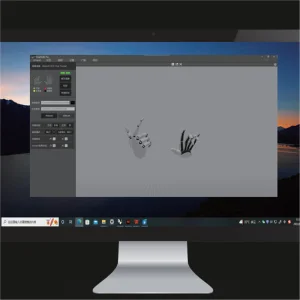
Facial point cloud and expression mapping data can involve sensitive personal telemetry. Virdyn desktop applications (VDMocap Studio, DreamsCap Studio, and Valyze) run entirely offline in local air-gapped network environments without mandatory cloud connectivity, ensuring full compliance with GDPR and enterprise NDA obligations.
Comprehensive Evaluation
Face Capture Technical Paradigm Matrix
Selecting the appropriate facial tracking system depends on production environment constraints, tracking volume requirements, and real-time processing demands.
| Evaluation Parameter | Dual-Camera HD Helmet (Virdyn AH-D) | Single-Camera Helmet (VDFace) | Stationary Depth Camera (RGB-D) | Optical Dot-Marker Array |
|---|---|---|---|---|
| Actor Mobility | 100% Unrestricted (360° Studio Range) | 100% Unrestricted (Full Mobility) | Strictly Confined to Frontal Cone | Restricted to Optical Volume Stage |
| Lighting Resistance | Active High-CRI Micro Lighting (Uniform) | Integrated Diffused Ring LED | Subject to Ambient Room Flickering | Requires IR Lighting Array Arrays |
| Lip & Jaw Depth Precision | Stereoscopic Triangulation (<0.5mm) | Monocular AI Estimation (<1.2mm) | Infrared Time-of-Flight (<1.0mm) | Sub-millimeter Marker Coordinates |
| Live Stream Engine Latency | <15ms Low-Latency Stream | <20ms Socket UDP/TCP | >35ms Depending on Depth Filtering | <10ms (Requires Offline Cleanup) |
| Cost & Setup Overhead | High Cost-Efficiency, Fast Setup | Most Cost-Effective Enterprise Choice | Moderate, Low Wearability | Very High (Camera Array & Markers) |
Expert Technical Q&A
Frequently Asked Questions: Face Capture System Solutions
In-depth answers to common technical, integration, and purchasing questions encountered by virtual production supervisors and lead pipeline engineers.
How does the AH Double-Camera Helmet handle actor facial asymmetry and extreme expressions?
The dual-camera stereoscopic setup tracks facial landmarks from offset vantage angles simultaneously. When an actor looks down or speaks with extreme asymmetrical lip movement, a single lens frequently suffers from occlusion or planar foreshortening. The AH stereoscopic algorithm triangulates coordinates from both perspectives, resolving full 3D muscle movement and driving Apple ARKit-compatible or custom 52-blendshape rigs without losing tracking around the corners of the mouth and nasal folds.
Can facial tracking data be synchronized in real time with full-body inertial suits and data gloves?
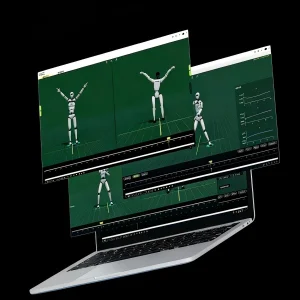
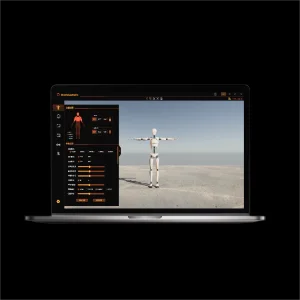
Yes. Virdyn's unified suite—including VDMocap Studio and DreamsCap Studio—acts as an integrated synchronization hub. The facial capture stream, whether from the VDFace or AH helmet, is time-aligned via centralized frame triggers with the VDSuit Full IMU suit and mHand Pro mocap gloves. The combined data streams natively into Unreal Engine 5 (via Live Link), Unity, Maya, and MotionBuilder as a unified skeletal and facial rig.
What are the lead times and minimum order quantities for enterprise sourcing and university labs?
Because our production lines are based in our Guangzhou factory, standard system packages (such as AH Helmets, VDFace sets, and VDSuit configurations) are maintained in active inventory with typical order lead times of 3 to 7 business days for express global delivery. There are no minimum order quantity (MOQ) limits for standard units; pilot evaluation units can be procured individually before full fleet expansion. Custom OEM/ODM runs require technical review and lead times between 3 and 5 weeks.
How does the system ensure expression accuracy under dim or rapidly changing stage lighting?
Production sets often use theatrical lighting with harsh colored gels or rapid intensity shifts. Virdyn face capture helmets feature integrated, flicker-free high-CRI micro-LED ring illuminators. These lights cast uniform, calibrated illumination across the actor’s facial features, keeping tracking landmarks well-lit while physical camera filters reject peripheral stage flare.
How can research teams use VDFace and AH helmets for humanoid robot and embodied AI data collection?
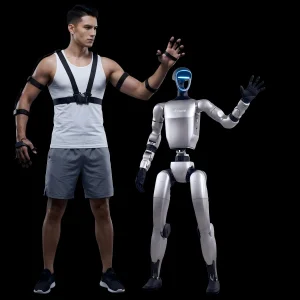
Beyond virtual character animation, high-frequency human facial and head pose telemetry is increasingly valuable for training conversational humanoid robots. Our open C++ and Python SDKs deliver raw metric 3D point-cloud arrays and normalized FACS blendshape weights over local TCP/UDP sockets, enabling machine learning researchers to train social robotics models without proprietary API restrictions.
Complete Mocap Ecosystem
Robotics, Hand Articulation & Motion Analysis Hardware
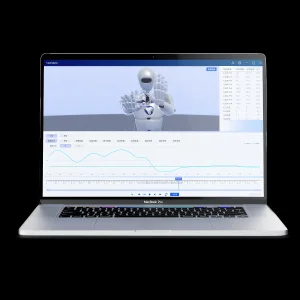
Explore our full line of multi-segment inertial capture accessories, robot teleoperation datasets, and AI-assisted biometric evaluation platforms.