Featured Solutions · Module 01
Featured Computer Vision & Spatial Sensor Solutions
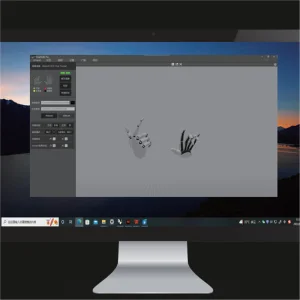
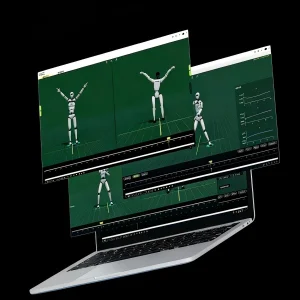
Industrial-grade motion acquisition systems optimized for autonomous robotics validation, biomechanics modeling, and photoreal kinematic streaming into modern 3D simulation engines.


Paradigm Shift · Market Dynamics
Global Industry Trends: From Rigid Marker Capture to Spatial AI
The global motion analysis and capture marketplace has reached an inflection point. Driven by advancements in neural rendering, multi-view deep convolutional pose estimators, and low-latency edge computing, Computer Vision Motion Capture (CV Mocap) has transcended legacy studio confines into high-velocity operational environments.
Markerless Deep Neural Kinematics
Traditional optical mocap demanded reflective retro-spheres, dark stages, and tedious recalibration cycles. Contemporary computer vision pipelines employ dense spatial networks, self-supervised spatial priors, and spatial transformer networks (STNs). By interpreting high-framerate multi-camera RGB/depth feeds, these neural architectures resolve 3D human pose and anatomical degrees of freedom (DoF) without physical body markers, cutting setup latency by over 85%.
Hybrid IMU + Vision Multi-Sensor Fusion
Pure visual recognition encounters line-of-sight occlusion during dynamic multi-actor scenes or close-quarters tool handling. Enterprise-grade planning dictates hybrid pipelines: pairing 9-axis micro-electromechanical inertial measurement units (IMUs) with synchronized multi-camera vision arrays. Extended Kalman Filtering (EKF) and Factor Graph Optimization eradicate positional drift while preserving high-frequency joint acceleration data.
Embodied AI & Humanoid Training Datasets
The explosive demand for humanoid general-purpose robotics has reshaped motion capture requirements. Teleoperation systems now ingest zero-latency egocentric camera data, dexterous glove telemetry, and full-body spatial kinematics to feed Vision-Language-Action (VLA) foundation models. High-fidelity human demonstration capture constitutes the vital prerequisite for imitation learning and reinforcement learning in simulation (Sim2Real).
< 15ms
End-to-End Processing Latency
99.4%
Spatial Skeletal Joint Accuracy
10+
Native Real-Time Engine Integrations
70%
CapEx Reduction vs. Legacy Optical
Strategic Sourcing · Technical Specifications
Global Procurement Requirements Across Enterprise Verticals
Evaluating computer vision and hybrid mocap hardware demands a holistic review of software modularity, API robustness, SDK open standards, and operational resilience across diverse organizational environments.
| Evaluation Parameter | Legacy Passive Optical Stages | Standalone Markerless CV | Virdyn Hybrid Multi-Sensor Architecture |
|---|---|---|---|
| Operating Environment | Dedicated capture volume; zero sunlight or reflective floors | Controlled lighting; visible line-of-sight required | Unrestricted indoor/outdoor, industrial shop floors, tight cockpits |
| Occlusion Handling | High marker loss during ground maneuvers or object interaction | Prone to depth ambiguity and skeletal swapping | Zero occlusion loss (IMU orientation constraints maintain integrity) |
| Data Acquisition Throughput | Requires extensive post-capture optical point cleanup | Moderate; post-inference neural smoothing required | Immediate zero-cleanup streaming (BVH, FBX, Live Link, ROS2) |
| Deployment Speed | Weeks of ceiling rigging, calibration, and wanding | Hours (camera tripod placement and extrinsic solving) | 10 minutes (rapid wearable auto-calibration and wireless link) |
| Robotics / ROS Teleoperation | Cumbersome rigid body configurations | Latency often exceeds control loop boundaries | Direct ROS/ROS2, UDP/TCP socket streaming, C++/Python APIs |
Cross-Platform Interoperability
Native zero-overhead transmission to Unreal Engine 5.x (Live Link), Unity, Autodesk Maya, Blender, MotionBuilder, and WebRTC streaming for distributed virtual studios.
High-Density Biomechanical Telemetry
True multi-node finger articulacy capture (16-20 DoF per hand) combined with 60-120 FPS high-definition facial blendshape tracking matching ARKit 52 standard.
Electromagnetic Hardening
Integrated adaptive magnetometers and dynamic Kalman filters that prevent yaw drift in heavy industrial spaces containing structural steel and high-voltage motors.
Enterprise TCO Optimization
Avoidance of recurring per-seat software tax; inclusion of perpetual studio licenses and modular hardware field-repairability for mission-critical reliability.
Global Manufacturing Hub · Industrial Advantage
China Industry 4.0: Supply Chain Resilience & R&D Agility
Guangzhou Virdyn Network Technology Co., Ltd. leverages the world's most concentrated microelectronics, precision optics, and textile engineering ecosystem to deliver uncompromised hardware at competitive industrial price points.
Full-Stack In-House Hardware & Algorithmic Mastery
Unlike integrators who white-label off-the-shelf IMUs or generic machine vision kits, Virdyn develops all sensor PCBs, proprietary fusion firmware, low-latency 2.4GHz/5.8GHz wireless transmission protocols, and host desktop SDKs internally in Guangzhou. This sovereign R&D loop enables swift firmware tailoring for customer-specific robotics or defense applications within days rather than quarters.
Greater Bay Area Electronics Super-Cluster
Operating in the heart of the Guangdong-Hong Kong-Macao Greater Bay Area provides immediate physical proximity to tier-1 semiconductor foundries, high-precision SMT surface-mount lines, and technical Lycra textile fabricators. This tight spatial coupling ensures stringent six-sigma quality control, rapid prototype turnaround, and dependable component supply buffers that remain impervious to global logistics crunches.
Scalable Tier-1 Delivery & Global Export Compliance
With established worldwide shipping channels, Virdyn guarantees short production lead times (often 3 to 7 business days for stock setups) and direct institutional logistics with complete CE, FCC, and RoHS certifications. Procurement managers avoid long dealer markups and benefit directly from factory-direct consultative support, comprehensive developer documentation, and swift spare parts dispatch.
Real-World Implementations · Deployment Architecture
Localized Application Scenarios: Field-Tested Execution
From Tokyo virtual YouTuber studios and Hollywood previs soundstages to automotive assembly plants in Stuttgart and biomechanical research universities across North America, explore real-world deployment frameworks.
Virtual Production & Film Previs
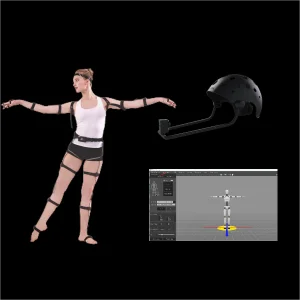
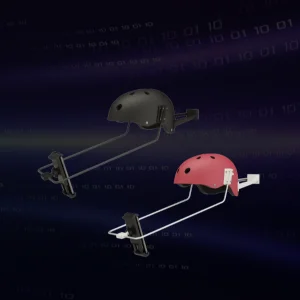
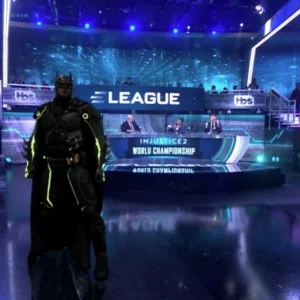
Directors preview fully rendered digital creatures and environments live inside Unreal Engine. Actors wear VDSuit Full and VDFace Pro to drive cinematic avatar performance directly on the volume stage, dramatically shrinking post-production iteration time.
Humanoid Teleoperation & Robot Learning
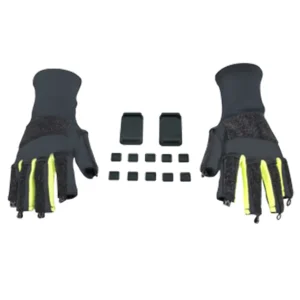
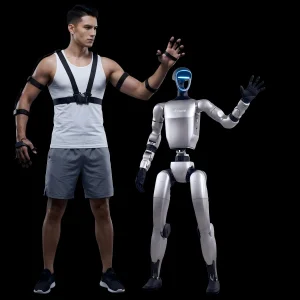
Using the VDSuitMini half-body suit, mHand Pro dexterous gloves, and VDEgo first-person cameras, operators teleoperate bipedal robots and multi-finger robotic end-effectors in real time, simultaneously compiling structured imitation datasets.
Virtual Live Streaming & E-Commerce VTubers
Agencies broadcast interactive 3D virtual streamers across Twitch, YouTube, and TikTok via Warudo or VRChat (OSC protocol). Zero camera occlusion guarantees smooth acrobatic dancing, athletic poses, and expressive hand gestures over hours of live interaction.
Clinical Ergonomics & Sports Science
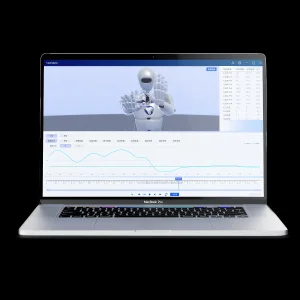
Equipped with Valyze biomechanical analytics software, university researchers measure real-time joint angular velocities, gait symmetries, and muscular load vectors during high-impact athletics or rehabilitation drills without restricting natural movement.
Engineering FAQ · Procurement Diligence
Frequently Asked Technical & Sourcing Inquiries
Detailed responses compiled by Virdyn's senior hardware architects and computer vision algorithmic leads.
Q How does Virdyn computer vision & inertial capture solve the occlusion problem common in marker-based optical setups?
Traditional optical setups rely on clear line-of-sight between external cameras and reflective spheres. When performers crawl, carry props, or embrace another performer, markers are occluded, triggering joint jumping or skeletal breakdown. Virdyn's inertial systems (VDSuit Full) measure kinematic orientation natively via body-mounted 9-axis IMUs, rendering the system impervious to visual obstructions. In hybrid configurations, our sensor fusion algorithm uses inertial telemetry to bridge momentary visual occlusions seamlessly.
Q Can Virdyn mocap data stream directly into robot controllers via ROS/ROS2 for low-latency teleoperation?
Yes. Virdyn provides low-latency C++ and Python SDK interfaces alongside native UDP socket broadcast protocols. Telemetry from the VDSuitMini and mHand Pro gloves can be unpacked directly into Cartesian or joint-angle target vectors within ROS/ROS2 nodes. This enables sub-20ms control loops for real-time humanoid arms and multi-fingered dexterous grippers, complete with collision limit clamping.
Q What algorithmic methods are used to mitigate electromagnetic interference (EMI) on metal floors?
Industrial environments contain structural rebar, high-voltage motors, and steel decking that distort earth's ambient magnetic field. Virdyn's VDMocap Studio incorporates dynamic magnetic anomaly rejection algorithms. By cross-validating gyroscope angular rate integration with biomechanical skeletal constraints, the solver automatically de-weights distorted magnetometer readings, maintaining accurate yaw tracking without drift.
Q What software environments, 3D pipelines, and live-streaming engines are natively supported?
Every Virdyn system ships with native zero-friction plugins for Unreal Engine 4/5 (via Live Link), Unity, Autodesk Maya, 3ds Max, MotionBuilder, Blender, and Reallusion iClone. Furthermore, for interactive virtual creators, we natively support VRChat through OSC protocols and Warudo for interactive multi-avatar live broadcasts. Android SDK support is also provided for mobile robotics integration.
Q What is the standard international procurement, warranty, and lead-time schedule?
Global orders are dispatched directly from our Guangzhou manufacturing headquarters via express air freight (DHL, FedEx, UPS). Standard hardware kits maintain typical manufacturing lead times of 3 to 7 business days. All systems include a comprehensive 1-year factory warranty, lifelong software maintenance updates, and access to English-speaking application engineers available for remote video onboarding and troubleshooting within 24 hours.
Q How does Virdyn support egocentric visual dataset collection for Embodied AI and Foundation Models?
We provide synchronized multi-modal capture setups integrating our VDEgo first-person wide-angle high-speed cameras with full-body and hand kinematic telemetry. This allows researchers to capture perfectly time-aligned visual video streams alongside physical joint rotations and hand interactions, generating the large-scale multimodal tokenized demonstration data required for modern Vision-Language-Action (VLA) model training.
Featured Solutions · Module 02
Full Performance Capture & Biomechanical Systems
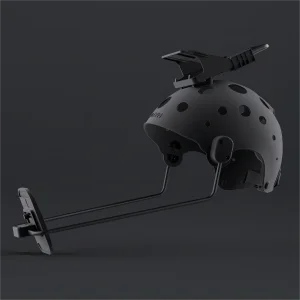
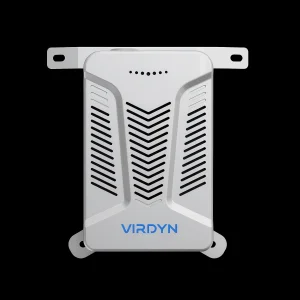
High-precision motion tracking peripherals, facial capture helmets, and specialized data analysis software built for AAA entertainment and industrial motion research.