Enterprise Motion Capture & Teleoperation Hardware
Direct hardware procurement and high-performance sensor ecosystems compatible with modern Android and desktop motion capture suites.


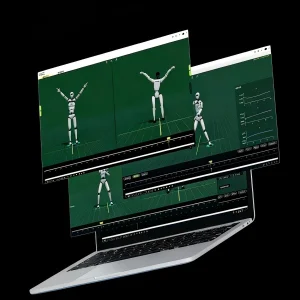
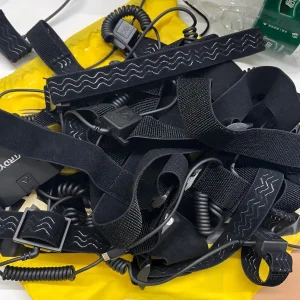
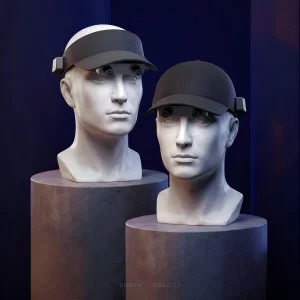

Global Landscape of Android Face Motion Capture
Decentralizing micro-expression tracking: How modern Android Neural Processing Units (NPUs) and dense geometry meshes have shattered the proprietary hardware monopoly.
For over half a decade, computer-vision facial animation pipelines in entertainment, interactive media, and game development were disproportionately tied to closed hardware architectures—predominantly relying on Apple's proprietary TrueDepth structured-light sensor arrays. While effective, this created an acute enterprise bottleneck: prohibitive capital expenditures when deploying multi-node performance capture stages, vendor lock-in preventing hardware customization, and steep platform licensing fees.
Today, a profound paradigm shift is sweeping the global commercial landscape. The rapid evolution of Qualcomm Snapdragon Neural Processing Units (NPUs), MediaTek Dimensity AI accelerators, Google ARCore, and open-source landmarking frameworks like Google MediaPipe (FaceMesh 468/478 landmarks) has elevated standard Android camera hardware to cinema-grade real-time capture fidelity. Leveraging high-frequency RGB video streams paired with on-device tensor cores, enterprise Android facial motion capture solutions now solve complex FACS (Facial Action Coding System) blendshapes at over 60 to 120 FPS with under 15ms algorithmic latency—rendering enterprise-grade biometric tracking scalable, affordable, and fully open.
Edge NPU Tensor Execution
By delegating deep learning inference to dedicated Qualcomm Hexagon and MediaTek APUs, facial landmark networks process multi-layer regressions without loading the host CPU or degrading wireless streaming frame rates.
Standard 52 Blendshapes (FACS)
Mathematical solvers map 478 three-dimensional facial vertices directly to industry-standard Apple ARKit-compatible 52 morph targets, ensuring immediate plug-and-play fidelity across Unreal Engine, Unity, and Maya rigs.
Zero-Lag Protocol Streaming
Custom Android capture engines stream packetized bone transformations and blendshape coefficients across low-latency UDP, Open Sound Control (OSC), and Virtual Motion Capture (VMC) protocols over standard Wi-Fi 6 networks.
Hardware Procurement Cost Reduction
Average Monocular Algorithmic Latency
3D Real-Time Dense Facial Landmarks
Continuous Deterministic Frame Stability
The Chinese Factory & Hardware Ecosystem Advantage
How Guangzhou and Greater Bay Area manufacturing precision unlocks rapid hardware iterations, thermal management rigs, and unbeatable unit economics for global procurement.
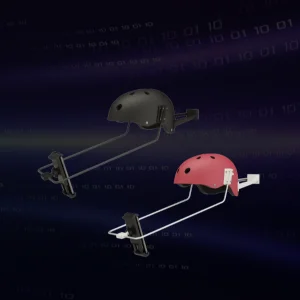
Executing professional Android face motion capture requires more than just an APK; it mandates an entire industrial hardware framework. Extended capture sessions spanning several hours subject mobile hardware to intensive thermal load and camera vibration. Without rigid, biomechanically balanced head-mounted camera (HMC) systems and localized illumination, software performance quickly degrades due to sensor thermal throttling and motion blur.
China's advanced manufacturing clusters—centered around Guangzhou, Shenzhen, and Dongguan—provide an unmatched competitive advantage in bridging this software-hardware divide. By integrating aviation-grade carbon fiber molding, CNC-machined counterweighted phone brackets, active heat dissipation thermoelectric Peltier coolers, and calibrated 95+ CRI miniature ring lighting, Chinese OEM/ODM facilities deliver complete, turnkey HMC rigs at a fraction of Western boutique fabrication costs.
Ultra-Lightweight Carbon Fiber
Molded autoclave carbon fiber booms minimize actor neck fatigue during 8-hour live broadcasts, maintaining sub-millimeter camera stability under high physical kinetic stress.
Active Semiconductor Cooling
Integrated silent magnetic Peltier heat sinks pull heat away from mobile processors, completely eliminating thermal clock drops and frame drops during live Unreal Engine sessions.
Calibrated 98 CRI Diffused Lighting
Custom-built micro ring illuminators eradicate harsh facial shadow falloffs, ensuring convolutional neural networks identify nasolabial folds and eyelid landmarks flawlessly.
Unified IMU Suit Integration
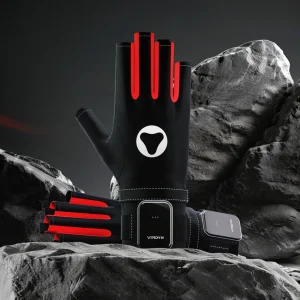
Direct mechanical and software synchronization with Virdyn's VDSuit Full and mHand Pro gloves enables full-body, finger, and face capture unified under a single hardware hub.
Enterprise Commercial Applications of Android MoCap
From high-throughput VTuber agencies to humanoid robot micro-teleoperation, how industry leaders deploy Android facial tracking pipelines.
VTubing & Virtual E-Commerce
TikTok, YouTube, and Twitch live commerce broadcasts require continuous, unattended 12-hour operational windows. Android-based rigs paired with light desktop software allow studios to run dozens of live rooms concurrently with minimal infrastructure overhead.
Game Cinematics & Pre-Visualization
Indie and mid-market game studios capture iterative dialogue acting instantly on actors' personal Android devices. Data streams live into Unreal Engine 5's Live Link, bypassing months of tedious manual phoneme and blendshape animation keyframing.
Humanoid Robotic Teleoperation
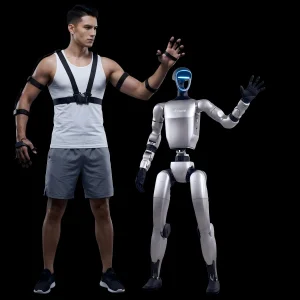
Embodied AI and social humanoid robots (such as Hanson Robotics Sophia or Unitree humanoids) leverage teleoperated human facial telemetry. Operators mimic human expressions, and high-frequency Android blendshape streams drive physical facial linear actuators.
Interactive AI Concierges & Smart Kiosks
Airports, luxury retail, and hospitality kiosks deploy embedded Android tablets running local facial tracking. Digital human ambassadors respond intuitively to consumer gaze, smiling in real-time to mirror customer engagement without cloud latency.
Clinical Neurological & Speech Therapy
Medical institutions utilize high-accuracy 3D landmark regression to assess Bell's palsy, stroke recovery, and speech pathologies. Micro-movements in zygomaticus and orbicularis muscles provide objective rehabilitation progress metrics.
Automotive Cabin Driver Monitoring (DMS)
Next-generation cockpit infotainment and safety architectures integrate Android-driven ocular and mouth tracking to detect micro-sleep episodes, driver distraction, and emotional stress triggers on vehicle edge computing modules.
Enterprise Facial Capture Architecture Matrix
A rigorous comparative analysis of Android Monocular Neural Solutions, Apple TrueDepth, and Dedicated Multi-Camera Infrared HMC Systems.
| Evaluation Criteria | Android NPU Neural Solution (Virdyn VDFace) | Apple iOS TrueDepth (ARKit) | Dedicated Multi-Cam IR Optical Rig |
|---|---|---|---|
| Sensor Technology | High-FPS RGB Stream + On-Device Deep Learning NPU | VCSEL Infrared Structured-Light Dot Projector | Dual/Quad Active Infrared Stereo Cameras |
| Facial Landmark Density | 468 – 478 3D Vertices (Sub-mm) | 30,000 IR Points (Pre-filtered into 52 morphs) | Physical Retro-Reflective Marker Array (60-120 pts) |
| Hardware Procurement Cost | Ultra-Low ($150 - $400 per capture node) | Moderate ($800 - $1,400 per capture node) | Prohibitive ($8,000 - $35,000+ per system) |
| Platform Openness & SDK | Fully Open (NDK, C++, Python, ONNX, Android SDK) | Restricted to Apple Ecosystem & Metal Framework | Proprietary Vendor Lock-In Software Stacks |
| Continuous Thermal Stability | High (When paired with Chinese Peltier Cooling Rigs) | Medium (Prone to thermal throttling past 45 mins) | Very High (Industrial heat-sinked housing) |
| Live Engine Retargeting | Unreal Live Link, Unity OSC, Maya, Blender, VMC | Unreal Live Link, Custom Socket Clients | MotionBuilder, Custom Fiber/Vicon Shogun Hub |
| Field Setup & Mobility | Instant (Wearable HMC, Wi-Fi 6 wireless stream) | Instant (Wearable HMC, Wi-Fi wireless stream) | Complex (Multi-receiver optical setup & calibration) |
Industry Trends & Enterprise Procurement Guidelines
Strategic technology trajectories and technical evaluation criteria for B2B procurement managers, production engineers, and academic directors.
Edge Generative Micro-Expressions
By 2026, on-device small generative neural models will synthesize sub-surface micro-tensions—such as subconscious pupil dilation and autonomic vascular skin flush—directly from Android video inputs.
Ultra-Wideband & Wi-Fi 7 Protocols
Next-gen Wi-Fi 7 wireless integration enables uncompressed 120 FPS floating-point raw coordinate streaming across 30+ performers simultaneously on a single stage without packet jitter.
Multimodal Audio-Visual Fusion
Hybrid capture algorithms cross-reference phoneme soundwaves captured via the Android mic array with visual lip contours, delivering 100% accurate plosive speech articulation even during occlusions.
Enterprise MoCap Procurement Evaluation Checklist
Before signing volume purchase agreements for mobile facial motion capture systems, global technical directors must verify the following mission-critical parameters:
Frequently Asked Questions: Android Face Motion Capture
In-depth technical answers addressing system engineering, synchronization, and production integration.
How does an Android RGB camera achieve depth-like facial accuracy without dedicated structured light sensors?
How do you resolve thermal throttling on Android smartphones during extended capture sessions?
Can Android facial motion capture data be synchronized with Virdyn full-body inertial suits and gloves?
What network protocols are recommended for streaming facial blendshapes in low-latency live environments?
How are lighting variations mitigated when actors move around an uncalibrated room?
What is the typical hardware lead time and OEM customization capability from Chinese production hubs?
Enterprise Motion Capture Systems & Accessories
Complete your production setup with professional inertial suits, conversion software, facial rigs, and embodied AI robotics platforms.