Flagship Motion Capture Systems & Performance Peripherals
High-precision multi-sensor architectures engineered for enterprise virtual production, game development, spatial computing, and robotic dataset collection.
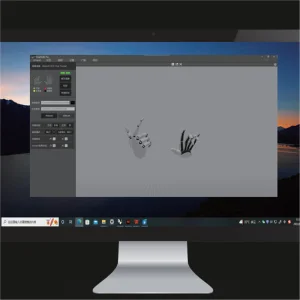

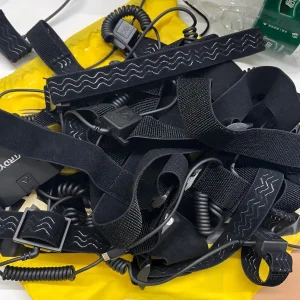

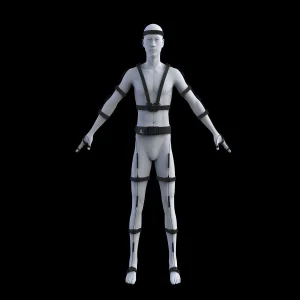
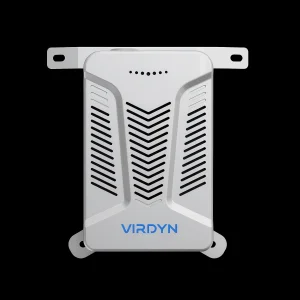

Holistic Motion Capture Suit Planning & Engineering Blueprint
Achieving sub-millimeter biomechanical fidelity outside traditional multi-camera volumes requires an integrated approach across embedded sensor fusion, advanced kinematics, and enterprise data pipes.
Inertial Fusion & 9-Axis Nodes
Modern inertial motion capture relies on industrial-grade 9-axis IMU nodes (triaxial accelerometer, triaxial gyroscope, and triaxial magnetometer). By deploying Extended Kalman Filter (EKF) algorithms directly at the firmware layer, our hardware eliminates drift caused by linear acceleration spikes and mechanical vibrations during high-velocity impacts.
- Dynamic zero-velocity update (ZUPT) foot-strike compensation
- Hardware-level magnetic anomaly detection & active shielding
- 1000Hz internal sensor sampling down-sampled to 120Hz/240Hz
Suit Hub & High-Throughput Bus
Reliable data harvesting requires a specialized master processing unit. The integrated Suit Hub coordinates localized sensor chains via flexible, anti-interference flat cabling. Sensor signals are synchronized with sub-microsecond precision before wireless packet serialization via proprietary 2.4GHz RF or WiFi 6.
- Deterministic packet transmission with hardware time-stamping
- Hot-swappable dual battery design supporting 6+ hours continuous capture
- Integrated onboard MicroSD logging for wireless failover recovery
Kinematic Solver & Live Retargeting
Raw orientation matrices must be translated into human anthropomorphic movements without unnatural bone-stretching. Our algorithmic pipeline incorporates forward and inverse kinematics (IK) driven by biomechanical constraints, ensuring natural joint limits and bone lengths across distinct anatomical structures.
- Zero Euler angle gimbal-lock anomalies via pure quaternion math
- Multi-actor spatial alignment and zero-latency real-time preview
- Native broadcast to Unreal Engine Live Link, Maya, Unity, and ROS2
Industrial Landscape: The Shift From Optical Volumes to Hybrid Agility
High capital expenditure and geographical constraints of legacy optical stages are accelerating the transition toward high-density inertial and hybrid tracking across global engineering and creative sectors.
| Evaluation Parameter | Virdyn VDSuit Inertial Architecture | Legacy Passive Optical Stages | Pure Computer Vision (Markerless) |
|---|---|---|---|
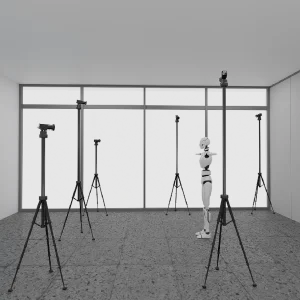
| Spatial Infrastructure | Zero dedicated room required; operates outdoors, in offices, vehicles, or tight cockpits. | Requires dedicated studio (50m² to 400m²) with trussing, matte black paint, and controlled lighting. | Requires calibrated camera arrays and uncluttered line-of-sight visual background. |
| Line-of-Sight Occlusion | 100% Occlusion Immune; performs flawlessly in multi-actor combat, under props, or inside vehicles. | Severely degrades when markers are occluded by props, complex costumes, or ground contact. | Subject to joint ambiguity and marker hallucination when performers overlap. |
| Setup & Calibration Time | Under 5 minutes: slip-on garment, single T-pose/A-pose gesture calibration. | 45 to 120 minutes: multi-camera wand calibration, retroreflective marker placement. | 10 to 20 minutes: multi-view camera extrinsic and intrinsic matrix calibration. |
| CapEx & Operational Costs | Accessible CapEx; low operational overhead; single-operator deployment capability. | Extremely high CapEx ($80k - $500k+); requires dedicated mocap engineers and post-cleanup artists. | Moderate hardware cost; high GPU compute overhead; post-capture neural refining latency. |
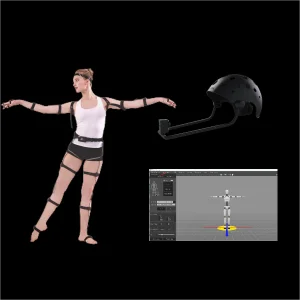
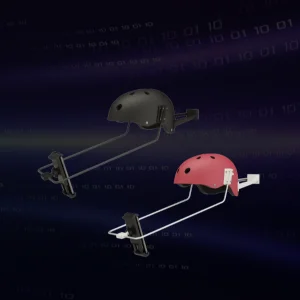
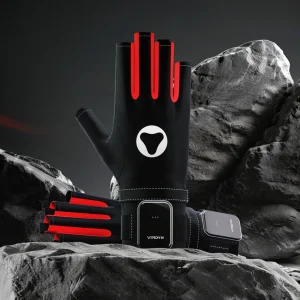
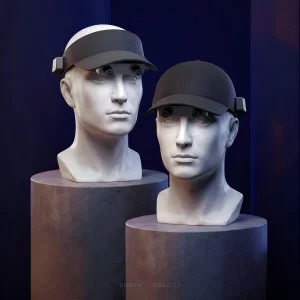
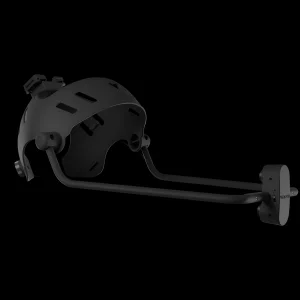
| Finger & Facial Co-Registration | Native modular sync: mHand Pro multi-node gloves + VDFace / AH-D HD helmet pipelines. | Requires dense retroreflective cluster setups; prone to tracking dropouts on small joints. | Relies on 2D landmarks; struggles under low-light or rapid micro-expression articulation. |
Cross-Disciplinary Deployment Solutions
How leading technology organizations leverage Virdyn motion capture architectures across robotics teleoperation, virtual production, digital brand marketing, and sports science.
Virtual Film Production & LED In-Camera VFX
Modern virtual production pipelines demand instantaneous character streaming inside Unreal Engine 5. VDSuit Full pairs with LED wall volumes to stream live stunt doubles and digital creatures without retroreflective camera interference.
- Genlock and Timecode synchronization (SMPTE/LTC)
- Simultaneous multi-actor stunt previs in confined set spaces
- Direct FBX/BVH raw data recording for post-VFX pipelines
Humanoid Robotics & Embodied AI Training
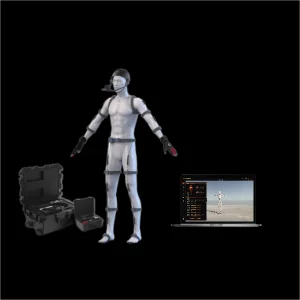
Imitation learning (IL) and reinforcement learning (RL) in robotics require thousands of hours of high-precision human demonstration data. The DreamsCap X1 and VDEgo systems capture whole-body kinetics and egocentric views for direct mapping to robotic end-effectors.
- ROS / ROS2 URDF kinematic retargeting modules
- mHand Pro dexterous hand teleoperation with low latency
- Egocentric camera arrays for aligned visual-motor dataset generation
Digital Humans & Real-Time Virtual Live Broadcasting
Empowering virtual brand ambassadors, VTubers, and e-commerce livestreams with continuous, authentic performance tracking. Full-body dynamics, subtle finger nuances, and facial micro-expressions are integrated into a single live stream.
- Turnkey integration with Warudo, VSeeFace, and VRChat (OSC)
- 52 Apple ARKit standard facial blendshape driving accuracy
- Low compute requirements enabling single-PC streaming configurations
International Compliance, RF Governance & Localized Deployment
Deploying wireless hardware across multiple continents demands rigorous certification, dynamic RF channel adaptation, and regional enterprise maintenance guarantees.
Global Certification & Radio Safety
Virdyn hardware adheres to stringent electromagnetic radiation and radio frequency spectrum regulations across major economic regions. Hardware is designed to operate safely in crowded wireless production environments.
- North America: FCC Part 15 Class B compliance for industrial and office use
- European Union: CE RED directive compliance, RoHS & REACH certified materials
- Adaptive Frequency Hopping (AFH) preventing interference with wireless audio gear
Localized Scenarios & Tailored Integration
Regional production workflows vary from high-density multi-actor studios in Asia to distributed AAA game animation departments across Europe and North America.
- Asia-Pacific: Turnkey packages optimized for multi-tenant VTuber agencies and live e-commerce
- North America: Direct live linking with Maya, MotionBuilder, and Unreal virtual sets
- Academic & Research: VDAnalyze biomechanical toolkits for universities and sports institutes
Enterprise Support & SLA Guarantees
Global commercial clients receive professional hardware guarantees, rapid replacement logistics, and direct access to kinematic software engineers.
- Rapid 24-hour business response commitment via dedicated technical support channels
- Complete modular spare parts ecosystem: individual cables, hubs, straps, and IMU nodes
- Remote pipeline onboarding, custom skeleton retargeting, and SDK co-development
Technological Roadmap: 2025–2030 Spatial Kinematics
The convergence of neuromorphic vision, edge-AI Kalman filtering, and generative kinematic priors is redefining the boundaries of motion capture accuracy and physical automation.
Vision-Inertial Hybrid Neural Fusion (VIO)
Bridging the gap between absolute positional tracking and high-frequency inertial orientation. Embedded egocentric SLAM cameras dynamically anchor the inertial skeleton in real-world 6-DoF space, eliminating drift over infinite capture durations without external camera arrays.
Edge-AI Neuromorphic Micro-Sensors
Deploying micro-neural network processing directly inside each IMU node. Kinematic anomaly filtering, contact phase estimation, and local calibration happen at the chip level, slashing wireless packet payloads by 60% and enabling 500Hz dense tracking.
Physics-Informed Generative Infilling
Integrating deep transformer architectures directly into the retargeting software layer. The solver predicts foot-slip, joint torque, and inertia under physical constraints, guaranteeing anatomically accurate interactions with digital props and virtual ground terrain.
6G Cloud-Native Ubiquitous Teleoperation
Harnessing ultra-reliable low-latency 6G networks to teleoperate robotic fleets across continents. Operators in London or Tokyo will execute micro-assembly and hazardous operations through haptic mocap suits with sub-millisecond tactile feedback.
Frequently Asked Questions & Technical Consultation
In-depth technical answers addressing core architectural, procurement, and deployment considerations for studio supervisors and robotics researchers.
How does Virdyn solve the long-term positional drift inherent to inertial motion capture?
Can the VDSuit Full be deployed in environments with significant ferromagnetic interference (e.g., rebar concrete, metal stages)?
How does the data glove integration operate alongside the full-body suit?
What software environments, DCC applications, and robotics frameworks are natively supported?
- Game Engines & DCC: Unreal Engine 4/5 (native Live Link), Unity, Autodesk Maya, Autodesk MotionBuilder, Blender, 3ds Max, iClone.
- Virtual Live & Social VR: Warudo, VSeeFace, VRChat (via open OSC streaming), OBS Studio virtual camera.
- Robotics & AI: ROS and ROS2 message publishers, Python SDK for streaming raw joint angles, and C++ libraries for real-time bilateral teleoperation.
- File Formats: Real-time broadcast over TCP/UDP, and batch export to industry-standard FBX, BVH, and CSV joint data.
What are the lead times, warranty terms, and international delivery procedures?
Specialized Capture Gear & Teleoperation Hardware
Expand your studio pipeline with entry-level performance capture suits, facial tracking helmets, optical markerless systems, and robotics development kits.