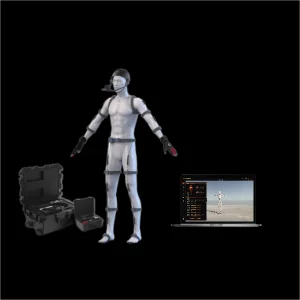
Integrated Motion Capture & Teleoperation Systems
Enterprise wearable nodes, spatial computation suites, and low-latency robotics control systems engineered with high-efficiency distributed power architecture.


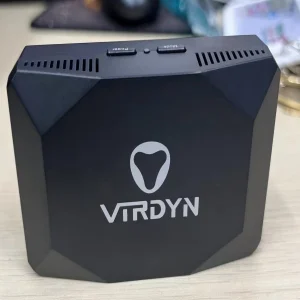
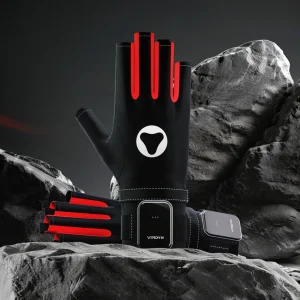
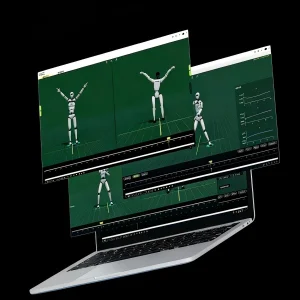
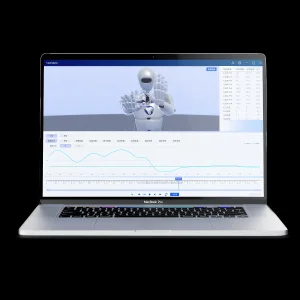
Power Budget Engineering & Electrical Architecture
In-depth breakdown of energy consumption across multi-node 9-axis IMUs, high-rate microcontrollers, RF packet transmission, and power regulation topologies.
Sensor Node Power Allocation
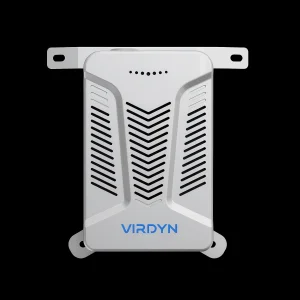
A full-body inertial motion capture suit typically integrates between 17 and 31 high-precision Inertial Measurement Units (IMUs). Each node integrates a tri-axial accelerometer, a tri-axial gyroscope, and a tri-axial magnetometer. Under continuous high-bandwidth tracking at 100 Hz to 240 Hz, an individual sensor array draws between 6.5 mA and 14 mA at 3.3V. Synchronizing these multi-bus nodes over an internal low-voltage SPI/I2C topology demands precision step-down regulators to eradicate parasitic line drop across physical limb extensions.
RF Protocol Power Trade-offs
Wireless transmission efficiency represents the single highest variable in field runtime. Proprietary 2.4 GHz ultra-low latency protocols, BLE 5.3, and Wi-Fi 6 (OFDMA) exhibit radically disparate drain profiles. While Wi-Fi 6 enables direct multi-actor router streaming, continuous power dissipation exceeds 120 mA to 180 mA per transmitter. In contrast, proprietary dual-channel 2.4 GHz hopping networks achieve deterministic payload packet transmission with total RF transceiving loads constrained to ≤ 28 mA, prolonging operational endurance by up to 240%.
Dynamic Buck-Boost Regulation
Traditional linear drop-out (LDO) regulators burn excess voltage as thermal waste, which degrades lithium battery capacity and poses localized skin-heating concerns for performers. Modern industrial mocap hardware uses high-efficiency synchronous switching buck-boost converters boasting 92% to 96% dynamic efficiency. This architecture maintains strict voltage stability (3.3V ± 1%) across the full lithium-ion discharge envelope from 4.2V down to 3.0V cutoff, ensuring consistent tracking accuracy.
Empirical Runtime Modeling & Workload Profiling
Quantitative analysis of operational runtime based on system duty cycle, active data streaming rates, and peripheral expansion loads.
| System Configuration | Active IMU Nodes | Wireless Streaming Mode | Mean Power Consumption | Battery Pack Specification | Verified Operational Runtime |
|---|---|---|---|---|---|
| Compact Upper-Body Teleop | 9 Nodes (Torso + Arms) | 2.4GHz Proprietary @ 120Hz | 0.72 W | 3.7V 1,200 mAh Li-Po | 5.8 – 6.2 Hours |
| Full-Body Production Suit (VDSuit) | 17–23 Nodes (Full Skeleton) | 2.4GHz Proprietary @ 200Hz | 1.65 W | 3.7V 3,400 mAh Li-ion (18650) | 7.5 – 8.5 Hours |
| Full Body + Biometric Gloves + Facial | 23 Nodes + 20 Hand Nodes + Dual Cam | Wi-Fi 6 MIMO + 2.4GHz Direct | 4.80 W | 7.4V 2,800 mAh Dual-Pack | 4.1 – 4.5 Hours |
| Humanoid Continuous Teleoperation Hub | 27 Sensor Clusters + Force Feedback | 2.4GHz Dual-Link Low-Latency | 2.25 W | 3.7V 5,000 mAh Industrial Li-Po | 7.8 – 8.2 Hours |
| Tactical / Defense Biomechanical Rig | 19 Sealed Nodes (Ruggedized IP67) | Encrypted UWB / BLE 5.3 Mesh | 1.40 W | 3.6V 3,500 mAh High-Temp Cell | 8.6 – 9.1 Hours |
Mathematical Power Equation:
T_runtime (Hours) = [ Capacity_nominal (mAh) × V_nominal (V) × η_discharge × (1 - Aging_factor) ] / [ P_nodes (W) + P_mcu (W) + P_rf (W) + P_bms (W) ]
Where η_discharge represents DC-DC conversion efficiency (typically 0.94), Aging_factor reflects cell degradation after N cycles (typically 0.15 at 500 cycles), and P_* accounts for specific dynamic bus loads.
Battery Chemistry, Safety Topology & BMS Precision
Mitigating thermal runaway risks, ensuring safe skin-contact operation, and maximizing chemical lifespan through intelligent fuel-gauging algorithms.
Lithium-Polymer vs. Cylindrical 18650
Lithium Cobalt Oxide (LiCoO2) and Nickel Manganese Cobalt (NMC) pouches offer superior volumetric energy density (up to 260 Wh/kg), allowing thin contouring inside anatomical harness pockets. For ruggedized applications or multi-shift production environments, high-drain cylindrical 18650/21700 cells with steel encasement provide elevated impact resistance, standardized replacement access, and exceptional thermal containment under continuous charging regimes.
Intelligent Coulomb-Counting BMS
Simple voltage-based battery indicators fail under erratic dynamic loads, leading to unexpected capture dropouts mid-take. Industrial motion capture hubs utilize Texas Instruments or Maxim Integrated fuel-gauge ICs employing impedance track technology. By measuring current integrators down to micro-ampere precision across internal shunt resistors, the system broadcasts real-time State-of-Charge (SoC) metrics with ±1% residual tolerance directly to Unreal Engine and Unity viewport telemetry.
Multi-Tier Thermal & Over-Current Defense
Performers generate body heat that degrades battery cooling dynamics. To ensure total safety compliant with wearable consumer health regulations, every integrated battery assembly implements triple-tier physical and logic protection: an onboard Positive Temperature Coefficient (PTC) thermistor, secondary solid-state dual MOSFET disconnects (over-voltage, under-voltage, over-current), and firmware-level thermal throttles capping charging current if junction temperatures exceed 45°C.
China Factory Supply Chain & Advanced Hardware Manufacturing
Capitalizing on the world's most concentrated microelectronics ecosystem in the Greater Bay Area to deliver precision-grade motion capture hardware with rapid iterative velocity.
Guangzhou-Shenzhen Hardware Ecosystem Density
Our direct access to world-class Tier-1 semiconductor suppliers, precision SMT facilities, and tier-one battery cell formulators (such as ATL, Sunwoda, and EVE) enables seamless integration of ultra-compact PCB assemblies. We compress hardware prototyping iterations from months to days, rapidly incorporating the latest low-quiescent power ICs, high-flux IMU silicon, and precision micro-machined connectors into full production runs.
Automated Cell Grading & Impedance Matching
Cellular consistency is vital for multi-pack wearable balance. Within our manufacturing facilities, every incoming lithium-ion pouch cell undergoes 100% automated automated charge-discharge testing, ESR (Equivalent Series Resistance) matching, and ultrasonic welding under Class 10,000 cleanroom controls. This rigorous grading prevents premature pack imbalances and ensures sustained capacity retention across enterprise fleet lifecycles.
BOM Optimization & Agile Engineering Customization
By owning the complete stack from mechanical molding, flexible flat cable (FFC) harness lamination, to firmware algorithm authoring, we eliminate excessive multi-tier distributor markups. Enterprise customers receive industrial-grade motion tracking solutions at a fraction of the total cost of legacy Western systems, backed by rapid turnaround on custom harness geometry, military-spec connectors, and OEM battery configurations.
Rigorous Environmental Stress Screening (ESS)
Every production batch is subjected to comprehensive thermal shock cycling (-20°C to +60°C), continuous high-frequency vibration testing simulating aggressive athletic stunt capture, and ESD surge verification up to ±15kV air discharge. This guarantees that your mocap suits operate reliably whether deployed on air-conditioned soundstages or extreme outdoor sports research facilities.
Enterprise Procurement Demands & SLA Requirements
Addressing the mission-critical uptime requirements of AAA animation studios, defense contractors, and industrial robotics research laboratories.
Zero-Downtime Hot-Swapping Architecture
On multi-million-dollar virtual production sets, pausing a take to recharge batteries incurs thousands of dollars per minute in lost crew productivity. Enterprise mocap hardware incorporates internal bridge supercapacitors or secondary micro-cells, providing 90 seconds of reserve power. Operators can hot-swap the primary battery pack without interrupting wireless connectivity, resetting skeletal calibration, or dropping engine sync.
Centralized Gang-Charging Station Deployments
Institutions managing fleet inventories of 10 to 50 suits require streamlined turnaround logistics. We deliver integrated multi-bay charging flight cases with active air cooling and intelligent power distribution. These stations charge up to 16 packs concurrently to 80% capacity within 45 minutes via USB-PD 3.0 protocols while monitoring individual cell state-of-health and cycle counts across cloud asset management dashboards.
Total Cost of Ownership (TCO) & Guaranteed SLA
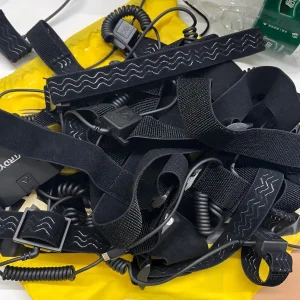
Procurement teams evaluate systems not merely on acquisition price, but on 3-year operating expenditures. We guarantee battery availability SLAs with predictable replacement pricing, modular field-replaceable cable harnesses, and factory refresh programs. Comprehensive hardware warranties, expedited overseas module swapping, and direct engineering channel access safeguard long-term enterprise capital investments.
Global Logistics Compliance & Localized Technical Support
Navigating strict international lithium shipping directives and delivering hands-on technical assurance across key regional markets.
UN38.3 & IATA Dangerous Goods Certification
Transporting high-capacity lithium battery systems across international borders requires rigorous certification. All Virdyn battery packs comply strictly with UN38.3 transport testing requirements (altitude simulation, thermal testing, vibration, shock, external short circuit, impact, overcharge, and forced discharge). Packaged under IATA Packing Instructions 965, 966, and 967, our hardware transitions smoothly through global customs clearance without freight impounding.
CE, FCC, RoHS & REACH International Standards
Our electronic hardware adheres to stringent electromagnetic interference (EMI) and electromagnetic compatibility (EMC) mandates under FCC Part 15 Subpart B/C and CE RED directives. This guarantees that our high-speed wireless telemetry operates flawlessly without causing interference or succumbing to RF saturation on crowded soundstages alongside wireless video transmitters, lighting controllers, and personal audio monitors.
Localized Field Engineering Hubs
Global availability is paired with local accountability. Virdyn maintains localized engineering networks, authorized system integrators, and technical support centers across North America, Europe, Japan, and Southeast Asia. Institutional clients benefit from native-language technical onboarding, on-site setup consultation, rapid warranty replacement pooling, and custom pipeline retargeting integration.
Field Scenarios: Mission-Specific Power Profiles
Real-world battery load planning and operational execution across five demanding commercial deployment paradigms.
VFX & Virtual Production Stages
Operating inside high-density LED volumes with massive electromagnetic interference from display walls and lighting rigs. Requires dynamic RF power-boosting (up to +10 dBm) to maintain 0% packet loss. Systems are paired with our hot-swappable dual-pack architecture, enabling continuous 12-hour production shoot days without ever unsuiting the stunt performers.
VTuber Marathon Live Broadcasts
Extended 8 to 12-hour interactive livestreams demand ultra-lightweight, ergonomic wearability without heavy battery packs causing performer fatigue. We deploy distributed dual 1,800 mAh high-density pouch configurations integrated into an anatomical lumbar belt, delivering uninterrupted power with low heat transfer to the streamer.
Humanoid Embodied AI Data Collection
Operators collect thousands of hours of high-fidelity manipulation datasets for humanoid robot training using full-body suits and mHand Pro gloves. Sustained high-frequency polling (240 Hz) and onboard IMU calibration filtering demand sustained current delivery, backed by direct tether-assisted bypass power when operating at fixed industrial workstations.
Outdoor Sports & Biomechanical Gait Analysis
Field research conducted on football pitches, ski slopes, and rehabilitation courses with no direct access to AC power. Systems utilize IP65 weather-sealed lithium battery packs engineered for cold-weather discharge performance down to -10°C, sustaining 6+ hours of untethered kinematic recording to onboard SD logging storage.
Tactical Simulation & Defense Training
High-G physical impacts, crawling, and tactical weapon manipulation require reinforced cell encapsulation, Mil-Spec quick-release harness points, and anti-static ESD-shielded power distribution cabling. Batteries feature hardware-level master kill switches for zero-signature tactical transport security.
Next-Generation Wearable Power Vectors (2026–2030)
Emerging battery chemistry, ultra-low-power silicon, and kinetic energy harvesting frontiers shaping the next decade of motion capture.
Semi-Solid-State Lithium Cells
Transitioning from volatile liquid electrolytes to gel/solid-state ceramic matrices raises volumetric energy density beyond 380 Wh/kg while eliminating combustible puncture risks during aggressive stunt falls and wirework.
Silicon-Anode High-Drain Chemistries
Replacing conventional graphite anodes with porous silicon-carbon nanostructures enables 3C rapid charging rates, refilling 80% of suit capacity in under 15 minutes during brief talent rehearsal pauses.
On-Chip Edge AI Sensor Compression
New ultra-low-power neuromorphic microcontrollers embedded directly inside the IMU node pre-filter and compress 9-axis vector datasets locally, reducing wireless RF transmission payloads by up to 60% and slashing transmission power drain.
Kinetic & Thermal Energy Scavenging
Next-gen textile integration incorporates flexible piezoelectric joint generators and thermoelectric generator (TEG) arrays, harvesting human body heat and kinetic joint deceleration to passively trickle-charge auxiliary sensor nodes.
Frequently Asked Questions (FAQ)
Authoritative technical answers addressing power planning, thermal thresholds, software compatibility, and maintenance protocols.
Enterprise Mocap Hardware & Ecosystem Accessories
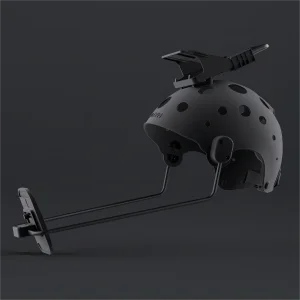
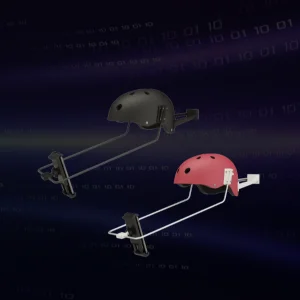
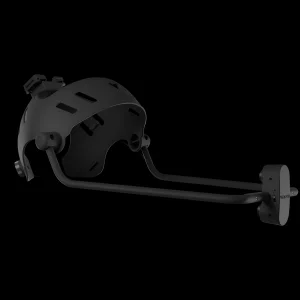
Explore our complete inventory of modular suits, facial tracking helmets, data gloves, and industrial software packages available for enterprise deployment.