Integrated Hardware Stack
Core Kinematic & Robotic Training Hardware Modules
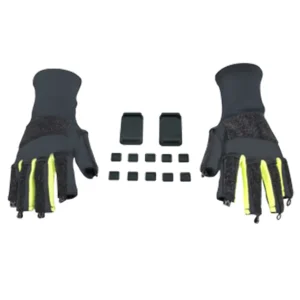
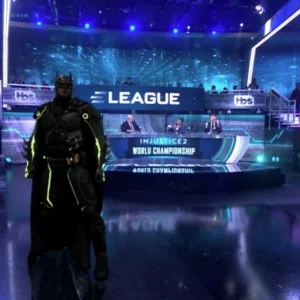
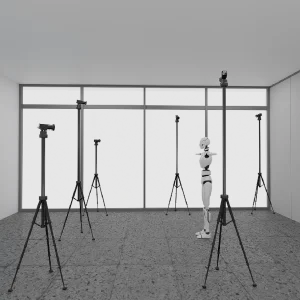
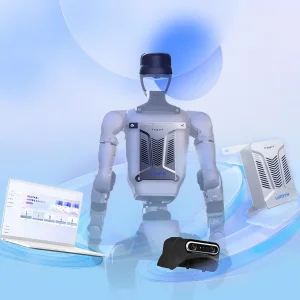
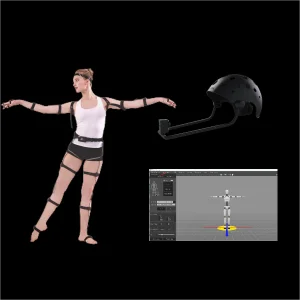
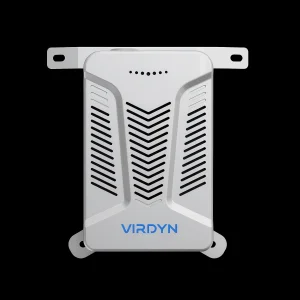
Pre-engineered capture systems configured for instant deployment across professional animation, virtual production, and robotics imitation learning studios.

Executive Industry Analysis
The Commercial & Industrial Transformation of Motion Capture Studios
The convergence of generative AI, high-framerate real-time game engines, and physical AI robotics has transformed studio spatial design from an artistic luxury into mission-critical data infrastructure.
120Hz
Synchronous Capture Frequency
<15ms
End-to-End Glass Latency
99.8%
Skeletal Solver Kinematic Precision
10+
Direct Engine & DCC Integrations
Historically confined to big-budget Hollywood visual effects stages with high capital expenditure ($250,000 to $1,000,000+ per volume), modern motion capture studios have evolved into modular, hyper-flexible digital human and robotics data hubs. The commercial appetite for volumetric and kinetic data has expanded exponentially due to three concurrent global market dynamics:
Embodied AI & Humanoid Training
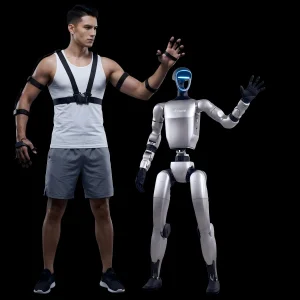
Humanoid robotics enterprises (from Tesla Optimus and Boston Dynamics to Figure AI and Fourier Intelligence) require millions of human trajectory tokens. Mocap studios are no longer just entertainment spaces; they function as precision imitation learning and reinforcement learning data factories.
- Egocentric FPV video alignment
- Multi-axis dexterous teleoperation
- Sub-millimeter joint kinematic verification
High-Cadence Virtual Production
Unreal Engine 5.4+ with Nanite and Lumen has commoditized real-time in-camera visual effects (ICVFX). Studios now demand instant motion capture setups that sync genlocked frustum cameras with inertial/optical talent tracking at zero perceptible drift.
- Live SMPTE timecode sync across pipelines
- Multi-character concurrent streaming
- Real-time camera frustum parallax matching
The VTuber & Digital Persona Economy
Interactive live streaming and VTubing have matured into billion-dollar entertainment sectors across Asia, North America, and Europe. Dedicated micro-studios with turnkey full-body inertial suits and zero-calibration requirements allow talent to broadcast live within minutes.
- Native Warudo & VRChat OSC integration
- 52 Blendshape facial capture telemetry
- Zero camera occlusion in compact spaces
Manufacturing Agility & Scalability
The China Factory Efficiency Advantage in Motion Capture Hardware
How Guangzhou and Greater Bay Area precision manufacturing creates high-reliability, accessible motion capture ecosystems with enterprise-grade quality assurance.
The engineering realization of high-performance motion capture systems relies on an intricate balance of micro-electro-mechanical systems (MEMS) packaging, elastic ergonomic textiles, low-latency RF transceivers, and deterministic multi-sensor firmware. Virdyn’s operational center in Guangzhou, China, capitalizes on the world's most concentrated precision hardware supply chain, providing distinct operational advantages for global institutional buyers:
Vertically Integrated R&D
From initial PCB schematic routing and surface-mount technology (SMT) assembly to customized ergonomic Lycra tailoring, all manufacturing processes remain integrated within our specialized facilities.
Rapid Firmware Iteration
Sensor fusion algorithms (Kalman filter banks, magnetic gradient compensation, and biomechanical limb constraints) are tuned with immediate hardware loop feedback, reducing development cycles by 70%.
Rigorous Factory Burn-In
Every single 9-axis IMU node undergoes thermal cycling, tri-axial rate table calibration, and magnetic chamber verification prior to shipment, ensuring uniform operational fidelity across all 50+ batch units.
Total Cost of Ownership
By removing third-party licensing markups and leveraging direct supply economies of scale, studios acquire Tier-1 full-body, facial, and finger capture capabilities at 1/5th the capital cost of traditional optical rigs.
Supply Chain Assurance: Institutional clients benefit from dedicated batch-reserved spare sensor modules, fast hot-swap availability, and customizable hardware cabling engineered for heavy everyday production studio wear.
End-to-End Field Deployments
Localized Mocap Studio Architectures by Vertical
Engineered technical configurations matching concrete studio blueprints with target production goals, software plugins, and synchronization constraints.
AAA Game Cinematics & Locomotion
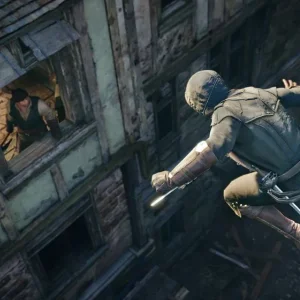
Capturing high-velocity martial arts, weapon combat stances, and multi-actor dialogue. Traditional marker setups suffer catastrophic marker drop during occluded ground rolls or grappling; VDSuit Full maintains flawless joint articulation via on-body IMUs.
- Engine Pipeline: Live retargeting into Unreal Engine 5 Control Rig via Live Link
- Export Format: 120 FPS SMPTE-aligned BVH and raw bone FBX with root motion
- Studio Footprint: 4m x 4m minimum clear floor; no specialized optical truss required
Humanoid Teleoperation & Embodied AI
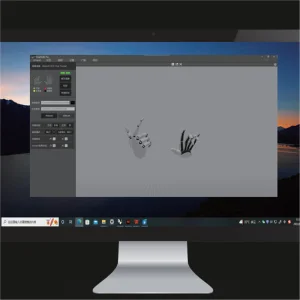
Training multi-degree-of-freedom robotic arms and bipedal humanoids. Human operators wear mHand Pro gloves and VDSuitMini to teleoperate robots in high-risk environments while concurrently recording demonstration trajectories for behavioral cloning.
- Robotics Interop: ROS / ROS2 Python & C++ publisher nodes with microsecond timestamps
- Kinematic Mapping: Human hand joint angles mapped to dexterous robotic hands
- Multimodal Sync: First-person VDEgo camera feed recorded in lockstep with IMU data
Virtual Production & Digital Live Rooms
High-reliability live broadcasting for national television networks, agencies, and brand ambassadors. Combines real-time facial micro-expressions with body tracking, streaming to rendering software without audio-visual desync.
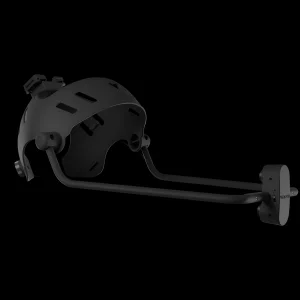
- Facial Tracking: AH Dual-Camera / VDFace Pro helmet streaming ARKit 52 Blendshapes
- Broadcast Protocols: NDI / SDI low-latency video feed integration with OSC triggers
- Zero Setup Downtime: Performer calibrations achieved in under 90 seconds
System Selection Guide
Kinematic Modality Matrix: Technical Trade-Offs
A rigorous engineering comparison between Inertial (IMU), Passive Optical (Retroreflective), and Deep Learning Markerless Vision systems for enterprise studio planning.
| Evaluation Parameter | Virdyn Inertial IMU (VDSuit / mHand) | Passive Optical (Multi-Camera Array) | Markerless AI Vision (YanDong) |
|---|---|---|---|
| Spatial Infrastructure Requirement | Any Environment (Offices, sets, outdoor daylight) | Dedicated fixed-truss light-controlled black volume | Single to multi-RGB/RGB-D camera baseline |
| Line-of-Sight Occlusion Resilience | Immune (Sensors calculate relative angular momentum) | High vulnerability (Markers hidden by props/actors drop frames) | Moderate (Subject to neural network self-occlusion artifacts) |
| End-to-End Latency | < 15 ms (Deterministic 2.4GHz / Wi-Fi RF burst) | < 8 ms (Hardware genlock optical capture) | 35 - 75 ms (Deep neural inference dependent) |
| Absolute Global Position Accuracy | Estimated via zero-velocity update (ZUPT); pair with optical for mm precision | Sub-millimeter absolute reference volume coordinates | Centimeter-level spatial depth estimation |
| Deployment & Calibration Time | < 2 Minutes (Rapid single-pose T/A-pose calibration) | 45 - 90 Minutes (Wand waving, ground squaring, marker placement) | < 30 Seconds (Instant zero-wearable entry) |
| Finger & Fine Dexterity Capture | High Fidelity (Dedicated 16-node mHand Pro gloves) | Requires ultra-dense, fragile retroreflective finger markers | Approximated via 2D-to-3D visual skeleton estimation |
| Total Turnkey Solution Cost | Accessible ($3,000 – $15,000 full production kit) | Capital Intensive ($60,000 – $400,000+ per room) | Cost Efficient (Software license + commodity GPU/cameras) |
Hybrid Solution Architecture: For tier-1 visual effects facilities, the optimal modern approach is often hybridization: utilizing Virdyn inertial suits to guarantee occlusion-free continuous joint rotations while leveraging simple 3-camera optical arrays for zero-drift global world positioning coordinates.
Studio Blueprint & Implementation
The 4-Stage Turnkey Studio Engineering Protocol
From architectural acoustic/EMF shielding to software pipeline integration, our field engineers follow a standardized protocol for zero-downtime installations.
01
EMF & Acoustic Spatial Audit
Analyzing local electromagnetic environments. We verify ambient 2.4GHz/5.8GHz RF congestion and calibrate ferromagnetic field gradients to guarantee zero sensor drift.
02
Sensor Topology & Rigging
Mounting multi-modal systems: configuring master wireless hubs, low-latency base stations, synchronization timecode boxes, and tailored Lycra suit fitting protocols.
03
Network & Engine Integration
Configuring low-latency UDP broadcast nodes. Establishing direct live link socket bridges with Unreal Engine, Unity, Autodesk Maya, MotionBuilder, or ROS2.
04
Biomechanical Solver Calibration
Tailoring skeletal segment proportions, floor contact IK constraints, finger articulation offsets, and facial blendshape neutral-state anchors for real-time accuracy.
Global Procurement Standards
Enterprise Buyer Checklist for Motion Capture Facilities
Essential contractual, operational, and architectural criteria global procurement teams require before signing a mocap hardware purchase order.
Data Security & Air-Gapped Operation
Studios working on proprietary video game IP, film blockbusters, or classified robotics applications demand 100% offline security. Virdyn software guarantees zero cloud dependency, zero outbound telemetry, and full air-gapped local execution.
Direct Multi-SDK Open Access
Modern enterprises refuse black-box solutions. Procurement contracts must mandate unencumbered C++, C#, Python, and ROS/ROS2 SDK access, enabling internal teams to read raw IMU quaternions, angular velocities, and linear accelerations directly.
Global Hardware Warranty & Spares
Production stage downtime equates to massive hourly burn rates. Institutional procurement requires direct RMA pathways, hot-swappable sensor replacement modules dispatched within 48 hours, and dedicated English-speaking systems engineering support.
Emerging Horizons
Next-Generation Mocap Paradigms: 2025–2030
How spatial computing, multimodal sensory synthesis, and neural kinematics are reshaping human motion capture studios over the next half-decade.
Neural Kinematic Fusion
Combining physics-informed neural networks with real-time IMU output to predict floor collisions, center of mass, and contact friction forces with zero manual post-cleanup, eradicating foot-sliding artifacts.
Synthetic Data Generation
Feeding captured human trajectories directly into generative 3D world models and physics engines (Omniverse, Isaac Sim) to procedurally synthesize billions of varied simulation scenarios for autonomous robotics.
Micro-MEMS Nanomaterials
Transitioning from rigid sensor enclosures to stretchable, conductive graphene thread matrices embedded directly into active performance wear, making motion capture suits indistinguishable from everyday athletic apparel.
Engineering Knowledge Base
Frequently Asked Questions (Mocap Engineering & Procurement)
Direct answers from our senior systems architects addressing calibration, magnetic interference, frame latency, and enterprise supply chain execution.
How do Virdyn inertial motion capture systems resolve ferromagnetic field distortion in modern steel-frame studios?
Virdyn utilizes an advanced 9-axis sensor fusion architecture governed by adaptive Kalman filter banks and dynamically weighted magnetometer de-coupling algorithms. When local ferromagnetic disturbances (such as steel floor joists, heavy power cabling, or structural columns) induce magnetic flux distortion, the solver temporarily attenuates the magnetometer weighting and computes segment orientations relying purely on high-frequency gyroscope integration constrained by rigid biomechanical skeletal limits. This eliminates catastrophic character "twisting" or limb collapse.
What is the true measured end-to-end latency for live broadcasting and robot teleoperation pipelines?
Under standard 2.4GHz RF wireless or prioritized 5GHz Wi-Fi transmission protocols, our raw hardware-to-receiver packet latency averages between 4ms and 8ms at a 120Hz update rate. When routing through VDMocap Studio into Unreal Engine 5 via Live Link or ROS2 robot control nodes over a local gigabit Ethernet network, total end-to-end glass latency remains strictly under 15ms. This meets the micro-timing thresholds required for bilateral haptic teleoperation and live television broadcast genlock.
Can Virdyn mocap data be streamed concurrently to both Unreal Engine and robotics platforms like ROS / ROS2?
Yes. Virdyn desktop applications support multi-cast and simultaneous UDP/TCP broadcast output channels. You can stream live character bone transforms to Unreal Engine 5 or Maya for live cinematics pre-visualization, while concurrently publishing joint angle quaternions and angular velocity data arrays to a ROS2 workspace via our native Python/C++ API bridge for humanoid robot imitation learning and trajectory recording.
What are the minimum room dimensions and environmental conditions required to operate a VDSuit Full system?
Unlike optical motion capture installations that demand dedicated 8m x 8m x 4m volumes with non-reflective wall treatments and expensive truss overheads, Virdyn inertial suits have no minimum volume restrictions. An operator can record full-body performance capture in a compact 3m x 3m office, inside a moving vehicle, or outdoors in direct sunlight across a 50-meter wireless line-of-sight radius.
How does Virdyn support institutional procurement and bulk academic laboratory orders?
We provide comprehensive institutional procurement support, including formal proforma documentation, export compliance certificates, custom HS code categorization for research equipment, multi-seat site educational software licensing, and specialized OEM/ODM hardware customization. Academic laboratories and enterprise R&D centers receive direct access to our engineering field team, including remote onboarding workshops and dedicated spare-parts replenishment pools.
Specialized Studio Hardware
Advanced Capture Accessories, Markerless Vision & Virtual Host Solutions
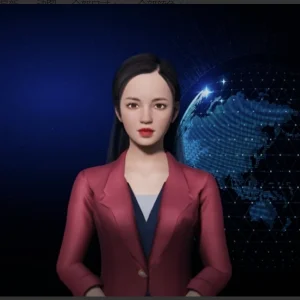
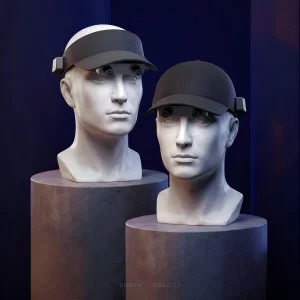
Complete your studio inventory with facial capture helmets, ergonomic replacement wear, dual-camera sensor arrays, and virtual avatar pipelines.