
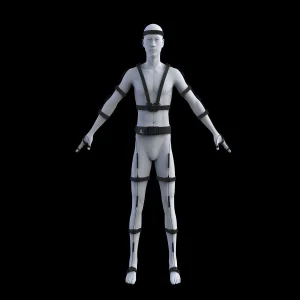
Design Virdyn VDSuit Full for Full Body Function Inertia Motion Capture Suit Planning, Solution
Explore VDSuit FullA mocap helmet functions within a synchronized capture pipeline. Explore our production-ready inertial capture suits, precision sensor gloves, and embodied AI teleoperation architectures.
Design Virdyn VDSuit Full for Full Body Function Inertia Motion Capture Suit Planning, Solution
Explore VDSuit Full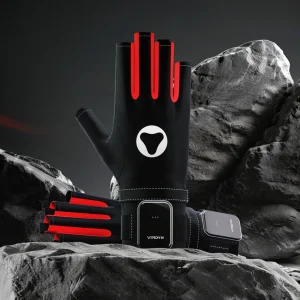
Best Virdyn mHand Pro an Inertia Motion Capture Gloves for Virtual Reality Planning, Solution
Explore mHand Pro
Design Ready-to-Use Robot Motion Datasets | Virdyn Planning, Solution
View Robot Datasets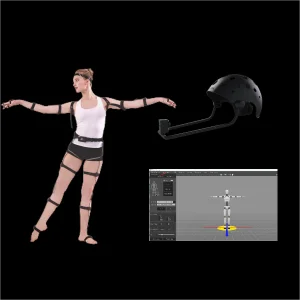
Design VDCap Full Performance Capture Entry-Level Motion Capture Kits for Beginners and Hobbyist Planning, Solution
Explore VDCap Entry Kit
Best Camera Optical Markerless Motion Capture Solution - Virdyn YanDong | Real-Time Full Body, Hands, Face Planning, Solution
View YanDong Optical
Best Motion Capture Technology Opens a New Era of Animation Development Planning, Solution
Animation Pipeline Guide
Design Virdyn DreamsCap Studio Motion Capture System Engine For Professional Animators Film and Game Producers Planning, Solution
Explore DreamsCap Studio
Best Humanoid Robot Intelligent Voice Interaction Development Kit Planning, Solution
Explore Robot Voice KitFrom multi-million dollar traditional Head-Mounted Camera rigs to ubiquitous Apple TrueDepth sensor arrays: How consumer hardware commoditization created an industrial production standard.
The convergence of Apple's TrueDepth sensor module—integrating vertical-cavity surface-emitting lasers (VCSEL) projecting 30,000 infrared dots alongside an IR camera and Neural Engine—fundamentally disrupted facial performance capture (FPC). Rather than relying on expensive bespoke stereoscopic multi-camera head rigs requiring manual tracking dot cleanup, Apple's native ARKit framework outputs 52 standardized BlendShape weights (FACS-compliant) at 60 fps with zero post-solve latency.
Modern in-camera visual effects (ICVFX) and LED volume stages impose severe electromagnetic, optical, and thermal hurdles on talent. Bulky, tethered legacy helmets introduce visual occlusions for camera frustums and induce severe cervical strain during 10-hour shooting days. The lightweight iPhone mocap helmet has evolved from an indie DIY alternative into a mandatory tool inside tier-one virtual production workflows.
Beyond entertainment, humanoid robotics laboratories (Tesla Optimus, Figure AI, Boston Dynamics, Unitree) have emerged as primary enterprise purchasers of iPhone HMC systems. High-fidelity human teleoperation requires synchronized recording of the operator's egocentric field of view, facial micro-expressions (to encode conversational intent and affect), and upper-limb inertial telemetry to train multi-modal foundation models.
Holding a 220-gram iPhone 15/16 Pro 20 centimeters in front of an actor's face introduces severe rotational torque, structural oscillation, and optical drift. Here is our rigorous mechanical engineering solution.
Mounting an iPhone at a 200mm cantilever arm produces a forward rotational moment of approximately 0.44 N·m on the cervical spine. To eliminate user fatigue, muscular tremors, and head-pitch bias, our design incorporates a rear-mounted occipital counterweight module.
By housing the auxiliary hot-swappable NP-F550/PD power bank and wireless transmitter at the posterior base of the skull, the combined center of mass (CoM) is repositioned precisely over the atlas vertebra (C1), eliminating forward tipping during rapid head rotations.
Facial tracking requires zero micro-vibration between the TrueDepth camera and the actor's facial coordinate space. Any deflection in the boom arm during running or dynamic vocalization manifests as artificial jitter and retargeting artifacts.
We deploy high-modulus, hollow 3K twill carbon fiber dual tubes mated to 6061-T6 aviation aluminum CNC ball-and-socket locking clamps. This delivers ultra-high stiffness-to-weight ratios, dampening natural resonance frequencies below 15 Hz while offering micro-metric 4-axis adjustments (Pan, Tilt, Roll, Distance).
Continuous 60 fps TrueDepth compute, coupled with screen rendering and real-time WiFi broadcasting, triggers severe thermal throttling on iPhones within 25 minutes, dropping frames and causing capture desync.
Our custom aluminum chassis features a rear-contact graphite conduction thermal plate and an optional ultra-quiet (<18 dBA) hydraulic centrifugal micro-fan that evacuates heat away from the A17/A18 Bionic SoC. Dual integrated shockmount cold shoes allow simultaneous mounting of wireless lavalier mic receivers (e.g., DJI Mic, Rode Wireless PRO) without acoustic coupling.
Industrialization of high-end motion capture hardware demands rapid iteration between rapid mechanical prototyping, composite layups, and precision electronics integration.
In our Guangzhou and Shenzhen production facilities, design iterations move from CAD topology optimization to 5-axis CNC machining and high-density stereolithography (SLA) verification in under 72 hours, drastically slashing R&D turnaround compared to Western supply chains.
The industrial cluster surrounding the Pearl River Delta provides direct, same-day access to aviation-grade aluminum alloys, aerospace carbon fiber roving, antimicrobial open-cell memory foam, and certified high-discharge lithium-ion battery modules at factory gate pricing.
Industrial production lines feature robotic multi-axis cyclic fatigue testing (100,000 hinge adjustments), automated 1.5-meter drop testing onto hard surfaces, and environmental thermal chamber cycling (-15°C to +50°C) ensuring absolute reliability in high-stakes studio sets.
We empower international distributors, game studios, and universities with custom brand engraving, customized clamp brackets for varying iPhone chassis dimensions (standard to Pro Max), tailored carry-case foam cutouts, and localized regulatory certifications (CE, FCC, RoHS).
A rigorous engineering comparison between custom iPhone-based mocap helmets, entry-level 3D printed rigs, and traditional optical tracking broadcast systems.
| Performance & Mechanical Criteria | Industrial iPhone Mocap Helmet (Virdyn Solution) | DIY / Desktop 3D Printed iPhone Mounts | Legacy Dual-Camera Optical Studio HMC |
|---|---|---|---|
| Structural Rigidity & Vibration | Aviation 6061-T6 Aluminum CNC + 3K Carbon Fiber dual-boom; resonance damped <15 Hz. | PLA/PETG FDM filament; high structural flex, prone to micro-jitters and thermal deformation. | Ultra-rigid carbon fiber; highly durable but requires customized multi-bolt rigging. |
| Center of Mass & Biomechanics | Neutralized 50:50 sagittal distribution via rear counterweight battery; zero forward cervical pitch. | Severe front-heavy moment arm (>0.4 N·m); causes neck strain within 30 minutes of wear. | Rear-balanced with heavy V-mount or Gold-mount batteries; overall weight often exceeds 1.2 kg. |
| Tracking Latency & Engine Pipeline | Sub-16ms native UDP streaming via Apple ARKit to Unreal Engine 5 Live Link Face & Unity. | Variable latency; relies on uncalibrated consumer apps with prone Wi-Fi buffer bloat. | Sub-5ms uncompressed SDI/Fiber feed; requires expensive dedicated offline solve workstations. |
| Thermal Dissipation Efficiency | Integrated aluminum heatsink plate with whisper-quiet (<18 dBA) active centrifugal micro-fan. | Insulating plastic shell trapping iPhone thermal buildup; leads to frequent frame drops. | Dedicated bare-board camera sensors cooled via external chassis vents. |
| Deployment & Total Cost of Ownership | Plug-and-play within minutes; turnkey price point under $1,200 USD (excluding iPhone). | Low upfront cost ($50–$150 USD); high hidden maintenance costs and tracking data cleanup hours. | Enterprise studio investment: $15,000–$35,000+ USD per helmet plus multi-camera tracking license fees. |
Real-world integration workflows demonstrating how an iPhone-centric mocap helmet delivers actionable productivity boosts across entertainment, broadcast, and high-tech research.
Modern interactive storytelling demands high-volume, organic facial animations recorded simultaneously with full-body action stunts. By integrating our iPhone HMC with our VDSuit Full inertial system and mHand Pro data gloves, game animators record full-performance capture sessions directly inside Unreal Engine 5.4.
The TrueDepth depth-map accurately captures subtle lip curls, jaw clenches, and ocular darting, drastically cutting manual facial rigger cleanup hours by up to 75% across narrative dialogue trees.
On stage with dynamic LED background walls (Unreal nDisplay), traditional optical tracking markers suffer from infrared crosstalk and reflective washout caused by massive ceiling lighting panels. The iPhone HMC operates completely independent of external studio tracking volumes.
Actors move uninhibited through soundstages, communicating facial performance directly to digital doubles in real time over local 5GHz Wi-Fi, allowing directors to evaluate final compositing in the camera monitor instantaneously.
The global 2D/3D VTuber live-streaming economy requires hardware that talent can don and configure independently without requiring a dedicated studio engineer. Our helmet system features quick-release ratcheting headbands (comparable to medical surgical loupes) with tactile click-stops.
Streamers achieve identical millimeter-accurate phone placement every single session, maintaining seamless blendshape calibration during 6-hour marathon interactive broadcasts on Twitch, YouTube, and Bilibili.
How institutional procurement committees, VFX studio technical directors, and hardware distributors evaluate long-term viability, modularity, and future spatial computing convergence.
When international production companies source motion capture headgear from manufacturing partners, enterprise quality assurance requires auditing five non-negotiable vectors:
The motion capture horizon is shifting toward multi-angle egocentric spatial vision. While current HMC systems focus solely on inward-facing TrueDepth tracking of the actor's face, the next generation combines inward facial tracking with outward-facing stereoscopic cameras.
This facilitates simultaneous capture of the actor's facial nuance alongside an egocentric spatial map of physical props, furniture, and co-actors, feeding ground-truth physical interaction tokens directly into world-model AI engines.
On-device neural inference is rapidly transforming raw BlendShape output into physics-based muscular simulations. Future firmware solutions integrate edge-processing bridges directly within the counterweight module.
These bridges translate raw ARKit parameters into non-linear musculoskeletal deformation tensors before wireless transmission, enabling seamless zero-latency photorealistic digital human driving on edge-constrained XR headsets.
In-depth engineering answers to common procurement, mechanical, and technical deployment inquiries regarding iPhone motion capture helmets.
Expand your capture capabilities with high-fidelity egocentric cameras, dedicated facial capture helmets, and complete embodied teleoperation ecosystems.
Design VDEgo - Egocentric Video Data Collection Service at Scale | FPV Head-Mounted Camera Planning, Solution
Explore VDEgo Camera
Design Virtual Actors: How the Film Industry Should Layout the Virtual Market Planning, Solution
Virtual Actor Solutions
Design Motion Capture Technology to Help the Development of Creative Advertising with Realistic Effects Planning, Solution
Advertising Mocap Guide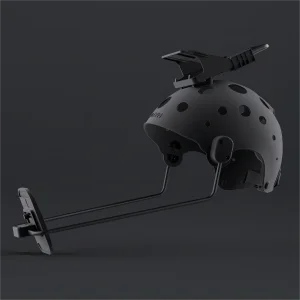
Best Virdyn VDFace Pro Capture System for Real Time Facial Capture with Face Capture Helmet Planning, Solution
Explore VDFace Pro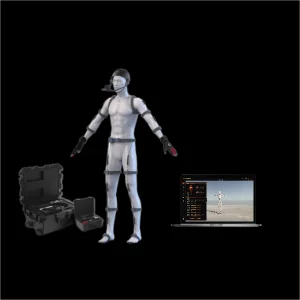
Design DreamsCap X1 Full-Body, Hand & Face Motion Capture for Humanoid Robot Data Collection & Teleoperation Planning, Solution
Explore DreamsCap X1
Design Inertial Motion Capture Technology to Help the Game Development and Production Planning, Solution
Game Production Mocap
Best VDSuitMini Half-Body Mocap System | Robot Data Collection & Teleoperation | Free Software Planning, Solution
Explore VDSuitMini
Design AI LingSi System | Robotic Intelligent Creation Platform & Intelligent Voice Interaction Planning, Solution
Explore AI LingSi