Integrated Mocap Hardware Systems
Enterprise-grade sensor arrays and teleoperation interfaces natively compatible with our Android spatial runtime framework.
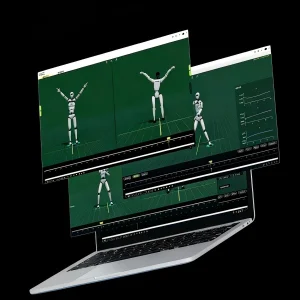
Design VDRobot Studio: Motion Data Collection & Conversion Platform for Robotics
Explore Platform
Design Book a Demo for VDSuit Full or mHand Pro Planning, Solution
Request Solution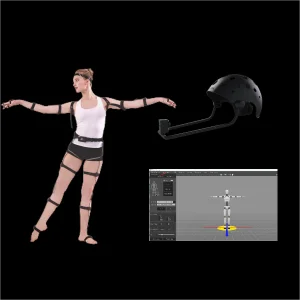
Design VDCap Full Performance Capture Entry-Level Motion Capture Kits
View Product
Design Inertial Motion Capture Technology to Help Game Development
System Specs
Design Motion Capture Technology for Creative Advertising Applications
Architecture Details
Best How Do Brands Use Virtual Spokesman to Tell Good Stories
Case Studies
Design Virtual Actors: How the Film Industry Should Layout Markets
Industry Insights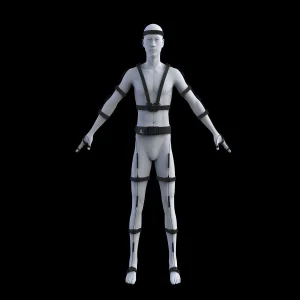
Design Virdyn VDSuit Full for Full Body Inertia Motion Capture Suit
Hardware SpecsEngineering Android Applications for Real-Time Mocap
Transitioning precision inertial tracking from compute clusters to low-overhead mobile edge architectures.
NDK & C++ Kinematic Solvers
By routing raw inertial multi-sensor packets through the Android Native Development Kit (NDK), our architecture circumvents Java Garbage Collection pauses. Mathematical operations execute directly in memory via ARM NEON SIMD vectorization routines.
Zero-Copy DirectBuffers
Real-time telemetry transfers utilize ByteBuffers directly bound to hardware sockets. Raw quaternions and acceleration vectors are piped from Bluetooth LE stack buffers to OpenGL/Vulkan rendering layers without allocation penalties.
VSP & OSC Live Broadcasting
Integrated micro-services allow mobile devices to function as spatial servers. The app can stream live VMC (Virtual Motion Capture) protocol or proprietary binary frames to Unreal Engine, Unity, and Blender instances over 5G/Wi-Fi 6 networks.
Localized Applications & On-Site Scenarios
Enterprise deployments demonstrating mobile mocap robustness across diverse operating environments.
Field Robotics & Embodied AI
Robotic engineers deploy Android tablets running VDRobot Studio directly inside industrial plants. Technicians perform complex manipulation tasks while wearing mHand Pro gloves, providing immediate teleoperation trajectories and imitation learning datasets without server racks.
On-Set Virtual Production Previs
Film directors inspect camera angles and character blocking in real-time. The Android application renders low-poly digital doubles driven by VDSuit Full directly over live camera viewports via ARCore, delivering instant compositing feedback to field cinematographers.
Sports Biomechanics & Rehab
Physical therapists monitor athletic gait and joint articulation in clinical settings. The mobile app executes real-time inverse kinematics, computing angular velocity and stress parameters on joint capsules, generating PDF reports immediately post-assessment.
Commercial Status & Supply Chain Resilience
How tight hardware-software co-design inside China's Pearl River Delta manufacturing corridor unlocks price-to-performance advantages worldwide.
Global Motion Capture Paradigm Shift
Traditional optical studio pipelines incur prohibitive costs in infrastructure, multi-camera calibration, and post-production marker clean-up. The global market is transitioning toward agile, wearable inertial setups capable of broadcasting high-fidelity data directly to edge devices like smartphones and standalone headsets.
Integrated Manufacturing in Guangzhou
Virdyn's base within the Greater Bay Area provides immediate geographic access to advanced SMT lines, precision MEMS packaging, and textile production. This tight loop allows iterative firmware updates to be tested on hardware prototypes within 48-hour development cycles.
Component Traceability & Sourcing
By leveraging redundant multi-source domestic procurement for high-precision triaxial accelerometers, rate gyroscopes, and magnetometers, Virdyn guarantees stable mass-production delivery schedules, shielding international clients from global semiconductor supply shocks.
Technical Roadmap & Engineering Milestones
Phased advancement schedule for edge mobile spatial computing and automated calibration.
Vulkan Compute Engine
- Porting Kalman filter arrays to Vulkan Compute Shaders for sub-millisecond execution.
- Direct integration with Android NNAPI for hardware-accelerated pose refinement.
Vision-Inertial Odometry
- Fusing monocular RGB mobile camera streams with wearable IMU arrays to eradicate position drift.
- Zero-calibration automatic limb length calculation via spatial camera feed.
Embodied ROS2 Native Stack
- Native compilation of ROS2 micro-nodes running inside background Android services.
- Sub-millisecond URDF joint state publishing for direct humanoid control.
On-Device Motion Synthesis
- Transformer-based real-time foot contact slip resolution running on local mobile NPUs.
- Automatic recovery from severe electromagnetic interference using historical motion priors.
Regulatory Compliance & Global Support
Global integration standards ensuring seamless institutional and studio adoption.
GDPR & Privacy Framework
Our Android architecture adheres strictly to global data protection laws. Motion trajectories, facial geometry vectors, and biometric tracking calculations are processed strictly on edge RAM, preventing unauthorized cloud harvesting of sensitive performer physical data.
RF & Hardware Certifications
All wireless transmission modules utilized across our wearable hardware and transceiver bridges carry FCC, CE, TELEC, and SRRC radio certifications, ensuring non-interfering operation within crowded multi-frequency film sets and medical robotics labs.
Global Field Engineering Support
Virdyn offers direct technical escalation lines to our core algorithm engineers. International clients access dedicated SDK repos, complete C++/Java bindings, full schema docs, and continuous firmware upgrades through our enterprise maintenance contracts.
Frequently Asked Questions
Technical guidance regarding mobile mocap system design, hardware matching, and deployment options.
How does an Android app manage multi-node BLE synchronization without latency?
Our solution pairs with a customized master wireless transceiver via Android USB Host Mode (OTG), bypassing typical smartphone BLE simultaneous connection restrictions. The hardware transceiver collects 16+ node IMU frames at 120Hz over 2.4GHz proprietary protocols and pushes them in a serialized binary stream straight into the native C++ layer.
Can the Android system broadcast skeletal poses simultaneously to game engines?
Yes. The app incorporates a multi-threaded UDP broadcast engine capable of dispatching VMC, OSC, and proprietary BVH byte streams over Wi-Fi 6 or 5G tethering. Game engines like Unreal Engine and Unity ingest this stream through free Virdyn plugins with under 15ms total wireless delay.
How is electromagnetic interference handled on factory floors and film stages?
Our sensor fusion algorithm pairs triaxial gyroscopes and accelerometers with adaptive magnetometer de-weighting. When sudden local geomagnetic distortions are identified, the internal Kalman filter temporarily disregards compass heading, maintaining kinematic stability via internal biomechanical constraints.
Is the Android software suite open for custom robotics teleoperation integration?
Yes. Virdyn delivers an enterprise Android SDK including precompiled JNI interfaces, C++ shared libraries (.so), and ROS2 bridge bindings. System integrators can effortlessly stream custom URDF joint coordinates directly to physical humanoid and robotic arm end-effectors.
Advanced Mocap Kits & Software Engines
Complete your production setup with specialized facial capture, teleoperation rigs, and analysis software.
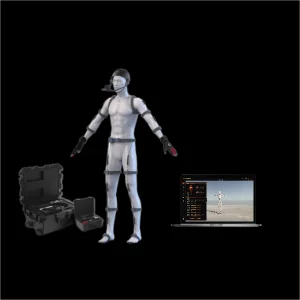
Design DreamsCap X1 Full-Body, Hand & Face Motion Capture
View System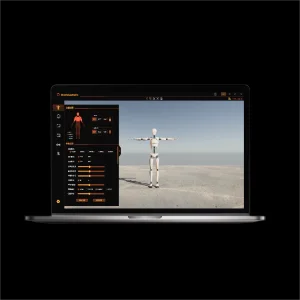
Design Virdyn DreamsCap Studio Motion Capture System Engine
Explore Engine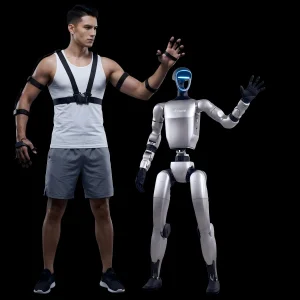
Best VDSuitMini Half-Body Mocap System | Robot Data Collection
Inspect Hardware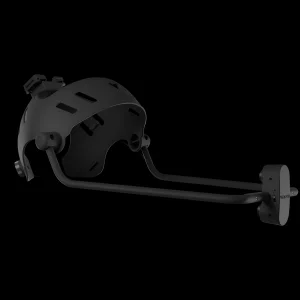
Design AH Double Camera-Based Face Capture Helmet With HD 1080p
Facial Solution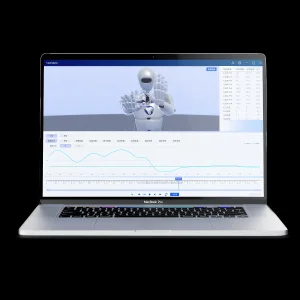
Best Valyze | Visualized Intelligent Motion Data Analysis Software
Data Analytics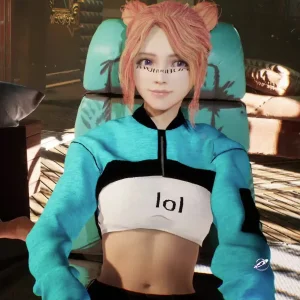
Best Virtual Human Live Streaming Rapidly Gaining Popularity
Broadcast Tech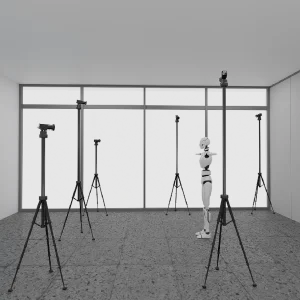
Best Camera Optical Markerless Motion Capture - Virdyn YanDong
Optical System