Phase I Architecture Deployments
High-Efficiency Mocap Hardware & Toolkits
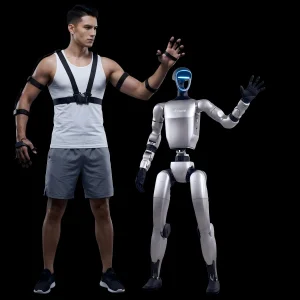
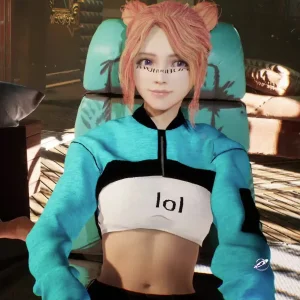
Pre-engineered hardware kits designed for friction-free integration across virtual live broadcasting, humanoid robotics, digital asset production, and multi-actor interaction pipelines.
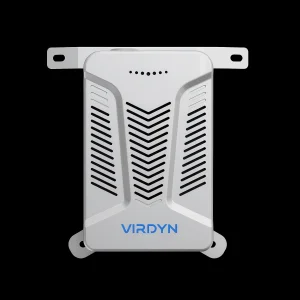
Humanoid Robot Intelligent Voice Interaction Development Kit Planning
Deploy Solution
Advanced Motion Capture Technology for Next-Gen Animation Development
Deploy Solution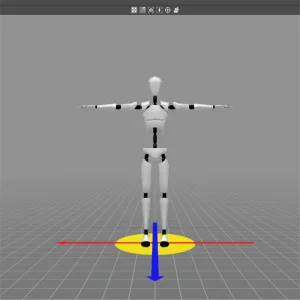
Virdyn VDMocap Studio Plus Motion Capture Software System for VDSuit
Deploy Solution
Virtual Live Technology for Interactive Learning & Online Education
Deploy Solution
Bespoke 3D Virtual Avatar Rigging & High-Fidelity Custom Services
Deploy Solution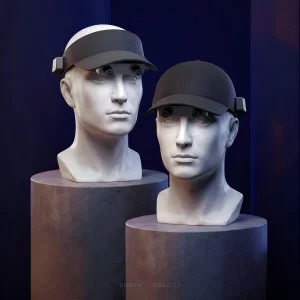
VDEgo Egocentric FPV Camera System for Scale AI Data Collection
Deploy Solution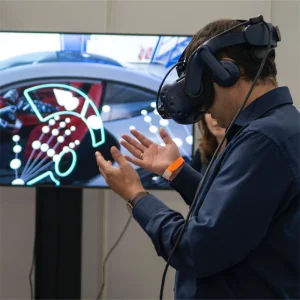
Enterprise Evaluation: Book an Engineering Demo for VDSuit & mHand Pro
Deploy Solution
Industry Macro Trends
The Democratization of Kinetic Kinematics: 2026 Strategic Outlook
How low-budget inertial sensor fusion has dismantled the optical capture monopoly, shifting motion analytics from capital-prohibitive soundstages to agile distributed edge environments.
From Soundstages to Ambient Capture
Traditional optical motion capture infrastructure has historically demanded dedicated 100m² facilities, ceiling truss networks, and expensive multi-camera arrays running up to $250,000 in capital expenditures. Modern inertial sensor solutions eliminate spatial restrictions, enabling accurate biomechanical acquisition in living rooms, factories, robotics testing arenas, and uncontrolled outdoor environments.
Edge Sensor Fusion vs. Visual Occlusion
Optical systems inherently suffer from sightline occlusion when subjects execute ground rolls, crawl beneath machinery, or handle complex physical props. Inertial capture relies on 9-axis Micro-Electro-Mechanical Systems (MEMS) (combining tri-axial accelerometers, gyroscopes, and magnetometers) coupled with biomechanically constrained Kalman filters to guarantee continuous skeletal integrity regardless of spatial obstructions.
The Embodied AI Data Catalyst
The explosive rise of humanoid robotics, autonomous manipulation, and foundation imitation learning models has inverted data demands. Robotics companies do not require multi-million-dollar optical setups; they need massive, decentralized human kinetic datasets capturing everyday manipulation tasks, teleoperated via wearable inertial gloves and ergonomic suits in high-throughput workflows.
Enterprise Procurement Matrix
Architectural Comparison: Low-Budget Inertial vs. Traditional Optical
A rigorous, data-driven technical analysis for Chief Technology Officers, Procurement Directors, and Lead Pipeline Engineers evaluating Total Cost of Ownership (TCO).
| Evaluation Parameter | Virdyn Low-Budget Inertial Solution | Mid-Tier Optical Markerless | High-End Optical Camera Volume |
|---|---|---|---|
| Initial Infrastructure CapEx | $1,500 – $6,000 Total Turnkey | $12,000 – $35,000 (Multi-cam vision) | $65,000 – $250,000+ (Vicon/OptiTrack) |
| Spatial & Environmental Needs | Zero fixed space; functional indoors, outdoors & vehicles | Controlled lighting, 20m² cleared floor space | Dedicated blacked-out soundstage (60-150m²) |
| Calibration Overhead & Downtime | Under 3 minutes (Standard T-pose / Neutral Pose) | 5–15 minutes camera wanding & floor framing | 30–60 minutes daily recalibration protocols |
| Resistance to Visual Occlusion | 100% immune (Proprietary on-body IMU tracking) | Moderate failure when actors cross or interact | High marker drop rates during prop manipulation |
| Engine Integration & SDK Support | Native Zero-Latency Live Link (UE5, Unity, Maya, ROS2) | Variable latency, compute-heavy vision processing | Complex client-server workstation processing |
| Performer Scalability | Simultaneous multi-actor RF channels (Up to 8 nodes) | Limited to 1-2 actors before ID swapping | High actor count supported with premium licensing |
Industrial Backbone
China Factory 4.0: Supply Chain Agility & Hardware Parity
How our vertically integrated Greater Bay Area manufacturing facility guarantees military-grade sensor calibration, aggressive cost disruption, and rapid global supply-chain scalability.
Automated Multi-Axis SMT Lines
Every sensor node in Virdyn's inertial hardware undergoes surface-mount technology (SMT) assembly on high-precision German robotic lines. This ensures zero trace variance across our 9-axis sensor boards, minimizing cold solder failures and baseline noise to achieve clean, raw kinematic input before algorithmic processing.
Robotic Gyroscopic Turntable Testing
Unlike boutique Western vendors who manually calibrate sensors in small batches, our Guangzhou manufacturing base runs 24/7 automated three-axis rate tables. Each IMU is individually mapped across extreme thermal gradients (-10°C to 55°C) and calibrated for non-linear scale factors, cross-axis sensitivity, and zero-bias drift.
Integrated Supply-Chain BOM Compression
Direct spatial proximity to the world's dense electronic component supply ecosystems in Shenzhen and Guangzhou enables Virdyn to compress the standard Bill of Materials (BOM) cost by up to 65%. These savings are passed directly to studios, schools, and robotics researchers without compromising mechanical or computational precision.
Continuous Firmware & SDK Co-Design
Our co-located hardware and software engineering teams work under one roof. When our algorithm specialists develop novel magnetic interference rejection protocols or zero-velocity updates (ZUPT), firmware updates are deployed directly to production runs within days, establishing rapid iterative development impossible in fragmented outsourcing chains.
Implementation Blueprints
High-Yield Application Architectures for Commercial Workflows
Engineered for mission-critical deployments where real-time kinetic fidelity, zero latency, and budget efficiency are paramount.
1. Humanoid Robot Teleoperation & Embodied AI
By pairing the VDSuitMini half-body suit with mHand Pro multi-node gloves and the VDRobot Studio retargeting suite, engineers can directly control humanoid robotic arms and dexterous end-effectors in real time. The low-latency pipeline captures high-frequency human kinematic trajectories, translating complex manipulation data straight into ROS2 / PyBullet nodes for imitation learning and algorithmic reinforcement training.
2. Virtual Livestreaming & High-Frequency VTubing
Agile digital entertainment agencies require turnkey micro-studios capable of broadcasting 8-hour daily livestreams without drift or skeletal collapse. Virdyn's live-streaming pipeline features native zero-configuration plugins for Warudo, VRChat (via OSC), and Unity. VTuber operators suit up in 3 minutes, streaming hyper-expressive full-body and nuanced finger gestures directly to Bilibili, YouTube, or Twitch.
3. Rapid Indie Game Cinematics & Unreal Engine 5.4 Live Link
Indie game studios running Unreal Engine 5 can bypass grueling manual keyframe animation for cutscenes and core combat locomotion. Through VDMocap Studio's integrated Live Link server, mocap actors act out combat combos, acrobatics, and dialogue that project instantaneously onto MetaHuman rigs. The clean skeletal data exports directly as production-ready FBX/BVH assets, truncating post-cleanup by 70%.
4. Academic Biomechanics & Ergonomic Analysis
University sports science labs, medical rehabilitation departments, and ergonomic design teams harness Virdyn's VDAnalyze evaluation platform. The system records precise joint angles, angular velocities, and postural cadence during gait analysis and industrial lifting tasks, delivering peer-reviewable biomechanical data without demanding an optical gait lab.
Deployment Blueprint
Engineering Planning: 4-Step Architecture for a Sub-$5,000 Studio
How pipeline directors execute a complete commercial-grade capture studio on an agile capital allocation.
01
RF & Magnetic Assessment
Survey the intended capture space for severe electromagnetic anomalies. While Virdyn's fusion filters reject typical industrial noise, elevating workstations 1 meter above reinforced concrete floors ensures optimal baseline sensor calibration and rock-solid 2.4GHz / 5.8GHz wireless stability.
02
Performer Calibration Workflow
Implement standardized performer onboarding. Actors wear breathable Lycra suits fitted with sensor harnesses. Initializing takes under 60 seconds using a simple posture check (A-Pose or T-Pose) to establish zero-offset joint baselines across all 17-27 inertial body nodes.
03
Network Protocol Configuration
Deploy local high-speed routing using UDP socket streaming to eradicate OS network stack buffering. Transmit skeletal rotational quaternions and root coordinates directly into Maya, Blender, or Unreal Engine via local zero-copy shared memory or dedicated broadcast IP addresses.
04
Automated Post-Solving & Export
Configure VDMocap Studio Plus to apply automated foot contact point locking (eliminating foot slide) and trajectory floor projection. Export synchronous multi-channel animation sequences directly to production rigs via universal FBX or BVH formats in seconds.
Technical Clarifications
Frequently Asked Questions: Low Budget Mocap Architecture
Authoritative answers addressing common procurement inquiries, software compatibility, and hardware capabilities.
How does Virdyn resolve inertial drift during extended capture sessions?
Inertial drift is mitigated through Virdyn’s proprietary multi-sensor data fusion engine. By fusing high-rate gyroscopic integration with gravitational accelerometer references and magnetic declination vectors, our algorithms calculate absolute orientation. Furthermore, intelligent Zero Velocity Update (ZUPT) algorithms detect the exact frame a performer’s foot strikes the floor, instantly zeroing positional drift and anchoring the kinematic chain.
Can low-budget inertial suits be combined with optical tracking or facial helmets?
Yes. Virdyn specializes in unified hybrid ecosystems. You can drive body skeletal motion via the VDSuit Full, finger articulation through mHand Pro gloves, and facial blendshapes using our VDFace lightweight helmet camera—all synchronized simultaneously in VDMocap Studio Plus and streamed over a single time-coded Live Link session into Unreal Engine or Unity.
What are the minimum workstation hardware specs required to operate the system?
Because onboard microcontrollers handle the initial digital signal processing (DSP), client computing requirements are remarkably light. A standard Windows laptop equipped with an Intel Core i5/i7 (or AMD Ryzen 5/7), 16GB RAM, and a dedicated GPU (NVIDIA GTX 1660 or higher for live rendering) is fully sufficient to run VDMocap Studio at maximum 120Hz throughput.
How does Virdyn provide international warranty and technical onboarding?
Every industrial kit comes with comprehensive English documentation, video integration tutorials, and direct access to senior application engineers. We provide 12-month hardware warranties, guaranteed component replacement shipping from our central hub, and remote diagnostic sessions for enterprise and educational clients across North America, Europe, and Asia-Pacific.
Phase II Advanced Hardware
Precision Capture Nodes, Robotics Kits & Accessories
Complete your motion capture pipeline with specialized peripheral hardware, dexterous glove assemblies, and dedicated robotic dataset development kits.
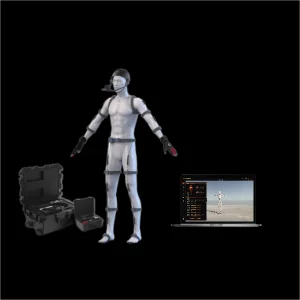
DreamsCap X1 Full-Body, Hand & Face Capture for Humanoid Robotics
Deploy Solution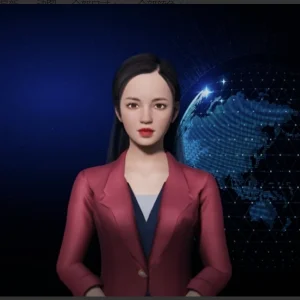
Virtual Host Broadcast Technology for Mainstream Media & Newsrooms
Deploy Solution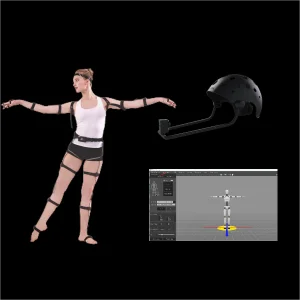
VDCap Full Performance Capture Entry-Level Motion Capture Kit
Deploy Solution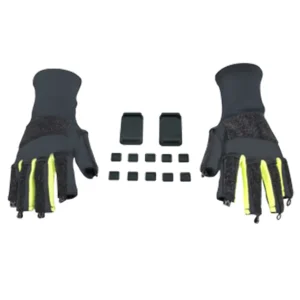
Inertia Motion Capture Fingers Elastic Lycra Fabric Gloves for VDSuit
Deploy Solution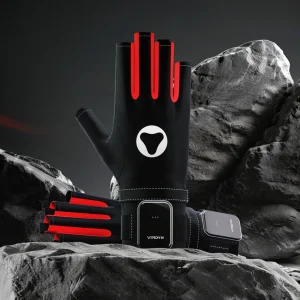
Virdyn mHand Pro Inertia Motion Capture Gloves for High-Dexterity VR
Deploy Solution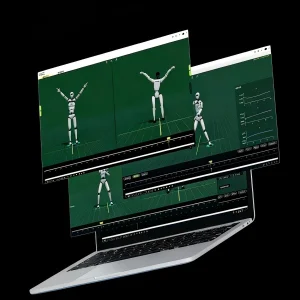
Ready-to-Use High-Precision Robot Motion Datasets for Embodied AI
Deploy Solution
Advanced Technology Motion Capture Tools for Virtual Film Production
Deploy Solution