Primary Motion Capture Hardware & Engineering Systems
Enterprise-grade kinematic capture devices, full-body sensor suits, and synchronized facial/glove nodes calibrated for low-latency AAA game pipelines.


The Paradigm Shift in AAA Game Motion Capture Production
Analyzing industry inflection points: From capital-intensive, monolithic optical stages to nimble, high-throughput hybrid tracking infrastructures.
De-escalation of Stage Footprint Constraints
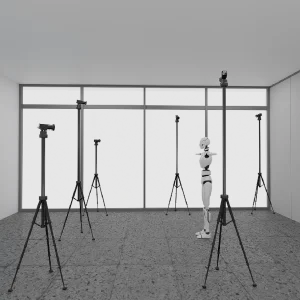
Traditional AAA character animation historically required multi-million-dollar optical volumes spanning thousands of square feet. Today's hyper-distributed global studios rely on inertial measurement units (IMUs) integrated with high-precision biomechanical solvers, facilitating untethered locomotion and parkour recording in natural outdoor topographies, active stairwells, and constrained vehicle interiors without line-of-sight occlusion.
Procedural Mechanics vs. Kinetic Truth
While machine-learned locomotion matching and ragdoll physics solve generic traversal, AAA game design relies fundamentally on kinetic nuance—weight shifts, anticipatory finger flexes, asymmetrical mass transfers, and micro-facial twitches. Capturing authentic actor performances via high-frequency IMUs preserves the subtle physical storytelling indispensable for narrative-heavy cinematic immersion.
Sub-20ms Zero-Latency Engine Ingestion
Modern live-retargeting engines (e.g., Unreal Engine 5 Control Rig, Unity 6 Kinematica) allow directors to evaluate digital doubles inside production lighting and Nanite geometry simultaneously with physical stage takes. Eliminating latency between hardware IMU sampling and character rig solve slashes iterative cycle costs by up to 68% across previsualization and final cinematic takes.
Enterprise Procurement Blueprint: Total Cost of Ownership & System Selection
A vendor-neutral, architectural assessment model for studio technical directors, lead animators, and budget controllers evaluating motion capture pipelines.
| Evaluation Parameter | High-Density Optical System | Enterprise Inertial (VDSuit Full) | AI Markerless Video Array | Hybrid Studio Topology |
|---|---|---|---|---|
| Spatial Infrastructure | Dedicated soundstage ($200k+ buildout), rigid truss rigs. | Zero volume requirements; field, office, or outdoor capture. | Multi-camera sync area; vulnerable to lighting shifts. | Compact stage volume augmented with wearable nodes. |
| Occlusion Vulnerability | High during multi-actor ground grappling, rolling, or close combat. | Zero occlusion; sensor nodes are physically mounted to segments. | Significant degradation during dense self-occlusion. | Inertial nodes continuously infill optical marker drops. |
| Setup & Calibration Speed | 60–90 min (Wand waving, retro-reflective marker affixing). | 5–8 minutes (Suit zip-up, single posture calibration). | 10–15 minutes (Background subtraction, extrinsics check). | 20–30 minutes (Cross-sensor global coordinate calibration). |
| Data Post-Processing TCO | Intense clean-up costs; marker swapping & occlusion stitching. | Direct curve solve; instantaneous BVH/FBX streaming. | Medium; requires neural confidence threshold tweaking. | Minimal; mathematically reconciled tracking layers. |
| Capital Expenditure (CapEx) | $150,000 – $750,000 USD | $10,000 – $45,000 USD | $15,000 – $60,000 USD | $50,000 – $120,000 USD |
Active Magnetic Drift Immunity
Studios located in metropolitan steel-frame buildings face severe magnetic anomalies that disrupt ordinary magnetometers. Virdyn implements custom Extended Kalman Filter (EKF) algorithms combined with adaptive gyro-bias estimation, isolating kinematic solves from local magnetic disturbances caused by reinforced concrete, lighting rigs, or nearby electronic consoles.
Native Engine Integration Layer
Procuring raw tracking hardware without rock-solid runtime integrations creates massive software technical debt. Virdyn delivers deep native SDKs and live plugins for Unreal Engine (Live Link 5.1–5.5), Unity, Autodesk Maya, 3ds Max, Blender, and MotionBuilder, enabling multi-character live puppet streaming with single-click retargeting directly to custom AAA skeletal rigs.
Unified Full-Body Genlock Synchronization
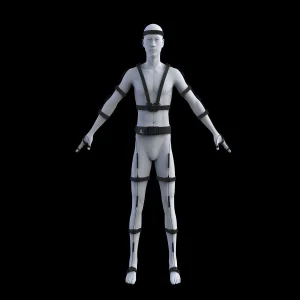
Cinematic performance demands synchronous capture across body, high-articulation hand joints, and facial expressions. Fragmented workflows cause frame-slippage and desync. The Virdyn architecture unites the VDSuit Full, mHand Pro gloves, and VDFace helmet via a centralized SMPTE timecode genlock protocol, delivering phase-aligned skeletal animation files in a single pass.
End-to-End Enterprise AAA Motion Capture Pipeline Architecture
A systematic technical roadmap detailing the journey from stage calibration and multi-sensor fusion to live engine solve and cinematic export.
Biomechanical Spatial Alignment
Prior to capturing physical action, the performer completes a dynamic T-Pose / A-Pose posture check. The VDMocap Studio engine calculates segment lengths based on user anatomical profiles, initializing the skeletal hierarchy with millimeter-precise limb proportional scaling and center-of-mass calibrations.
Edge-Computed IMU Sensor Fusion
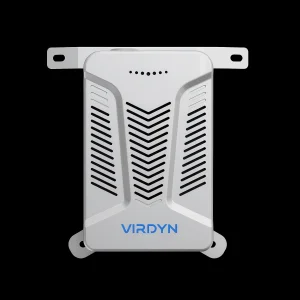
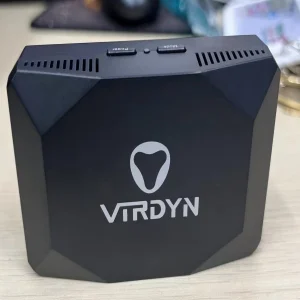
Each independent 9-axis node measures angular velocity, linear acceleration, and magnetic vectors at up to 500 Hz. Virdyn's on-suit hardware hub processes raw data through high-speed edge filters, removing high-frequency motor vibration and electromagnetic interference before transmitting UDP packets over 2.4GHz/5.8GHz channels.
Inverse Kinematics & Floor Contact
Raw orientation data passes into the biomechanical solver. The core software applies biological joint limits to eliminate unnatural hyperextension, while intelligent ground-contact detection algorithms accurately calculate foot-strike, heel roll, and toe push-off, preventing distracting foot skating or ground penetration.
Live Link Streaming & In-Engine Solve
The clean skeletal stream is ingested in real time into Unreal Engine via the Live Link protocol. Motion capture data is instantly transferred onto complex stylized or photorealistic MetaHuman rigs, allowing game directors, cinematographers, and animators to view final lighting, camera angles, and VFX in situ.
Global Regulatory Compliance, Localization & Enterprise SLAs
Ensuring frictionless multi-region game studio operations with stringent wireless certifications, biometric data security, and enterprise support frameworks.
Worldwide RF Spectrum Certification
Global deployment demands compliance with dynamic regional radio frequency regulations. Virdyn proprietary multi-node transmitters and receiver stations are fully certified under FCC (North America), CE RED (European Union), TELEC (Japan), and SRRC (China), guaranteeing zero broadcast interference with existing studio wireless audio, video feeds, or enterprise networks.
Biometric Privacy & Studio IP Protection
Motion capture data inherently contains identifiable biomechanical signatures of actors and proprietary character animation intellectual property. Virdyn software runs completely offline in zero-telemetry enterprise modes, ensuring compliance with GDPR (Art. 9 Biometrics), CCPA, and ISO/IEC 27001 data isolation policies. Studio files never touch unauthorized cloud servers.
24/7 Enterprise Mission-Critical SLA
With AAA crunch cycles operating around the clock across global time zones, Virdyn provides tiered Service Level Agreements (SLAs) including dedicated pipeline engineering support, priority hot-swappable hardware replacement programs, custom engine plugin builds, and remote calibration diagnostic assistance within a guaranteed 4-hour window.
Technical Roadmap: Embodied AI & Generative Motion Synthesis
Anticipating the technological convergence of game animation engines, robotics teleoperation datasets, and AI-driven kinetic inpainting.
Embodied AI & Humanoid Training Datasets
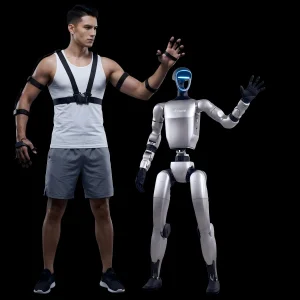
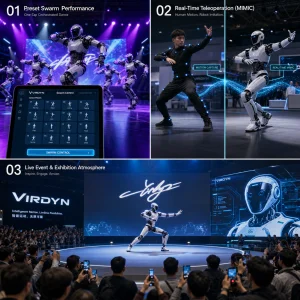
Motion capture technology has expanded beyond entertainment into artificial intelligence training. High-fidelity motion suites such as VDSuit Full and VDSuitMini collect dense kinetic demonstrations used by robotics laboratories to train reinforcement learning policies for bipedal humanoid locomotion, spatial balancing, and multi-finger dexterous manipulation.
Generative Kinetic Denoising
Next-generation Virdyn firmware embeds neural inference models directly into receiver stations. By leveraging deep physical models trained on millions of motion curves, real-time AI routines instantly identify and neutralize residual drift, eliminate anomalous contact pops, and reconstruct missing skeletal segments when extreme magnetic distortion occurs.
Vision-Inertial Odometry (VIO) Unification
The upcoming architectural standard unites lightweight IMU arrays with low-power egocentric computer vision sensors (such as VDEgo). By cross-referencing visual feature point tracking with inertial accelerations, VIO delivers absolute centimeter-grade world position tracking over massive open-world spaces without requiring external optical camera towers.
Technical Clarifications for Production Directors & Riggers
In-depth responses to critical questions regarding latency, magnetic deviation, multi-actor networking, and production workflow integration.
How does Virdyn resolve long-duration drift during continuous takes?
Inertial drift primarily affects position rather than orientation. Virdyn uses 9-axis sensor arrays coupled with zero-velocity updates (ZUPT) applied dynamically each time a foot makes contact with the ground plane. Furthermore, angular drift is suppressed through advanced sensor-fusion heuristics that continuously calculate gravity vectors and orientation matrices, ensuring clean stability over 45+ minute continuous takes.
Can multiple performers be recorded concurrently without RF interference?
Yes. The VDMocap Studio master hub operates dynamic frequency hopping spread spectrum (FHSS) across multi-channel 2.4GHz and 5.8GHz bands. Studios can concurrently run up to 6 performers equipped with full-body suits, facial helmets, and finger gloves in the same physical space with zero packet crosstalk or dropped frames.
How are finger articulations mapped when holding weapons or props?
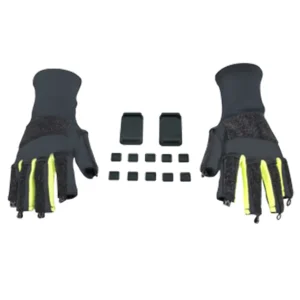
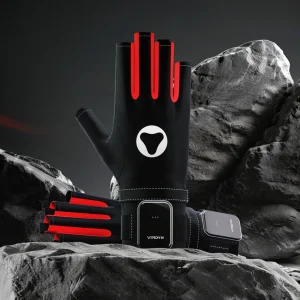
The mHand Pro glove incorporates low-profile, high-durability IMU nodes along each digit segment combined with an ultra-thin conductive Lycra chassis. This ensures performers retain natural haptic feedback when gripping swords, firearms, or steering wheels, without bulky exterior mechanical exoskeletons hindering natural finger wraps.
What is the native export format and engine Live Link compatibility?
VDMocap Studio supports real-time network streaming over UDP, TCP, and Named Pipes directly to Unreal Engine (Live Link), Unity, Autodesk MotionBuilder, and Maya. For offline DCC work, data exports cleanly to industry-standard hierarchical FBX (with custom skeleton mapping) and BVH formats at 60fps, 120fps, or 240fps.
How does the facial capture helmet integrate with Apple ARKit blendshapes?
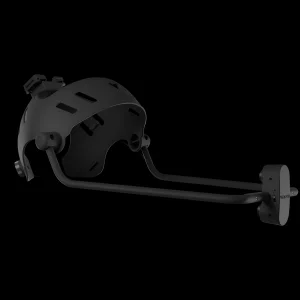
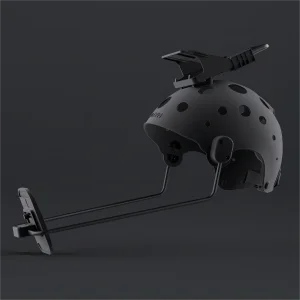
The VDFace Pro helmet utilizes an ultra-wide angle, distortion-calibrated RGB camera system streaming at 60 fps under embedded anti-glare illumination. Onboard software tracks 52 standardized ARKit blendshapes in real time, mapping seamlessly to MetaHuman facial rigs, FACS hierarchies, or custom stylized blendshape blend-trees.
What battery runtime and field serviceability can studios expect?
Both VDSuit Full and mHand Pro feature high-capacity swappable lithium polymer cells providing up to 5 hours of continuous wireless capture per charge. Hot-swapping modules takes less than 60 seconds without dropping overall software session configurations or requiring full calibration re-runs.
Kinematic Accessories, AI Teleoperation & Specialized Solutions
Advanced half-body suites, humanoid robotics interfaces, and precision finger capture textiles designed for high-throughput AAA workflows.