◆ Integrated Ecosystem
Top Recommended WBSN Core Hardware & Engines
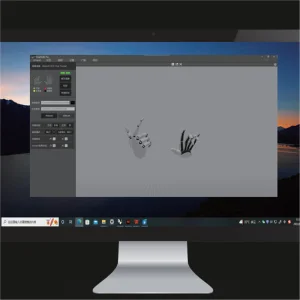
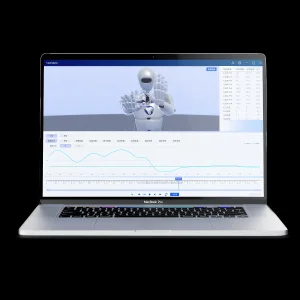
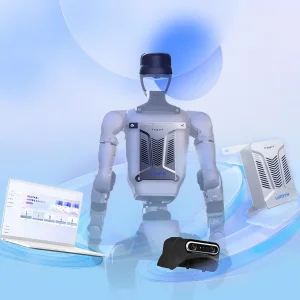
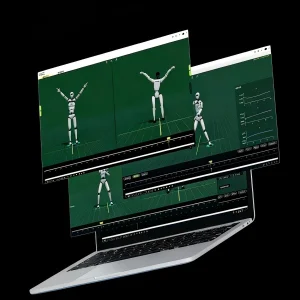
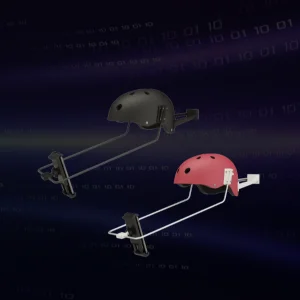
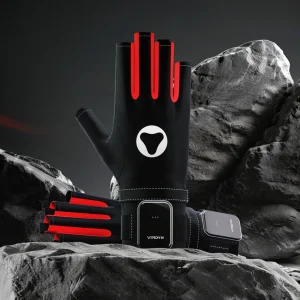
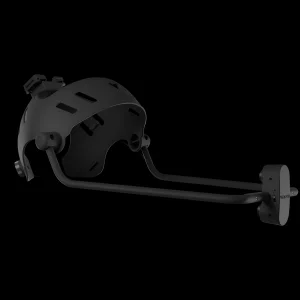
Deploy industrial-grade multi-sensor nodes, precision motion capture suits, and intelligent pipeline tools engineered for mission-critical spatial tracking.



⚙ Industry Analysis
Global State of Wireless Body Sensor Networks (WBSN) in 2026
The convergence of wearable biomedical micro-electro-mechanical systems (MEMS), high-throughput wireless protocols (Wi-Fi 6E/7, Bluetooth LE 5.4, and UWB), and embodied AI kinematics is fundamentally redefining modern automation and performance analysis.
⇄
Industrial Ergonomics & Safety
Modern assembly plants and logistics warehouses integrate WBSN to continuously monitor postural kinematics, dynamic joint torque, and repetitive strain hazards. Real-time edge fusion algorithms alert operators of fatigue, preventing musculoskeletal injuries before chronic conditions manifest.
✨
Robotics & Teleoperation Pipelines
The emergence of bipedal humanoid robots and dexterous robotic arms demands ultra-dense human demonstration telemetry. WBSN configurations provide uninterrupted six-degrees-of-freedom (6DoF) spatial tracking, allowing operators to teleoperate robots across dangerous or remote environments.
◎
Digital Twins & Healthcare Rehab
In clinical orthopedics and elite sports biometrics, WBSN replaces cumbersome optical studios. Decentralized inertial nodes enable patients and elite athletes to capture high-rate biomechanical data in organic environments, standardizing longitudinal recovery curves.
⚡ Engineering Roadmap
WBSN Architecture: Edge Computing, Sensor Fusion, and RF Topologies
A resilient Wireless Body Sensor Network requires meticulous cross-layer protocol design, dynamic interference mitigation, and robust biomechanical joint constraints.
⌘
Tier 1: Physical & Sensor Layer
High-G tri-axial accelerometers, high-bandwidth gyroscopes, and geomagnetic flux sensors operating at sampling frequencies up to 1000Hz. Advanced low-noise MEMS prevent raw integrator saturation during high-acceleration dynamic maneuvers.
⇢
Tier 2: Edge Fusion & Anti-Drift
Proprietary Extended Kalman Filtering (EKF) combined with biomechanical skeletal constraints. On-node pre-processing eliminates ferromagnetic disturbances and gyroscopic drift in real-time before spatial packet encapsulation.
☁
Tier 3: Distributed Network Fabric
Star-bus and hybrid mesh topologies utilizing frequency-hopping spread spectrum (FHSS). Guaranteed time-slot allocation (TDMA) guarantees deterministic delivery of synchronous postural packets across multi-actor configurations.
| Deployment Metric | Conventional Consumer Wearables | Commercial Optical Stage | Virdyn Industrial WBSN Solution |
|---|---|---|---|
| Spatial Mobility Volume | Localized (5-10 meters BLE) | Strictly bounded volume (Optically constrained) | Unlimited range; indoor/outdoor untethered operation |
| Occlusion Vulnerability | Low (limited kinematic data) | High (Line-of-sight required) | Zero line-of-sight occlusion vulnerability |
| Sampling Fidelity | 30Hz - 60Hz (Interpolated) | 120Hz - 240Hz (High precision) | Up to 240Hz deterministic multi-node streaming |
| Deployment Latency | Varies (Unsynchronized) | High setup & calibration overhead | Instant on-body calibration (< 2 minutes) |
❖ Macro Solutions
Cross-Industry Engineering Implementations
How forward-thinking enterprises deploy our end-to-end WBSN infrastructure across virtual production, cognitive robotics, and biomechanical intelligence.
⚒
Humanoid Robotic Teleoperation
Collect high-density human teleoperation trajectories for imitation learning. The synchronized capture of VDSuit Full and mHand Pro gloves enables zero-shot sim-to-real transfer for robotic hands handling complex physical manipulation tasks.
⊞
Film & Triple-A Virtual Production
Unshackle performers from physical optical volumes. Broadcast real-time BVH/FBX data directly to Unreal Engine 5 via LiveLink, enabling seamless multi-performer cinematic stunts, pre-visualization, and dynamic on-set virtual interaction.
⊙
Clinical Ergonomics & Rehabilitation
Equip rehabilitation hospitals with Valyze biomechanical analytics software. Objective 3D gait metrics, angle deflection velocity, and muscle exertion profiles give clinicians verifiable recovery tracking far superior to legacy visual assessment.
⎈
Enterprise Digital Human Interaction & VTubing Scalability
For high-frequency live commerce, broadcast, and metaverse events, our comprehensive WBSN planning enables ultra-stable 12-hour continuous broadcasting. With zero optical occlusion risk, performers transition smoothly through complex seated, standing, and acrobatic routines without joint popping or frame jitter.
❔ Direct Technical Q&A
Wireless Body Sensor Network (WBSN) FAQs
Key technical and procurement criteria addressed directly by our chief system architects and RF engineers.
Q1: How does Virdyn solve magnetic interference in dense industrial environments?
Our sensor fusion algorithm decouples heading estimation from pure magnetic orientation during detected anomaly spikes. Combining active hard/soft-iron compensation routines with kinematic joint constraints ensures zero yaw drift even near steel machinery.
Q2: Can WBSN data streams integrate directly into ROS/ROS2 for robotics?
Yes. Alongside our Unreal Engine and Unity C++ plugins, our SDK outputs low-level quaternion and positional offsets over UDP/TCP sockets, natively ingestible into ROS2 nodes for humanoid teleoperation and embodied AI training sets.
Q3: What is the operational throughput and wireless battery endurance?
VDSuit Full and mHand Pro feature proprietary low-energy RF protocols, sustaining continuous 60-120Hz capture sessions for up to 6–8 hours on a single charge cycle, with hot-swappable battery redundancy options available.
Q4: How does inertial WBSN compare with markerless optical cameras?
While markerless computer vision is convenient for basic motion capture, it suffers when performers turn away from cameras, interact with props, or wear loose clothing. WBSN attaches directly to the body skeleton, providing true, occlusion-free angular kinetics anywhere.
◇ Comprehensive Suite
End-to-End Motion Tracking & Teleoperation Hardware
Select specialized hardware solutions from our complete ecosystem to scale your spatial tracking, digital avatar, and embodied AI pipelines.