Hardware & Software Deployments
Featured Motion Capture Hardware & Integrated Solutions
Industrial-grade wearable IMU rigs, synchronized facial cameras, and high-degree-of-freedom finger telemetry systems precision-machined for global pipelines.
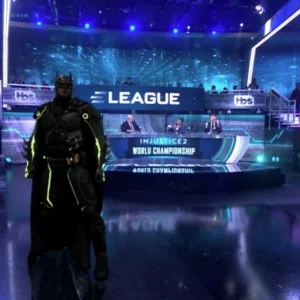
Design Motion Capture Provides Advanced Technology Tools for Virtual Film Production Planning, Solution
Explore Solution Specs →
Best How Do Brands Use Virtual Spokesman to Tell Good Stories: Motion Capture Technology Empowers Brand Propagation Planning, Solution
Explore Solution Specs →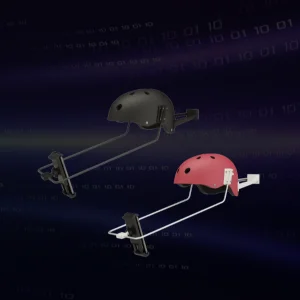
Best Virdyn VDFace Capture System for Real Time Facial Capture with Face Capture Helmet Planning, Solution
Explore Solution Specs →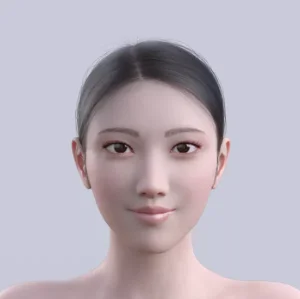
Best Customize Your 3D Virtual Avatar - Personalized High-Quality and Fast Delivery | 3D Custom Avatar Services Planning, Solution
Explore Solution Specs →
Best Virtual Live Technology Empowerment Makes Online Education and Learning As Fun As Watching Cartoons Planning, Solution
Explore Solution Specs →
Design Virtual Human Technology: Digital Human Activation Brand Marketing New Path Planning, Solution
Explore Solution Specs →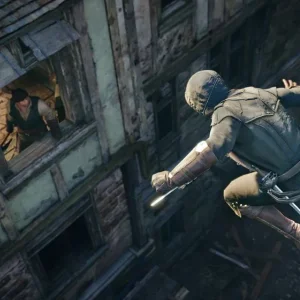
Design Inertial Motion Capture Technology to Help the Game Development and Production Planning, Solution
Explore Solution Specs →
Capital Allocation & TCO Analysis
Motion Capture System Cost Breakdown: CapEx vs. OpEx Realities
High-fidelity kinematic capture is no longer restricted to multi-million-dollar multi-camera retro-reflective stages. Strategic budgeting requires dissecting direct acquisition costs against operational space, maintenance overhead, and data throughput speed.
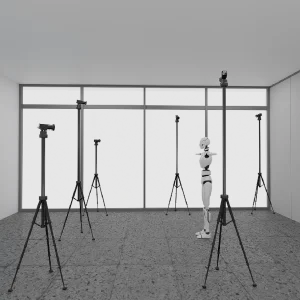
When enterprise procurement committees evaluate motion capture systems, they often commit the classic mistake of comparing only unit retail prices. True Motion Capture System Cost encompasses the initial capital expenditure (hardware sensors, processing hubs, head-mounted rigs, gloves), facility overhead (acoustically isolated or optically controlled stages, truss arrays, active sync genlock hardware), software seat licenses, recurring maintenance fees, and, most crucially, post-capture cleanup labor.
Optical motion capture stages relying on passive or active marker arrays demand a strictly controlled environment. A typical 24-to-36 camera optical volume requires anywhere from $80,000 to upwards of $350,000 in equipment alone, combined with recurring calibration cycles, marker occlusion issues during floor maneuvers or multi-actor combat, and heavy post-processing cleanup teams costing thousands of dollars per animation minute.
"The most disruptive shift in modern mocap economics is the transition from localized physical tracking volumes to wearable, multi-sensor inertial fusion platforms. By computing kinematics directly on the human body, studios eliminate the physical footprint and decrease total production costs by an order of magnitude."
| Tracking Modality | Hardware CapEx | Dedicated Spatial Footprint | Setup & Calibration Time | Occlusion Resistance | Post-Processing Overhead | Ideal Scenario |
|---|---|---|---|---|---|---|
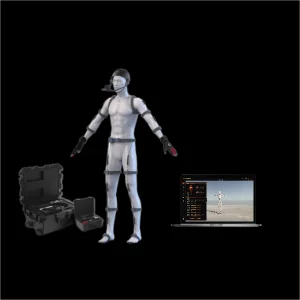
| Inertial IMU Suit (e.g. VDSuit Full) | Low to Moderate ($3k – $15k) | Zero (Any room, field, or vehicle) | 3 – 5 minutes | 100% Occlusion-Free | Extremely Low (Clean live telemetry) | Robotics teleoperation, VTubers, indie/AA games, outdoor |
| Optical Passive Marker Volume | Very High ($60k – $400k+) | Requires 500–3,000 sq.ft rigid stage | 45 – 90 minutes per session | Susceptible to line-of-sight drops | High (Requires marker labeling & cleanup) | AAA Hollywood stunts, precise biomechanics gait analysis |
| Markerless Computer Vision | Low to Mid ($2k – $25k) | Moderate (Controlled lighting & FOV) | 10 – 20 minutes | Moderate (Fails on fast overlapping limbs) | Moderate to High (Jitter dampening) | Fitness apps, crowd previs, low-budget indie pre-vis |
| Hybrid Fusion (Inertial + RGB-D) | Mid-Range ($8k – $30k) | Minimal (Single desk or modest room) | 5 – 10 minutes | High (Sensors compensate for camera blind spots) | Low (Algorithmic drift correction) | Embodied AI humanoid learning, virtual production |
Supply Chain Excellence & Manufacturing
Why China Direct Factory Engineering Changes Mocap Economics
Integrating precision MEMS component procurement, high-density SMT assembly, and tailored textile engineering under one roof yields unmatched cost-to-performance ratios for global clients.
Vertical Hardware-Software Integration
Traditional Western mocap vendors frequently outsource component fabrication to third-party contractors while maintaining software operations overseas. This multi-layered distribution model stacks distributor markups, import duties, and margin buffers.
- Proprietary PCB design and high-speed SMT assembly in Guangzhou.
- In-house magnetic calibration chambers ensuring sub-degree orientation accuracy.
- Direct engineer-to-client firmware refactoring without middle-tier vendors.
Rapid Textile & Sensor Customization
Anatomical biomechanics require form-fitting, anti-slip Lycra fabrics to prevent sensor displacement during violent movement. Direct factory control allows bespoke ergonomic revisions for diverse body types, child actors, or robotic armatures.
- Aerated, antibacterial Lycra fabrics engineered for 12-hour continuous shoots.
- Reinforced cable routing harnesses or custom wireless puck mounts.
- OEM/ODM custom sensor layouts for quadruped or bespoke non-humanoid skeletons.
Drastic Capital Reinvestment in Sensor Fusion
Cost savings realized in hardware manufacturing are directly reinvested into algorithmic development: 9-axis Kalman filters, magnetic disturbance rejection, and unified machine learning inverse kinematics (IK) solvers.
- Zero recurring per-seat software licensing fees on enterprise bundles.
- Free SDKs for C++, Python, ROS (Robot Operating System), Unity, and Unreal.
- Volume unit manufacturing enables scalable lab deployment for universities.
Macro Industry Ecosystems
Full-Stack Enterprise Applications: Where Data Creates Value
Kinematic data architectures power five trillion-dollar industry verticals: next-gen AAA game engines, real-time virtual broadcast studios, embodied AI robotics, digital twin manufacturing, and clinical sports medicine.
Embodied AI & Humanoid Robotics
Modern AI agents cannot master physical manipulation without dense imitation learning datasets. Teleoperating humanoid bipedal robots and multi-finger robotic hands (e.g. mHand Pro) creates end-to-end motor trajectory policies.
ROS/ROS2 Bridge
Dexterous Gloves
Egocentric Data
Virtual Film Production & VFX
Real-time LED volume in-camera visual effects (ICVFX) demand instant camera tracking and background actor pre-visualization. Inertial systems let actors navigate physical props without casting optical marker occlusions.
Unreal Live Link
Genlock Sync
Previs Tooling
Interactive VTubing & Brand Avatars
From multinational luxury brands deploying 24/7 autonomous brand spokespersons to interactive streamers on TikTok, YouTube, and Twitch. Wearable suits pair with lightweight face tracking helmets for spontaneous live broadcasting.
Warudo / VRChat
Low-Latency IP
Facial Helmets
Game Development & AAA Cutscenes
Eliminate thousands of animator hours spent block-keyframing standard combat loops, walk/run cycles, and narrative cutscenes. Record authentic stunt-actor performances anywhere, instantly streaming FBX and BVH into Maya or Blender.
FBX / BVH Direct
Autodesk Plugins
Multi-Actor Retarget
Strategic Procurement Framework
Global Enterprise Procurement: Critical Evaluation Criteria
Before issuing an RFP or purchase order for motion capture hardware, enterprise engineering teams must evaluate these 6 mission-critical technical vectors.
1. Magnetic Disturbance Resilience
Office buildings and studio floors contain reinforced steel rebar, high-current power cables, and electromagnetic equipment that ruin cheap IMU orientation. Inquire whether the vendor utilizes dynamic Kalman-filtering fusion algorithms that suppress soft- and hard-iron distortions in real time.
2. Zero-Drop Wireless Protocol
Standard 2.4GHz Wi-Fi is heavily congested in production sets. High-end suits should leverage proprietary low-latency 2.4G/5.8G dual-band RF hopping or local onboard micro-SD caching that guarantees zero missing frame packets during live stunt recording.
3. Articulated Finger & Face Sync
A mocap suit that only tracks major limbs forces animators to manually keyframe hands and faces, negating up to 60% of the mocap time savings. Evaluate whether the supplier offers synchronized gloves (with at least 12–16 IMUs or optical nodes per hand) and lightweight HD headcams.
4. Native Game Engine & DCC Live Streaming
Data that requires 2 hours of file conversion is practically unusable for live VTubing, robotics teleoperation, or virtual production. Verify zero-latency live plugins for Unreal Engine 5 (Live Link), Unity, MotionBuilder, Blender, and iClone.
5. Battery Swappability & Runtime
Film shoots and full-day lab tests cannot tolerate 4-hour recharges mid-day. Ensure the hardware supports hot-swappable or standard external USB-C power banks, offering continuous operational autonomy beyond 5 to 8 continuous hours.
6. Long-Term Spare Parts & Support SLA
Wearable suits suffer wear-and-tear: torn straps, worn Lycra, and stepped-on cables. Procuring directly from reputable manufacturers like Virdyn ensures express access to replacement sensor nodes, custom cables, and round-the-clock technical engineering consultation.
Expert Technical Q&A
Frequently Asked Questions on Motion Capture Costs & Deployment
Direct, authoritative answers addressing technical implementation, budget management, and operational viability for enterprise stakeholders.
What is the realistic price range for an enterprise-ready motion capture system?
A professional full-body inertial motion capture setup (such as the VDSuit Full paired with multi-node mocap gloves and facial capture helmet) generally ranges between $3,500 and $15,000 USD. This stands in stark contrast to optical multi-camera studio installations, which start at $50,000 and easily exceed $250,000 once optical cameras, specialized trussing, active genlock controllers, and marker suites are tallied. Furthermore, inertial systems eliminate dedicated studio rental fees entirely.
How do inertial motion capture systems eliminate sensor position drift?
Historically, inertial sensors experienced positional drift over prolonged capture runs because double-integrating linear acceleration accumulates error over time. Modern systems like Virdyn solve this via advanced multi-sensor data fusion: 9-axis MEMS nodes (accelerometers, gyroscopes, and magnetometers) are bound by anatomical skeletal kinematic constraints (IK solvers) coupled with automatic zero-velocity foot-contact updates (ZUPT). This prevents foot sliding and keeps positional tracking stable across hours of recording.
Why are Chinese mocap manufacturers becoming the primary choice for robotics and game studios?
China—specifically the Greater Bay Area hardware ecosystem including Guangzhou and Shenzhen—hosts the world's most consolidated supply chain for MEMS sensors, SMT fabrication, wireless communication modules, and precision textiles. This proximate manufacturing infrastructure allows companies like Guangzhou Virdyn to produce hardware with identical or superior sensor specs compared to Western counterparts at 30% to 50% of the hardware acquisition cost, without imposing punitive annual software subscription models.
Can inertial mocap suits be integrated into humanoid robot teleoperation and Embodied AI?
Yes. In fact, full-body inertial suits (like DreamsCap X1 and VDSuitMini) paired with data gloves (mHand Pro) have become the premier modality for training humanoid robots and collecting foundational physical action datasets. With low-latency UDP/ROS streams, human demonstrators can teleoperate bipedal robots and dexterous robotic end-effectors in real time, capturing rich kinematic trajectory, angular velocity, and end-effector pose data essential for imitation learning and reinforcement learning.
What software integrations and real-time game engine plugins are provided?
Professional mocap solutions ship with turnkey integration plugins: Unreal Engine 5 (native Live Link for skeletal animation and MetaHuman driving), Unity 3D, Autodesk Maya, Autodesk MotionBuilder, 3ds Max, Blender, and Reallusion iClone. For streaming and social VTuber deployment, protocols like VRChat OSC and Warudo are natively supported, alongside complete C++ and Python SDKs for custom robotics and computer vision pipelines.
Accessories, Advanced Kits & Optical Systems
Complete Your Motion Pipeline: Accessories & Specialized Systems
From replacement ergonomic Lycra fabrics to dual-camera facial helmets and markerless optical multi-person capture arrays, discover specialized modules engineered for studio scalability.
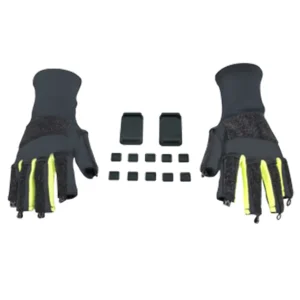
Best Inertia Motion Capture Fingers Capture Accessories Elastic Lycra Fabric Gloves for VDSuit Full(Without Sensors) Planning, Solution
Explore Solution Specs →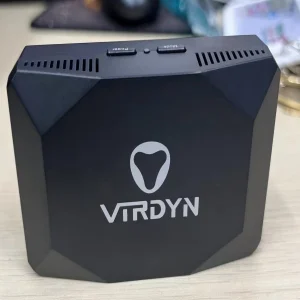
Design Full Body Motion Capture Accessories for Suit Hub Planning, Solution
Explore Solution Specs →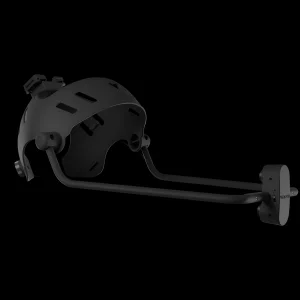
Design AH Double Camera-Based Face Capture Helmet With HD 1080p Embedded RGB Camera Planning, Solution
Explore Solution Specs →
Design Book a Demo for VDSuit Full or mHand Pro Planning, Solution
Explore Solution Specs →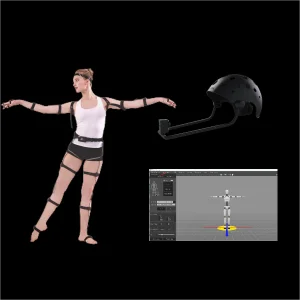
Design VDCap Full Performance Capture Entry-Level Motion Capture Kits for Beginners and Hobbyist Planning, Solution
Explore Solution Specs →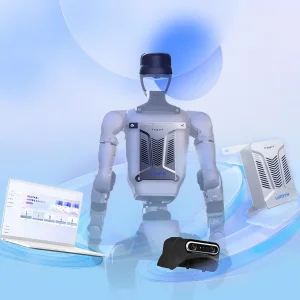
Design AI LingSi System | Robotic Intelligent Creation Platform & Intelligent Voice Interaction Planning, Solution
Explore Solution Specs →
Design Virtual Actors: How the Film Industry Should Layout the Virtual Market Planning, Solution
Explore Solution Specs →