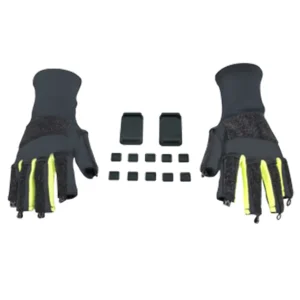
High-Precision Inertial Tracking & Teleoperation Systems
Explore core inertial suites, multi-degree-of-freedom glove architectures, and real-time facial capture helmets engineered to match custom anthropometric sizing envelopes.
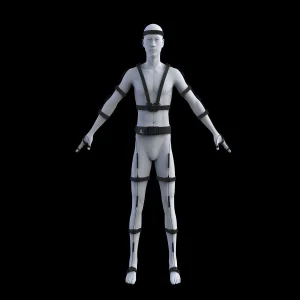
Design Virdyn VDSuit Full for Full Body Function Inertia Motion Capture Suit Planning, Solution
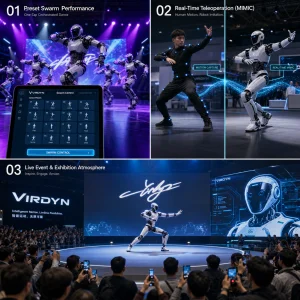
Best Virdyn Humanoid Robot Live Event Performance Solution for Robot ce&Teleoperation Planning, Solution
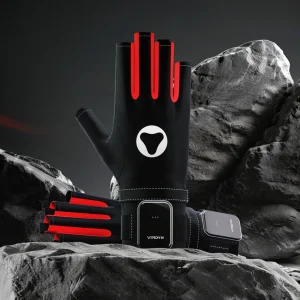
Best Virdyn mHand Pro an Inertia Motion Capture Gloves for Virtual Reality Planning, Solution

Best Virtual Live Technology Empowerment Makes Online Education and Learning As Fun As Watching Cartoons Planning, Solution
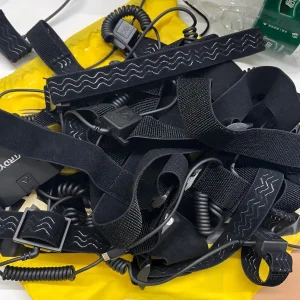
Best Full Body Motion Capture Accessories for Suit Elastic Tapes Planning, Solution
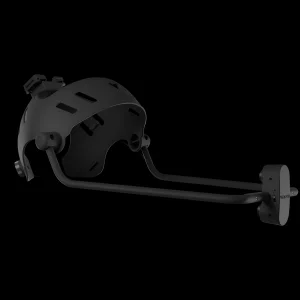
Design AH Double Camera-Based Face Capture Helmet With HD 1080p Embedded RGB Camera Planning, Solution
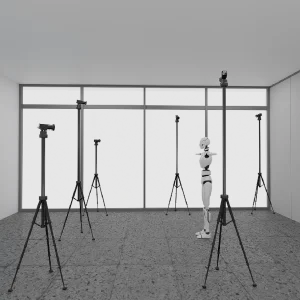
Best Camera Optical Markerless Motion Capture Solution - Virdyn YanDong | Real-Time Full Body, Hands, Face Planning, Solution
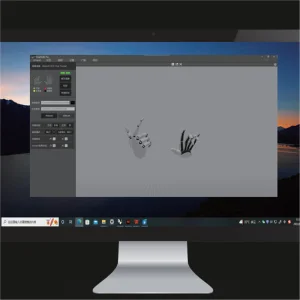
Best Virdyn mHand Studio Motion Capture Gloves Software System for mHand Pro Planning, Solution
Why Anthropometric Sizing Dictates Motion Capture Fidelity
In inertial motion capture (mocap), the physical suit serves as the mechanical bridge coupling MEMS-based inertial measurement units (IMUs) to skeletal landmarks. An ill-fitted garment introduces non-rigid soft tissue displacement, causing drift, rotational slippage, and degraded inverse kinematics (IK).
In professional visual effects, digital asset creation, and robotic imitation learning, motion data precision is governed by the rigidity of sensor-to-bone coupling. When an actor wears an oversized motion capture suit, inertial sensor nodes experience parasitic micro-displacements during dynamic acceleration maneuvers—such as sprinting, martial arts kicks, or acrobatic rolls. This physical latency manifests in software as bone length jitter, foot sliding, and rotational divergence.
Chief Technology Officer Insight: "A 15mm lateral shift of a femur-mounted IMU sensor during a rapid pivot can produce up to 8.4 degrees of synthetic yaw error down the kinematic chain. Custom sizing and high-tensile compression fabric matrices eliminate over 92% of soft-tissue kinetic artifacts before algorithmic filtering even begins."
Conversely, undersized suits subject performers to restricted ranges of motion (ROM), altered natural gait biomechanics, and premature textile seam fatigue. Precision motion capture suit size planning requires evaluating not merely standard garment metrics (chest, waist, hip), but segmented limb lengths, musculoskeletal girth variations, and sensor fixture positioning over critical bony landmarks: the C7 cervical vertebra, acromion processes, lateral epicondyles of the femur, and lateral malleoli.
| Suit Sizing Grade | Performer Height (cm) | Chest Circumference (cm) | Arm Inseam (cm) | Leg Inseam (cm) | IMU Coupling Tension Index | Recommended Production Application |
|---|---|---|---|---|---|---|
| Compact (S-Pro) | 155 – 165 | 82 – 90 | 50 – 54 | 68 – 73 | 4.8 N/cm² (High Rigidity) | VTuber Talents, Agile Stunt Actors, High-Cadence Teleoperation |
| Standard (M-Studio) | 166 – 176 | 90 – 98 | 54 – 58 | 73 – 79 | 4.5 N/cm² (Balanced) | Mainstream Game Mocap Stages, Cinematic Previs, Academic Labs |
| Extended (L-Flex) | 177 – 186 | 98 – 108 | 58 – 63 | 79 – 85 | 4.4 N/cm² (Balanced) | Combat VFX Stunt Performers, Humanoid Kinematic Datasets |
| Industrial (XL-Rig) | 187 – 198+ | 108 – 122+ | 63 – 69 | 85 – 92 | 4.2 N/cm² (Elastic Reinforced) | Heavy Physicality Captures, Exoskeleton Cross-validation |
Macro Industry Solutions Powered by Tailored Sizing Envelopes
From multi-camera virtual production volumes to remote robotics manipulation, how tailored motion capture sizing solves concrete industrial bottlenecks.
AAA Game Development & VFX Virtual Production
Unreal Engine 5 and Unity pipelines require clean skeletal curves without manual graph cleanup. Precisely fitted suits eliminate joint flip and maintain constant bone offsets across 8-hour capture days.
- Native LiveLink & OSC Skeletal Streaming
- Automated T-Pose & A-Pose Rig Solvers
- Zero Optical Occlusion in Confined Sets
Embodied AI & Humanoid Robot Data Teleoperation
Training neural network locomotion policies and dexterous manipulation calls for millimeter-accurate human demonstration data. Form-fitting mocap garments map human kinematics straight to URDF robot models.
- ROS / ROS2 Native Streaming Daemons
- Real-Time Dynamic Joint Torque Estimation
- Continuous Teleoperation Feedback via mHand
Ergonomics, Sports Biomechanics & Medical Rehab
Clinical gait evaluation and sports science demand uncompromised sensor repeatability. Custom anthropometric sizing accommodates specialized athletic postures and patient support harnesses.
- Valyze Clinical Kinematic Analysis Export
- Dynamic Center-of-Mass (CoM) Projection
- Anti-Static, Hypoallergenic Medical Fabric
Technology Roadmap: Smart Textiles & Edge-AI Fusion (2025–2028)
The convergence of conductive graphene knit fabrics, on-node neuromorphic processing, and optical-inertial auto-calibration is redefining the future of motion capture suit sizing.
Phase 1: Dynamic Morphing Smart Textiles
Integration of shape-memory alloy (SMA) micro-filaments within suit seams. The garment automatically tightens to apply uniform 4.5 N/cm² pressure across disparate body shapes upon powering on, turning a single suit into an auto-sizing system.
Phase 2: On-Body Kalman Neuromorphic Compute
Shifting raw multi-sensor fusion computation directly into the node clusters. Rather than transmitting raw accelerometer-gyro-magnetometer streams, nodes synthesize quaternion orientations directly, minimizing wireless RF packet collisions.
Phase 3: Optical-Inertial Self-Calibrating Rigs
Markerless RGB-D computer vision instantly calculates external body segment dimensions and passes exact bone lengths to VDMocap Studio within 3 seconds, eliminating manual tape measurements and manual avatar calibration.
China Factory 4.0: Supply Chain Resilience & Micrometer Tolerance
Direct manufacturing in Guangzhou leverages world-class electronics fabrication, automated laser textile cutting, and proprietary testing jigs to guarantee enterprise repeatability.
Automated CNC Laser Cutting
Textile panels for VDSuit Full are cut using computerized multi-ply laser gantries with a 0.1mm dimensional variance, ensuring exact node pocket placement across batch runs.
Automated IMU Calibration Rigs
Every inertial sensor node completes a multi-axis 3D helmholtz coil and thermal chamber stress test across -10°C to +55°C to calibrate zero-bias drift and magnetic permeability before assembly.
Dynamic Anti-Interference Shielding
Sensor housings feature interior vacuum metallization coating, suppressing electromagnetic interference (EMI) generated by studio audio transmitters, floor LED walls, and robotic servo motors.
Rapid Turnaround & Spares Inventory
Guangdong manufacturing ecosystem guarantees 48-hour turnarounds on custom-tailored suit patterns and worldwide air-freight dispatch for replacement harnesses, cables, and sensor modules.
Localized Support, International Compliance & RFP Specifications
Institutional procurement teams in North America, the European Union, Japan, and the Asia-Pacific region require transparent certifications and streamlined logistical guarantees.
Full International Regulatory Certification
All Virdyn hardware products hold CE (Europe), FCC Part 15 Class B (United States), RoHS (Hazardous Substances), and TELEC (Japan) wireless certifications. Secure 2.4GHz FHSS and low-latency WiFi transmission bands operate globally without licensing constraints.
Tier-1 Academic & Studio SLA Support
Enterprise procurement accounts receive dedicated application engineering support via Slack, Teams, or video call. We provide comprehensive SDK documentation (C++, Python, C# for Unity/Unreal), sample code repositories, and scheduled annual firmware updates.
Flexible Institutional RFP Contracting
We routinely execute university procurement tenders, framework agreements, and master service contracts (MSAs) accommodating DAP, DDP, net-30 educational terms, and multi-suit bundle configurations with spares packages and custom transit cases.
Frequently Asked Questions: Motion Capture Suit Sizing & Solutions
In-depth engineering answers addressing sizing planning, sensor placement, multi-actor scaling, and teleoperation reliability.
How does choosing the wrong suit size degrade inertial motion capture data quality?
Can a single studio suit be shared among performers with differing physical builds?
What precise body dimensions are required before placing an enterprise mocap order?
How does suit size planning influence humanoid robot teleoperation and imitation learning?
How does Virdyn maintain suit hygiene and durability across high-throughput commercial productions?
Advanced Teleoperation, Facial Capture & Digital Human Systems
Integrate your full-body suit sizing plan with synchronized high-density facial capture, egocentric AI vision, and dedicated teleoperation packages.
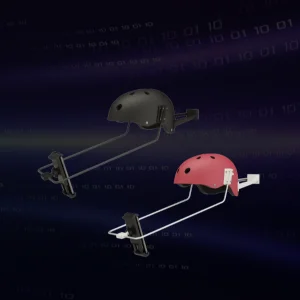
Best Virdyn VDFace Capture System for Real Time Facial Capture with Face Capture Helmet Planning, Solution
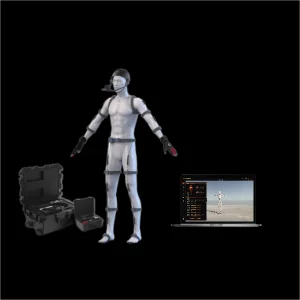
Design DreamsCap X1 Full-Body, Hand & Face Motion Capture for Humanoid Robot Data Collection & Teleoperation Planning, Solution
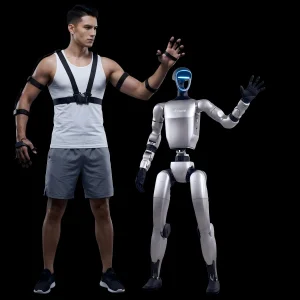
Best VDSuitMini Half-Body Mocap System | Robot Data Collection & Teleoperation | Free Software Planning, Solution
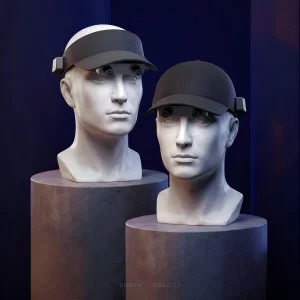
Design VDEgo - Egocentric Video Data Collection Service at Scale | FPV Head-Mounted Camera Planning, Solution

Design Virtual Human Technology: Digital Human Activation Brand Marketing New Path Planning, Solution
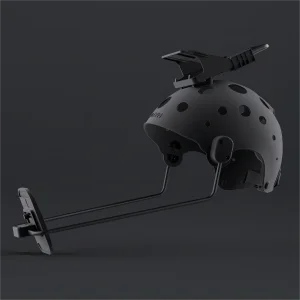
Best Virdyn VDFace Pro Capture System for Real Time Facial Capture with Face Capture Helmet Planning, Solution
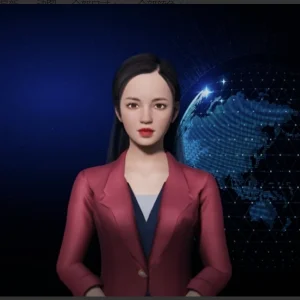
Design Virtual Host Technology: Help Mainstream Media Layout Virtual Reality Industry Planning, Solution