Featured Hardware & Intelligent Capture Rigs
Industrial-grade precision motion capture hardware designed to power VTuber avatars, real-time broadcasts, and interactive digital humans.



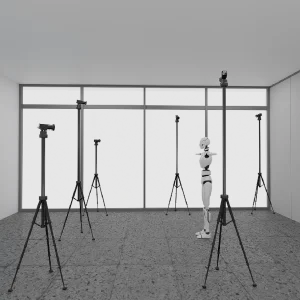
The Evolution of VTubing: From Webcams to Multi-Modal Kinematics
An analytical overview of the technological paradigm shift driving virtual entertainment, live streaming monetization, and spatial computing interaction.
The Strategic Shift in Live Avatar Immersion
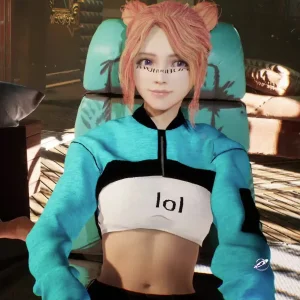
The global VTubing ecosystem has graduated from rudimentary face-tracking webcams into full-body, high-fidelity real-time interactive performances. Modern audiences on platforms such as YouTube, Twitch, TikTok, and Bilibili demand nuanced body language, responsive micro-gestures, and seamless locomotion without the artificial jitter associated with early tracking methodologies.
Procurement directors and agency leaders face a pivotal engineering choice: optical capture environments demand massive spatial footprints, dedicated calibration grids, and millions in capital expenditure. Conversely, advanced inertial sensor fusion captures dynamic choreography and micro-interactions in everyday live-streaming rooms, cutting deployment overhead by up to 80% while preserving sub-millimeter angular precision.
Addressing Global Enterprise Procurement Demands
Global entertainment syndicates and enterprise VTuber talent agencies evaluate motion capture solutions across five stringent vectors: kinematic stability, calibration retention, anti-magnetic resilience in high-density electronic environments, continuous wireless throughput, and cross-platform retargeting compatibility.
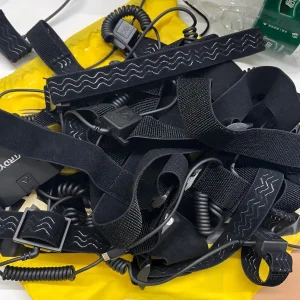
The integration of ergonomic sensor nodes—such as the VDSuit Full and mHand Pro—allows VTubers to stream for 6 to 10 consecutive hours without sensor fatigue, physical discomfort, or data drift. This reliable operational envelope makes inertial motion capture the definitive production standard for high-throughput commercial agencies worldwide.
China Industry 4.0: Supply Chain Resilience & Hardware Innovation
How advanced sensor manufacturing clusters in the Greater Bay Area provide unmatched quality control, rapid prototyping, and cost performance.
Full-Stack R&D Integration
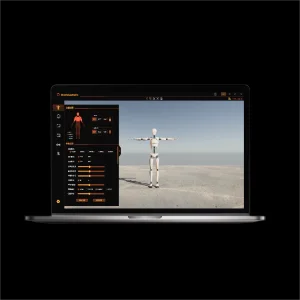
By integrating hardware layout, firmware microcode, sensor fusion mathematics, and desktop retargeting suites under one domestic roof in Guangzhou, iterative cycles drop from months to weeks.
Automated MEMS Calibration
Every IMU module undergoes automated thermal compensation and 3D rotational test benches in Industry 4.0 manufacturing cells, guaranteeing absolute zero drift across variable live room conditions.
Agile Global Delivery
Direct access to tier-1 component suppliers and advanced textile assembly facilities enables steady inventory holding, rapid warranty replacement, and dispatch within 48 hours for global enterprise clients.
Motion Capture Tracking Technology Benchmark
A comprehensive engineering comparison of primary motion tracking paradigms for VTuber studios, enterprise broadcasters, and interactive experiential events.
| Evaluation Parameter | Virdyn Inertial Mocap (VDSuit / mHand) | Optical Multi-Camera Marker Systems | Pure Computer Vision / Markerless |
|---|---|---|---|
| Spatial Requirement | Zero volume restrictions; works in any standard room or outdoors | Dedicated 6m x 6m stage with calibrated optical truss | Limited to single or multi-camera optical cones |
| Occlusion Vulnerability | Zero occlusion; IMU sensors maintain tracking under clothing & props | High vulnerability when markers are blocked or hidden | High; joint estimation breaks upon limb overlap |
| Deployment Latency | < 15ms continuous wireless UDP / OSC stream | < 10ms with high-end processing servers | 35ms – 80ms due to neural network inference lag |
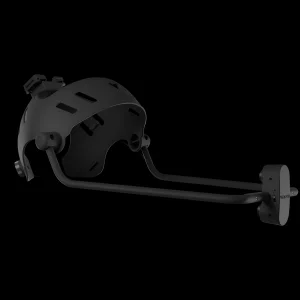
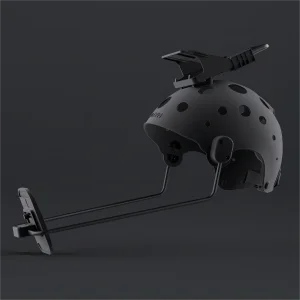
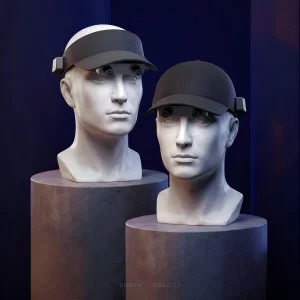
| Finger & Facial Capture | Dedicated multi-node mHand Pro + VDFace capture helmets | Dense retro-reflective facial markers & active optical gloves | Approximated via webcams; lower micro-expression accuracy |
| Total Cost of Ownership | Extremely cost-effective; turnkey setup within 5 minutes | Prohibitive hardware, software licenses & dedicated technicians | Low hardware cost, but high computational load and jitter |
Localized Deployment Scenarios in Modern VTubing
Tailored technical solutions for agencies, independent performers, virtual e-commerce hosts, and stadium-scale interactive entertainment.
Single-Talent Stream Rooms
Inertial suits like the VDSuit Full paired with Warudo or VRChat enable individual creators to dance, gesture, and engage live chats directly from desktop rigs with instantaneous startup.
Multi-Actor Agency Studios
Multi-node synchronization protocols enable simultaneous live broadcasts with 4 to 8 talents on stage. Seamless retargeting feeds Maya, Unreal Engine, and custom Unity environments without crosstalk.
Virtual E-Commerce Live
Commercial brands leverage virtual presenters driven by mHand Pro mocap gloves to interact with physical product displays, showcase real-time tactile handling, and conduct 24/7 sales streams.
Concerts & Live XR Events
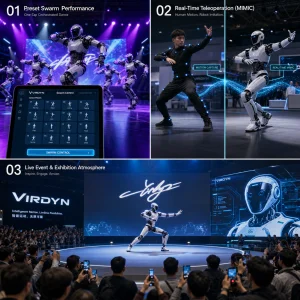
Hybrid optical-inertial stage tracking drives holographic live idol performances. Performers run, jump, and interact with pyrotechnics and augmented visual effects with stable root-motion coordinates.
Motion Capture for VTubing: Technical FAQ
Essential technical, integration, and operational answers curated by Virdyn's senior solutions architecture team.
Professional Motion Capture Ecosystem Solutions
Explore our complete hardware line, facial rigs, robotics telemetry systems, and digital actor toolsets available for enterprise procurement.