
High-Dynamic Sensor Arrays & Athlete Telemetry Platforms
Explore certified inertial, optical, and hybrid telemetry units engineered for rapid biomechanical acquisition, real-time kinetic processing, and high-frequency physiological monitoring.
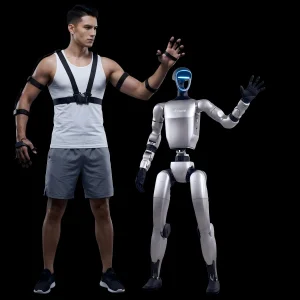
VDSuitMini Half-Body Mocap System | Robot Data Collection & Teleoperation
Explore Solution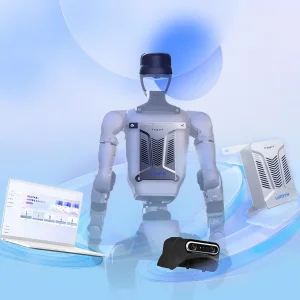
AI LingSi System | Robotic Intelligent Creation & Interaction Platform
Explore Solution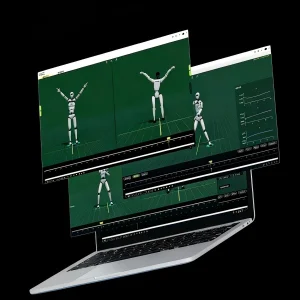
VDTraining: One-Stop Robot Reinforcement & Imitation Learning Platform
Explore Solution
Humanoid Robot Intelligent Voice Interaction Development Kit
Explore Solution
Virtual Human Technology: Digital Human Activation & Analytics Path
Explore Solution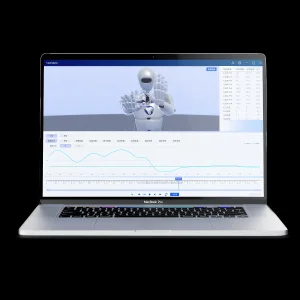
Valyze | Visualized Intelligent Motion Data Analysis for Sports & Rehab
Explore Solution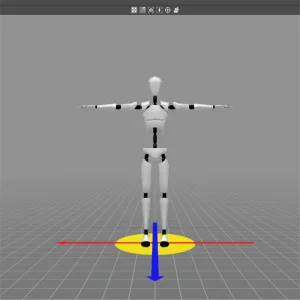
VDMocap Studio Plus Motion Capture Software System for VDSuit Full
Explore Solution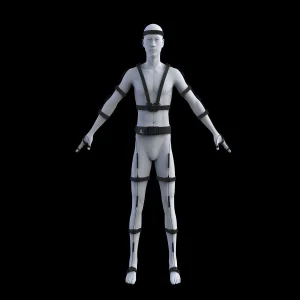
Virdyn VDSuit Full for Full Body Function Inertia Motion Capture Suit
Explore SolutionThe Biomechanical Paradigm Shift: From Visual Guesswork to Quantified Kinematics
Traditional athletic coaching has historically relied on empirical visual observation and standard high-speed 2D video replay. While beneficial, 2D planar analysis suffers from parallax distortion, foreshortening errors, and an inability to calculate joint torque and angular acceleration across dynamic tri-planar rotations. Deploying full-body motion capture (Mocap) within high-performance training regimens delivers objective, sub-millimeter anatomical coordinate mapping and microsecond temporal resolution.
Multi-Segment Kinetic Chains
Athletic force production is fundamentally a sequential transfer of momentum from the ground up—through foot strike, tibial translation, pelvic rotation, trunk torque, and distal extremity release. Inertial sensor arrays map segmental velocities and identify energy leaks in real time.
- Proximal-to-distal sequencing audits
- Rotational velocity tracking exceeding 2,000°/s
- Micro-hesitation and energy dispersion detection
Asymmetry & Load Balancing
Bilateral asymmetries above 10-15% represent a primary precursor to non-contact ligamentous injuries (e.g., ACL tears, hamstring strains). Motion capture provides continuous, objective side-to-side comparison of joint flexion, valgus angles, and braking forces during max-effort drills.
- Dynamic knee valgus / varus angle computation
- Ground reaction force (GRF) symmetry tracking
- Fatigue-induced compensatory pattern logging
Closed-Loop Biofeedback
Leveraging high-frequency telemetry combined with Virdyn’s Valyze analysis suite enables instantaneous auditory and visual biofeedback. Athletes perceive neuromuscular corrections during the actual execution phase rather than hours later in video post-mortems.
- Sub-20ms wireless pipeline latency
- Virtual reality and AR visual overlay compatibility
- Accelerated motor-unit motor learning acquisition
Telemetry Architecture: Inertial (IMU) vs. Optical vs. Hybrid Stacks
Choosing the correct motion capture pipeline for athletic training requires an objective technical appraisal of capture volume, occlusion vulnerability, environmental lighting, field mobility, and setup latency.
| Evaluation Parameter | Virdyn Wearable IMU (VDSuit Full) | Multi-Camera Optical (Markers) | Markerless Computer Vision |
|---|---|---|---|
| Operating Environment | Unlimited (Open grass, turf, gym, ice, sand) | Strictly Indoor Lab (Controlled light volume) | Constrained camera cone of view |
| Optical Occlusion Immunity | 100% Immune (No line-of-sight required) | High Failure Rate during dense team scrums | Prone to error when limbs overlap props |
| Field Setup & Calibration | < 3 Minutes (Self-contained body calibration) | 45 - 90 Minutes (Wand waving, marker pasting) | 10 - 20 Minutes (Camera array alignment) |
| Direct Joint Angular Velocity | Direct Gyroscope Integration (Up to 2,000°/s) | Derived numerically (Prone to high-frequency noise) | Derived (Smoothing artifacts common) |
| Tactile Hand / Finger Tracking | Native mHand Pro Multi-Node Integration | Requires complex, fragile retroreflective clusters | Severe finger occlusion during grip execution |
| Capital Investment & TCO | Accessible, institutional direct cost | Extremely High ($80k - $250k+ CapEx) | Moderate, high GPU computing overhead |
Localized Athletic Scenarios & Tactical Training Integration
Biomechanical data only generates competitive advantages when translated into discipline-specific training micro-cycles. Virdyn hardware is deployed globally across specialized athletic ecosystems.
Rotational Ballistics & Swings
In baseball pitching, cricket bowling, and golf swings, kinetic energy translates through the pelvis and torso to the wrist. IMU node tracking isolates pelvic-lumbar hip-shoulder separation (X-Factor) to maximize release velocity while minimizing UCL and rotator cuff stress.
Sprint Mechanics & Stride Symmetry
Track sprinters and soccer wings utilize wearable suits during live field accelerations. Segmental data profiles ground contact time, flight phase duration, pelvic tilt, and hip extension angles at maximum velocity, surfacing minute inefficiencies invisible to standard video.
ACL Return-to-Play Rehabilitation
Athletic trainers utilize Valyze software to quantify joint rehabilitation milestones. Following ACL reconstruction, single-leg landing drills are audited for dynamic knee valgus moment, quadriceps avoidance strategies, and limb-load distribution under fatiguing conditions.
Winter & Aquatic Sports Modeling
Optical cameras fail under snow glare or aquatic wave refractions. Lightweight, weather-resistant inertial suits operate seamlessly on alpine ski slopes, figure skating rinks, and cross-country tracks, delivering precise biomechanical telemetry through sub-zero sessions.
Global Commercial & Industrial Landscape in Sports Performance
The global sports analytics and biomechanics industry has surpassed a critical inflection point, expanding toward an estimated $8.4 billion valuation by 2030. Elite sporting leagues—including the English Premier League, NFL, NBA, MLB, and national Olympic training committees—have transitioned from simple GPS workload metrics to multi-dimensional skeletal kinematics.
Concurrently, the boundaries between sports science and embodied artificial intelligence have dissolved. The same high-fidelity motion data arrays utilized to correct an Olympic weightlifter’s snatch trajectory are now fed directly into reinforcement learning architectures (such as VDTraining) to train bipedal humanoid robots and autonomous physical agents.
The Institutional Takeaway
Sports science organizations that fail to build proprietary skeletal telemetry databases risk losing tactical competitive advantages, player asset valuation retention, and empirical medical defensibility during contract negotiations.
China Factory Supply Chain Resilience & Manufacturing Velocity
Headquartered within the Greater Bay Area hardware innovation cluster in Guangzhou, Virdyn leverages one of the world's most concentrated microelectronic and advanced textile supply ecosystems. This strategic industrial placement delivers decisive advantages for international buyers:
Direct Component Synthesis & Rapid Iteration
From high-frequency MEMS sensor packaging and surface-mount PCB assembly to high-elasticity antibacterial synthetic fabrics, Virdyn maintains 100% in-house vertical control over hardware fabrication.
Democratic CapEx & Uncompromised Quality
By eliminating western distributor markups and capitalizing on automated robotic testing rigs, Virdyn delivers full-body motion capture at a fraction of legacy optical pricing, making institutional-grade mocap accessible to collegiate, regional, and academy teams.
Localized Support Infrastructure, Data Sovereignty & Compliance
Deploying biometric tracking within athletic institutions requires strict compliance with medical data privacy frameworks, secure data pipelines, and responsive technical engineering support.
GDPR, HIPAA & Biometric Privacy
Biomechanical data represents sensitive athlete biometric property. Virdyn software features offline-first local network processing, AES-256 encrypted file structures, and strict role-based access controls to guarantee full GDPR and collegiate compliance.
Global 24-Hour Engineering Support
Global sports leagues operate across time zones. Virdyn maintains dedicated tier-3 technical support desks delivering response times under 24 hours, supplemented by remote calibration diagnostics, developer API support, and rapid spare-parts air shipment.
Open SDK & Pipeline Extensibility
Avoid proprietary walled-gardens. Virdyn provides comprehensive C++, Python, Unity, Unreal Engine, and ROS SDKs. Direct BVH, FBX, and CSV raw quaternion stream export allows immediate integration into internal team analytics portals.
Technology Roadmap & Future Outlook: 2025 to 2030
The next era of athletic motion capture transitions from passive kinematic observation to predictive, intelligent neuromuscular coaching engines.
Generative Neuromuscular Digital Twins
Integration of foundation models to construct individualized physiological digital twins. The software compares real-time movement frames against historical baseline models to forecast acute soft-tissue failure probability up to 3 plays before an injury occurs.
Graphene Smart-Textile Weaving
Elimination of rigid plastic node enclosures. Next-generation VDSuit systems will embed flexible conductive graphene circuits and micro-MEMS directly into athletic compression garments, permitting imperceptible monitoring during official competitive match play.
Multi-Modal Biomechanical Autonomics
Unification of motion capture, surface electromyography (sEMG), blood-oxygen saturation, and force-plate sensor telemetry into a single, synchronized neural data stream directly feeding decentralized AI performance engines.
Frequently Asked Questions: Athlete Mocap Engineering
Detailed technical responses to the most critical inquiries posed by collegiate sports directors, biomechanists, head athletic trainers, and performance analysts.
How do Virdyn inertial suits overcome magnetic interference inside weight rooms and arena stadiums?
What is the typical sampling rate and latency budget for high-speed sprinting and rotational ballistics?
How does Virdyn's Valyze software integrate with our existing sports analytics databases?
Are the wearable suits washable and resistant to intense athletic perspiration?
What is the initial setup, calibration procedure, and learning curve for coaching staff?
Advanced Tactile Hardware & Extended Motion Infrastructure
Complete your athletic biomechanics pipeline with precision finger articulation gloves, real-time facial analysis helmets, hub expansion modules, and high-performance animation suites.
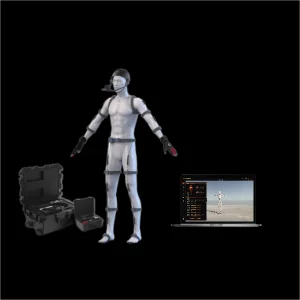
DreamsCap X1 Full-Body, Hand & Face Mocap for Robot Data Collection
Explore Solution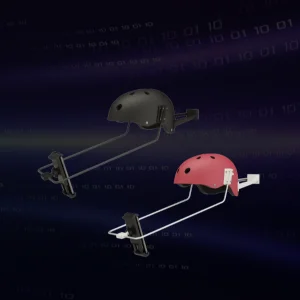
Virdyn VDFace Capture System for Real Time Facial Capture with Helmet
Explore Solution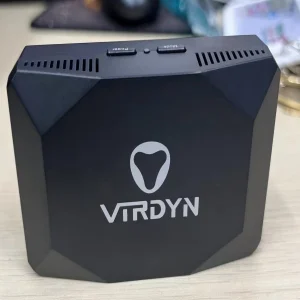
Full Body Motion Capture Accessories for Suit Hub Platform
Explore Solution
Motion Capture Technology Opens a New Era of Animation Development
Explore Solution
Virtual Live Technology Empowerment for Interactive Online Education
Explore Solution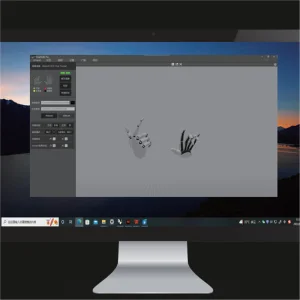
Virdyn mHand Studio Motion Capture Gloves Software for mHand Pro
Explore Solution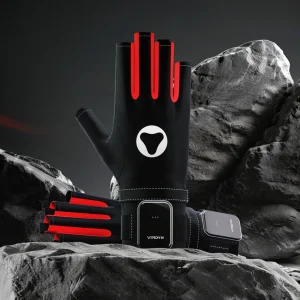
Virdyn mHand Pro Inertia Motion Capture Gloves for VR Interaction
Explore Solution
Virtual Human Live Streaming: Mocap Suit Becomes a Key Tactical Tool
Explore SolutionArchitect Your Organization's Biomechanical Pipeline
Connect directly with Virdyn’s senior biomechanics systems architects. Request an enterprise evaluation kit, schedule a live remote data stream demonstration, or obtain institutional bulk procurement pricing.