
Industrial & Academic Foundation Units (Phase I)
Direct factory-integrated motion capture systems, spatial hardware, and datasets engineered for entry-level researchers, advanced biomechanics, and robotics teleoperation pipelines.
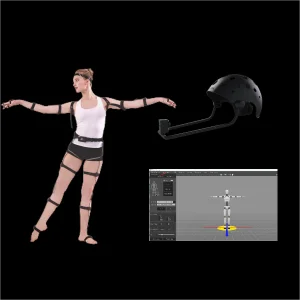
Design VDCap Full Performance Capture Entry-Level Motion Capture Kits for Beginners and Hobbyist Planning, Solution
Explore Kit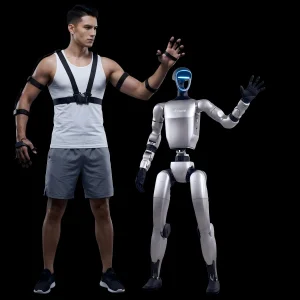
Best VDSuitMini Half-Body Mocap System | Robot Data Collection & Teleoperation | Free Software Planning, Solution
View System
Design Virtual Actors: How the Film Industry Should Layout the Virtual Market Planning, Solution
View Production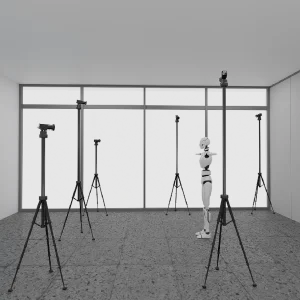
Best Camera Optical Markerless Motion Capture Solution - Virdyn YanDong | Real-Time Full Body, Hands, Face Planning, Solution
Discover Optical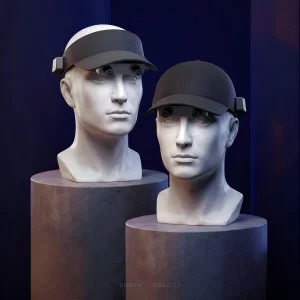
Design VDEgo - Egocentric Video Data Collection Service at Scale | FPV Head-Mounted Camera Planning, Solution
View Egocentric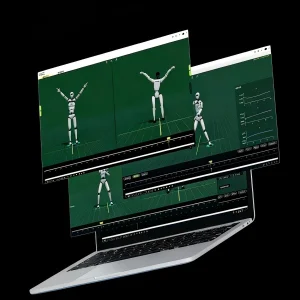
Design Ready-to-Use Robot Motion Datasets | Virdyn Planning, Solution
Access Datasets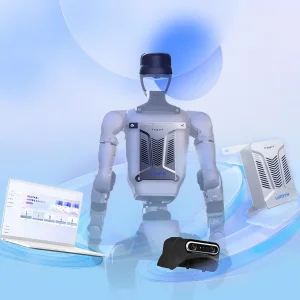
Design AI LingSi System | Robotic Intelligent Creation Platform & Intelligent Voice Interaction Planning, Solution
Explore AI System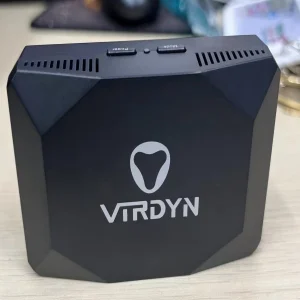
Design Full Body Motion Capture Accessories for Suit Hub Planning, Solution
Browse HardwareGlobal Commercial & Industrial Landscape: The Convergence of Mocap, SteamVR, and STEAM
In an era characterized by exponential shifts toward spatial computing, generative animation, and embodied intelligence, motion capture has evolved from an exclusive Hollywood visual effects luxury into an indispensable infrastructure across Science, Technology, Engineering, Arts, and Mathematics (STEAM).
Evolution of Spatial Demands
Historically, optical motion capture necessitated multi-million-dollar studios with 24 to 64 fixed infrared stroboscopic cameras, extensive truss rigging, and protracted multi-hour post-capture trajectory cleanups. This model is obsolete for modern agile engineering workflows.
The intersection of SteamVR tracking protocols, open-source OpenXR pipelines, and high-density inertial measurement units (IMUs) democratizes multi-node tracking. Academic faculties, game development studios, and robotics laboratories now demand portable, zero-occlusion frameworks capable of running instantaneously.
The STEAM Pedagogy Shift
Modern technical education has shifted from static, theoretical coursework to active, embodied simulation. Higher education institutions and secondary schools increasingly deploy "Mocap STEAM Labs" to unify diverse computational curricula.
Students develop algorithms in C++ and Python, stream raw six-degree-of-freedom (6DoF) spatial streams into physics engines, construct photorealistic digital twins in Unreal Engine 5, and examine biomechanical human kinetic factors in real time—bridging abstract computer science with physical human kinetic dynamics.
Localized Application Scenarios for Mocap STEAM Pipelines
Real-world implementations require localized calibration, environmental adaptation, and workflow interoperability. Discover how our engineering blueprints transform classrooms, studios, and industrial testbeds.
STEAM Academic Laboratories
Universities and engineering faculties implement centralized motion tracking environments where computer vision, interaction design, and biomechanical kinematics intersect.
By removing reliance on static camera arrays, multi-student teams configure interactive zones inside standard classrooms. The system outputs normalized Euler angles, quaternion data streams, and linear acceleration figures via UDP/OSC protocols, supplying engineering students with direct kinematic telemetry for algorithmic modeling.
Clinical Ergonomics & Sports Science
High-speed sports biomechanics and physical therapy centers require mobility beyond the confines of calibrated indoor volumes.
Virdyn's sensor fusion algorithm isolates gait abnormalities, angular joint velocity, and dynamic range of motion (ROM) in football pitches, running tracks, and clinical therapy gyms. Valyze evaluation software processes high-g impact data to inform post-operative recovery regimens and athletic conditioning.
Humanoid Teleoperation Platforms
Industrial automation teams deploying bipedal humanoid robots or dual-arm dexterous manipulators in hazardous manufacturing environments require low-latency bilateral control.
Using our VDSuitMini paired with mHand Pro gloves and egocentric FPV helmet cameras (VDEgo), operators teleoperate complex manipulative tasks. The system retargets multi-joint human actions to end-effector coordinates with zero magnetic drift.
Precision Engineering & Supply Chain Resilience: The Chinese Manufacturing Advantage
Global procurement managers face tightening budgets and brittle logistics channels. Virdyn's centralized design and manufacturing campus in Guangzhou offers unmatched vertical integration, structural resilience, and cost-to-performance equity.
| Evaluation Parameter | Virdyn Integrated Ecosystem (Guangzhou, CN) | Conventional Western Mocap Providers | Consumer-Grade Hobbyist Trackers |
|---|---|---|---|
| Hardware-Firmware-Algorithm Stack | 100% In-House R&D (Sensor calibration, firmware, multi-sensor data fusion, DCC plugins) | Outsourced third-party manufacturing with fragmented licensing tiers | Repurposed consumer IMUs with generic open-source drift filters |
| Bespoke IMU Calibration Matrices | Multi-axis automated rate turntables; custom thermal & magnetic hysteresis profiling | Manual batch calibration leading to higher per-unit overhead and long lead times | Software-only auto-calibration prone to rapid rotational drift |
| End-to-End Latency | <15 ms deterministic wireless streaming via proprietary RF protocols | 20–45 ms across complex optical switch routing | 50–120 ms over congested Bluetooth / standard Wi-Fi |
| Procurement Lead Times | 3–7 business days via direct automated assembly and surface-mount lines | 6–14 weeks due to multi-tier outsourced supply chains | Variable / unstable stock availability |
| Total Cost of Ownership (TCO) | Zero subscription lock-in; perpetual SDK licenses; rapid spare node delivery | Prohibitive annual seat licenses, expensive proprietary cabling and markers | Low initial price but zero industrial SLA, repairability, or SDK integration |
Vertically Integrated SMT & QA
Located at the center of the world's premier microelectronics corridor in the Pearl River Delta, our assembly lines deploy surface-mount technology (SMT) with micron-level component alignment. High-frequency robotic pick-and-place systems ensure consistent soldering and impedance characteristics across every 9-axis sensor node.
Dynamic Thermal & Magnetic Testing
Each sensor module undergoes exhaustive thermal-chamber stress testing (-20°C to +60°C) and multi-axis turntable rate-table validation. This isolates sensor bias, scale factor errors, and non-orthogonality, ensuring inertial performance remains consistent across diverse global deployment climates.
Technological Roadmap & Future Horizons: 2025–2030
As digital twin environments, spatial computing hardware, and embodied AI models converge, Virdyn maintains an aggressive multi-year R&D trajectory. Explore our developmental milestones.
Multi-Sensor Fusion & SteamVR Sync
Integration of 9-axis IMUs, optical markerless video trackers, and SteamVR Lighthouse global anchoring. Sub-15ms latency, native multi-DCC plugin ecosystems, and ROS2 bridging for humanoid robotics.
Edge-AI On-Sensor Solving
Migration of inverse kinematics (IK) solvers directly onto ultra-low-power microcontrollers residing within the node clusters. Elimination of centralized workstation solving overhead, allowing real-time multi-actor tracking on portable mobile compute packs.
Neuromorphic Vision & Generative Priors
Combining event-based neuromorphic vision sensors with IMU arrays. Deep reinforcement learning diffusion priors infer micro-muscular dynamics, foot sliding, and contact physics with zero floor drift, even during extreme acrobatic aerial trajectories.
Embodied Foundation Models
Autonomous, bidirectional teleoperation architectures where human demonstration data trains and fine-tunes multi-modal robot policies in real time. Human and humanoid co-performance with bilateral haptic force feedback.
Global Localization, Compliance, and Enterprise SLA Frameworks
Deploying mission-critical motion capture hardware across cross-border educational networks and enterprise studios requires stringent regulatory validation, uninterrupted operational guarantees, and rapid-response localized support.
Global Regulatory Compliance
Every Virdyn hardware suite carries comprehensive international safety and RF emissions compliance. All electronics comply with CE, FCC Class B, RoHS, and ISO 9001:2015 manufacturing standards.
Our 2.4GHz and 5.8GHz wireless transmission protocols comply with dynamic frequency selection and regional spectral allocations across North America, the European Union, Japan (TELEC), and South Korea (KC).
Cross-Border Logistics & RMA
Institutional purchases are backed by streamlined door-to-door global logistics with DDP (Delivered Duty Paid) options. Through regional distribution hubs and expedited courier agreements, standard spare parts, replacement sensor hubs, and battery modules ship with guaranteed 48-hour turnarounds.
Hardware components carry standardized 12-to-24-month comprehensive warranties with zero-hassle swap policies for certified educational institutions.
Advanced Solutions: Custom Avatars, Facial Systems & Software (Phase II)
Specialized virtual production tools, high-frequency inertial gloves, dual-camera facial capture rigs, and real-time capture studio suites engineered for professional media and research.

Best Customize Your 3D Virtual Avatar - Personalized High-Quality and Fast Delivery | 3D Custom Avatar Services Planning, Solution
Customize Avatar
Design Motion Capture Technology to Help the Development of Creative Advertising with Realistic Effects Planning, Solution
View Ad Tech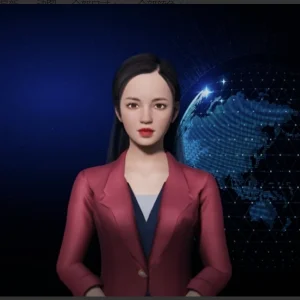
Design Virtual Host Technology: Help Mainstream Media Layout Virtual Reality Industry Planning, Solution
Explore Virtual Host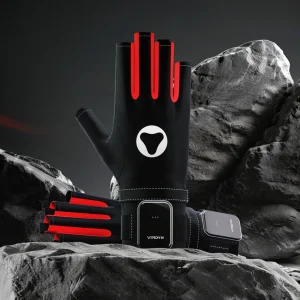
Best Virdyn mHand Pro an Inertia Motion Capture Gloves for Virtual Reality Planning, Solution
Discover mHand Pro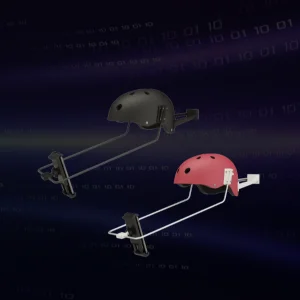
Best Virdyn VDFace Capture System for Real Time Facial Capture with Face Capture Helmet Planning, Solution
View VDFace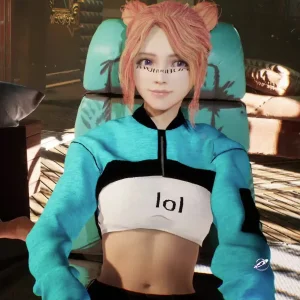
Best Virtual Human Live Streaming Rapidly Gaining Popularity: Motion Capture Suit Becomes a Key Tool Planning, Solution
Explore Live Suite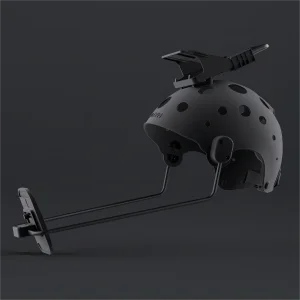
Best Virdyn VDFace Pro Capture System for Real Time Facial Capture with Face Capture Helmet Planning, Solution
View VDFace Pro
Design Virdyn VDMocap Studio Plus Motion Capture Software System for VDSuit Full Planning, Solution
Get Studio PlusEnterprise FAQ: Strategic & Operational Integration Answers
Architectural and procurement answers covering SteamVR integration, magnetic drift mitigation, network topologies, and embodied AI robotics compatibility.
How does Virdyn's Mocap Steam solution resolve magnetic interference in dense technical classrooms?
Industrial and academic environments feature substantial electromagnetic interference (EMI) originating from steel reinforced floors, high-voltage equipment, and dense Wi-Fi signals. Virdyn mitigates this through a proprietary extended Kalman filter (EKF) combining 9-axis sensor fusion with adaptive magnetometer de-weighting. When sudden local magnetic anomalies are detected, the solver automatically falls back onto high-frequency gyro-accelerometer integration and bio-mechanical joint constraints, entirely preventing yaw drift or limb distortion without requiring frequent re-calibration.
Can Virdyn motion capture rigs seamlessly link into SteamVR and OpenXR hardware ecosystems?
Yes. Virdyn hardware integrates with SteamVR tracking spaces. By assigning one or more SteamVR Vive trackers or Lighthouse receivers as global positional anchors, our VDMocap Studio software binds full-body inertial skeletal orientation data to absolute spatial 6DoF coordinates. This hybrid workflow eliminates global positional drift while delivering the non-occlusive, continuous finger, body, and facial tracking characteristic of high-density wearable inertial nodes.
What specific data formats and protocols are used for robotics and embodied AI pipelines?
For robotics teams utilizing ROS or ROS2, Virdyn provides native publisher nodes streaming raw joint rotations, angular velocities, and end-effector cartesian coordinates at frequencies up to 120Hz via zero-copy IPC or UDP sockets. Furthermore, datasets can be instantaneously exported or broadcast in standard FBX, BVH, CSV, JSON, and HDF5 formats for direct consumption by deep reinforcement learning frameworks (e.g., PyTorch, Isaac Gym, or MuJoCo).
What are the wireless latency specifications during multi-actor capture sessions?
Virdyn's enterprise wireless transceiver architecture operates over dedicated 2.4GHz proprietary radio frequency (RF) bands rather than standard Bluetooth or Wi-Fi. This yields end-to-end packet delivery latency under 15ms. In multi-actor scenarios, up to four performers can be simultaneously synchronized to a single master receiver without packet collision or dropped frame degradation, making it suitable for multi-student STEAM labs or multi-performer virtual broadcasts.
How does Virdyn ensure software update longevity and third-party DCC compatibility?
Our engineering division maintains active plugins for Unreal Engine (including UE 5.3+ Live Link), Unity, Autodesk Maya, MotionBuilder, Blender, 3ds Max, iClone, and VTuber suites such as Warudo and VRChat (via OSC). When major game engine updates launch, our software development team rolls out compatible API builds within 14–30 business days. All software suite purchases include perpetual desktop licensing without compulsory ongoing maintenance fees.
What support and replacement timelines are offered for overseas academic institutions?
We provide structured global service tiers. Tier-1 and Tier-2 software issues receive remote troubleshooting within 24 hours on business days via direct Slack, Teams, or email channels. For hardware contingencies, our Guangzhou factory stocks dedicated reserves of modular sensor nodes, hubs, harness textiles, and USB transceivers. Replacement components ship via express international air freight (DHL/FedEx) within 48 hours of ticket confirmation, minimizing lab or production downtime.
Deploy Industry-Standard Mocap STEAM Solutions Today
Whether establishing an interdisciplinary academic robotics lab, launching real-time broadcast productions, or generating tokenized demonstration datasets for autonomous agents, Virdyn provides end-to-end hardware, software, and integration expertise.