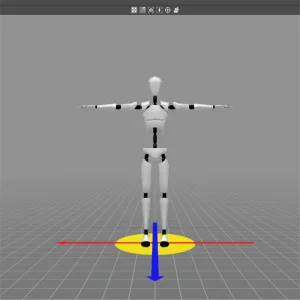
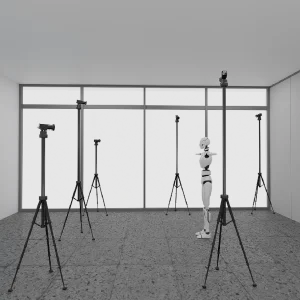
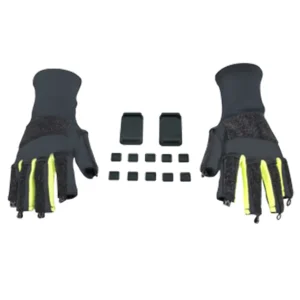
Enterprise Mocap & Telemetry Deployments
Explore native full-performance capture nodes, virtual human platforms, and neural interaction kits tested across global broadcast studios.
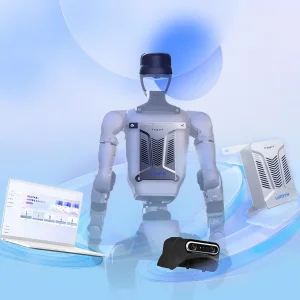




Engineering Rigor in Head Mounted Face Capture (HMC)
A rigorous examination of optical geometry, high-frequency IMU sensor fusion, thermal dissipation, and sub-millimeter biometric facial landmark extraction.
Optoelectronic Optical Rigging
Traditional desk-mounted optical tracking degrades under violent head rotations or dynamic physical stunts. Advanced head-mounted capture systems (HMC) overcome line-of-sight occlusions by anchoring calibrated, high-framerate micro-cameras directly to the cranial frame.
- Infrared active illumination array resistant to dark stage ambient
- Distortion-free low-dispersion optical glass elements
- Dynamic auto-exposure calibrated to micro-expressive skin reflectance
Biomechanical FACS Extraction
Real-time neural inference decodes subtle contractions of the zygomaticus major, orbicularis oris, and corrugator supercilii into standard Facial Action Coding System (FACS) vectors, avoiding mechanical latency and micro-jitter.
- Sub-millimeter landmark tracking across 128 micro-nodes
- Dual IR camera depth triangulation canceling jaw-twist artifacts
- Seamless real-time translation to Unreal Engine Live Link
Spatial Audio & Viseme Sync
Speech production is inherently physical. Enterprise solutions synchronize high-fidelity broadcast directional microphones with optoelectronic optical capture to correlate acoustics with phoneme-driven mouth geometry.
- Integrated low-profile cardioid shock-mounted mic assembly
- Sample-accurate SMPTE LTC timecode embedding
- Zero lip-sync drift across hours of continuous live capture
Enterprise Sourcing: Overcoming Production Bottlenecks
Enterprise procurement directors evaluate hardware beyond marketing specs. Real production environments demand structural durability, deterministic wireless streaming, and open-architecture interoperability.
Zero Lock-In Architecture
Studios cannot risk closed proprietary software locks. Enterprise head-mounted facial capture gear must output raw, uncompressed video streams along with real-time parsed BVH, FBX, and JSON/OSC blendshape feeds compatible with Maya, 3ds Max, Blender, Unreal Engine, and Unity.
Biomechanical Stability & Mass
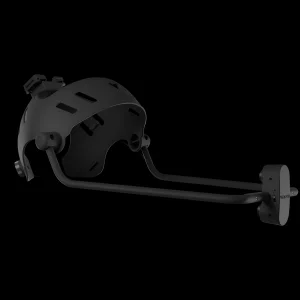
During active 8-hour shooting schedules, actor fatigue and helmet slippage are the #1 cause of recalibration delays. Systems must feature dual-dial Boa micro-adjustment systems, counterbalance cranial batteries, and aerospace carbon-fiber boom arms that resist rotational deflection.
Wi-Fi 6E & Dual-Band RF
Studio stages are congested RF environments. Commercial enterprise HMCs integrate MIMO Wi-Fi 6E transmission alongside fallback gigabit Ethernet slip-rings, preventing packet loss and frame jitter even when operating parallel with 16 wireless body mocap suits.
Predictable Lifecycle & Spares
Global entertainment giants insist on standard spare-parts provisioning: hot-swappable cranial foam inserts with anti-microbial coatings, replacement camera stalks, quick-release LEMO locking connectors, and dedicated custom Pelican road cases.
China's Hardware Clusters: Precision, Speed, & TCO
How the Greater Bay Area optoelectronic supply chain delivers industrial-grade head-mounted motion capture rigs at disruptive total-cost-of-ownership (TCO) benchmarks.
Integrated Precision Optoelectronics
Located in the heart of China’s advanced optical manufacturing corridor, our assembly partners manufacture high-transmittance, ultra-wide IR lenses and miniature CMOS global shutter sensors with sub-micron tolerance. Direct access to lens grinding and surface coating facilities eliminates foreign markups.
Rapid Tooling & Composite Carbon Rigs
Our rapid injection molding, CNC machining, and autoclaved pre-preg carbon fiber fabrication cycles turn custom ergonomic modifications around in weeks rather than quarters. Enterprise clients achieve custom cranial fitting curves and tailor-made boom-arm extensions on accelerated schedules.
Stringent Multi-Axis Calibration QC
Every single head-mounted capture helmet leaving our Guangzhou plant undergoes automated multi-axis vibration testing, optical chart modulation transfer function (MTF) benchmarking, thermal environmental chamber burn-in, and wireless RF noise floor validation.
Localized Support, Data Privacy, and Compliance
Enterprise assurance: Biometric privacy compliance, global hardware emissions certifications, and 24/7 dedicated engineering service level agreements (SLAs).
GDPR & Biometric Privacy
Facial geometry constitutes personal biometric data under GDPR (Art. 9) and CCPA. Our local processing pipelines allow raw pixel data to be processed purely in on-premise edge memory without cloud backhauls, safeguarding actor privacy and unannounced NDA cinematics.
Tier-1 Engineering SLA Support
Studios operate around tight broadcast deadlines. We back deployments with a 24-hour rapid technical escalation matrix, comprehensive remote pipeline diagnostics, on-demand firmware customization, and localized stocking depots for immediate component replacements.
CE, FCC & RoHS Certifications
Head-mounted hardware rests directly against the cranium and near the eyes. All systems feature certified low-SAR radio emissions, eye-safe Class 1 850nm/940nm infrared LEDs complying with IEC 62471 photobiological standards, and flame-retardant lightweight materials.
Localized Engine Integration Guides
Our solutions ship with localized documentation, bilingual technical account managers, open Unreal Engine Blueprints, C++ SDK headers, and zero-latency WebSocket/UDP streaming bridges for proprietary studio backend engines.
Enterprise Production Application Scenarios
From dynamic AAA action titles to live AI vtuber broadcasts and humanoid expressive teleoperation, head-mounted face tracking enables real-time fidelity.
AAA Game Cinematics & Previs
Simultaneous full-body motion capture and facial performance capture (FPC) during wirework and combat stunts. High frame rates record fleeting actor expressions, drastically slashing animators' manual cleanup hours in Maya or MotionBuilder.
Real-Time VTuber & Virtual Live Stream
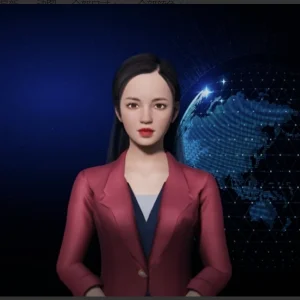
Zero-latency broadcasting for virtual concert stages and 24/7 commercial live shopping. Performers operate free from desk bounds, streaming continuous high-definition facial blendshapes over local Wi-Fi direct into Unreal Engine 5 or Warudo.
Embodied AI & Humanoid Teleoperation
Next-gen robotics research relies on teleoperating humanoid faces with expressive silicone skins. Head-mounted cameras capture operator micro-expressions in real-time, mapping facial vectors directly to multi-actuator robotic heads for affective AI datasets.
Academic Research & Clinical Biometrics
Universities and clinical neurology departments deploy our lightweight HMC rigs for psychological affect analysis, micro-expression detection in neurodegenerative screening, and non-verbal human-computer interaction (HCI) research.
Emerging Paradigms: The Next Decade in Facial Telemetry
Key technological inflections shaping next-generation head-mounted capture: Neuromorphic event cameras, edge neural networks, and gaze-contingent expression synthesis.
On-Sensor Neuromorphic Processing
Transitioning from traditional frame-based video sensors to asynchronous event-based neuromorphic vision. Pixels respond purely to illumination gradients, unlocking temporal resolutions exceeding 1,000 Hz with negligible micro-watt power draws and instantaneous edge solving.
Integrated Infrared Gaze & Pupil Tracking
Next-gen HMC booms integrate inward-looking micro-dichroic prisms to track sub-degree ocular saccades, iris dilation, and eyelid dynamics alongside lower facial FACS curves, unlocking photorealistic digital human avatars capable of conveying genuine empathy.
Self-Calibrating Deep Neural Solvers
Eliminating static neutral-face (rest pose) calibrations. Deep generative neural priors compensate on-the-fly for actor-induced helmet shifts, sweating, and varying facial hair, continuously adjusting landmark weights without requiring session pauses.
System Architecture Decision Matrix
Comparative architectural assessment designed for studio technical directors and procurement engineers.
| Evaluation Parameter | Consumer Mobile Clamp Rigs | Proprietary Western Legacy HMCs | Virdyn Advanced Enterprise HMC |
|---|---|---|---|
| Optical Capture Core | Consumer 30-60 FPS RGB front camera | Proprietary 60 FPS global shutter | 1080p 60-120 FPS Dual IR Global Shutter |
| Cranial Mass & Center of Gravity | Front-heavy (>650g), severe neck strain | Heavy harness (>550g), dual-boom | Ultra-light carbon fiber (<385g), counterbalanced |
| Ambient Lighting Tolerance | Poor; fails under studio floodlights/darkness | Moderate; visible LED halo distracts actors | High; invisible 850nm/940nm active dual IR illumination |
| Pipeline Interoperability | Proprietary iOS app sandbox only | Strict dongle licensing & vendor lock-in | Open SDK: Unreal Live Link, Unity, Maya, C++, OSC, FBX |
| Supply Chain & Unit Cost (TCO) | Low initial cost, frequent breakage | Extremely high ($15k - $30k per unit) | Factory-direct efficiency, modular spares, <30% legacy cost |
Frequently Asked Questions
Engineering answers addressing synchronization, rigging ergonomics, optical occlusion, and SDK architecture.
Enterprise Facial Helmets & Capture Suites
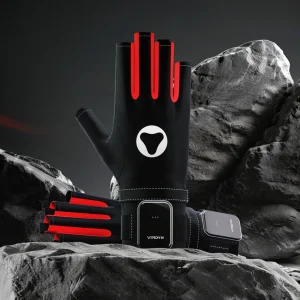
Complete your production setup with specialized dual-camera facial capture helmets, full-body tracking suites, and tactile glove accessories.