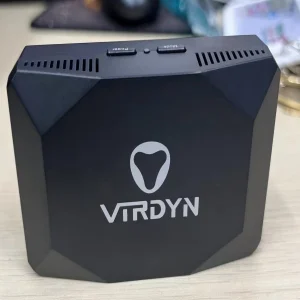
Enterprise Motion Capture & Facial Rigging Platforms
Explore Virdyn’s turnkey industrial solutions engineered for multi-modal data acquisition, full-body kinematics, and real-time Android-integrated facial performance tracking.
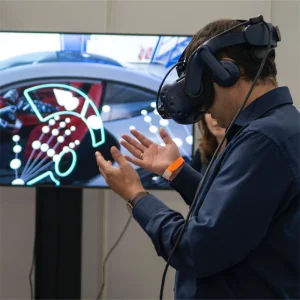
Design Book a Demo for VDSuit Full or mHand Pro Planning, Solution
View Solution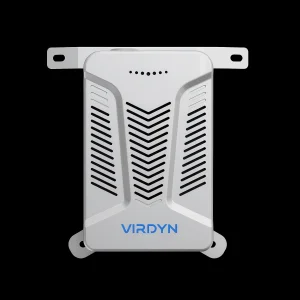
Best Humanoid Robot Intelligent Voice Interaction Development Kit Planning, Solution
View Solution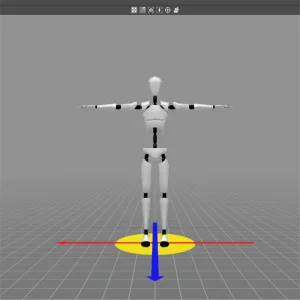
Design Virdyn VDMocap Studio Plus Motion Capture Software System for VDSuit Full Planning, Solution
View Solution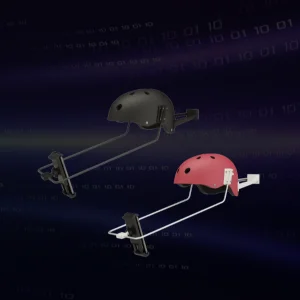
Best Virdyn VDFace Capture System for Real Time Facial Capture with Face Capture Helmet Planning, Solution
View Solution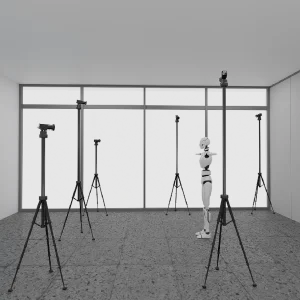
Best Camera Optical Markerless Motion Capture Solution - Virdyn YanDong | Real-Time Full Body, Hands, Face Planning, Solution
View Solution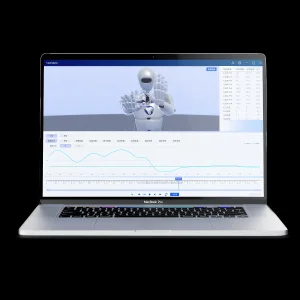
Best Valyze | Visualized Intelligent Motion Data Analysis Software for ce, Sports, Rehabilitation & Education Planning, Solution
View Solution
Best Motion Capture Technology Opens a New Era of Animation Development Planning, Solution
View Solution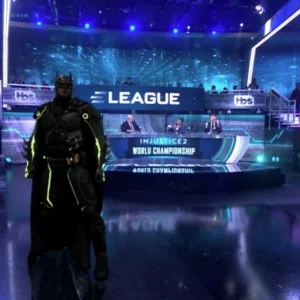
Design Motion Capture Provides Advanced Technology Tools for Virtual Film Production Planning, Solution
View SolutionThe Paradigm Shift to Edge Android Facial Motion Capture
Why modern virtual production studios, broadcast networks, and robotic research facilities are migrating from locked, proprietary iOS ecosystems to scalable, open-architecture Android edge computing pipelines.
Android NPU Edge Computing
Modern Android platforms equipped with Qualcomm Snapdragon Neural Processing Units (NPU) and MediaTek APUs provide dedicated, low-power Tensor acceleration. Running quantized deep neural networks directly on the device delivers sub-12ms blendshape inference without host PC overhead.
Hardware Interoperability
Unlike single-vendor locked platforms, Android architecture accommodates multi-spectral sensors, custom dual-camera stereoscopic rigs, wide dynamic range infrared (IR) illuminators, and specialized lightweight head-mounted displays (HMC) like the VDFace Pro helmet.
TCO & Deployment Scalability
Enterprise procurement requires deterministic hardware life cycles, volume licensing flexibility, and on-premises local network data handling without cloud-tethered subscription locks. Android provides unmatched Total Cost of Ownership (TCO) across multi-actor stages.
Computer Vision & Neural Blendshape Regression
Engineering robust facial telemetry requires multi-stage spatial landmark detection, non-linear optimization, and FACS-compliant muscle group mapping optimized for ARM architecture.
468 3D Dense Mesh
High-density spatial landmark prediction tracks subtle facial contours, micro-eyebrow tremors, nasolabial folds, and lip curvature in varying ambient illumination.
FACS 52 Blendshapes
Native mapping to industry standard Apple ARKit and FACS action units guarantees immediate drag-and-drop retargeting onto Unreal Engine MetaHumans and Unity avatars.
Pupil & Gaze Tracking
Independent neural sub-solvers accurately isolate ocular divergence, saccades, and blink mechanics, eliminating dead-eye artifacts in hyper-realistic digital doubles.
Zero-Lag Protocol Engine
Streams optimized UDP, WebSockets, OSC, and Named Pipes data over Wi-Fi 6E/USB-C tethering with deterministic network jitter mitigation under 2ms.
Unified Multi-Sensor Biomechanical Synergy
Combining edge-based Android face mocap with Virdyn’s industry-proven inertial suits and multi-node gloves into a monolithic, drift-free broadcast solution.
VDSuit Full IMU Tracking
High-frequency 9-axis sensor nodes compute bone rotational vectors across the complete human skeleton. Magnetic anti-interference algorithms prevent drift, providing absolute spatial alignment with facial telemetry.
mHand Pro Dexterous Capture
Dedicated per-finger articulation tracking with ultra-responsive micro-IMU sensors maps subtle hand movements and tool manipulation. Natively synchronized with the Android facial capture stream in VDMocap Studio Plus.
Sub-Frame Timecode Lock
Features hardware-level PTP (IEEE 1588) and SMPTE timecode integration, ensuring zero lip-sync divergence between audio phonemes, facial visemes, and gross motor body animation.
Enterprise Use-Cases & Vertical Implementations
From high-throughput animation production to next-generation embodied AI teleoperation, discover how Virdyn's Android face mocap framework accelerates mission-critical workflows.
3D Game Cinematic Pipelines
Stream live facial telemetry into Unreal Engine 5.4+ Live Link, enabling game directors to iterate character cutscenes in real-time with instant lighting and shader feedback.
Virtual Film Previs & LED Walls
Lightweight HMC helmet mounting provides complete mobility on sound stages. Actors perform complex stunts without line-of-sight occlusion or heavy battery packs.
VTuber Agencies & Live Streaming
Ultra-stable 24/7 continuous broadcast capability via Android devices. Integrates seamlessly with Warudo, VRChat OSC, and custom proprietary VTuber avatar engines.
Embodied AI & Robotics
Collect ground-truth human emotional expression datasets and teleoperate humanoid robot heads with low-latency facial actuator mapping and social interaction modeling.
Enterprise Facial Mocap Architecture Matrix
A rigorous comparative analysis evaluating compute topologies, optical configurations, latency constraints, and deployment parameters.
| Evaluation Criteria | Virdyn Android Edge Solution | Proprietary iOS TrueDepth | Marker-Based Optical Stage | PC-Tethered Dual Stereo |
|---|---|---|---|---|
| Inference Topology | On-Device NPU Accelerated | On-Device Neural Engine | Central Multi-Workstation Host | Host PC GPU Intensive |
| Hardware Portability | Ultra-Lightweight HMC Helmet | Consumer Phone Bracket | Fixed Volume Rigging | Tethered Cable Umbilical |
| End-to-End Latency | < 15ms Deterministic | 16 - 25ms (Frame Queued) | < 10ms (Pure Optical) | 20 - 35ms (USB Overhead) |
| Thermal & Runtime Throttle | Active Dissipation / 6h+ | Severe Heat Throttling (~1h) | Continuous AC Wall Power | Continuous Host Powered |
| Multi-Actor Scalability | Independent Android Nodes | Complex Multi-Account Pairing | Marker Occlusion Risk | Bandwidth USB Controller Caps |
| Licensing & Open SDK | Full C++/C# Android SDK & NDK | Closed Sandbox APIs | Expensive Seat Licenses | Proprietary Driver Walls |
China Factory 4.0: Supply Chain Resilience & Precision R&D
Headquartered in Guangzhou, Virdyn leverages vertical hardware-software integration, precision multi-sensor calibration laboratories, and agile industrial fabrication.
Automated Calibration Lab
Every sensor node and camera module undergoes multi-axis robotic calibration, verifying optical distortion parameters, IMU thermal drift compensation, and micro-accelerometer linearity under strict ISO 9001 quality audits.
Rapid CNC & Carbon Fiber Tooling
Our VDFace capture helmets utilize ultra-rigid aviation-grade carbon fiber booms and ergonomic, counter-balanced cranial rings manufactured via high-precision 5-axis CNC machining, ensuring zero flex during dynamic action scenes.
Global Component Sourcing Power
Direct Tier-1 partnerships with optical sensor manufacturers and ARM processor fabricators in the Greater Bay Area provide stable component availability, rapid turnaround on customization requests, and predictable shipping schedules.
Enterprise Compliance, Data Security & Procurement Framework
Architected for stringent enterprise specifications with local execution guarantees, biometric data privacy compliance, and flexible institutional deployment agreements.
Air-Gapped Privacy & Biometric Security
In accordance with GDPR, CCPA, and enterprise proprietary IP mandates, Virdyn’s Android facial capture runtime executes 100% locally on device. Raw facial landmark tensors and biometric geometries never leave the local LAN stage network, preventing leaks of actor identity models or NDA production cinematics.
Tiered Enterprise Support & Direct Engineering SLAs
We provide enterprise clients with direct access to core algorithm engineers, custom driver development, round-the-clock technical onboarding, fast-replacement hardware spares, and dedicated pipeline consultation for custom proprietary game engines.
Engineering & Procurement FAQ
Technical clarity on integrating Android face mocap rigs into existing virtual production, animation, and robotics architectures.
How does Android handle thermal throttling during long live sessions?
Virdyn's neural pipeline is deeply quantized using INT8/FP16 models optimized via NNAPI and Vulkan compute shaders. This design maintains processor utilization under 32%, ensuring zero thermal throttling or dropped frames over continuous 8-hour live broadcasts.
Is the facial tracking data compatible with standard Apple ARKit blendshapes?
Yes. The output payload strictly adheres to the 52 standard FACS-based blendshape action units. It maps natively into Unreal Engine MetaHuman Live Link, Unity blendshape nodes, Blender, Maya, and MotionBuilder with zero conversion needed.
Can Android face mocap synchronize with the VDSuit Full and mHand Pro gloves?
Absolutely. VDMocap Studio Plus acts as the centralized multi-modal hub. It ingests body kinematics from VDSuit Full, finger articulation from mHand Pro, and facial blendshapes from the Android HMC helmet simultaneously with sub-frame timecode alignment.
What wireless and wired transmission options are supported?
The Android client supports high-speed Wi-Fi 6/6E (UDP/TCP/WebSockets) and direct USB-C tethering. USB-C mode provides ultra-low deterministic latency (<8ms network transit) and constant device charging for uninterrupted production.
How does the system handle poor lighting or uneven studio illumination?
Virdyn's VDFace helmet modules incorporate diffuse, anti-glare IR/LED illumination arrays. Coupled with dynamic camera exposure algorithms, the vision model extracts stable facial landmarks even in dark sets or highly saturated LED wall volumes.
Can this system teleoperate humanoid robot heads and social robots?
Yes. Many embodied AI labs use our Android solution paired with the VDRobot Studio retargeting platform to translate live human facial telemetry into servo motor commands and muscle actuator curves for humanoid robotic heads.
Full-Body Kinematics & Teleoperation Hardware
Round out your performance capture pipeline with professional inertial suits, egocentric capture cameras, and precision accessories.
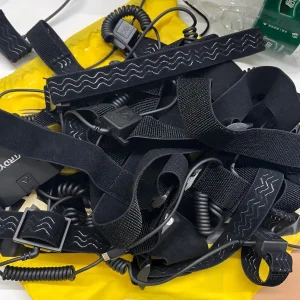
Best Full Body Motion Capture Accessories for Suit Elastic Tapes Planning, Solution
View Solution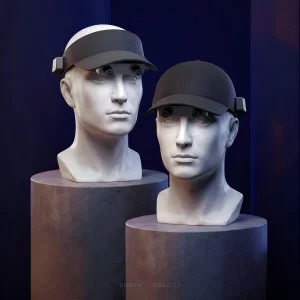
Design VDEgo - Egocentric Video Data Collection Service at Scale | FPV Head-Mounted Camera Planning, Solution
View Solution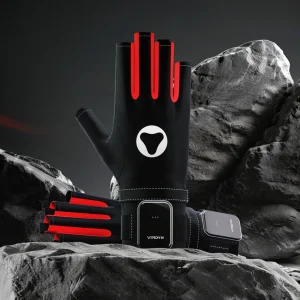
Best Virdyn mHand Pro an Inertia Motion Capture Gloves for Virtual Reality Planning, Solution
View Solution
Design Inertial Motion Capture Technology to Help the Game Development and Production Planning, Solution
View Solution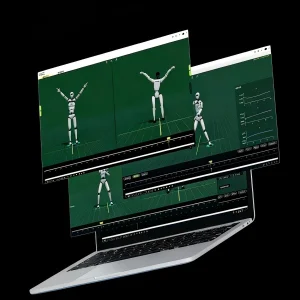
Design Ready-to-Use Robot Motion Datasets | Virdyn Planning, Solution
View Solution
Best How Do Brands Use Virtual Spokesman to Tell Good Stories: Motion Capture Technology Empowers Brand Propagation Planning, Solution
View Solution
Best Virtual Human Live Streaming Rapidly Gaining Popularity: Motion Capture Suit Becomes a Key Tool Planning, Solution
View Solution