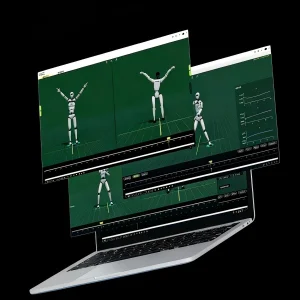
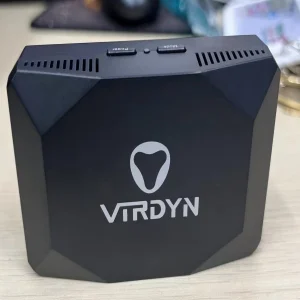
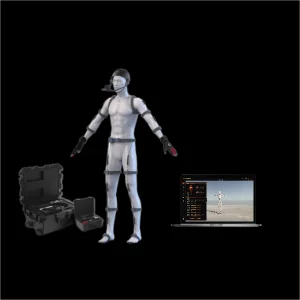
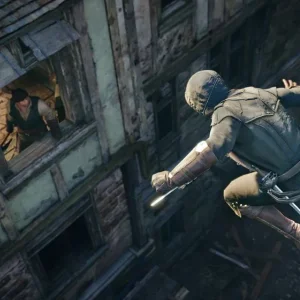
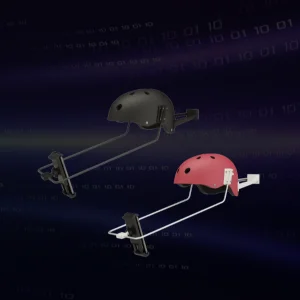
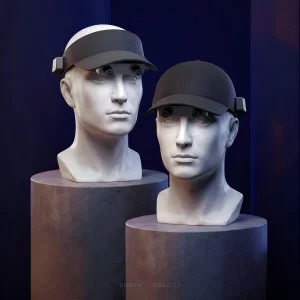
Primary Virtual Live Streaming Hardware & Modules
Pre-calibrated, industrial-grade inertial tracking suits, multi-node glove systems, and optical modules configured for rapid live-stage broadcast integration.




Global Commercial & Industrial Landscape of Virtual Live Streaming
The transition from pre-rendered keyframe animation to zero-latency, human-in-the-loop interactive streaming represents a structural paradigm shift in digital IP monetization and telepresence.
The Demise of High-CapEx Studio Walls
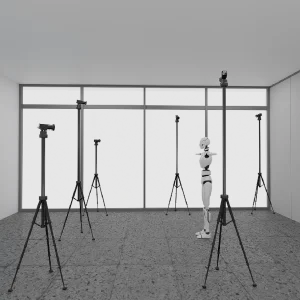
Traditional optical marker-based stages demand hundreds of square meters of climatically controlled, non-reflective volume outfitted with arrays of high-speed infrared cameras costing upwards of $150,000. In live-streaming entertainment, dynamic retail e-commerce, and real-time VTubing, this rigid setup is commercially unviable. Inertial sensor networks (IMUs) empower actors to perform anywhere—compact broadcast booths, expo stages, outdoor pop-ups—unhindered by optical line-of-sight occlusion or lighting shifts.
Zero-Drift Sensor Fusion
Historically, inertial suits suffered from geomagnetic drift and accumulated integration error. Modern enterprise systems deploy 9-axis micro-electro-mechanical systems (MEMS) coupling high-g accelerometers, low-noise gyroscopes, and magnetometers running sophisticated Extended Kalman Filtering (EKF). By dynamically calculating Zero-Velocity Updates (ZUPT) during floor contact and integrating multi-constellation orientation tracking, posture fidelity remains immaculate over consecutive 12-hour continuous live streams.
The Rise of VTuber IP Agencies & Synthetic Live Commerce
Global entertainment agencies and multi-channel networks (MCNs) in East Asia, North America, and Europe have turned digital avatars into billion-dollar merchandising machines. Virtual talent interacts with live chat in real time, reacting with micro-expressions and full-body gestural nuance. Achieving this level of immersion requires synchronized multi-channel acquisition: full-body skeletal dynamics, per-phalange finger articulation via mHand Pro, and optical facial landmark solve via high-speed helmet rigs.
Technical Architecture: End-to-End System Integration Blueprint
A mission-critical live broadcast infrastructure demands sub-frame synchronization across hardware ingestion, raw data parsing, kinematic retargeting, and real-time rendering pipelines.
Layer 1: Sensor & Node Transduction
High-frequency IMU sensors sample linear acceleration, angular rate, and localized magnetic flux at rates exceeding 200 Hz. Each node executes on-chip raw bias filtering, feeding raw data to the central hub via proprietary 2.4 GHz wireless transceivers engineered with multi-channel frequency hopping to withstand aggressive 5G and Wi-Fi congestion.
Layer 2: Biomechanical Kinematic Solver
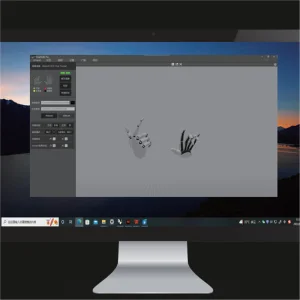
VDMocap Studio processes the arriving quaternion orientation stream against an anatomically calibrated anthropometric skeleton. Using hierarchical Forward Kinematics (FK) constrained by natural anatomical limits, the solver prevents bone shearing and joint popping while performing floor contact detection to ensure zero foot-skating.
Layer 3: Ultra-Low Latency Streaming Protocol
The resolved skeletal pose is packaged into lightweight UDP/OSC or direct named pipe data streams. Native C++ SDKs and plugins inject real-time bone transforms into Unreal Engine 5 (Live Link), Unity, Warudo, or Blender, operating with sub-5ms internal software propagation latency.
Layer 4: Real-Time Engine Rendering & Compositing
Inside Unreal Engine 5 or Unity, the incoming Live Link data binds seamlessly to customized metahuman or anime avatar control rigs. Lumen dynamic global illumination and high-fidelity physics shaders (cloth, hair) compute in real-time, outputting via NDI or 12G-SDI capture cards directly into OBS or broadcast matrices.
| Evaluation Parameter | Virdyn Inertial Hybrid (VDSuit Full) | Legacy Optical Marker Rigs | Vision-Based Markerless AI |
|---|---|---|---|
| Spatial Footprint | Unconstrained: Any room, stage, or outdoor space | Constrained: Requires calibrated 8x8m+ rig | Fixed: Single or multi-camera cone of view |
| Occlusion Sensitivity | Zero Occlusion: Sensors worn directly on joints | High: Markers hidden by props break skeleton | Severe: Self-occlusion causes erratic glitches |
| Turnkey Setup Latency | 5–10 Minutes: Don suit, execute T/A-pose | 45–90 Minutes: Marker placement & wanding | 5 Minutes: Camera placement & framing |
| Biomechanical Fidelity | Extremely High: 200Hz joint orientation capture | Industry Benchmark: Absolute spatial precision | Moderate: Susceptible to fast velocity blur |
| Direct Hardware CapEx | Tier-1 Accessible: 1/5th to 1/8th of optical setups | Heavy Enterprise: $80k - $250k+ deployment | Software/GPU Dependent: Modest hardware cost |
Localized Commercial & Industrial Application Blueprints
From high-turnover TikTok live-selling hubs to mainstream news broadcast suites and embodied robotic teleoperation, explore how Virdyn mocap architectures scale across diverse operational verticals.
1. 24/7 E-Commerce Live Broadcast Hubs
In the fiercely competitive automated retail and cross-border streaming landscape (TikTok Shop, Shopee, Amazon Live), human streamers face fatigue after 4-6 hours. Virdyn’s virtual live streaming solutions enable continuous 24/7 avatar operation. By deploying an actor in a VDSuit Full during peak monetization hours and switching to procedural AI behaviors during off-peak windows, brands boost Gross Merchandise Value (GMV) by up to 280% while retaining dynamic interactivity.
2. VTuber Agency Staging & Virtual Concerts
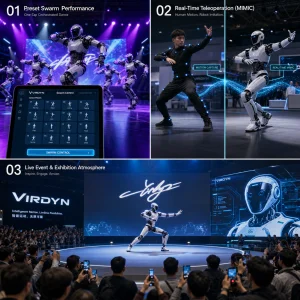
Professional entertainment talent requires acrobatic agility: jumping, dancing, sitting, and floor interaction. Traditional camera volumes fail when performers turn their backs or interact with stage props. Virdyn inertial suits maintain pristine 3D joint integrity regardless of performer orientation, allowing virtual idols to perform high-energy dance routines and live multi-camera stage productions streamed directly to YouTube, Twitch, and Bilibili.
3. Mainstream Media & Broadcast Virtual Anchors
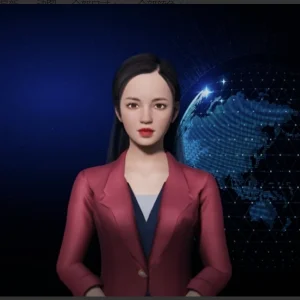
Television networks and digital newsrooms deploy photorealistic digital journalists to present breaking news, financial forecasts, and interactive weather segments. Virdyn bridges broadcast SDI infrastructures with Unreal Engine Live Link, driving MetaHuman avatars with sub-frame timecode synchronization (SMPTE), ensuring precise lip-sync, micro-gestures, and fluid physical poise.
4. Gamified EdTech & Interactive Virtual Classrooms
Standard video lectures suffer from severe drop-off in student engagement. By transforming instructors into expressive 3D animated characters in real time, online academies gamify complex curricula. The instructor’s genuine natural gestures directly guide students through complex anatomical models, astrophysics simulations, or historic re-enactments without post-production delays.
5. Embodied AI & Humanoid Teleoperation Convergence
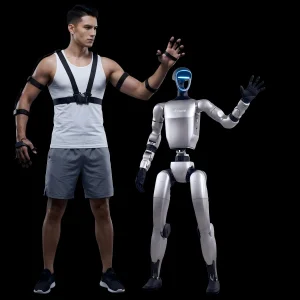
The boundary between virtual live streaming and real-world robotics is evaporating. The same VDSuit Full and mHand Pro setups that drive 3D avatars stream kinematic teleoperation vectors into physical bipedal humanoid robots and multi-finger robotic hands for live tech demonstrations, telepresence exhibitions, and imitation-learning dataset generation.
Chinese Factory Supply Chain Resilience & Manufacturing Efficiency
Vertical engineering integration in the Greater Bay Area hardware cluster delivers unmatched prototyping velocity, military-grade sensor QA, and unprecedented price-to-performance advantages.
Vertical Hardware & Micro-MEMS Clustering
Situated within the Guangzhou-Shenzhen manufacturing corridor, Virdyn commands localized access to tier-1 MEMS wafer packaging, precision surface-mount technology (SMT) lines, and automated multi-axis rotational calibration turntables. By consolidating PCB assembly, IMU potting, and custom smart fabric weaving within a 50km radius, production cycle times shrink from months to days.
Rigorous Factory-Gate Dynamic Calibration
Unlike assembled kit providers, each Virdyn IMU node undergoes an exhaustive 72-hour thermal stress screening and multi-temperature gyro drift profiling in our factory calibration laboratory. Proprietary multi-point polynomial compensation matrices are flashed directly onto each node’s onboard EEPROM, guaranteeing uniform response across fluctuating temperature environments.
Radical Cost Optimization for Global Buyers
Western motion capture competitors incur immense overhead from fragmented contract manufacturing, third-party licensing, and overseas distributor markups. By managing core IP, firmware, algorithm solvers, and physical manufacturing in-house, Virdyn delivers full-body, finger, and face capture capabilities to global enterprise studios at 30% to 50% lower total procurement cost.
Technological Roadmap & Future Outlook (2025–2030)
A strategic projection of next-generation sensor breakthroughs, neuromorphic vision fusion, and ultra-low latency protocols redefining digital human interaction.
Phase 1: Hybrid IMU-Vision SLAM Anchoring
By coupling wearable inertial networks with lightweight egocentric spatial cameras (such as the VDEgo series), the next iteration solves absolute 6-DoF world coordinate anchoring natively. This eliminates foot-sliding and positional drift without external multi-camera infrastructure, empowering live performers to navigate complex multi-level physical sets.
Phase 2: On-Device Neural Retargeting Solvers
Transitioning from mathematical IK heuristics to deep-learned biomechanical transformer models running on edge AI chips. The neural solver predicts intended actor trajectories and dynamic momentum, automatically compensating for sudden magnetic disturbances from steel-framed stages in real time with zero perceived latency.
Phase 3: Wi-Fi 7 & Private 5G URLLC Integration
Adoption of Wi-Fi 7 (802.11be) multi-link operation (MLO) and sub-millisecond cellular URLLC protocols will enable ultra-dense multi-actor capture in broadcast studios. Multiple performers can interact within the same capture domain with deterministically guaranteed sub-2ms network packet transport and absolute clock synchronization.
Cross-Border SLA, Global Compliance & Biometric Ethics
Enterprise buyers require guaranteed continuity, strict international certification standards, and full regulatory privacy adherence for cross-border studio operations.
Tier-1 Global SLA & Support Engineering
Virdyn maintains multi-lingual technical customer engineering hubs with standard 24-hour business day triage. For enterprise studio deployments, we provide remote SDK onboarding, custom rigging pipeline calibration, and expedited international hot-swap hardware replacement to guarantee zero live-broadcast downtime.
Regulatory Harmonization (CE, FCC, RoHS)
All Virdyn commercial products undergo third-party laboratory certification for electromagnetic radiation (FCC Part 15 Class B, CE-RED), ensuring full radio compliance across North America, the EU, the UK, Japan, and Korea. Environmentally compliant textile manufacturing conforms to RoHS and REACH environmental non-toxicity guidelines.
Biometric Privacy & GDPR Adherence
Unlike cloud-dependent computer vision platforms that stream sensitive performer video to external data centers, Virdyn’s software processes motion calculations completely on-premise. Kinematic outputs consist solely of abstracted mathematical vectors, guaranteeing 100% adherence to GDPR Article 9 biometric data security mandates.
Frequently Asked Engineering & Procurement Questions
Authoritative technical clarifications addressing sensor kinematics, magnetic interference mitigation, real-time pipeline latency, and enterprise SDK support.
How does Virdyn mitigate electromagnetic interference (EMI) in modern broadcast studios?
What is the verified end-to-end latency from performer motion to final broadcast output?
Can Virdyn mocap suits track simultaneous multi-actor interactions on a single stage?
How does the system eliminate foot-sliding without external optical reference cameras?
What SDKs, APIs, and file formats are supported for custom enterprise development?
Specialized Live-Stream, Teleoperation & Software Systems
Complete your production pipeline with half-body teleoperation systems, egocentric data collection rigs, facial capture helmets, and imitation learning suites.